SG_FSE_SiplaceHF_HF3_00193901-05_eng.pdf - 第445页
1 - 17 S tudent Guide SIPLACE HF/HF3 Edition 09/2005 10 Sitest 17 Sequence segment offset top (I): Fig. 10.2 - 6 Princple picture of a calibration t ool in the came ra in 0° (left); in 180°(right). – After Segment offset…

1 - 16
Student Guide SIPLACE HF/HF3
10 Sitest Edition 09/2005
16
Component camera: 10
– the Pixel size of the CCD sensors of the camera is determined in µm. Measured and calcu-
lated with Ax/Bx/Cx/Ay/ByCy calibration values.Saved in KAM_DAT.MA as:XU_Pixel /
YU_Pixel (50000 nm 12 nozzle-comp.-camera SST 12) (81000 nm 6 nozzle-comp.-camera
SST 13) (27500 nm DCA-camera SST14)
– the camera center is determined.
– the Mounting angle of the CCD-chip in the camera to the turning level of the placement star is
measured.Saved as ‘Kamera_winkel’ at the Data bloc of the respective comp. camera in KA-
MDAT.MA.
Sequence segment offset bottom (II):
Sequence at one nozzle:
– is the calibration tool picked with a Nozzle under 0 degree; optically centered and placed with
the PCB-camera is the exact placement position determined (in µm).
– is the calibration tool picked with a Nozzle under 90 degree; optically centered and placed with
the PCB-camera is the exact placement position determined (in µm)
– is the calibration tool picked with a Nozzle under 180 degree; optically centered and placed
with the PCB-camera is the exact placement position determined (in µm)
– is the calibration tool picked with a Nozzle under 270 degree; optically centered and placed
with the PCB-camera is the exact placement position determined (in µm)
– This sequence is repeated. From the 8 placement positions is the average value of the place.
Deviation calculated and taken for the seg. offset.
– The calibration tool do not turn at this sequence.
PCB camera - Component camera offset:
– At the measurements for Segment offset bottom (II) we calibrate the PCB -> component cam-
era offset with Segment 1:
– The distance in X- and Y- direction of the camera centers is determined in µm.
– The camera center of the PCB-camera is the reference.
– This distance is saved in REAL.MA at ‘Kopfoffsets’ at Kopf 1 (or in future Kopf 2) Kopfoffset_X
/..Y. (The Segmentoffset bottom of Segment 1 is 0)
– The Segment offsets of the other 11 (5) Segments are saved, as a deviation to segment 1, in
PIP_OFF.MA.
– For the Segment offset bottom the values are without limits.
1 - 17
Student Guide SIPLACE HF/HF3
Edition 09/2005 10 Sitest
17
Sequence segment offset top (I):
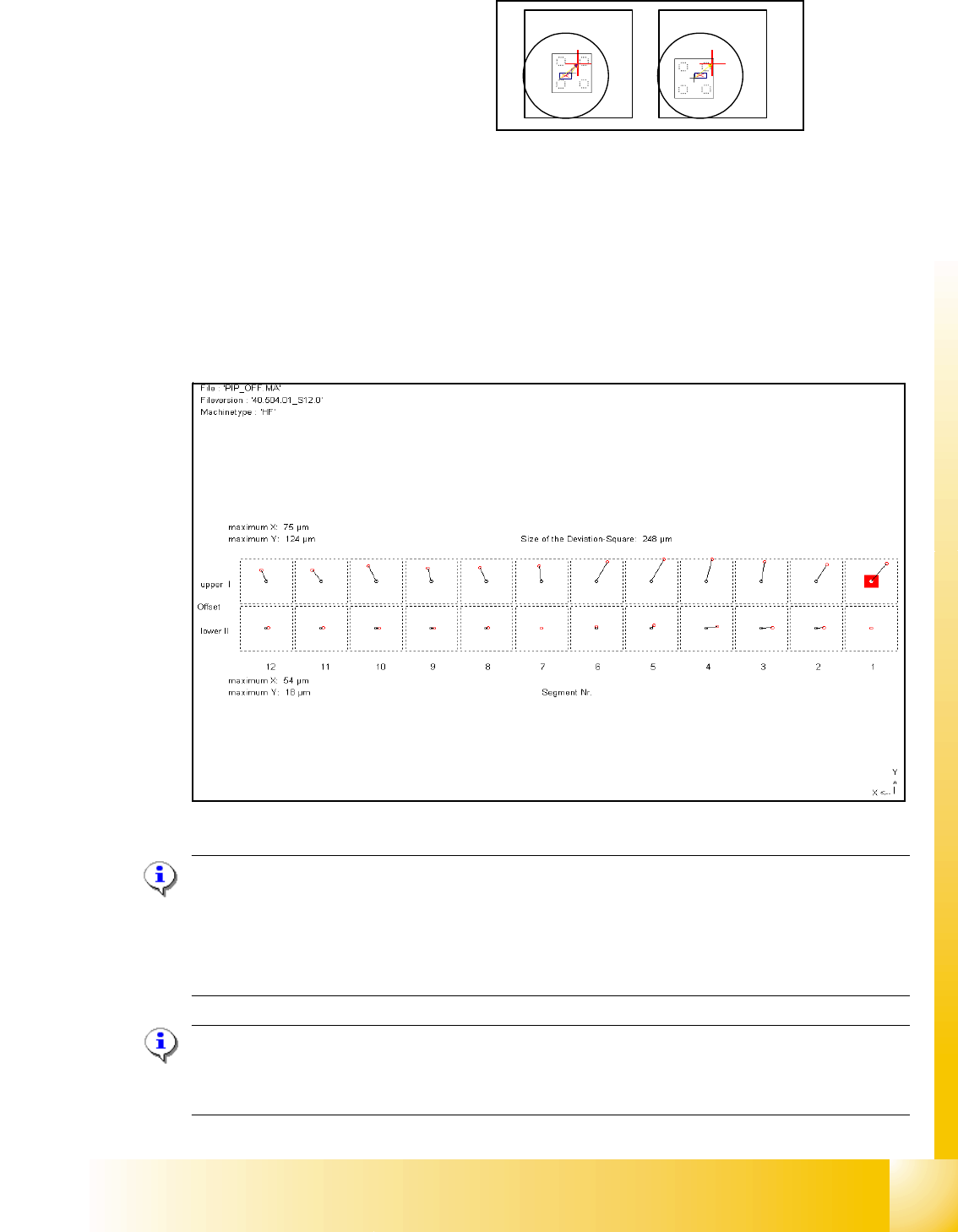
Fig. 10.2 - 6 Princple picture of a calibration tool in the camera in 0° (left); in 180°(right).
– After Segment offset bottom (II) we calibrate with Segment offset top (I) for C&P DLM 2 seg-
ments :
– the deviation in X- and Y-direction of the turning axis of the segments referring to the camera
center of comp. camera in µm.
– The Measurement is done in 0° 180° respective 90° 270°(to prove the result 8 measurements
per segment).
– The Segment offset values are saved in PIP_OFF.MA.
Graphic view of the results from segment offset:
Fig. 10.2 - 7 Graphical view segment I and II
Note:
For the segment offset I (top), the size of deviation shouldn‘t be larger than 600µm (450 µm) for
the segments and the deviation between the segments shouldn‘t be larger than +/- 150 µm.
The segment offset II (bottom) should not be larger than +/- 150µm. The deviation of the segments
should not larger than +/-150 µm.
Note:
The segment offset II (bottom), from the segment 1 is always 0 that is the reference value to the
other segments.
1 - 18
Student Guide SIPLACE HF/HF3
10 Sitest Edition 09/2005
18
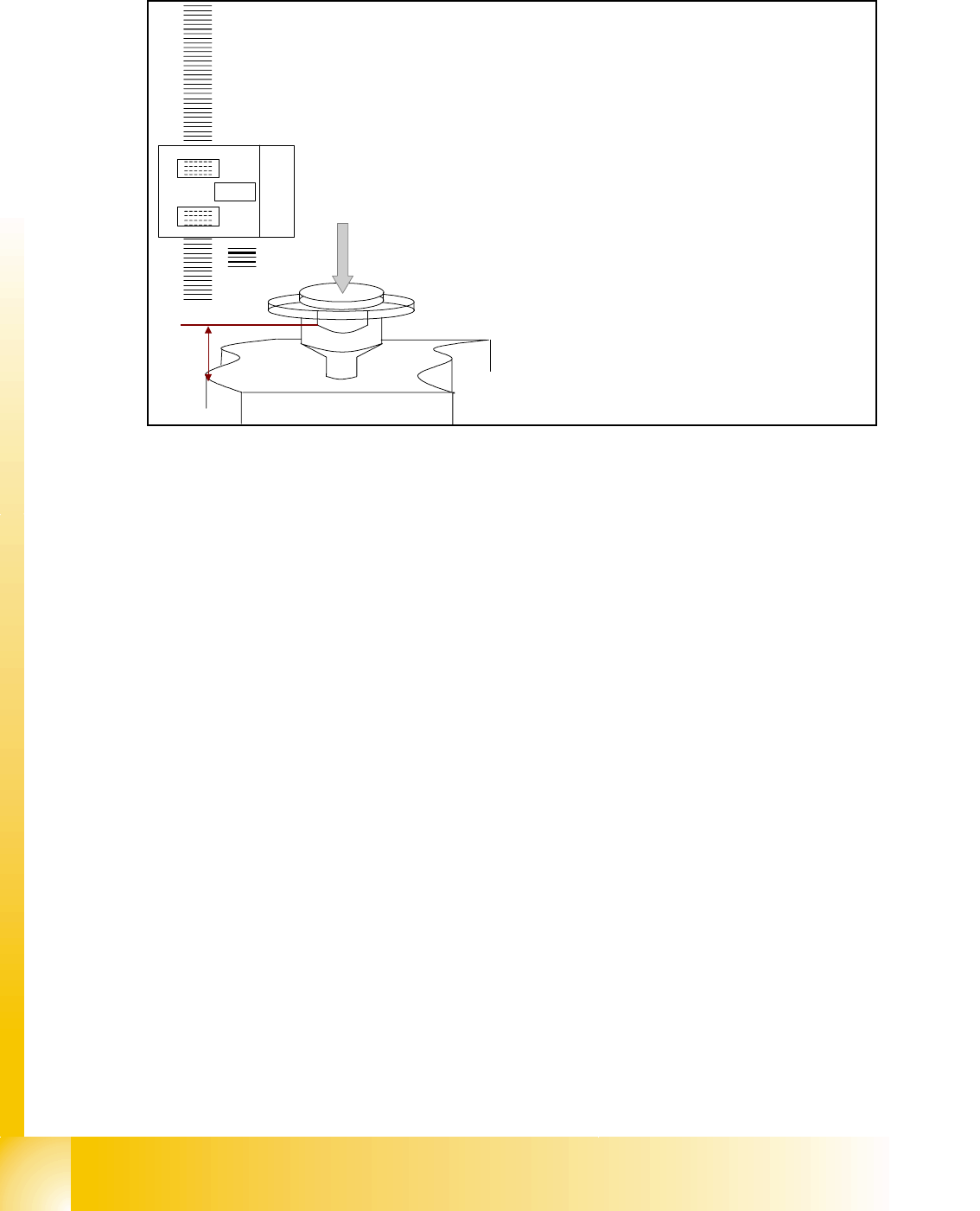
Twin head height: Calibrate Head height mean to determine Z-Zero point correction. 10
Fig. 10.2 - 8 Twin head height
Sequence:
– move to zero pulse
– set the position counter to 0
– move with 517 nozzle to the transport rail
– measure actual position
– subtract ‘Kopfhöhe’ head height from Ideal.ma (65500)
– subtract theoretical nozzle length
– is zero point correction Z-pos.act. -nozzle length -head height = 0-corr.
IC camera: 10
– After measuring the head height of TWIN head (Z-axis zero point correction) the TWIN -IC
camera is calibrated.
– The first measurement is the focus level of the stationary camera. The TWIN head determine
with Segment 1 the Z height for optimized focusing. (this height is the centering height for bot-
tom side of components.)
– The Pixel size in µm of the camera is determined next. Saved as:/XU_Pixel / YU_Pixel/ of cam-
era 11(in 79000 nm).
– The camera center of the TWIN- IC-camera refer to the zero point of the machine (X- / Y-
counter zero position).
A
B
‘
1
5
4
3
2
1. Incremental scale on the Z-axis
2. Incremental encoder fixed
3. Top of the conveyor rail
4. Head height
5. Nozzle lenght