00194614-08 Trainingsdoku. SG X-Serie_X4i SW70x (AL2)_EN.pdf - 第216页
C&P20A Parts Overview with Function Description Overview Student Guide SIPLACE X-Serie and X4I SW70x (AL2) 216 Component S ensor 7.2.3.4 Component Sensor The component sensor is a standard feature on the C&P20A h…
C&P20A
Overview Parts Overview with Function Description
215 Student Guide SIPLACE X-Serie and X4I SW70x (AL2)
Z Drive Function
Z Drive Function
Retract Unit
7.2.3.3 Retract Unit
Retract unit functions
At zero current, the bearing friction of the Z axis is not sufficient to protect the axis from falling down. A
pneumatic retract system has been installed to protect the Z axis should the gantry be moved when the
machine is switched off. This retract unit keeps the Z axis in the safe, upper position during zero current.
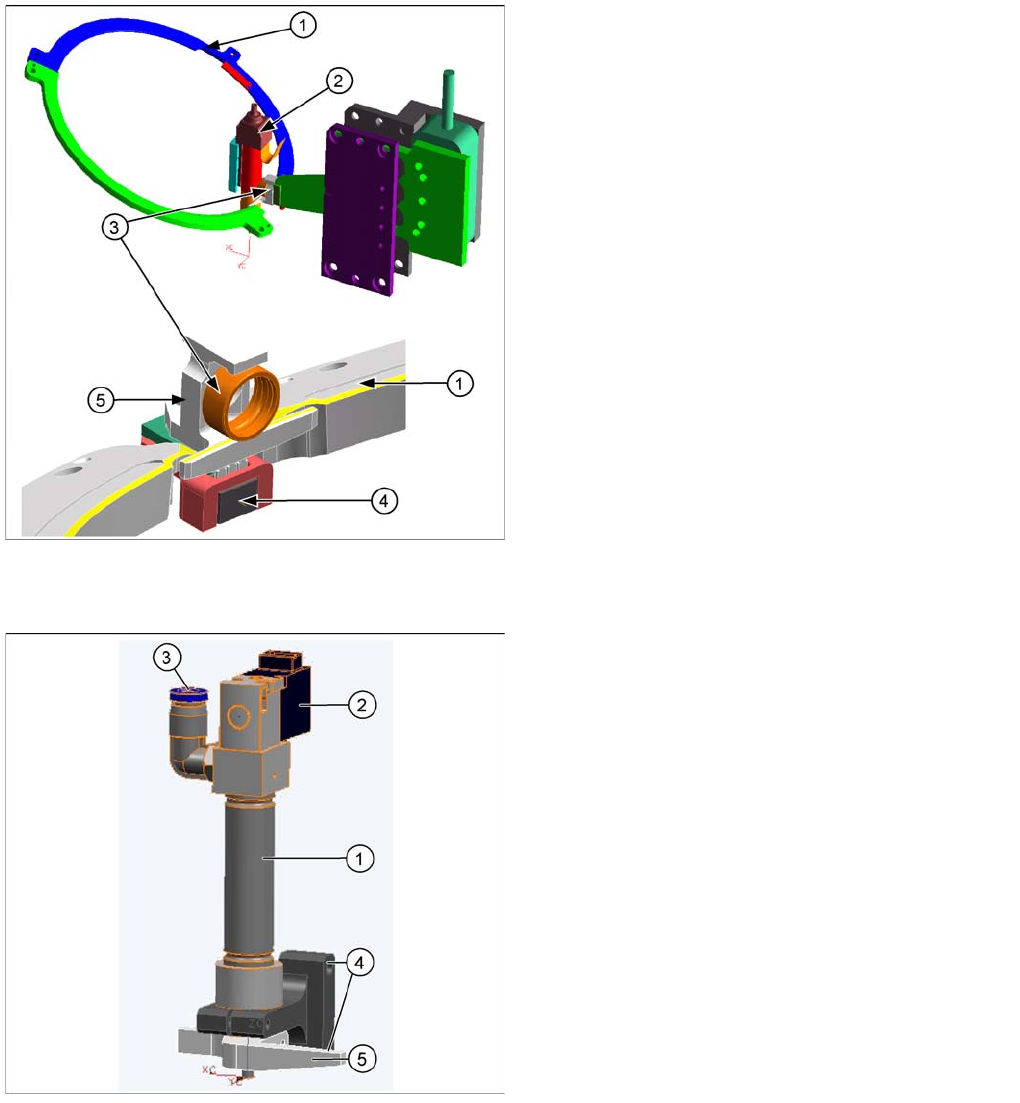
Legend
1. Raceway
2. Segment
3. Ball bearings
4. Light barrier down
5. Snap jaws
▪ The jaws are installed on the primary part of the Z
motor, for mechanical docking of the segments.
▪ A Z down sensor is located in the placement position,
for recognition of the Z axis put down position. This
recognizes a relative movement between the nozzle
and DP segment. When the Z axis springs into place,
this sensor sends a signal to the axis controller board.
The "light barrier down" signal is directly linked to the
measurement signal of the Z axis incremental
encoder.
Legend
1. Pneumatic cylinder
2. Solenoid valve
3. Compressed air connection
4. Retract unit fixtures
5. Z axis driver
The retract unit is installed on the Z axis and is
responsible for protecting the Z axis from damage, by
moving it into a safe area in the case of unexpected
events e.g. power cuts or machine shutdown.
The retract unit is fixed with two screws and can be easily
replaced during service work.
C&P20A
Parts Overview with Function Description Overview
Student Guide SIPLACE X-Serie and X4I SW70x (AL2) 216
Component Sensor
7.2.3.4 Component Sensor
The component sensor is a standard feature on the C&P20A head and no longer an option as in the DLM
heads. Also, the function and position of the component sensor is different to that for the DLM heads.
The component sensor is in the pickup/place position and the Z axis moves during the upwards and
downwards movement of the laser beam. If the laser beam is interrupted or when it is released again,
the exact Z axis position is read out and the corresponding evaluation started.
(Before pick up: no component on the nozzle, after Pick up: component on the nozzle;
placement: component still on the nozzle, after placement: no component on the nozzle)
NOTICE
The Z axis control system is designed to ensure that, should the machine power supply fail (or
be switched off), there is always enough power temporarily stored by the Z motor servo unit and
axis controller board to move the Z axis to the upper position.
Power failure is recognized by the issuance of a "Power fail" signal. This "Power fail" signal
enables the relevant function (upwards movement and activation of the retract unit) on the axis
controller board.
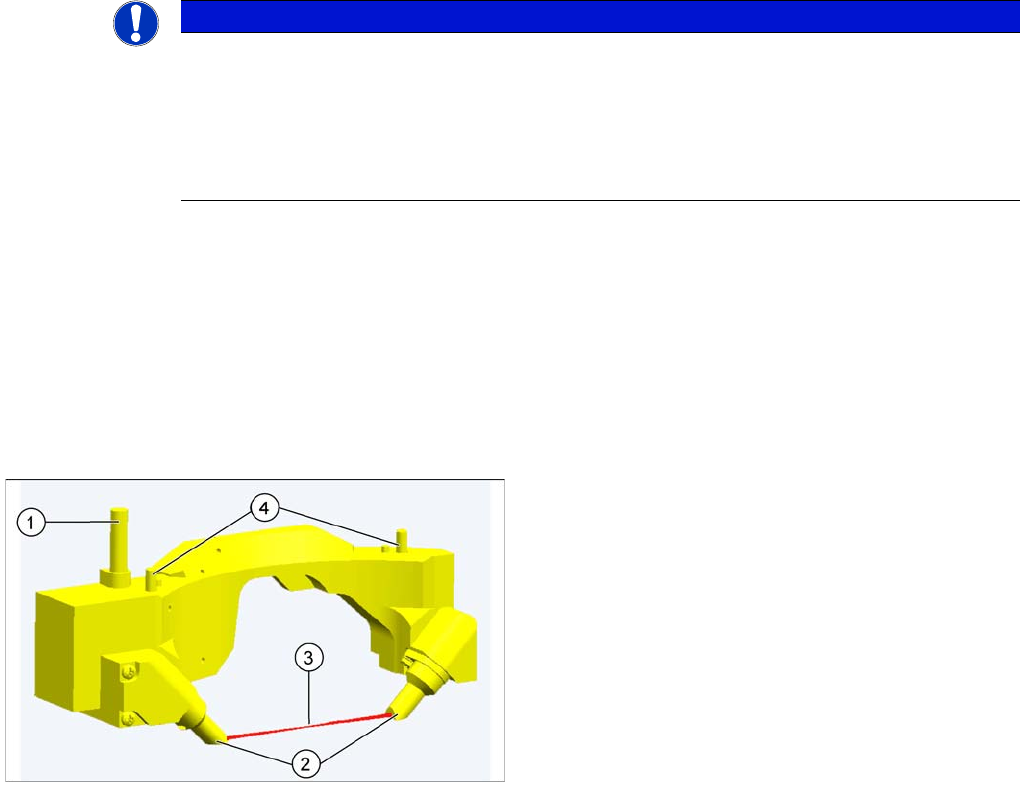
Component sensor
▪ The component sensor is installed in the pickup-
placement position on the C&P20A head, by default.
▪ The sensor is fixed to the head with two screws and
can be replaced as a complete unit during service
work.
Legend
1. Power/data supply cable
2. Transmitter and receiver unit
3. Laser beam
4. Fixture to housing
C&P20A
Overview Parts Overview with Function Description
217 Student Guide SIPLACE X-Serie and X4I SW70x (AL2)
Component Sensor Functions
Component Sensor Functions
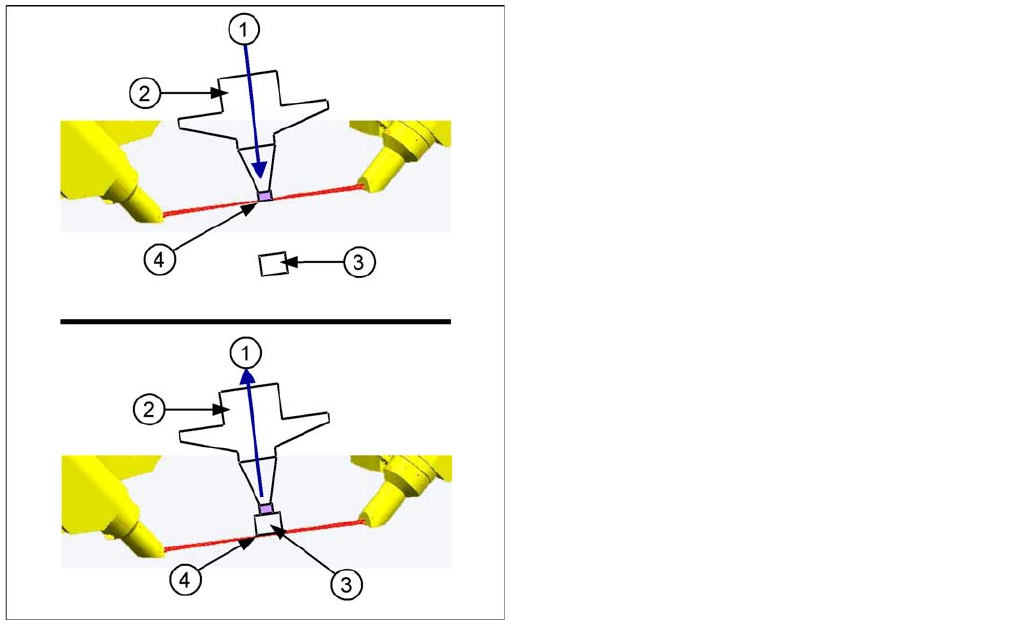
Pickup Process:
When the Z axis moves downwards, the nozzle interrupts the laser beam. At this exact moment, this Z
axis position is read out and compared to the reference value, from the height reference run, or from this
segment after placement. This determines whether there is still a component on the nozzle or not. If the
Z axis position indicates that there is a component on the nozzle, the Z axis will be immediately stopped.
An error message will appear or the component will be rejected and added to the repair cycle as not
placed.
When the Z axis moves upwards again, the laser beam is released and the Z position read out. Based
on the Z position during downwards movement, the system can now determine the presence and height
of a component.
Placement Process:
During the placement process, the system checks whether the component is at the nozzle (Z downwards
movement) or whether placement has been performed on the component (Z upwards movement). As a
precaution, these Z positions are compared to those from the pickup procedure.
This ensures maximum pickup and placement reliability.
Legend
1. Downwards (top diagram) or upwards (bottom
diagram) movement
2. Nozzle
3. Component
4. Reading out the Z position, if the laser beam is
interrupted (top diagram) or has been released again
(bottom diagram).
The component sensor signal is directly linked to the axis
controller (measurement system) of the Z axis. This
enables you to read out the Z position during upwards
and downwards movement.