4OM-1603-007_w.pdf - 第374页
4OM-1603 5-1 1 3. T roubleshooting on Placement Errors : Chap.5 (2-2) Machine-Based Factors Shown below are the assumable main factors based on the machine. When trouble occurs in some of the components (the components o…
4OM-1603
5-10
3. Troubleshooting on Placement Errors : Chap.5
(2) Missing Components on PCB
(2-1) Situational Grasp of Error Generation
The following three symptoms can be assumed regarding why some
components are missing.
•
Some components were lifted up during placement.
•
Some components sprang out due to vibrating PCB or vacuum break
during placement.
•
A component sprang out while the PCB is being discharged after
placement.
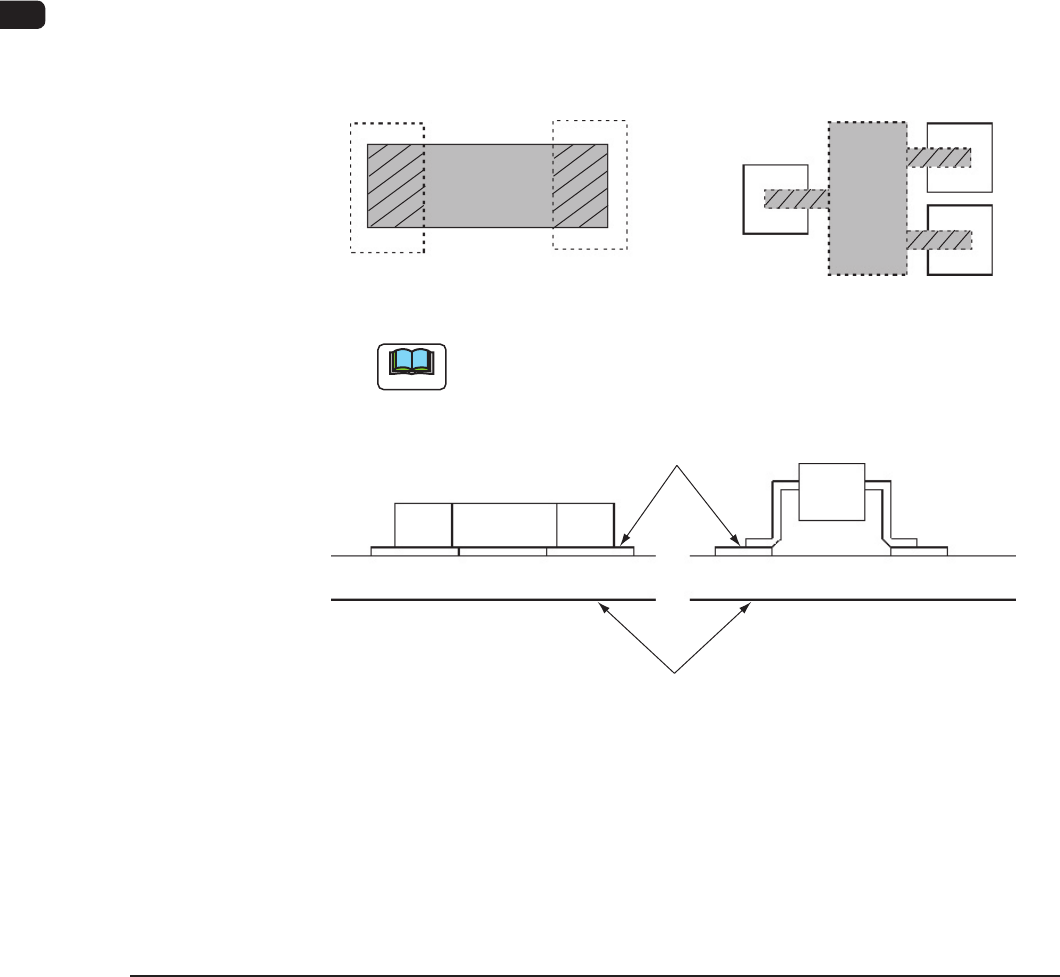
The smaller the touch area with the PCB (solder paste) is in comparison with
the component size, the more frequently this type of failure occurs.
This applies commonly to these symptoms.
As shown in Fig. 4E9, power enough to hold a component will be given
when square components (resistors, capacitors, etc.) are used. However,
the above symptoms may appear more frequently when leaded components
(transistors, diodes, etc.) are handled because of the small touch areas.
Square Component
Leaded Component
Shadowed are the touch areas between the components
and the solder paste.
Solder Paste
PCB
Note
F4E9
1012-005
4OM-1603
5-11
3. Troubleshooting on Placement Errors : Chap.5
(2-2) Machine-Based Factors
Shown below are the assumable main factors based on the machine.
When trouble occurs in some of the components (the components of the
same type that have been used in the past actual production), check for the
following factors.
•
Worn, Clogged, or Dirty Vacuum Nozzle
•
Vacuum Nozzle Up/Down Movement Error
•
Flow Rate of Broken Vacuum and Performance Error
•
Improper Placement Height Level
•
Imperfect Holding Power for Z Clamping
•
Dirt and/or Nicks on Linear Measure Sensor
(3) Other Factors
The factors other than the machine-based ones are assumed to be the shape
of the component, the condition of the PCB, or the condition of solder paste
or glue.
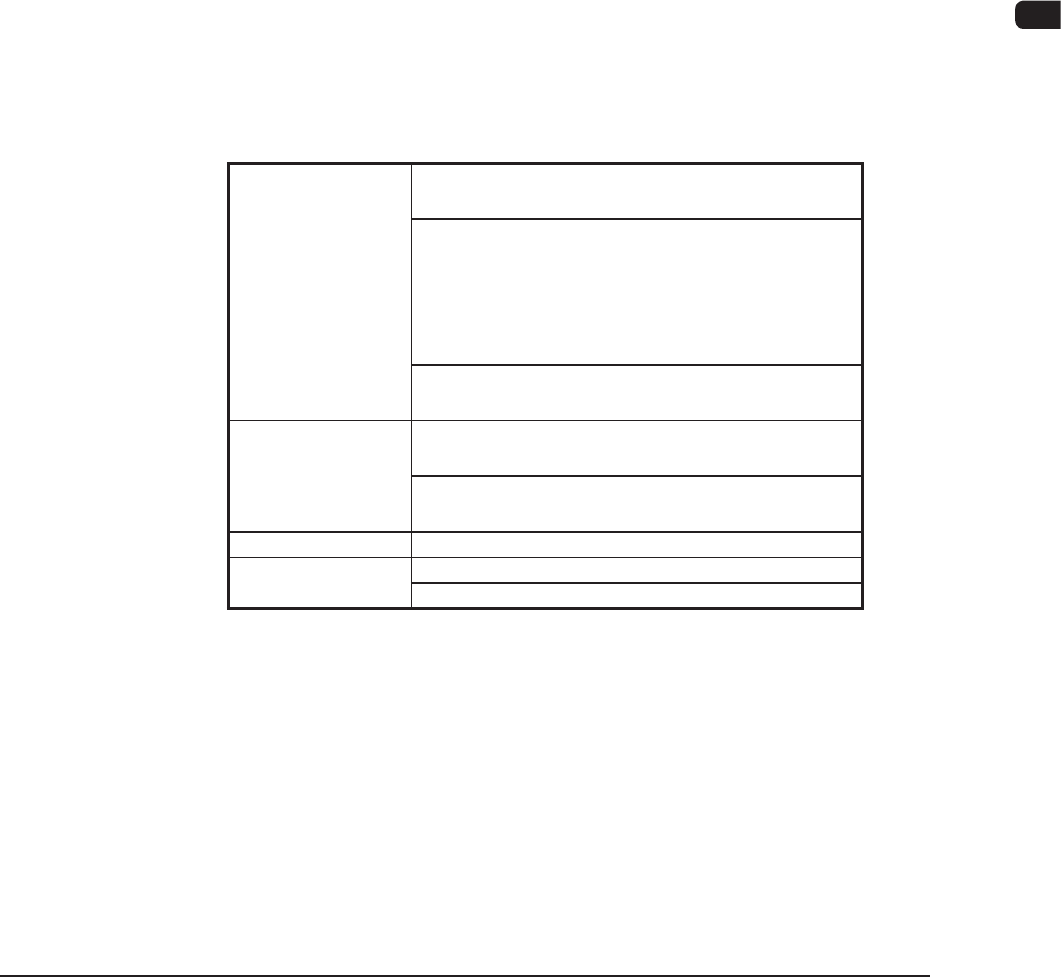
The factors are shown in the table below.
Check each item and take measures if necessary.
If no quick improvement can be made due to the condition of the PCB or
solder paste, failures can be avoided by slowing down the speed of the
component placement or the PCB transfer.
Component
A foreign substance exists on the upper surface of a
component and adheres to the vacuum nozzle.
There is a protruding portion on the upper surface
of a component, causing the lower surface of the
vacuum nozzle to wear out and an error during the
teaching operation through component recognition
lighting.
Oil or mold lubricant adheres to the lower surface of
a component.
PCB
Some PCBs vibrate during component placement
because the warpage is great.
Some PCBs are xed imperfectly due to variations
in shape.
Glue
Shortage of Applied Glue
Solder Paste
Shortage of Applied Solder Paste
Shortage of Adhesion
T4E2
1012-005
4OM-1603
5-12
3. Troubleshooting on Placement Errors : Chap.5
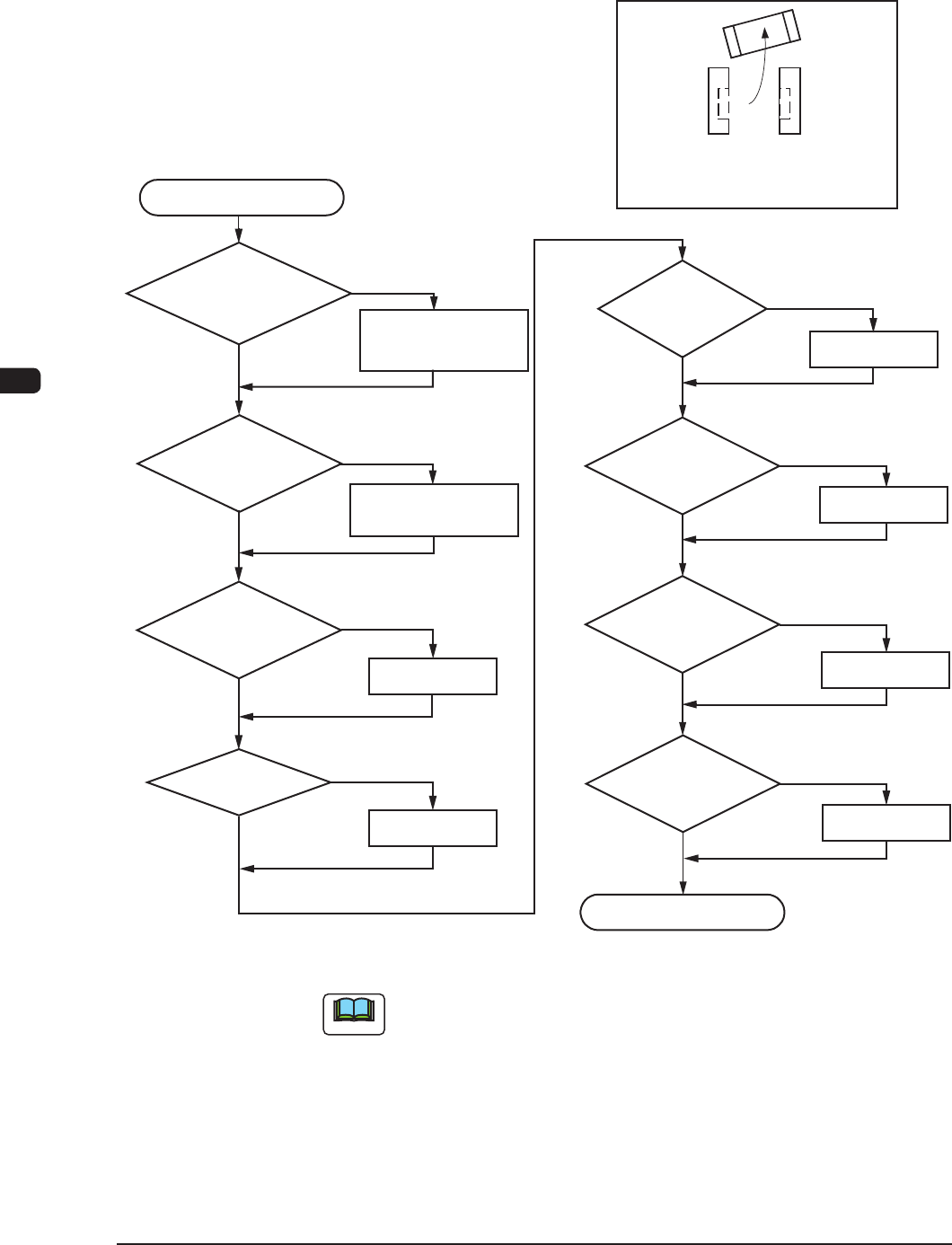
3.2 Symptom-Based Troubleshooting
(1) ComponentPlacementMarksatSpeciedPositionsonPCBLands
NG
OK
OK
OK
NG
NG
OK
NG
END
OK
OK
NG
NG
Correction
OK
NG
Replacement
NG
Note
OK
Dirt, Magnetization,
and/or Electrification
on Vacuum Nozzle
Cleaning,
Demagnetization,
and/or Deelectrification
Dirt on Vacuum
Filter and Attachment
Cleaning,
Replacement, or Repair
Verification of PCB
Thickness Data
Z Clamping
Correction
Adjustment
PCB Positioning
Vacuum Valve
ON/OFF
Switching
Component
Library Data
Improvement
Adhesion of
Solder Paste
Re-Setting
START
Component Placement Marks on
Solder Paste at Specified Positions
on PCB Lands
F4E10
Note
Check the vacuum ON/OFF switching in the "Output Chk" tab sheet in the
"I/O DIAG" window. (Operation Sequence: [MAINT] Button → [DVC
CHK] Button → "Output Chk" Tab)
1012-005