PathMaster-REV-L-4.5-1.pdf - 第103页
Machine Operati on Manual Revision L / February 2020 Page 103 of 200 Figure 122 : FastMas k Area Tea ch 12. Select the “ Next ” button. 13. Teach the opposi te corne rs of the firs t keep out a rea. 14. Select the “ Add …
Machine Operation Manual
Revision L /
February 2020
Page 102 of 200
FastMask™
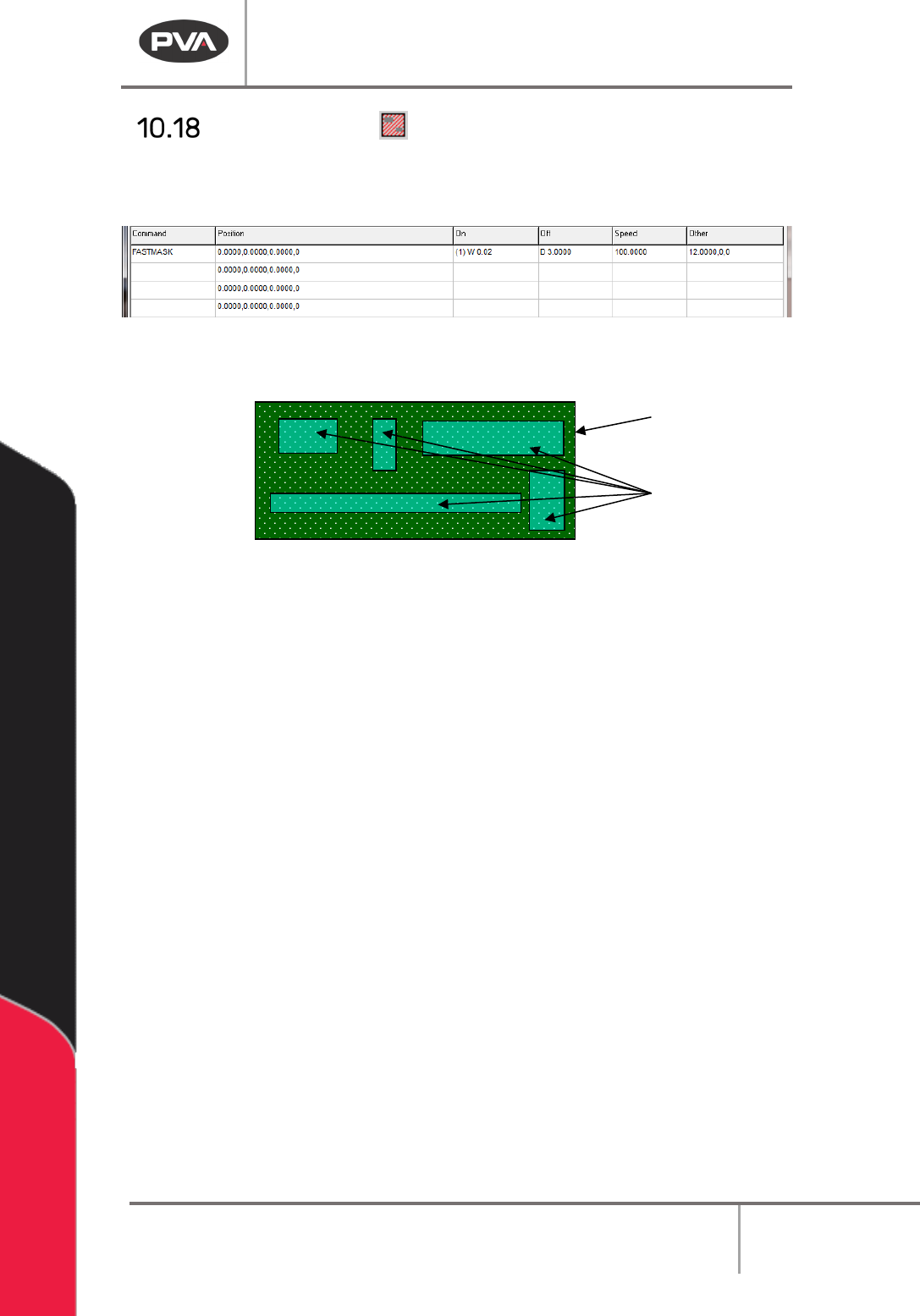
The FastMask™ function will create an area to be coated and keep outs within that area.
There can be up to 99 keep out areas specified within the coating area.
Figure 120: Programmed FastMask Command
Shown below is an example of a PCB (Printed Circuit Board) with keep out areas specified.
Figure 121: Sample Board with Keep out Areas
1. Select the FastMask™ function to open the wizard.
2. Select the Run Tool. Select (double click) the necessary tool from the Tool Selection
window. Refer to
Figure 68.
3. Select the Teach Tool if necessary. Select (double click) the necessary tool from the
Tool Selection window. Refer to
Figure 68.
4. Select “θ” to move the selected tool to the calibrated W-axis position (theta).
NOTE: The “θ” button will only be available on 4-axis machines. When you use the “Teach
Tool” (virtual tool 0) it is not necessary to select this button.
5. Set the Tool Height to “Use the Current Z Height” or “Use Calibrated Z Height”.
6. Set the Tool On to “Wait” or “Distance” and set the time or distance in the box.
7. Set the Tool Off to “Wait” or “Distance” and set the time or distance in the box.
8. Set the Path Speed.
9. Set the Area Spacing.
10. Select the appropriate tool parameters.
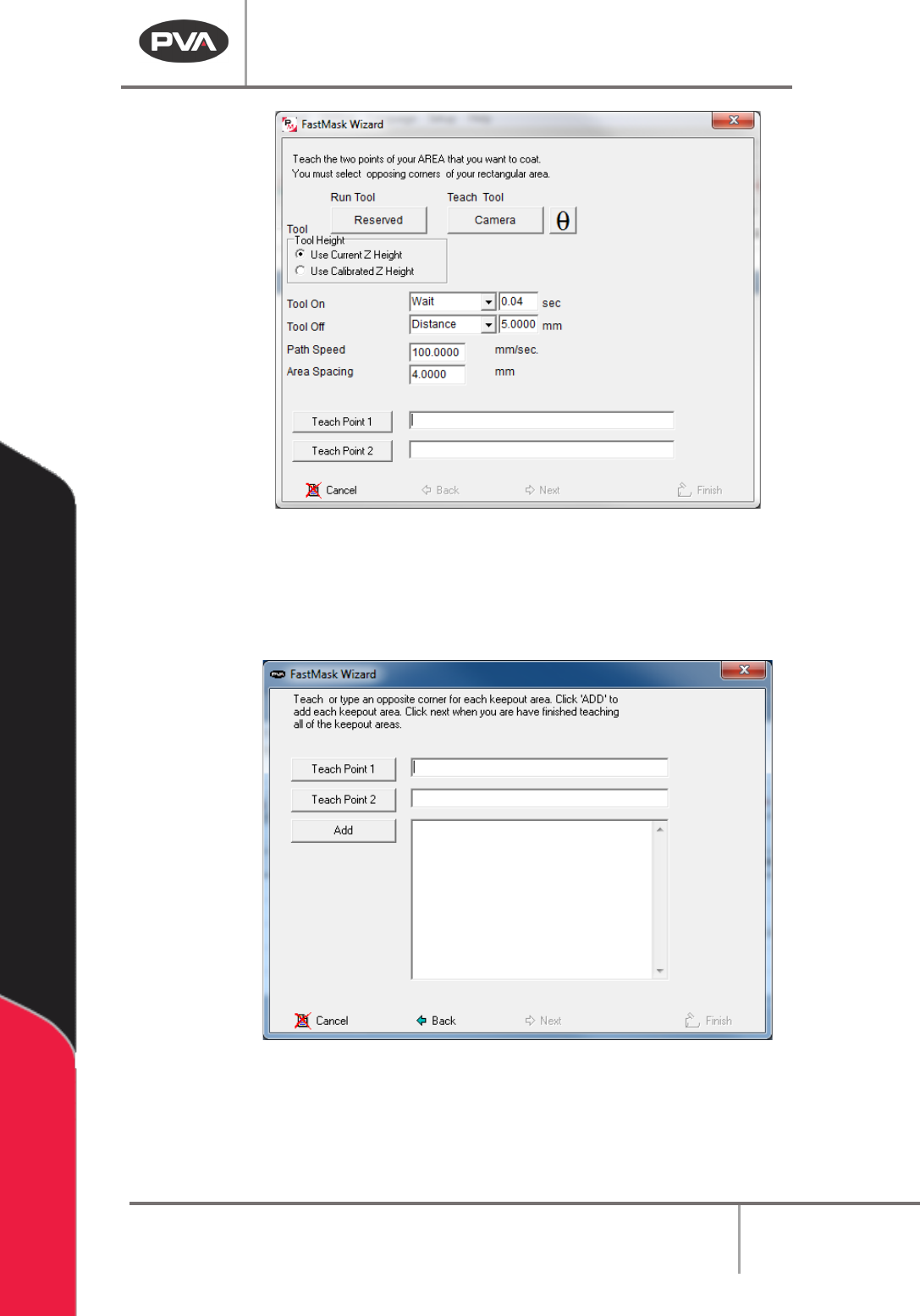
11. Teach two opposite corners of the area to be coated as point 1 and point 2.
Sample
Keep outs
Machine Operation Manual
Revision L /
February 2020
Page 103 of 200
Figure 122: FastMask Area Teach
12. Select the “Next” button.
13. Teach the opposite corners of the first keep out area.
14. Select the “Add” button to add the keep out to the FastMask™ list.
Figure 123: Keep Out Teach Menu
15. Continue to add keep out areas (up to 99 keep outs) until all non-coat areas have
been included in the FastMask™ list.
16. Select the “Next” button.
Machine Operation Manual
Revision L /
February 2020
Page 104 of 200
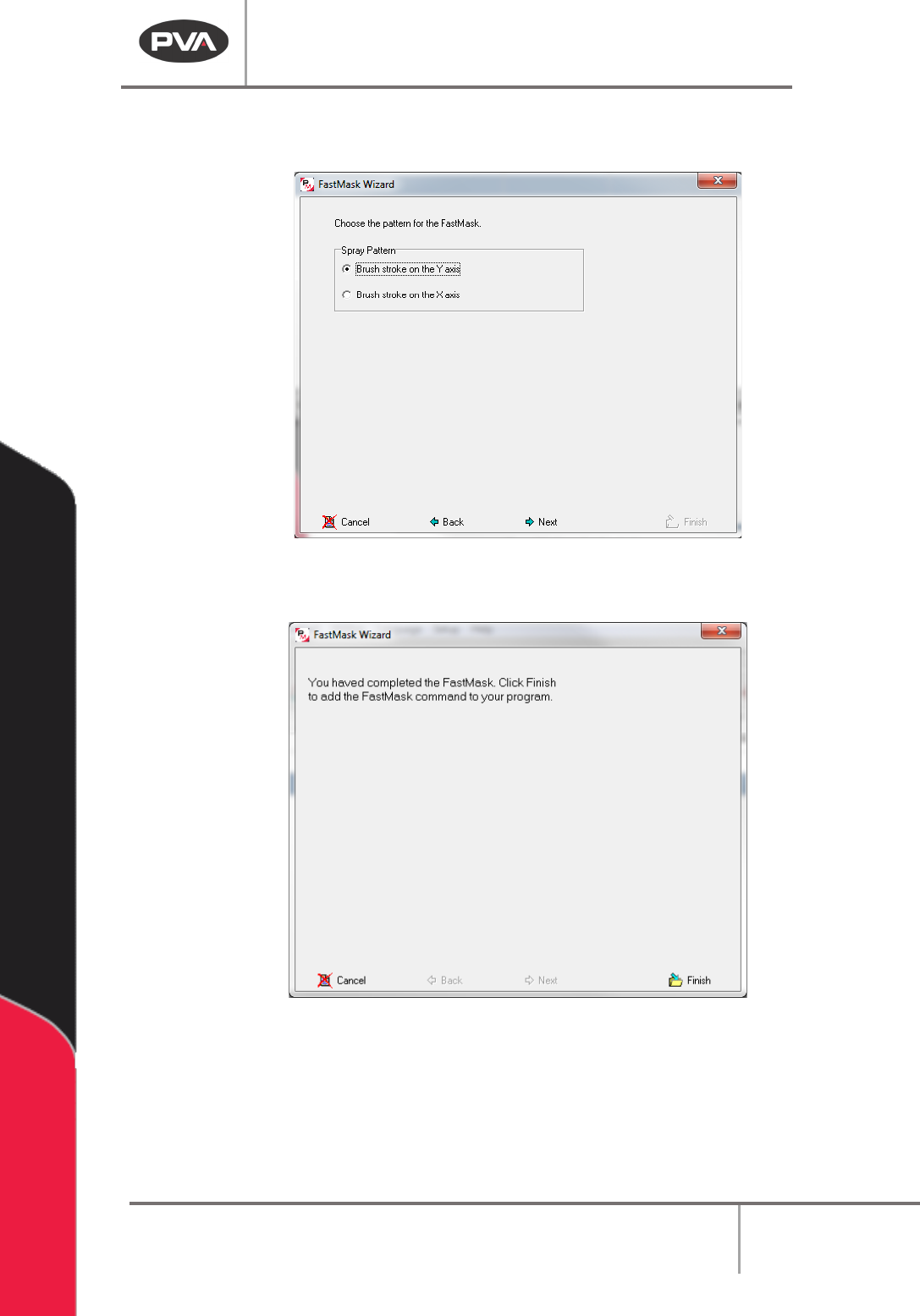
17. Select the Spray Pattern. This is the direction the tool will go when this FastMask™
pattern is used.
Figure 124: FastMask Brush Stroke Pattern
18. Select the “Next” button.
Figure 125: FastMask Complete
19. Select the “Finish” button.
The FastMask™ pattern will always start at the point taught closest to the origin of the
gantry (the smallest coordinate in the pattern).
20. To edit a FastMask, double click on the path and change the command in the edit
window. Refer to Section 7.5.