PathMaster-REV-L-4.5-1.pdf - 第81页
Machine Operati on Manual Revision L / February 2020 Page 81 of 20 0 Figure 87 : To ol Move 2. Select the App roach T ype. 3. Selec t the Run Tool . Select (double click) th e necessary tool from the Tool Selection windo…
Machine Operation Manual
Revision L /
February 2020
Page 80 of 200
Dwell
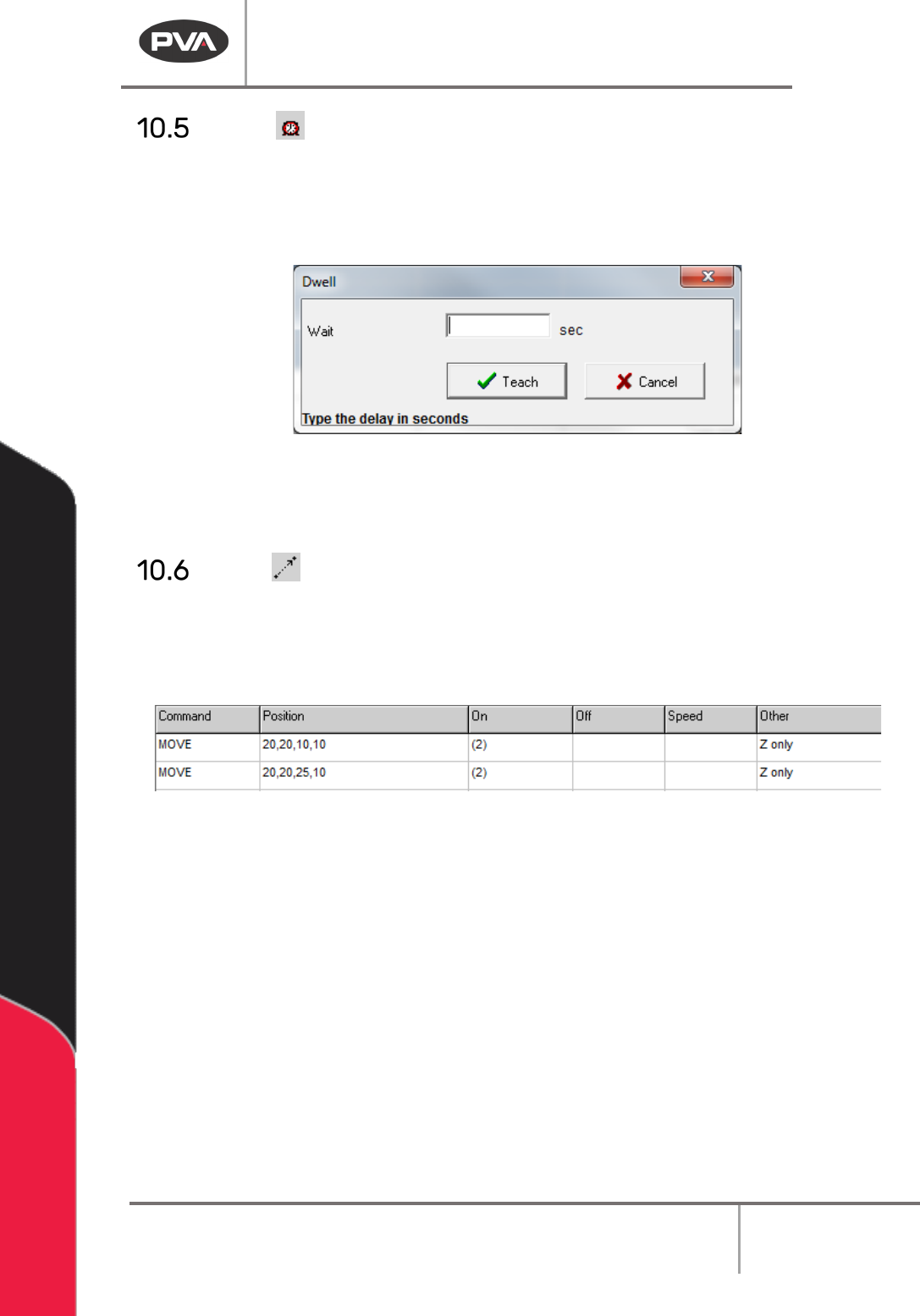
Set a delay in program execution in between path segments with the Dwell function.
1. Select the Dwell function.
2. Put the correct value in the Wait box.
Figure 85: Teach Dwell
3. Select “Teach” to add the command to the edit screen.
4. Select “Cancel” to exit and not add a command.
Move
The Move command is a non-dispense move. The approach type is applied globally to all
points taught within a single move command and determined by the selected approach
type when the “
Done” button is clicked. If more than one approach type is necessary, teach
multiple move commands. Refer to Section
10.1 for definitions of the tool functions.
Figure 86: Move Command in the Edit Screen
1. Select the Move function.
Machine Operation Manual
Revision L /
February 2020
Page 81 of 200
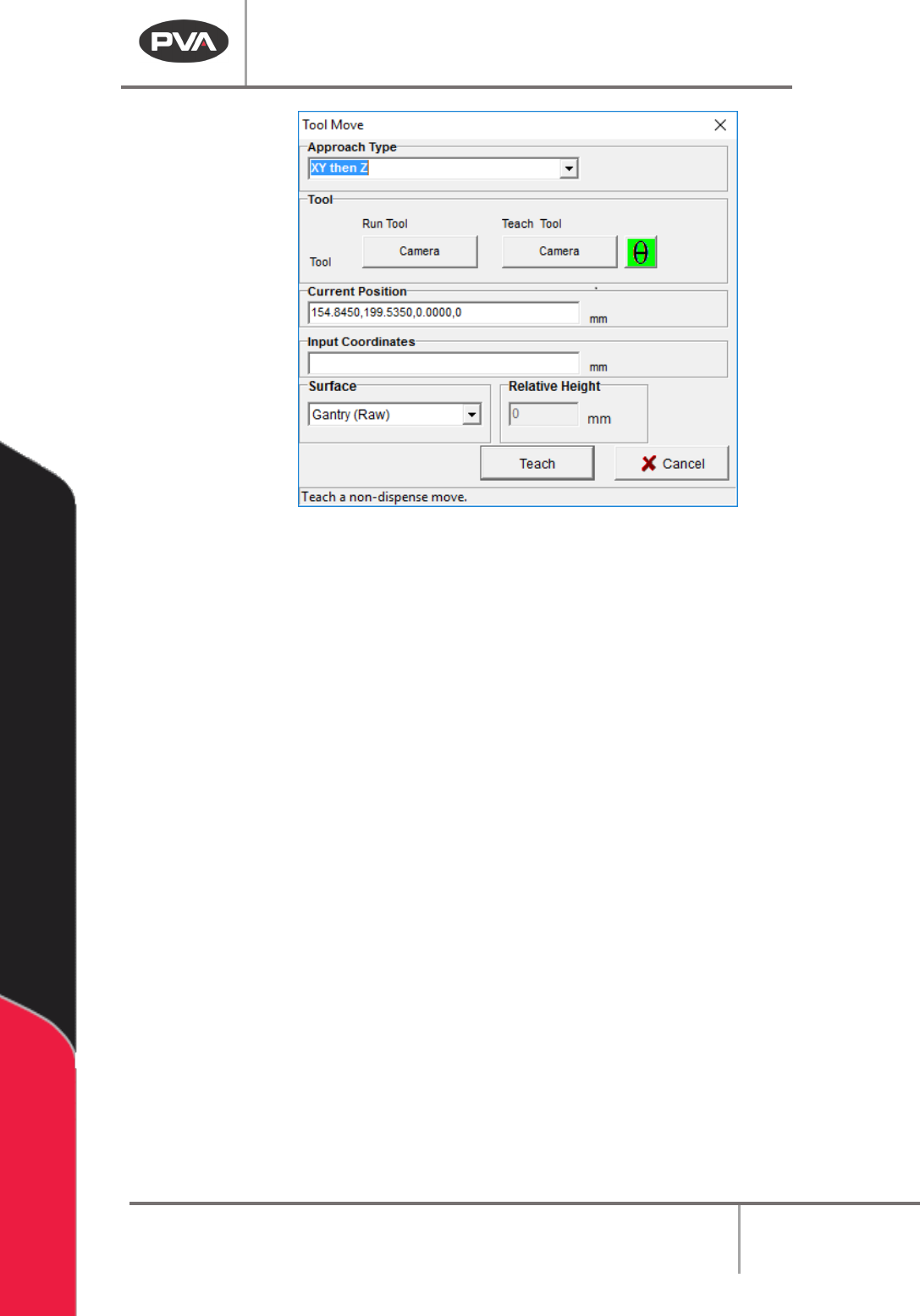
Figure 87: Tool Move
2. Select the Approach Type.
3. Select the Run Tool. Select (double click) the necessary tool from the Tool Selection
window.
4. Select the Teach Tool if necessary. Select (double click) the necessary tool from the
Tool Selection window.
5. Select “θ” to move the selected tool to the calibrated W-axis position (theta).
NOTE: The “θ” button will only be available on 4-axis machines. When you use the “Teach
Tool” (virtual tool 0) it is not necessary to select this button.
6. Select the Surface from the drop-down menu. Gantry (Raw) uses the current Z
height, Calibrated Z uses the calibrated Z height, Gantry (Relative) the user to sets a
move in Z axis relative to the taught position (mostly used for knit-line finishing).
7. Use the teach pendant or input the commands in the Input Coordinates box and
select “
Teach”.
8. Click “Teach” at the next move point as necessary.
9. Select “Done” to close the window.
10. To edit a Move command, double click on the path and change the command in the
edit window. Refer to Section 7.5.
Machine Operation Manual
Revision L /
February 2020
Page 82 of 200
2D Path
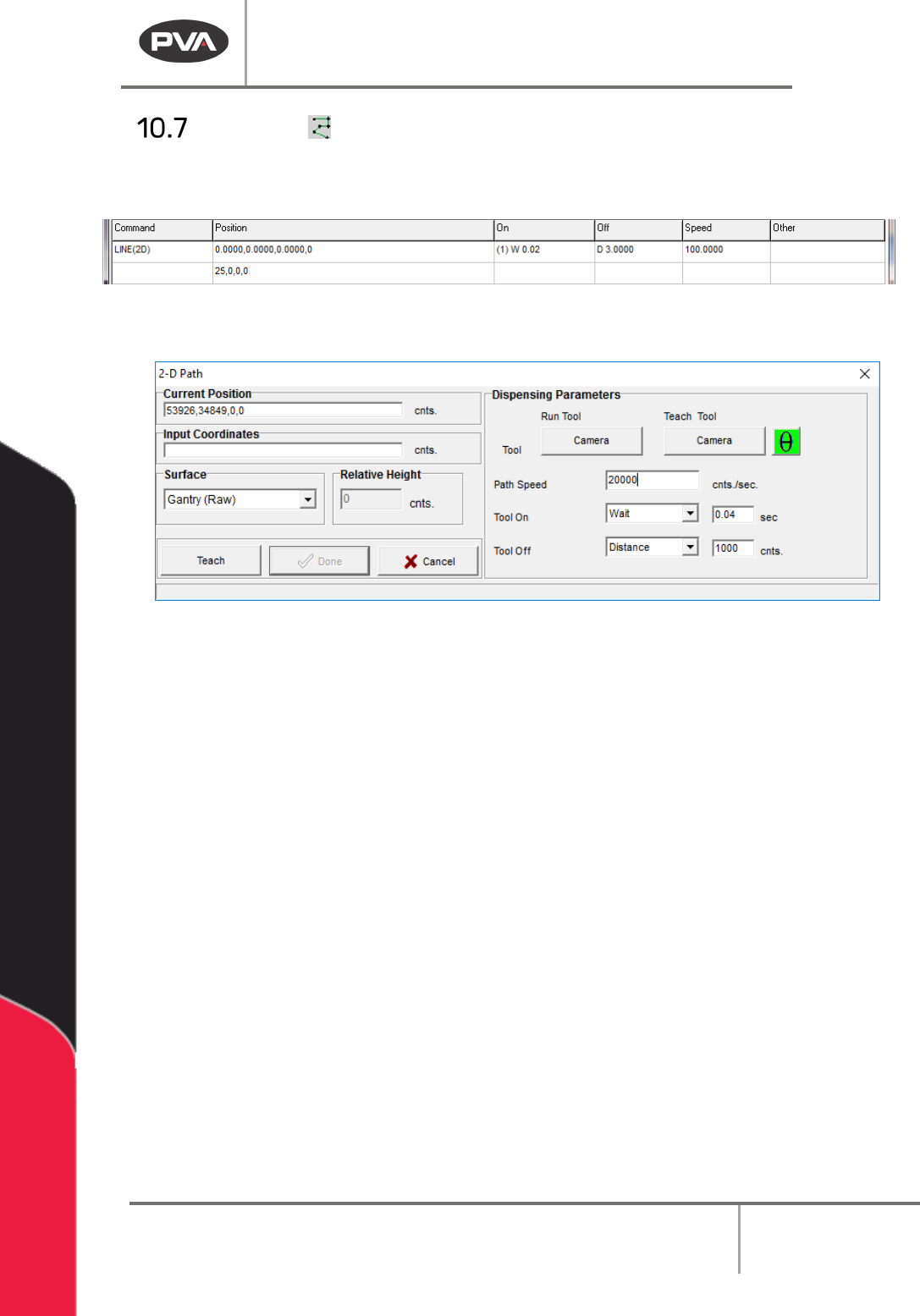
This tool teaches 2D path segments. The Z-axis does not change its position in the path.
Refer to Section 10.1 for definitions of the tool functions.
Figure 88: Programmed 2D Line Command
13. Select the 2D Path function.
Figure 89: Teach 2D Line
14. Select the Run Tool. Select (double click) the necessary tool from the Tool Selection
window. Refer to
Figure 68.
15. Select the Teach Tool if necessary. Select (double click) the necessary tool from the
Tool Selection window. Refer to
Figure 68.
16. Select “θ” to move the selected tool to the calibrated W-axis position (theta).
NOTE: The “θ” button will only be available on 4-axis machines. When you use the “Teach
Tool” (virtual tool 0) it is not necessary to select this button.
17. Select the Surface from the drop-down menu. In some units, you can set the
Relative Height.
18. Set the Path Speed.
19. Set the Tool On to “Wait” or “Distance” and set the time or distance in the box.
20. Set the Tool Off to “Wait” or “Distance” and set the time or distance in the box.
21. Select the “Teach” button or use the teach pendant to input the commands in the
Input Coordinates box.
22. Select “Done” to save the changes, or “Cancel” to exit and not save changes.
23. To edit a 2-D path, double click on the path and edit in the window shown. Refer to
Section 7.5.