2OM-1075-002.pdf - 第61页
1 . 3 Discharge of P .C.B. (1) The components-placed P .C.B. is carried out to the R conveyor . At the same time, a new P .C.B. is carried to the P .C.B. positioning section from the L conveyor . Fig. 2B17 (2) The compon…
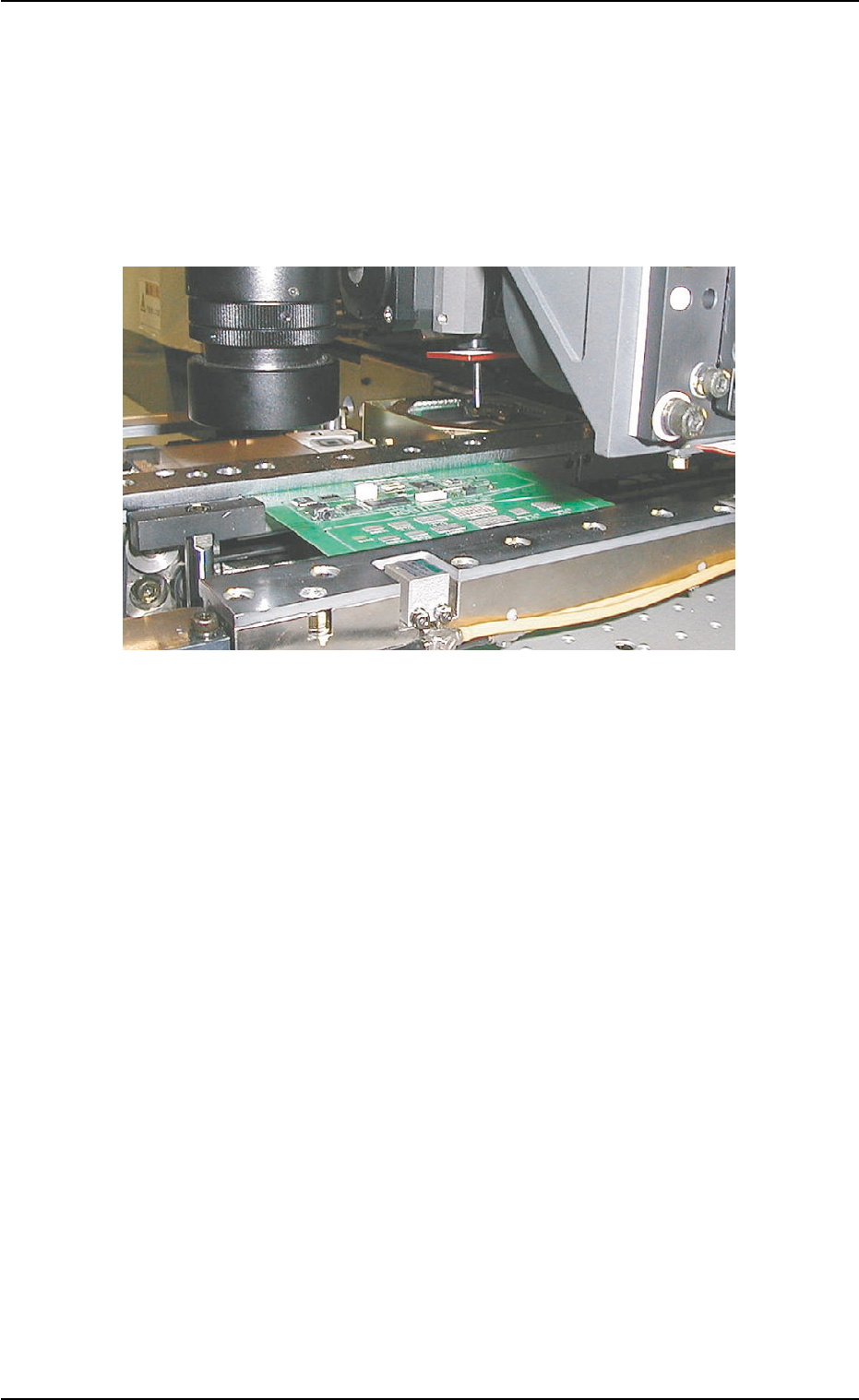
1.2.4 Component Placement
P.C.B. Positioning Section: Component Placement
• The heads move to the area over the placement coordinates on the
P.C.B. specified in the pattern program.
The deviation (X, Y) of the pick-up position (measured through the
component recognition) is also corrected at this time.
Fig. 2B16 Movement to Area over Placement Coordinates
• When a component is placed, the lowest limit of the required nozzle
is controlled according to the component library data.
• The vacuum valve closes, air blows out from the nozzle, and the
component is placed on the P.C.B.
0206-002 2-11
AHB01ESPP
1.2 Component Placement (starting with preparation for component picks)
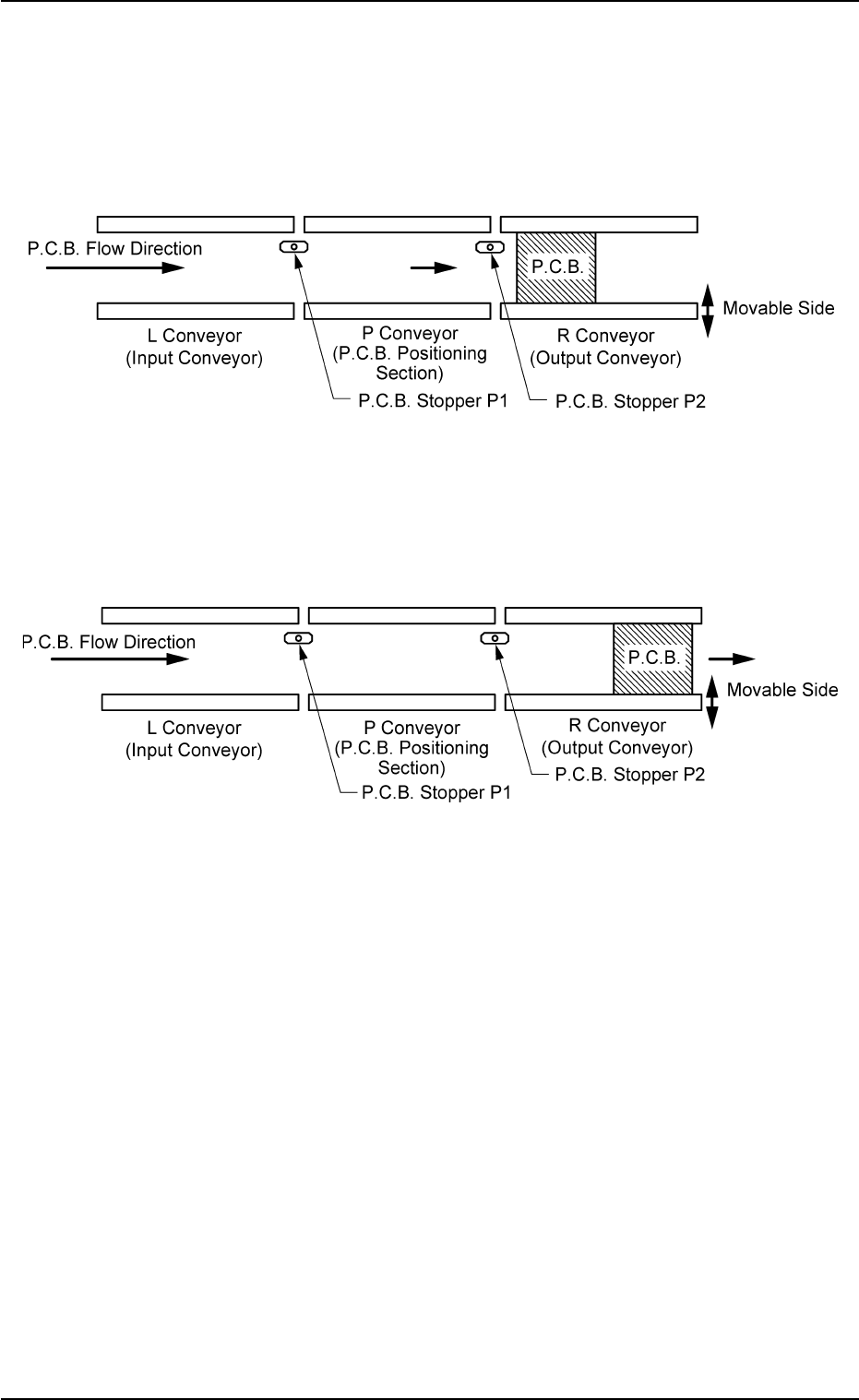
1.3 Discharge of P.C.B.
(1) The components-placed P.C.B. is carried out to the R conveyor.
At the same time, a new P.C.B. is carried to the P.C.B. positioning
section from the L conveyor.
Fig. 2B17
(2) The components-placed P.C.B. on the R conveyor is transferred to
the output machine by the R conveyor.
Fig. 2B18
0206-003 2-12
AHB01ESPP
1.3 Discharge of P.C.B.
2. Various Functions
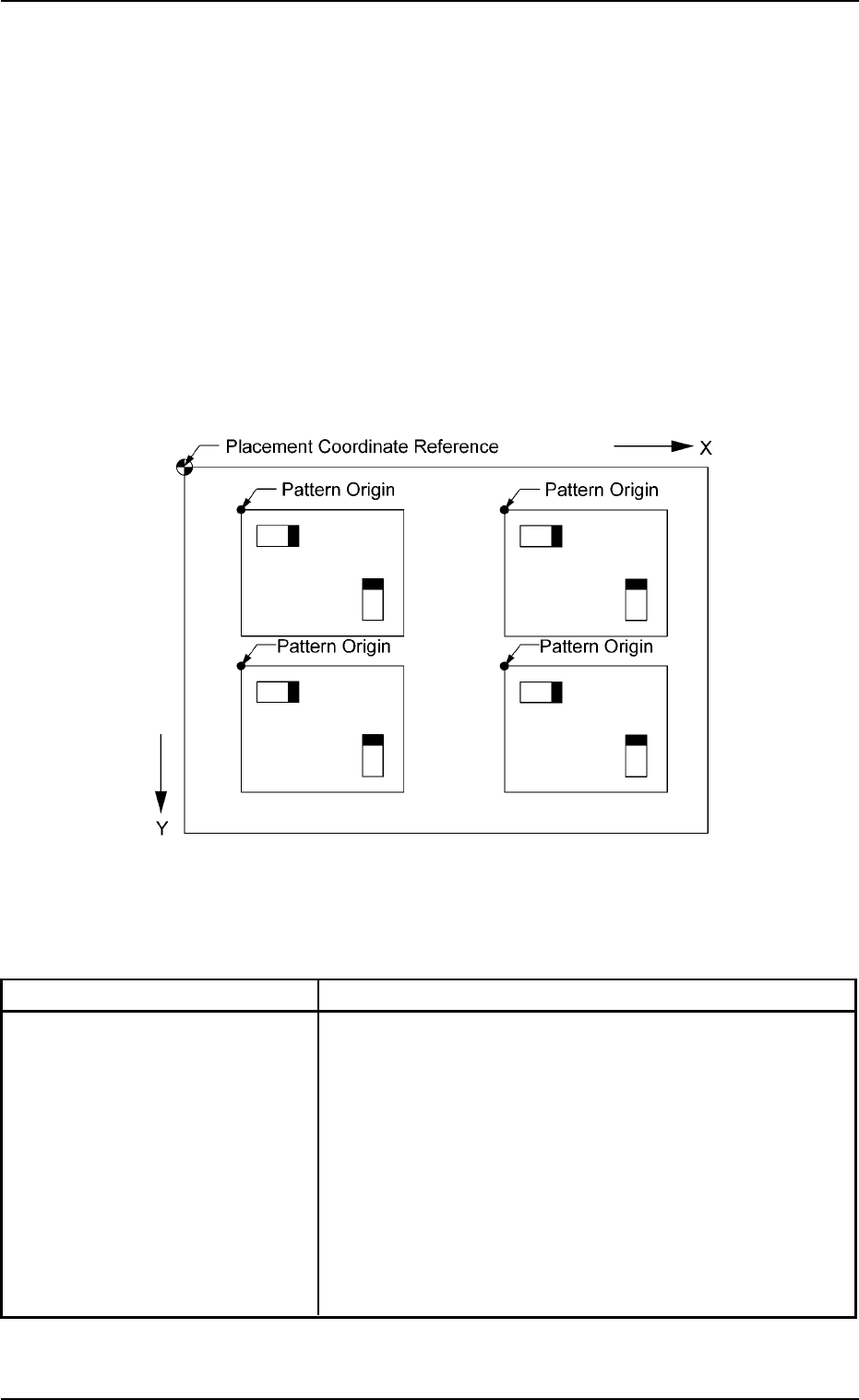
2.1 Equivalent Repetitive Pattern Function
Pattern program data for unit P.C.B.’s (same repetitive patterns) can
easily be created through a combination of coordinate data of repetitive
placement patterns and each placement pattern origin.
• The equivalent repetitive pattern function can be used when four pieces
of unit P.C.B.’s are arranged, forming constant patterns as shown
below and the same types of components are placed on each unit
P.C.B.
Fig. 2B19
• How to use the equivalent repetitive pattern function
Table 2B1
Step Reference
1. Creating a Pattern Program
(1) "2.1 Types of P.C.B.’s and Required Data" in "Section
2" of "Vol. 3: Programming and Machine Data"
(2) "2.5 Placement Data" in "Section 2" of "Vol. 3: Program-
ming and Machine Data"
• C01 Placement Data Un
• C02 Placement Data (P-data)
• C03 Placement Data (O-data)
(3) "3. Example of Pattern Program Creation" in "Section
2" of "Vol. 3: Programming and Machine Data"
• "3.3 Repetitive Patterns"
0206-002 2-13 AHB01ESPP
2.1 Equivalent Repetitive Pattern Function