00196044-05 - sg x und x4i fse_en.pdf - 第243页
C&P20A Parts Overview with Function Descr iption Overview S tudent Guide (FSE) SIPL ACE X Series and X4I Edition 01/2009 EN C&P20A 243 Component Sensor Functions Pickup Process : When the Z axis m oves downward…
C&P20A
Overview Parts Overview with Function Description
Student Guide (FSE) SIPLACE X Series and X4I
C&P20A Edition 01/2009 EN
242
7.2.3.3 Return unit
Return unit functions
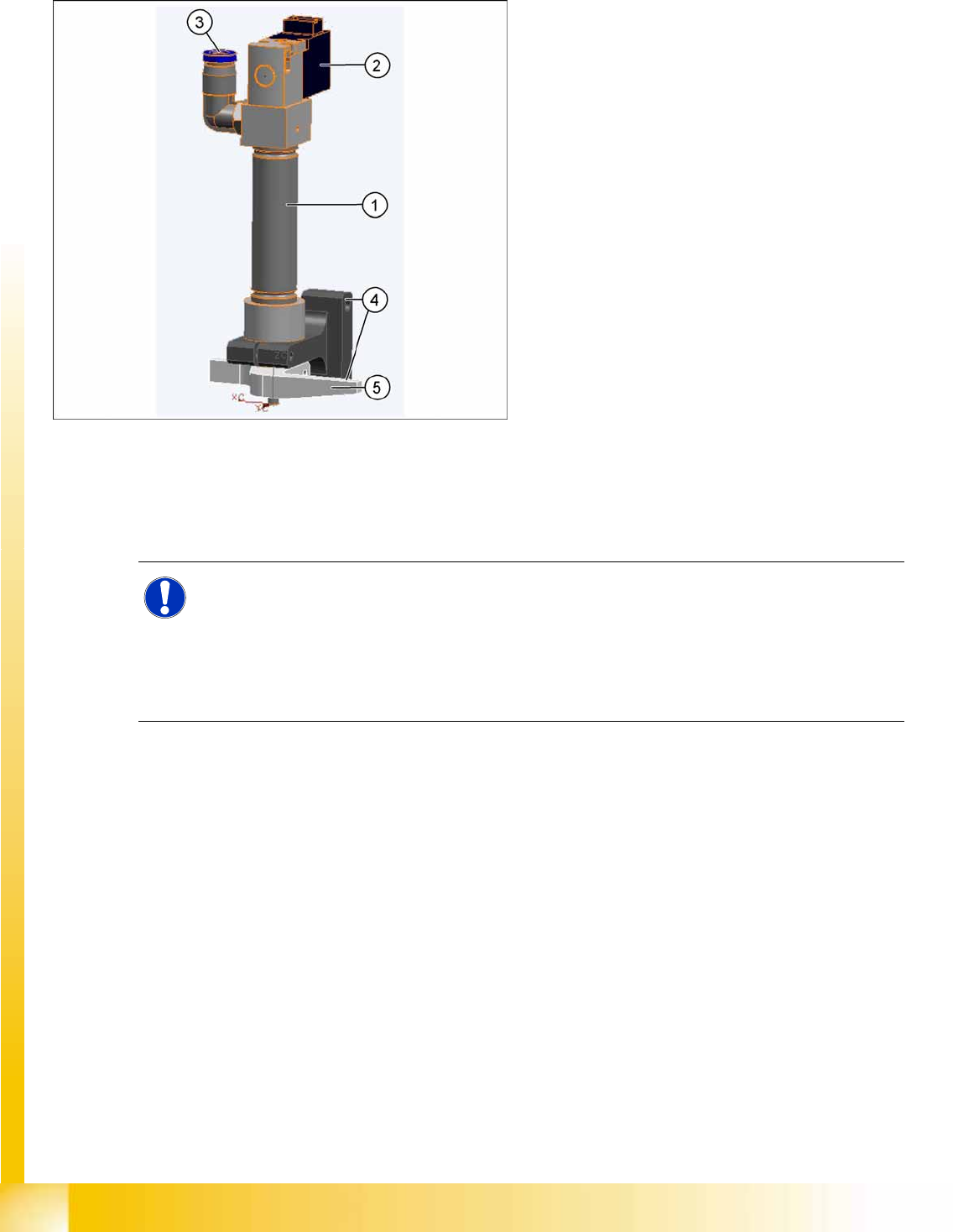
At zero current, the bearing friction of the Z axis is not sufficient to protect the axis from falling down. A
pneumatic return system has been installed to protect the Z axis should the gantry be moved when the
machine is switched off. This return unit keeps the Z axis in the safe, upper position during zero current.
7.2.3.4 Component sensor
The component sensor is a standard feature on the C&P20A head and no longer an option as in the DLM
heads. Also, the function and position of the component sensor is different to that for the DLM heads.
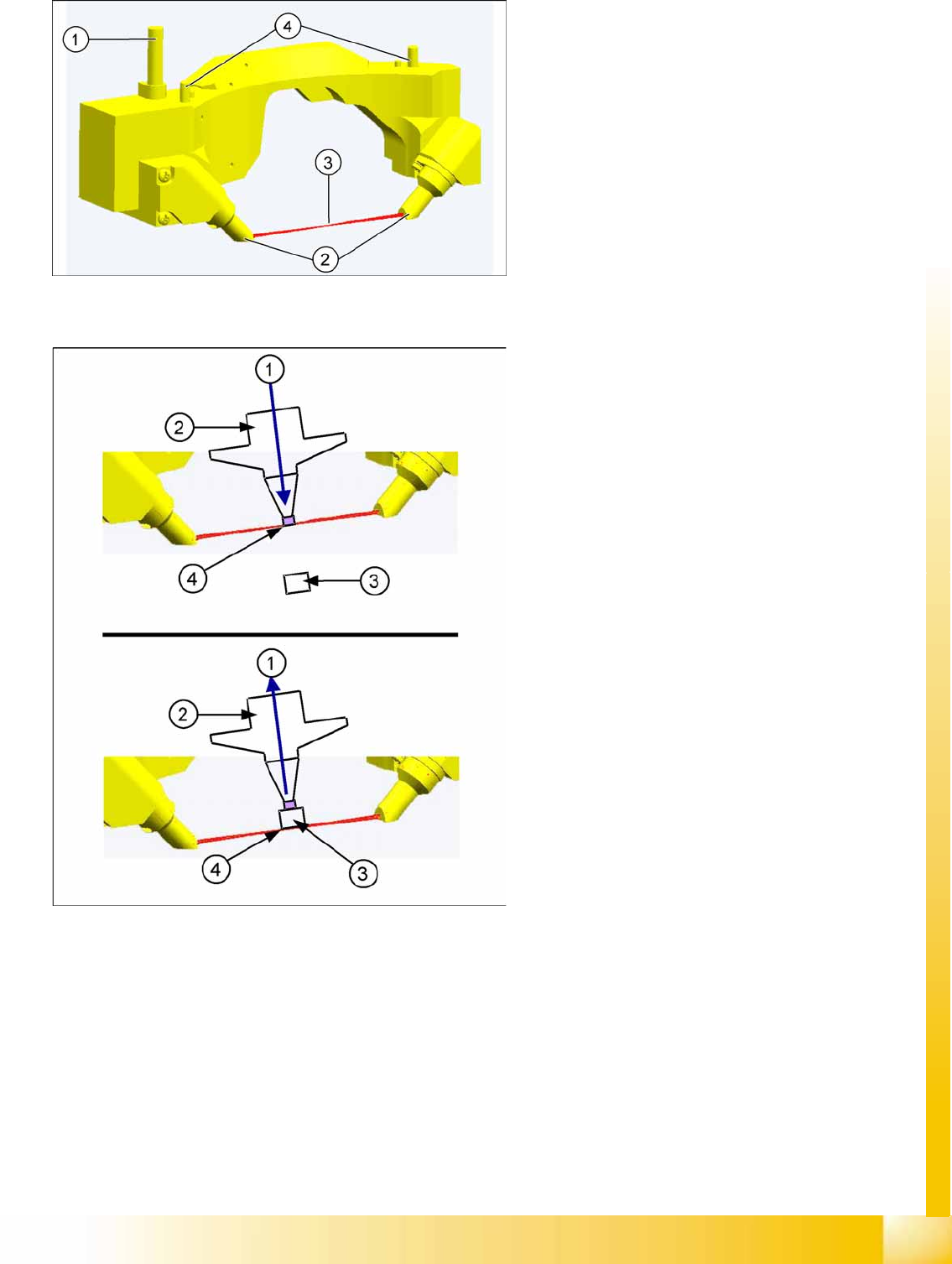
The component sensor is in the pickup/place position and the Z axis moves during the upwards and
downwards movement of the laser beam. If the laser beam is interrupted or when it is released again,
the exact Z axis position is read out and the corresponding evaluation started.
(Before Pick up: No Component on the nozzle, After Pick up: Component on the nozzle;
Placement: Component still on the nozzle, After placement: No Component on the nozzle)
Legend
1. Pneumatic cylinder
2. Solenoid valve
3. Compressed air connection
4. Return unit fixtures
5. Z axis driver
The return unit is installed on the Z axis and is
responsible for protecting the Z axis from damage,
by moving it into a safe area in the case of
unexpected events e.g. power cuts or machine
shutdown.
The return unit is fixed with two screws and can be
easily replaced during service work.
NOTE:
The Z axis control system is designed to ensure that, should the machine power supply fail (or
be switched off), there is always enough power temporarily stored by the Z motor servo unit and
axis controller board to move the Z axis to the upper position.
Power failure is recognized by the issuance of a "Power fail" signal. This "Power fail" signal
enables the relevant function (upwards movement and activation of the return unit) on the axis
controller board.
C&P20A
Parts Overview with Function Description Overview
Student Guide (FSE) SIPLACE X Series and X4I
Edition 01/2009 EN C&P20A
243
Component Sensor Functions
Pickup Process:
When the Z axis moves downwards, the nozzle interrupts the laser beam. At this exact moment, the
Z axis position is recorded and compared to the reference value, to see whether there is still a
component on the nozzle. If the Z axis position indicates that there is a component on the nozzle,
the Z axis will be immediately stopped. An error message will be issued or the component will be
rejected. When the Z axis moves upwards again, the laser beam is released and the Z position
recorded. Based on the Z position during downwards movement, the system can now determine the
presence and height of a component.
Placement Process:
During the placement process, the system checks whether the component is at the nozzle/whether
placement has been performed on the component.
Component sensor
In its standard state, the component sensor is
installed in the pickup-placement position on
the C&P20A head.
The sensor is fixed to the head with two
screws and can be replaced as a complete unit
during service work.
Legend
1. Power/data supply cable
2. Transmitter and receiver unit
3. Laser beam
4. Fixture to housing
Legend
1. Downwards (top diagram) or upwards (bottom
diagram) movement
2. Nozzle
3. Component
4. Read out Z position, if the IR beam is
interrupted (top diagram) or has been released
again (bottom diagram).
The component sensor determines the
component and nozzle height during the
placement process.
The component sensor signal is directly linked to
the measurement signal of the Z axis incremental
encoder.
C&P20A
Overview Parts Overview with Function Description
Student Guide (FSE) SIPLACE X Series and X4I
C&P20A Edition 01/2009 EN
244
7.2.3.5 Star Assembly
Star carrier
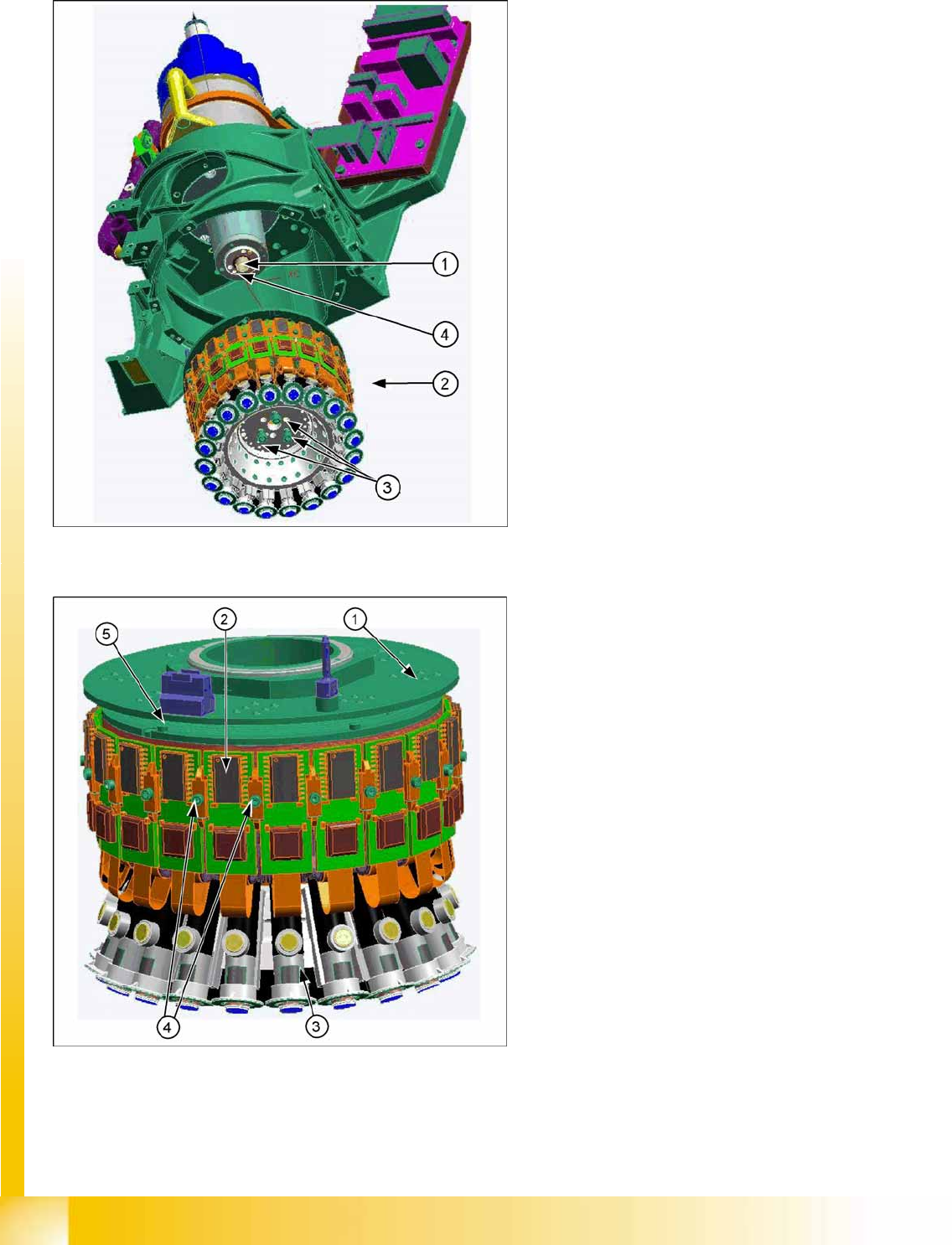
The mechanical E/D transformer (1) consists of a stationary and a rotating part. The 6 sliding contacts
transmit direct voltage (24V/4A), ground and CAN bus signals (CAN high, CAN low). The E/D
transformer can be replaced during service work.
E/D transformer (collector ring) (03007834-0x]
Legend
1. Motor shaft (1)
2. Star Assembly
3. Screws (3) mounting the star unit to the motor
shaft
4. Smoothed distributor disc
The star consists of the star carrier, on which the
20 DP drives are located, the motherboard and the
E/D transformer.
This complete unit is fixed to the motor shaft with
three screws and can be removed for service work
after the raceway has been dismounted.
Above the star you will find the E/D
transformer (1) for supplying energy and data
to the DP drives.
The motherboard is located behind the control
boards (2) of the DP drives (3) and is
responsible for controlling and positioning the
DP drives.
The control board is plugged into the
motherboard and is fixed via the two brackets
(4).
Two screws fix the complete DP drive unit from
inside, to the star frame.
An index screw (5) ensures that the ED
transformer is correctly positioned during
assembly.