JX-350_EPU使用说明书.pdf - 第71页
EPU Instruction M anual C hapter 4 Creating a Production Progr am 4- 23 (2) Multi - pl ane non - matrix PWB (set as “ No n - mat rix circ uit ” on t he “ Basic setting ” scr een) The angle of each circuit is diff erent f…
EPU Instruction Manual Chapter 4 Creating a Production Program
4-22
13) PWB height, PWB thickness, and Back height
Enter these fields in the same manner as those for a single-plane PWB.
Example: Data entry for a multi-plane matrix PWB
The following examples indicate a PWB whose reference circuit is at the left bottom
corner, and whose circuit origin is at the left bottom corner of a circuit.]
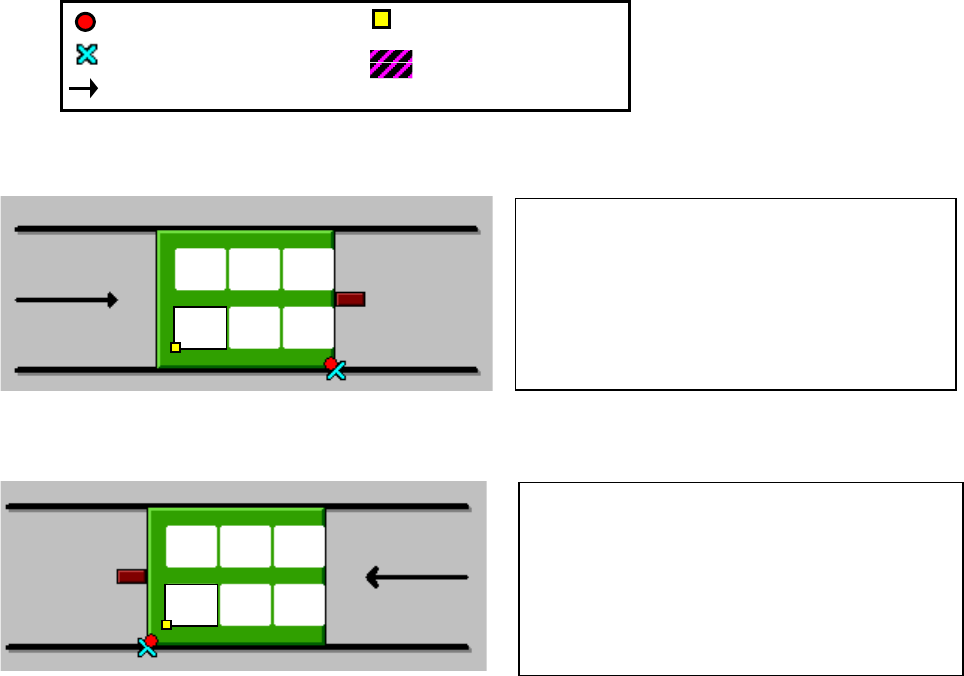
① For front reference and PWB transport direction of L → R: (when “Shape reference” is
selected as the “Positioning method” on the “Basic setting” screen)
② For front reference and PWB transport direction of R → L: (when “Shape reference” is
selected as the “Positioning method” on the “Basic setting” screen)
PWB dimensions X=200 Y=120
PWB layout offset X=5 Y=−5
Circuit dimension X=50 Y=30
Ckt. Layout offset X=0 Y=0
First circuit position X=−170 Y=15
Circuit divide No X=3 Y=2
Circuit pitch X=60 Y=50
PWB dimensions X=200 Y=120
PWB layout offset X=−5 Y=−5
Circuit dimension X=50 Y=30
Ckt. Layout offset X=0 Y=0
First circuit position X=20 Y=15
Circuit divide No X=3 Y=2
Circuit pitch X=60 Y=50
:PWB position reference
:
Transport direction
:Circuit origin
:Reference circuit
:Layout end
EPU Instruction Manual Chapter 4 Creating a Production Program
4-23
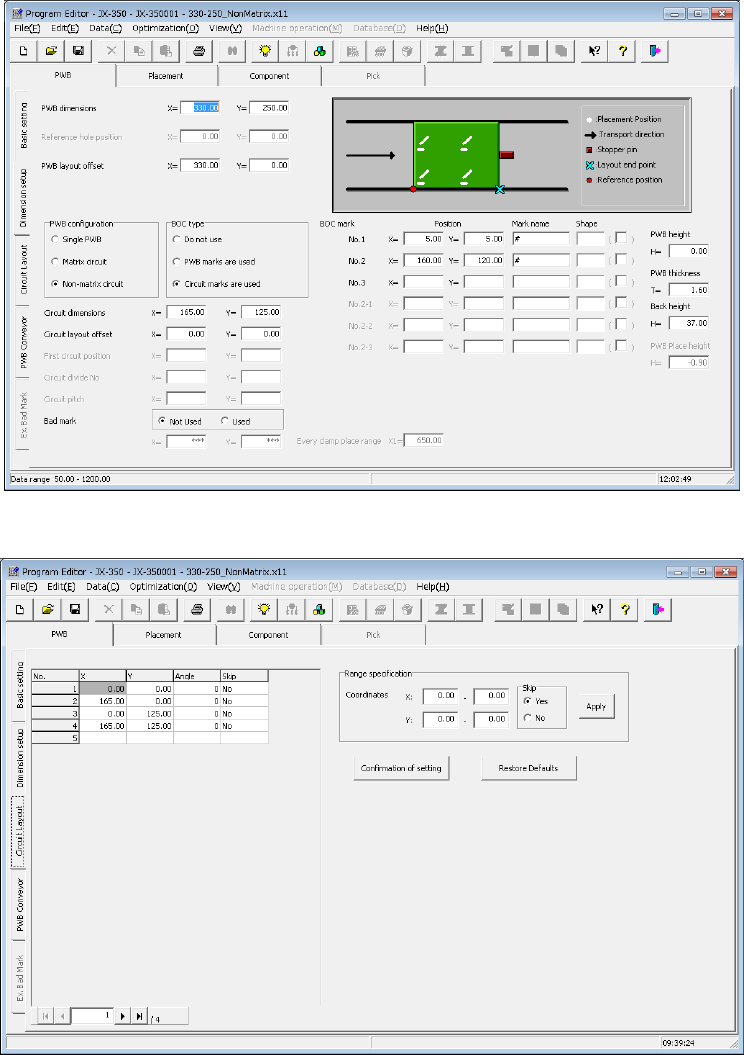
(2) Multi-plane non-matrix PWB
(set as “Non-matrix circuit” on the “Basic setting” screen)
The angle of each circuit is different from each other and the distance (pitch) between
circuits is not equal on this type of PWB (see the example on the next page).
The system places each circuit on a PWB one by one according to the specified X
and Y angles with regarding the PWB origin as the reference position. Therefore,
the system can handle the different pitch or the different circuit angle from other ones.
If you specify the same circuit pitch and angle, you can create PWB data for a
multi-plane matrix PWB also.
- Length setting screen
- Circuit layout screen
EPU Instruction Manual Chapter 4 Creating a Production Program
4-24
1) PWB dimensions:
Enter the dimensions of the PWB including all circuits.
2) Reference hole position:
* Not used in JX-350.
3) PWB layout offset:
In the same manner as a single-plane PWB, enter the position of the PWB layout
endpoint viewed from the PWB origin.
4) PWB configuration:
Select the “Non-matrix circuit” radio button.
5) BOC type:
Select the radio button in the same manner as when you select the “Matrix circuit”
in the “PWB configuration” column.
♦ Do not use: Select this radio button if you do not use a BOC mark at all.
♦ PWB marks/ref. ckt marks are used: Select this radio button if you are to
correct the coordinates of a component placement position with using BOC
marks.
♦ Circuit marks are used: Select this radio button if you are to correct a
component placement position with recognizing BOC marks on each circuit of
a multi-plane (circuit) board. When there are many circuits on a board, this
selection requires much time to recognize marks, but the accuracy of
component placement tends to be higher than that when you select the “PWB
marks/ref. ckt marks are used” radio button.
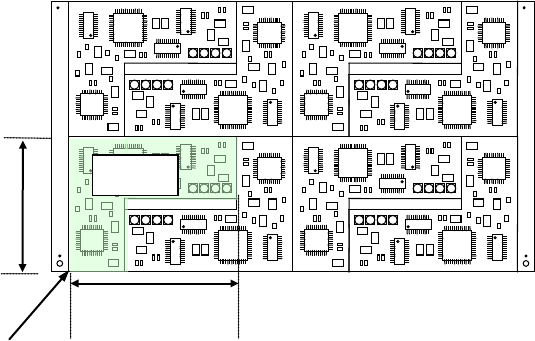
6) Circuit dimensions:
Enter the dimensions of a circuit (the dimensions that include all placement
coordinates).
Example)
7) Circuit layout offset:
Enter the distance from the circuit origin of the reference circuit to the left bottom
corner (this is an always fixed point regardless of the PWB transport direction) of
the reference circuit.
8) First circuit position, Circuit divide No., Circuit pitch:
You do not have to set these fields when you select the “Non-matrix circuit” radio
button in the “PWB configuration” (they are not available).
When you select the “Matrix circuit” radio button, enter a value in each field.
Circuit dimension X
Circuit dimension Y
Circuit layout offset
Reference
circuit