IPC-TM-650 EN 2022 试验方法--.pdf - 第117页
shall shall Figure 2 Chemical Resistance T est Pattern with Halfwa y Line Marking Example Immersion Line T ab end Immerse this end IPC-TM-650 Page 2 of 3 Number 2.3.2 Subject Chemical Resistance of Flexible Printed Board…
IPC-TM-650
IPC-TM-650
shall
shall
shall
shall
shall
shall
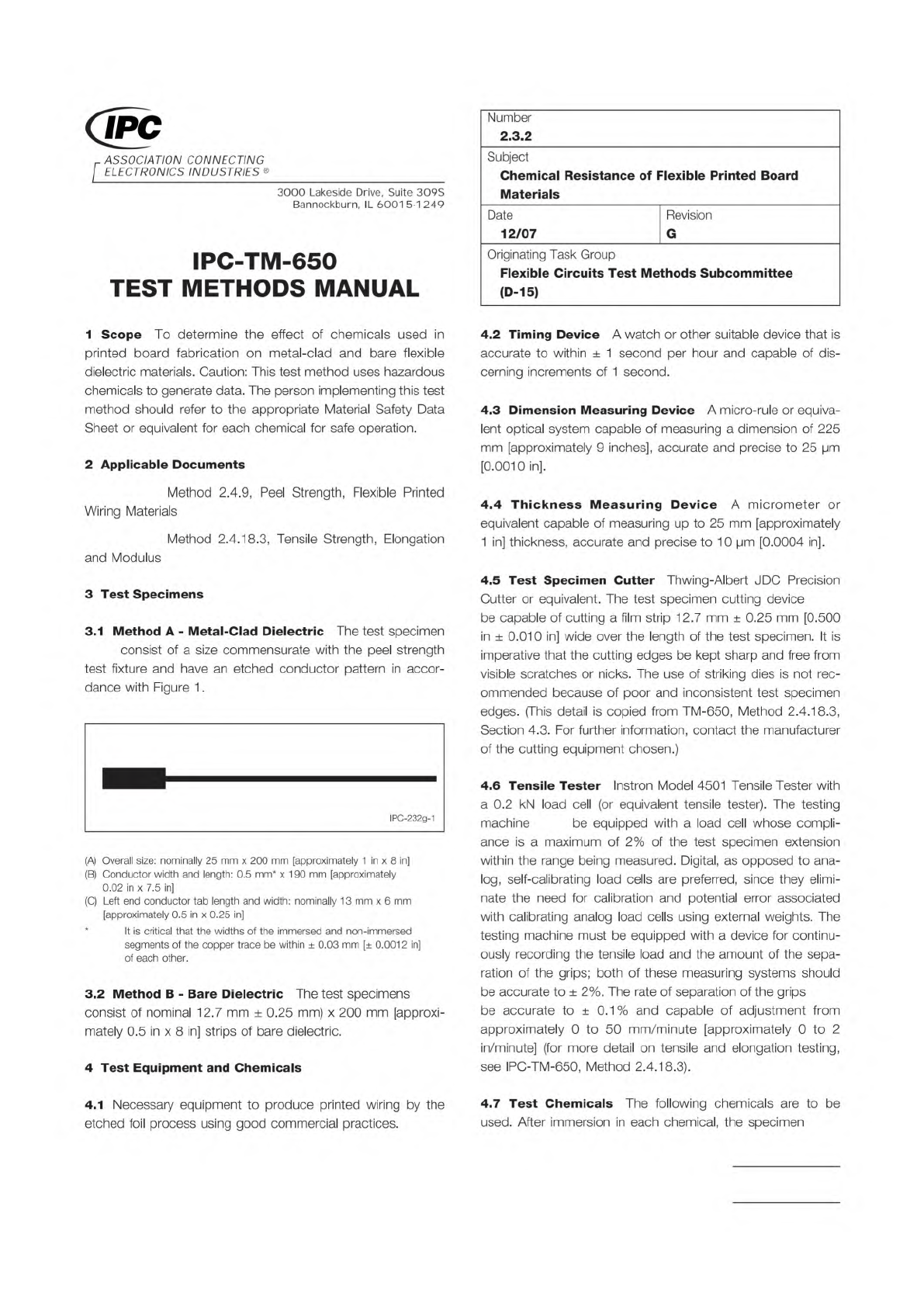
Figure 1 Chemical Resistance Test Pattern
NOTE:
Material in this Test Methods Manual was voluntarily established by Technical Committees of IPC. This material is advisory only
and its use or adaptation is entirely voluntary. IPC disclaims all liability of any kind as to the use, application, or adaptation of this
material. Users are also wholly responsible for protecting themselves against all claims or liabilities for patent infringement.
Equipment referenced is for the convenience of the user and does not imply endorsement by IPC.
Page 1 of 3
r
ASSOCIATION
CONNECTING
/
ELECTRONICS
INDUSTRIES
®
3000
Lakeside
Drive,
Suite
309S
Bannockburn,
IL
6001
5-1
249
IPC-TM-650
TEST
METHODS
MANUAL
1
Scope
To
determine
the
effect
of
chemicals
used
in
printed
board
fabrication
on
metal-clad
and
bare
flexible
dielectric
materials.
Caution:
This
test
method
uses
hazardous
chemicals
to
generate
data.
The
person
implementing
this
test
method
should
refer
to
the
appropriate
Material
Safety
Data
Sheet
or
equivalent
for
each
chemical
for
safe
operation.
2
Applicable
Documents
Method
2.4.9,
Peel
Strength,
Flexible
Printed
Wiring
Materials
Method
2.4.18.3,
Tensile
Strength,
Elongation
and
Modulus
3
Test
Specimens
3.1
Method
A
-
Metal-Clad
Dielectric
The
test
specimen
consist
of
a
size
commensurate
with
the
peel
strength
test
fixture
and
have
an
etched
conductor
pattern
in
accor¬
dance
with
Figure
1
.
IPC-232g-1
(A)
Overall
size:
nominally
25
mm
x
200
mm
[approximately
1
in
x
8
in]
(B)
Conductor
width
and
length:
0.5
mm*
x
190
mm
[approximately
0.02
in
x
7.5
in]
(C)
Left
end
conductor
tab
length
and
width:
nominally
13
mm
x
6
mm
[approximately
0.5
in
x
0.25
in]
*
It
is
critical
that
the
widths
of
the
immersed
and
non-immersed
segments
of
the
copper
trace
be
within
土
0.03
mm
[±
0.0012
in]
of
each
other.
3.2
Method
B
-
Bare
Dielectric
The
test
specimens
consist
of
nominal
12.7
mm
±
0.25
mm)
x
200
mm
[approxi¬
mately
0.5
in
x
8
in]
strips
of
bare
dielectric.
4
Test
Equipment
and
Chemicals
4.1
Necessary
equipment
to
produce
printed
wiring
by
the
etched
foil
process
using
good
commercial
practices.
Number
2.3.2
Subject
Chemical
Resistance
of
Flexible
Printed
Board
Materials
Date
12/07
Revision
G
Originating
Task
Group
Flexible
Circuits
Test
Methods
Subcommittee
(D-15)
4.2
Timing
Device
A
watch
or
other
suitable
device
that
is
accurate
to
within
土
1
second
per
hour
and
capable
of
dis¬
cerning
increments
of
1
second.
4.3
Dimension
Measuring
Device
A
micro-rule
or
equiva¬
lent
optical
system
capable
of
measuring
a
dimension
of
225
mm
[approximately
9
inches],
accurate
and
precise
to
25
pm
[0.0010
in].
4.4
Thickness
Measuring
Device
A
micrometer
or
equivalent
capable
of
measuring
up
to
25
mm
[approximately
1
in]
thickness,
accurate
and
precise
to
10
pm
[0.0004
in].
4.5
Test
Specimen
Cutter
Thwing-Albert
J
DC
Precision
Cutter
or
equivalent.
The
test
specimen
cutting
device
be
capable
of
cutting
a
film
strip
12.7
mm
±
0.25
mm
[0.500
in
±
0.01
0
in]
wide
over
the
length
of
the
test
specimen.
It
is
imperative
that
the
cutting
edges
be
kept
sharp
and
free
from
visible
scratches
or
nicks.
The
use
of
striking
dies
is
not
rec¬
ommended
because
of
poor
and
inconsistent
test
specimen
edges.
(This
detail
is
copied
from
TM-650,
Method
2.4.18.3,
Section
4.3.
For
further
information,
contact
the
manufacturer
of
the
cutting
equipment
chosen.)
4.6
Tensile
Tester
Instron
Model
4501
Tensile
Tester
with
a
0.2
kN
load
cell
(or
equivalent
tensile
tester).
The
testing
machine
be
equipped
with
a
load
cell
whose
compli¬
ance
is
a
maximum
of
2%
of
the
test
specimen
extension
within
the
range
being
measured.
Digital,
as
opposed
to
ana¬
log,
self-calibrating
load
cells
are
preferred,
since
they
elimi¬
nate
the
need
for
calibration
and
potential
error
associated
with
calibrating
analog
load
cells
using
external
weights.
The
testing
machine
must
be
equipped
with
a
device
for
continu¬
ously
recording
the
tensile
load
and
the
amount
of
the
sepa¬
ration
of
the
grips;
both
of
these
measuring
systems
should
be
accurate
to
土
2%.
The
rate
of
separation
of
the
grips
be
accurate
to
±
0.1%
and
capable
of
adjustment
from
approximately
0
to
50
mm/m
inute
[approximately
0
to
2
in/minute]
(for
more
detail
on
tensile
and
elongation
testing,
see
IPC-TM-650,
Method
2.4.18.3).
4.7
Test
Chemicals
The
following
chemicals
are
to
be
used.
After
immersion
in
each
chemical,
the
specimen
shall
shall
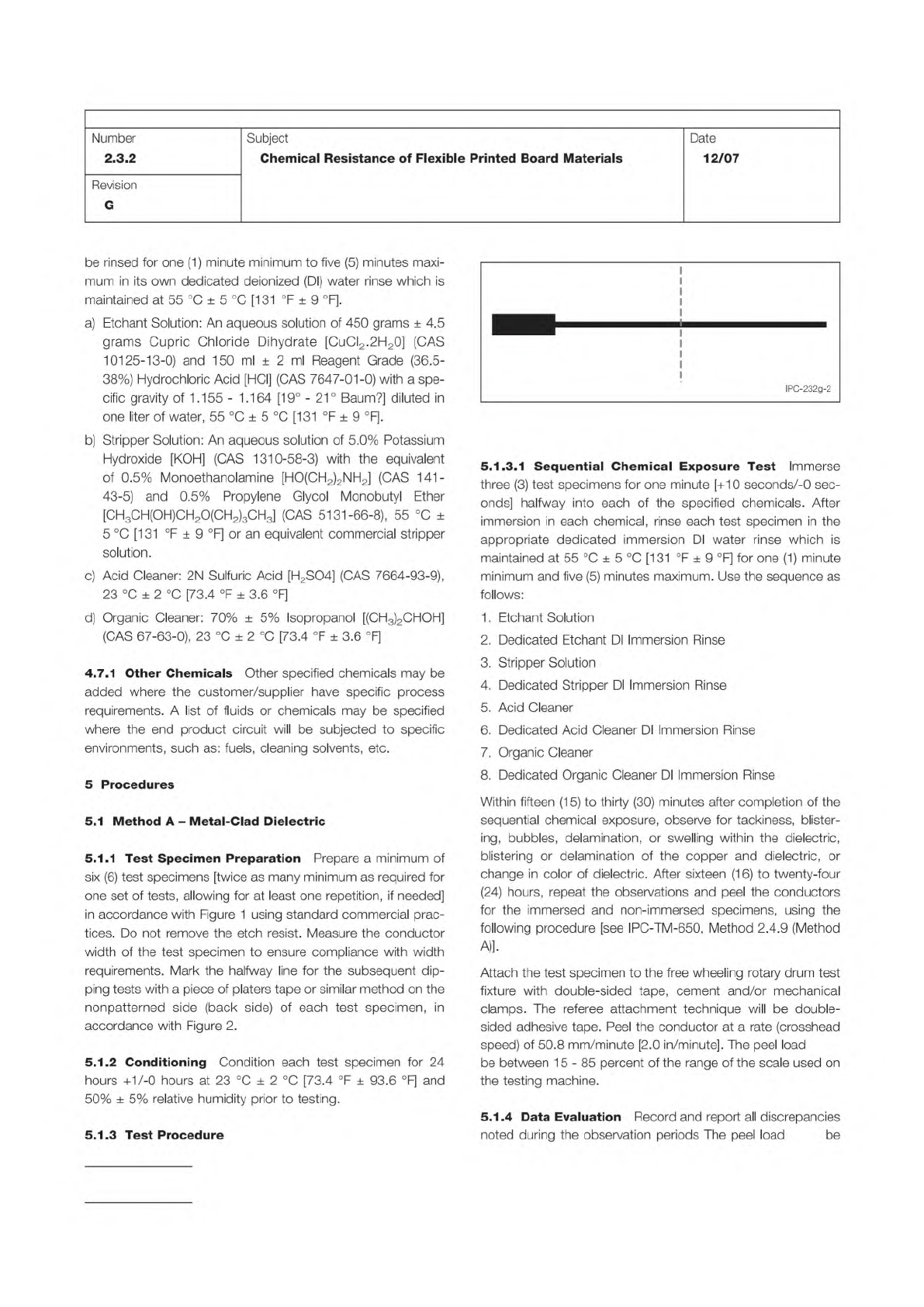
Figure 2 Chemical Resistance Test Pattern with Halfway
Line Marking Example
Immersion Line
Tab end Immerse this end
IPC-TM-650
Page 2 of 3
Number
2.3.2
Subject
Chemical
Resistance
of
Flexible
Printed
Board
Materials
Date
12/07
Revision
G
be
rinsed
for
one
(1)
minute
minimum
to
five
(5)
minutes
maxi¬
mum
in
its
own
dedicated
deionized
(DI)
water
rinse
which
is
maintained
at
55
±
5
[131
°F
±
9
°F]-
a)
Etchant
Solution:
An
aqueous
solution
of
450
grams
土
4.5
grams
Cupric
Chloride
Dihydrate
[CuCI2-2H20]
(CAS
10125-13-0)
and
150
ml
±
2
ml
Reagent
Grade
(36.5-
38%)
Hydrochloric
Acid
[HCI]
(CAS
7647-01-0)
with
a
spe¬
cific
gravity
of
1.155
-
1.164
[19°
-
21°
Baum?]
diluted
in
one
liter
of
water,
55
±
5
[131
°F
±
9
°F].
b)
Stripper
Solution:
An
aqueous
solution
of
5.0%
Potassium
Hydroxide
[KOH]
(CAS
1310-58-3)
with
the
equivalent
of
0.5%
Monoethanolamine
[H0(0H2)2NH2]
(CAS
141-
43-5)
and
0.5%
Propylene
Glycol
Monobutyl
Ether
[0H3CH(0H)CH20(CH2)3CH3]
(CAS
5131-66-8),
55
土
5
[131
°F
±
9
°F]
or
an
equivalent
commercial
stripper
solution.
c)
Acid
Cleaner:
2N
Sulfuric
Acid
[H2SO4]
(CAS
7664-93-9),
23
±
2
[73.4
°F
±
3.6
°F]
d)
Organic
Cleaner:
70%
±
5%
Isopropanol
[(CH3)2CH0H]
(CAS
67-63-0),
23
±
2
[73.4
°F
±
3.6
°F]
4.7.1
Other
Chemicals
Other
specified
chemicals
may
be
added
where
the
customer/supplier
have
specific
process
requirements.
A
list
of
fluids
or
chemicals
may
be
specified
where
the
end
product
circuit
will
be
subjected
to
specific
environments,
such
as:
fuels,
cleaning
solvents,
etc.
5
Procedures
5.1
Method
A
-
Metal-Clad
Dielectric
5.1.1
Test
Specimen
Preparation
Prepare
a
minimum
of
six
(6)
test
specimens
[twice
as
many
minimum
as
required
for
one
set
of
tests,
allowing
for
at
least
one
repetition,
if
needed]
in
accordance
with
Figure
1
using
standard
commercial
prac¬
tices.
Do
not
remove
the
etch
resist.
Measure
the
conductor
width
of
the
test
specimen
to
ensure
compliance
with
width
requirements.
Mark
the
halfway
line
for
the
subsequent
dip¬
ping
tests
with
a
piece
of
platers
tape
or
similar
method
on
the
nonpatterned
side
(back
side)
of
each
test
specimen,
in
accordance
with
Figure
2.
5.1.2
Conditioning
Condition
each
test
specimen
for
24
hours
+1/-0
hours
at
23
±
2
[73.4
°F
±
93.6
°F]
and
50%
±
5%
relative
humidity
prior
to
testing.
5.1.3
Test
Procedure
1
1
1
1
1
1
1
1
1
1
IPC-232g-2
5.1.
3.1
Sequential
Chemical
Exposure
Test
Immerse
three
(3)
test
specimens
for
one
minute
[+10
seconds/-。
sec¬
onds]
halfway
into
each
of
the
specified
chemicals.
After
immersion
in
each
chemical,
rinse
each
test
specimen
in
the
appropriate
dedicated
immersion
DI
water
rinse
which
is
maintained
at
55
±
5
[131
°F
±
9
°F]
for
one
(1)
minute
minimum
and
five
(5)
minutes
maximum.
Use
the
sequence
as
follows:
1.
Etchant
Solution
2.
Dedicated
Etchant
DI
Immersion
Rinse
3.
Stripper
Solution
4.
Dedicated
Stripper
DI
Immersion
Rinse
5.
Acid
Cleaner
6.
Dedicated
Acid
Cleaner
DI
Immersion
Rinse
7.
Organic
Cleaner
8.
Dedicated
Organic
Cleaner
DI
Immersion
Rinse
Within
fifteen
(1
5)
to
thirty
(30)
minutes
after
completion
of
the
sequential
chemical
exposure,
observe
for
tackiness,
blister¬
ing,
bubbles,
delamination,
or
swelling
within
the
dielectric,
blistering
or
delamination
of
the
copper
and
dielectric,
or
change
in
color
of
dielectric.
After
sixteen
(16)
to
twenty-four
(24)
hours,
repeat
the
observations
and
peel
the
conductors
for
the
immersed
and
non-immersed
specimens,
using
the
following
procedure
[see
IPC-TM-650,
Method
2.4.9
(Method
A)].
Attach
the
test
specimen
to
the
free
wheeling
rotary
drum
test
fixture
with
double-sided
tape,
cement
and/or
mechanical
clamps.
The
referee
attachment
technique
will
be
double¬
sided
adhesive
tape.
Peel
the
conductor
at
a
rate
(crosshead
speed)
of
50.8
mm/m
inute
[2.0
in/minute].
The
peel
load
be
between
15-85
percent
of
the
range
of
the
scale
used
on
the
testing
machine.
5.1.4
Data
Evaluation
Record
and
report
all
discrepancies
noted
during
the
observation
periods
The
peel
load
be
shall
shall
†
NOTE:
shall
shall
IPC-TM-650
Page 3 of 3
Number
2.3.2
Subject
Chemical
Resistance
of
Flexible
Printed
Board
Materials
Date
12/07
Revision
G
continuously
recorded,
and
the
recorded
load
for
the
entire
length
of
peeled
conductor
be
evaluated
by
averaging
the
chart
recording
values
for
each
segment
(immersed
and
non-immersed)
of
each
test
specimen.
A
minimum
of
57.2
mm
[approximately
2.25
in]
be
peeled
for
each
seg¬
ment,
with
the
first
6.4
mm
[approximately
0.25
in]
to
be
dis¬
regarded.
Compare
the
average
peel
strengths
of
the
immersed
segments
of
the
three
(3)
test
traces
with
those
of
the
non-immersed
segments
of
the
same
three
(3)
test
traces,
in
accordance
with
the
following
formula:
[Average
Peel
Strengths
of
three
(3)
immersed
test
trace
segments]
x
1
00
=
%
of
Originalt
[Average
Peel
Strengths
of
three
(3)
non-immersed
test
trace
segments]
Values
may
be
higher
than
100%,
which
may
indicate
chemical
absorption.
5.2
Method
B
-
Bare
Dielectric
5.2.1
Test
Specimen
Preparation
Cut
twelve
(12)
test
specimens,
as
per
3.2.
This
allows
for
at
least
one
full
repeti¬
tion
of
tests,
if
needed.
5.2.2
Conditioning
Condition
each
specimen
for
24
hours
at
23
±
2
[73.4
°F
土
3.6
°F]
and
50%
土
5%
relative
humidity
prior
to
testing.
5.2.3
Test
Procedure
5.2.3.
1
Sequential
Chemical
Exposure
Test
Fully
immerse
three
(3)
test
specimens
for
one
minute
[+10
seconds/-。
seconds]
into
each
of
the
specified
chemicals
on
a
sequential
basis.
After
immersion
in
each
chemical,
rinse
the
specimen
in
the
appropriate
dedicated
immersion
DI
water
rinse
which
is
maintained
at
55
±
5
[131
°F
±
9
°F]
for
one
(1)
minute
minimum
and
five
(5)
minutes
maximum.
Use
the
sequence
as
follows:
1.
Etchant
Solution
2.
Dedicated
Etchant
DI
Immersion
Rinse
3.
Stripper
Solution
4.
Dedicated
Stripper
DI
Immersion
Rinse
5.
Acid
Cleaner
6.
Dedicated
Acid
Cleaner
DI
Immersion
Rinse
7.
Organic
Cleaner
8.
Dedicated
Organic
Cleaner
DI
Immersion
Rinse
Within
fifteen
(15)
to
thirty
(30)
minutes
after
completion
of
the
sequential
chemical
exposure,
observe
for
tackiness,
blister¬
ing,
bubbles,
delamination,
or
swelling
within
the
dielectric
or
change
in
color
of
dielectric.
After
sixteen
(16)
to
twenty-four
(24)
hours,
repeat
the
observations
and
determine
the
tensile
strength
and
elongation
using
the
procedure
as
described
in
IPC-TM-650,
Method
2.4.18.3.
5.2.4
Data
Evaluation
Record
and
report
all
discrepancies
noted
during
the
observation
periods.
The
evaluation
is
con¬
sidered
to
have
passed
when
the
immersed
specimens
meet
or
exceed
the
minimum
tensile
strength
and
elongation
requirements
for
the
material
under
test.
If
the
immersed
test
specimens
do
not
pass,
then
the
non-immersed
specimens
be
tested
for
both
tensile
strength
and
elongation
to
verify
that
these
parameters
pass
the
requirements
for
the
material
under
test.
If
the
non-immersed
test
specimens
do
not
pass,
then
the
lot
of
bare
dielectric,
represented
by
the
test
specimens,
be
rejected.