IPC-TM-650 EN 2022 试验方法--.pdf - 第329页
ASTM B-36 IPC J-STD-004 IPC/EIA J-STD-006 Material in this T est M ethods Manual was voluntarily establis hed by T echni cal Committees of IPC. Thi s mat erial is a dvisory only and its use or adaptation is entirely volu…
IPC-TM-650 Test Methods Manual
The Institute for Interconnecting and Packaging Electronic Circuits
2215 Sanders Road • Northbrook, IL 60062-6135
Material in this Test Methods Manual was voluntarily established by Technical Committees of the IPC. This material is advisory only
and its use or adaptation is entirely voluntary. IPC disclaims all liability of any kind as to the use, application, or adaptation of this
material. Users are also wholly responsible for protecting themselves against all claims or liabilities for patent infringement.
Equipment referenced is for the convenience of the user and does not imply endorsement by the IPC.
Page 1 of 1
IPC-TM-650
TEST
METHODS
MANUAL
1
.0
Scope
Determine
the
ability
of
a
solder
paste
to
wet
an
oxidized
copper
surface
and
to
qualitatively
examine
the
amount
of
spatter
of
the
solder
paste
during
reflow.
2
.0
Applicable
Documents
None
2.4.43
Solder
Paste
—
Solder
Ball
Test
3
.0
Test
Specimen
7
.6
cm
x
2.5
cm
x
0.8
mm
specimen
of
1
ounce
oxygen-free
high
conductivity
(OFHC)
copper.
4
.0
Equipment/Materials/Apparatus
Flat
hot
plate
Specimen
tongs
Beaker
400
cc
Magnifying
glass
with
1
0
times
magnification
Liquid
copper
cleaner
Deionized
water
Isopropyl
alcohol
Solvent
for
residual
flux
removal
4.1
Stencil
76
mm
x
25
mm
x
0.2
mm
provided
with
at
least
3
round
holes
or
6.5
mm
diameter
aperature
with
a
minimum
between
centers
of
10
mm.
5
.0
Procedure
5.1
Preparation
5.1.1
The
specimen
shall
be
cleaned
with
a
liquid
copper
cleaner,
washed
thoroughly
with
water,
rinsed
with
isopropyl
alcohol,
dried
and
then
placed
in
boiling
deionized
water
for
10
minutes
and
air
dried
5.2
Test
Number
2.4.45
Subject
Solder
Paste
—
Wetting
Test
Date
Revision
1/95
Originating
Task
Group
Solder
Paste
Task
Group
(5-24b)
5.2.2
Reflow
using
the
procedure
outlined
in
paragraph
523.2
of
IPC-TM-650,
Test
Method
2.4.43.
5.2.3
After
reflow,
the
residual
flux
shall
be
removed
with
a
suitable
solvent.
5.3
Evaluation
When
examined
visually
at
1
0X,
the
solder
shall
uniformly
wet
the
copper
and
there
should
be
no
evi¬
dence
of
dewetting
or
non-wetting
of
the
copper
and
there
shall
be
no
solder
spatter
around
the
printed
dots.
5.2.1
Place
stencil
on
test
specimen
and
print
solder
paste
test
pattern.
ASTM B-36
IPC J-STD-004
IPC/EIA J-STD-006
Material in this Test Methods Manual was voluntarily established by Technical Committees of IPC. This material is advisory only
and its use or adaptation is entirely voluntary. IPC disclaims all liability of any kind as to the use, application, or adaptation of this
material. Users are also wholly responsible for protecting themselves against all claims or liabilities for patent infringement.
Equipment referenced is for the convenience of the user and does not imply endorsement by IPC.
Page 1 of 2
r
ASSOCIATION
CONNECTING
/
ELECTRONICS
INDUSTRIES
®
221
5
Sanders
Road
Northbrook,
IL
60062-6135
IPC-TM-650
TEST
METHODS
MANUAL
1
Scope
This
test
method
will
give
an
indication
of
activity
of
wave
solder
fluxes,
core
solder
fluxes,
and
solder
paste.
2
Applicable
Documents
Brass
Plate,
Sheet,
Strip,
and
Rolled
Bar
Requirements
for
Soldering
Fluxes
Requirements
for
Electronic
Grade
sol¬
der
Alloys
and
Fluxed
and
Non-Fluxed
Solid
Solders
for
Elec¬
tronic
Soldering
Applications
3
Test
Specimen
3.1
A
minimum
of
10
ml
of
first
article
or
production
speci¬
men
of
liquid
flux.
3.2
For
solid
or
paste
flux,
1
0
ml
of
a
35%
by
weight
solu¬
tion
of
the
flux
in
reagent
grade
2-propanol
(or
other
solvent
recommended
by
the
manufacturer)
(see
J
-STD-004).
3.3
For
solder
paste,
10
ml
of
a
25%
by
weight
solution
of
the
reflowed
solder
paste
flux
in
reagent
grade
2-propanol
(or
other
solvent
recommended
by
the
manufacturer)
(see
J-STD-004).
3.4
For
cored
wire,
10
ml
of
a
10%
by
weight
solution
of
reflowed
cored
solder
flux
in
reagent
grade
2-propanol
(or
other
solvent
recommended
by
the
manufacturer).
For
low
solids,
no
clean
fluxes
a
5%
solution
shall
be
used
(see
J-STD-004).
3.5
For
preform,
10
ml
of
a
10%
by
weight
solution
of
reflowed
preform
flux
in
reagent
grade
2-propanol
(or
other
solvent
recommended
by
the
manufacturer).
For
low
solids,
no
clean
fluxes
a
5%
solution
shall
be
used
(see
J-STD-004).
4
Apparatus
and
Reagents
4.1
Five
(5)
replicates,
approximately
40
x
75
mm
[1
.575
x
2.953
in],
of
0.25
mm
[0.00984
in]
thick
70/30
brass,
per
ASTM-B-36
C2600
HO2.
Number
2.4.46
Subject
Spread
Test,
Liquid,
Paste
or
Solid
Flux,
or
Flux
Extracted
from
Solder
Paste,
Cored
Wires
or
Preforms
Date
06/04
Revision
A
Originating
Task
Group
Flux
Specifications
Task
Group,
(5-24a)
4.3
Sn60
1.5
mm
[0.0591
in]
diameter
Type
S
solid
wire
solder
per
J-STD-006.
4.4
Solder
pot
containing
at
least
2
kg
of
solder
and
no
less
than
25
mm
[0.984
in]
in
depth.
4.5
Reagent
grade
isopropyl
alcohol
(I
PA).
4.6
3.0
mm
[0.1
18
in]
diameter
mandrel.
5
Test
5.1
Specimen
Preparation
5.1.1
Clean
the
five
(5)
brass
coupons
with
steel
wool.
5.1.2
Using
a
flat
strip
of
brass
as
a
guide,
put
a
90°
bend
in
opposite
ends
of
each
test
coupon
to
stiffen
and
flatten
the
coupon.
5.1.3
Cut
a
30
±
0.5
mm
[1.181
±
0.020
in]
length
of
solid
wire
solder.
5.1
.4
Wrap
the
cut
length
of
solder
around
a
3.0
mm
[0.1
18
in]
mandrel.
5.1
.5
Slide
the
perform
(coil)
off
of
the
mandrel.
Make
a
total
of
five
solder
performs
in
this
manner.
5.2
Procedures
5.2.1
Maintain
solder
pot
at
260
±
10
[500
±
18
°F].
5.2.2
Place
a
preformed
solder
circle
in
the
center
of
a
test
coupon
(on
the
surface
which
faces
up
when
the
bent
ends
point
up).
5.2.3
Place
one
drop
(0.05
ml)
of
flux
in
the
center
of
the
perform
and
allow
to
dry
to
minimize
spattering.
5.2.4
Carefully
place
the
coupon
on
the
surface
of
the
sol¬
der
bath
for
1
5
seconds.
If
the
solder
has
not
melted
in
1
5
seconds,
leave
the
coupon
on
the
solder
bath
until
the
per¬
form
melts.
4.2
Degreased
steel
wool
#00.
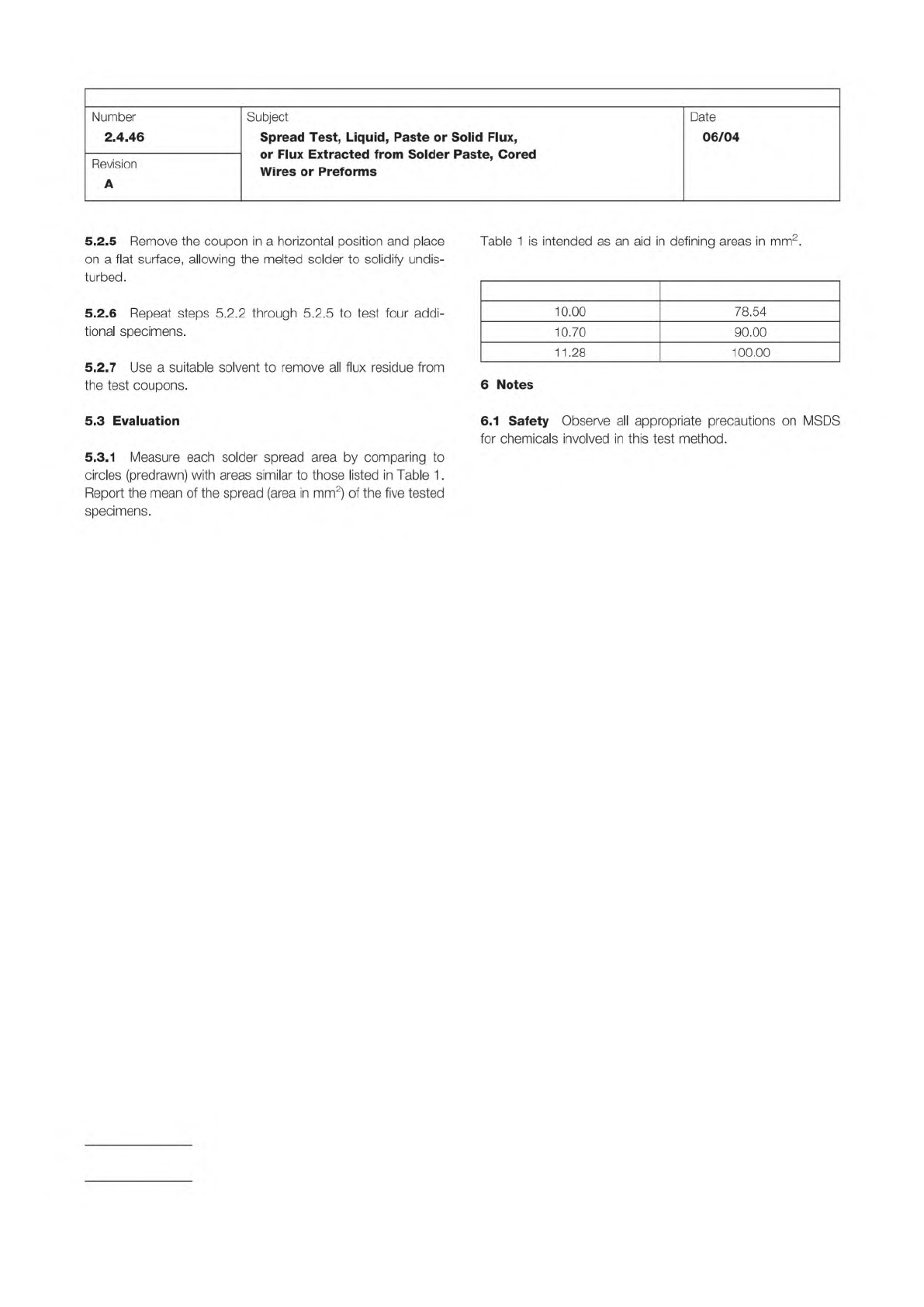
Table 1 Typical Spread Areas Defined in mm
2
Diameter in mm Area in mm
2
IPC-TM-650
Page 2 of 2
Number
2.4.46
Subject
Spread
Test,
Liquid,
Paste
or
Solid
Flux,
or
Flux
Extracted
from
Solder
Paste,
Cored
Wires
or
Preforms
Date
06/04
Revision
A
5.2.5
Remove
the
coupon
in
a
horizontal
position
and
place
on
a
flat
surface,
allowing
the
melted
solder
to
solidify
undis¬
turbed.
5.2.6
Repeat
steps
5.2.2
through
525
to
test
four
addi¬
tional
specimens.
5.2.7
Use
a
suitable
solvent
to
remove
all
flux
residue
from
the
test
coupons.
5.3
Evaluation
5.3.1
Measure
each
solder
spread
area
by
comparing
to
circles
(predrawn)
with
areas
similar
to
those
listed
in
Table
1
.
Report
the
mean
of
the
spread
(area
in
mm2)
of
the
five
tested
specimens.
Table
1
is
intended
as
an
aid
in
defining
areas
in
mm2.
6
Notes
10.00
78.54
10.70
90.00
11.28
100.00
6.1
Safety
Observe
all
appropriate
precautions
on
MSDS
for
chemicals
involved
in
this
test
method.