IPC-TM-650 EN 2022 试验方法--.pdf - 第142页
T a ble 1 Cloth No. Nominal Width Inches Thickness Inch Weight Per Square Y ard Ounces Y arn, W arp, and Fill Construction Minimum Breaking Strength Per Inch of Width Y ards per Standard Roll T ype of Weave W arp Pounds …
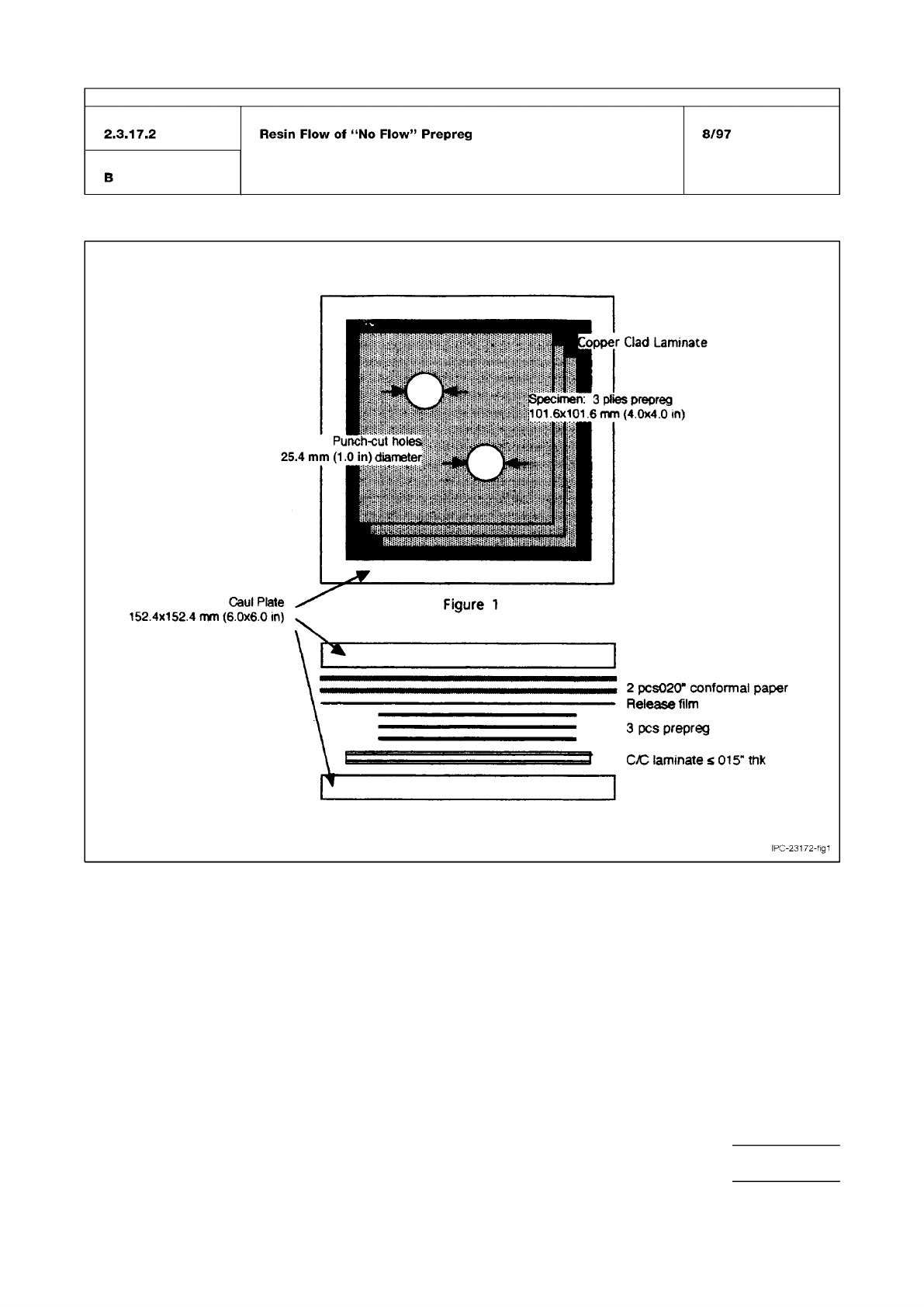
Figure 1
IPC-TM-650
Number
Subject Date
Revision
Page 3 of 3
2.3.17.2
Resin
Flow
of
“No
Flow"
Prepreg
8/97
B
IPC-23172-fig1
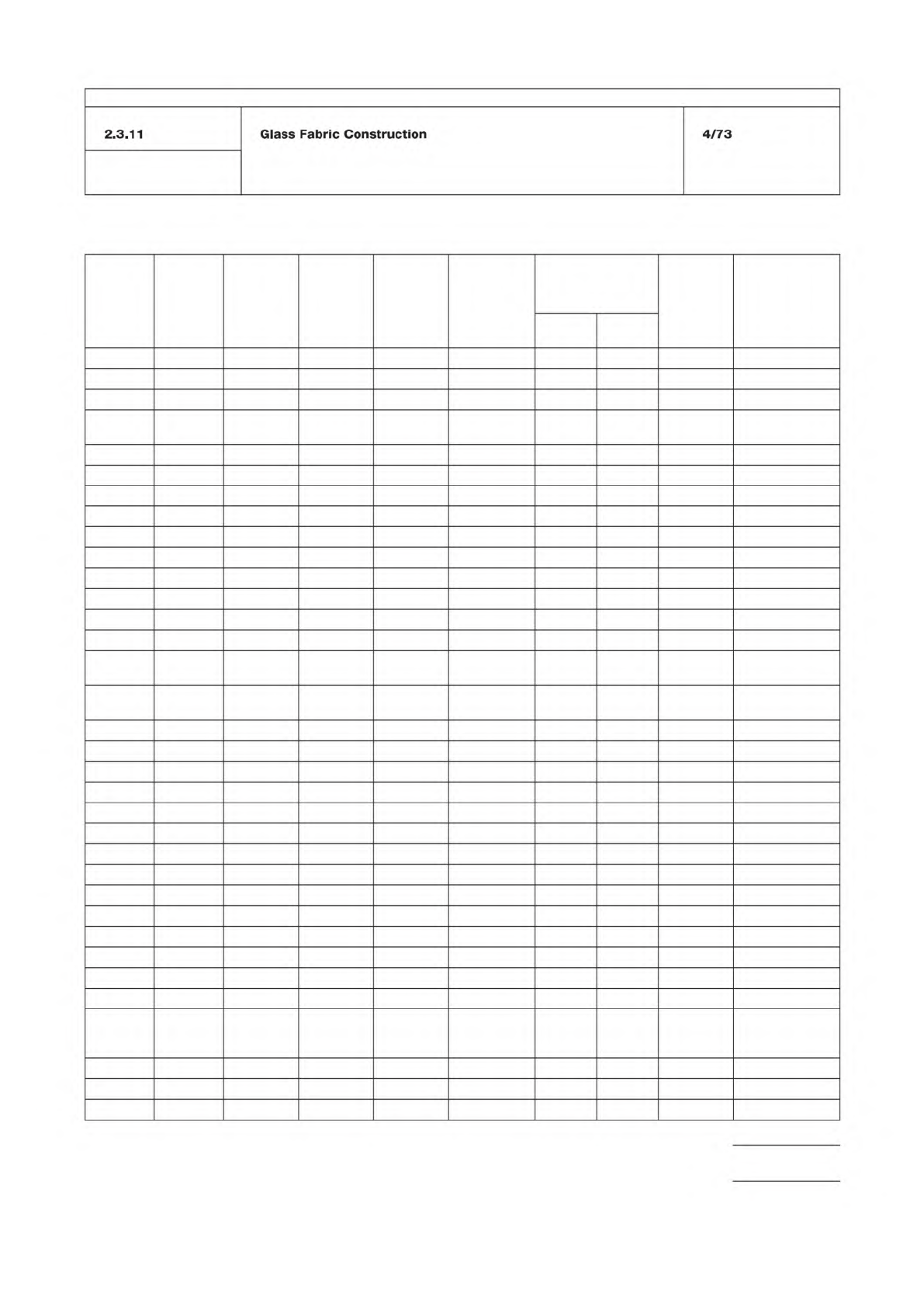
Table 1
Cloth
No.
Nominal
Width
Inches
Thickness
Inch
Weight
Per
Square
Yard
Ounces
Yarn,
Warp,
and Fill Construction
Minimum
Breaking
Strength Per
Inch of Width
Yards per
Standard
Roll Type of Weave
Warp
Pounds
Fill
Pounds
106 38 0.0015 0.85 900-1/0 56x56 46 52 250 ± 25 Plain
108 38 0.0020 1.43 900-1/2 60x47 70 40 250 ± 25 Plain
112 38 0.0030 2.09 450-1/2 40x39 82 80 250 ± 25 Plain
113 38 0.0030 2.46 450-1/2
900-1/2
60x64 123 60 250 ± 25 Plain
116 38 0.0040 3.16 450-1/2 60x58 123 120 250 ± 25 Plain
119 38 0.0040 2.80 450-1/2 54x50 110 100 250 ± 25 Plain
120 38 0.0040 3.16 450-1/2 60x58 125 120 250 ± 25 4-harness satin
126-150 38 0.0060 5.50 150-1/2 34x32 225 195 250 ± 25 Plain
126 38 0.0065 5.37 450-3/2 34x32 205 185 250 ± 25 Plain
127 38 0.0070 6.00 450-3/2 42x32 225 185 250 ± 25 Plain
128 38 0.0070 6.00 225-1/3 42x32 250 200 250 ± 25 Plain
128-150 38 0.0067 6.00 150-1/2 42x32 250 200 250 ± 25 Plain
140 38 0.0100 8.70 450-4/3 32x21 400 290 125 ± 25 Plain
141 38 0.0100 8.70 225-2/3 32x21 400 290 125 ± 25 Plain
143 38 0.0090 8.90 225-3/2
450-1/2
49x30 611 56 125 ± 25 4-harness satin
143-150 38 0.0086 9.40 150-2/2
450-1/2
49x30 660 70 125 ± 25 4-harness satin
148 38 0.0120 10.10 450-3/5 30x19 450 360 125 ± 25 Plain
149 38 0.0120 10.80 225-2/4 30x19 450 360 125 ± 25 Plain
161 38 0.0150 12.20 450-4/5 28x16 550 450 125 ± 25 Plain
162 38 0.0150 12.20 225-2/5 28x16 450 350 125 ± 25 Plain
164 38 0.0150 12.60 225-4/3 20x18 500 450 125 ± 25 Plain
164-150 38 0.0140 13.00 150-4/2 20x18 500 450 125 ± 25 Plain
181 38 0.0085 8.90 225-1/3 57x54 340 330 125 ± 25 8-harness satin
181-150 38 0.0080 9.50 150-1/2 56x54 350 325 125 ± 25 Plain
182 38 0.0130 12.40 225-2/2 60x56 440 400 125 ± 25 8-harness satin
182-150 38 0.0134 12.65 150-1/3 60x56 440 400 125 ± 25 Plain
183 38 0.0180 16.75 225-3/2 54x48 650 620 75 ± 15 8-harness satin
184 38 0.0270 25.90 225-4/3 42x36 950 800 50 ± 10 8-harness satin
184-150 38 0.0246 24.16 150-4/2 44x35 950 800 50 ± 10
573-150 38 0.0110 8.00 150-3/2 16x16 335 316 125 ± 25 Plain
1000-150 38
and
44
0.0130 9.66 150-4/2 16x14 450 410 125 ± 25 Plain
1044-150 38 0.0220 19.20 ...... 16x14 450 410 125 ± 25 Plain
1523-150 38 0.0140 11.70 150-3/2 28x20 525 400 125 ± 25 Plain
1527-150 38 0.0150 12.90 150-3/3 17x17 535 485 125 ± 25 Plain
IPC-TM-650
Number
Subject Date
Revision
Page 3 of 3
2.3.11
Glass
Fabric
Construction
4/73
ISO 9455
IPC-TM-650
IPC J-STD-004
Material in this Test Methods Manual was voluntarily established by Technical Committees of IPC. This material is advisory only
and its use or adaptation is entirely voluntary. IPC disclaims all liability of any kind as to the use, application, or adaptation of this
material. Users are also wholly responsible for protecting themselves against all claims or liabilities for patent infringement.
Equipment referenced is for the convenience of the user and does not imply endorsement by IPC.
Page 1 of 3
r
ASSOCIATION
CONNECTING
/
ELECTRONICS
INDUSTRIES
®
221
5
Sanders
Road
Northbrook,
IL
60062-6135
IPC-TM-650
TEST
METHODS
MANUAL
1
Scope
This
test
method
specifies
two
methods
for
the
determination
of
the
acid
value
of
a
flux
of
type
L,
M
or
H.
Method
A
is
a
potentiometric
titration
method
and
is
to
be
considered
the
reference
method.
Method
B
is
an
alternative,
visual
end-point,
titration
method.
2
Applicable
Documents
Soft
Soldering
Fluxes,
Test
Methods
Test
Methods
Manual
2
.3.34
Solids
Content,
Flux
Requirements
for
Soldering
Fluxes
3
Test
Specimen
A
minimum
of
2.0
grams
of
liquid
flux,
1
0
grams
of
solder
paste,
150
grams
of
cored
wire
or
10
grams
of
solder
preforms.
4
Apparatus
and
Reagents
4.1
General
4.1.1
Use
only
reagents
of
recognized
analytical
quality
and
only
deionized
water.
4.1.2
Ordinary
laboratory
apparatus.
4.2
For
Potentiometric
Titration
Method
(Method
A)
4.2.1
Tetrabutyl
ammonium
hydroxide,
0.1
M
(0.1
mole/L).
Use
a
commercially
available
standard
solution
or
one
pre¬
pared
from
a
commercially
available
concentrated
standard
solution
by
dilution
with
2-propanol
(4.2.2).
Alternatively,
pre¬
pare
a
0.1
M
tetrabutyl
ammonium
hydroxide
solution
by
dilut¬
ing
a
commercial
concentrated
solution
with
2-propanol
and
standardize
this
solution
against
an
accurately
weighed
amount
of
benzoic
acid
(about
0.5
g)
dissolved
in
dimethylfor¬
mamide,
previously
neutralized
to
thymol
blue.
4.2.2
2-Propanol.
Neutralized
with
tetrabutyl
ammonium
hydroxide
solution
(4.2.1)
to
a
faint
pink
color
using
phenol¬
phthalein
as
an
indicator.
Number
2.3.13
Subject
Determination
of
Acid
Value
of
Liquid
Solder
Flux
-
Potentiometric
and
Visual
Titration
Methods
Date
Revision
06/04
A
Originating
Task
Group
Flux
Specifications
Task
Group
(5-24a)
4.2.3
Ethanol,
anhydrous.
Neutralized
with
tetrabutyl
ammo¬
nium
hydroxide
solution
(4.2.1)
to
a
faint
pink
color
using
phe¬
nolphthalein
as
an
indicator.
4.2.4
Toluene.
Neutralized
with
tetrabutyl
ammonium
hydroxide
solution
(4.2.1)
to
a
faint
pink
color
using
phenol¬
phthalein
as
an
indicator.
4.2.5
Ethanol/toluene
mixture.
Mix
equal
volumes
of
the
neutralized
anhydrous
ethanol
(4.2.3)
and
neutralized
toluene
(4.2.4).
4.2.6
Phenolphthalein
Indicator.
4.2.7
Millivoltmeter
or
pH
meter.
4.2.8
Glass
electrode.
4.2.9
Saturated
calomel,
or
silver
chloride/silver,
electrode.
4.2.10
Magnetic
or
mechanical
stirrer
with
variable
speed
drive.
4.2.11
Burette
capable
of
delivering
aliquots
of
0.1
ml
to
1.0
ml.
4.3
For
Titration
with
Visual
End-Point
(Method
B)
4.3.1
Ethanol,
anhydrous.
Neutralized
with
potassium
hydroxide,
0.1
M
in
alcohol
(4.3.5),
to
a
faint
pink
color
using
phenolphthalein
as
an
indicator.
4.3.2
Toluene.
Neutralized
with
potassium
hydroxide,
0.1
M
in
alcohol
(4.3.5),
to
a
faint
pink
color
using
phenolphthalein
as
an
indicator.
4.3.3
Ethanol/toluene
mixture.
Mix
equal
volumes
of
the
neutralized
anhydrous
ethanol
(4.3.1)
and
neutralized
toluene
(4.3.2).
4.3.4
2-Propanol.
Neutralized
with
potassium
hydroxide,
0.1
M
in
alcohol
(4.3.5),
to
a
faint
pink
color
using
phenolphthalein
as
an
indicator.