00198661-02_UM_SX12-V3_EN.pdf - 第205页
Instruction manual SIPLACE SX1/SX2 Edition V2 and V3 4 Setting up and commissioning From software version SC.713.1 Edition 12/2020 4.3 Setting up the placement machine 205 4 4 4 4.3.3 Fitting attached p art s The placeme…
4 Setting up and commissioning Instruction manual SIPLACE SX1/SX2 Edition V2 and V3
4.3 Setting up the placement machine From software version SC.713.1 Edition 12/2020
204
4.3.2 Lifting and transporting the placement machine with the fork lift truck
4
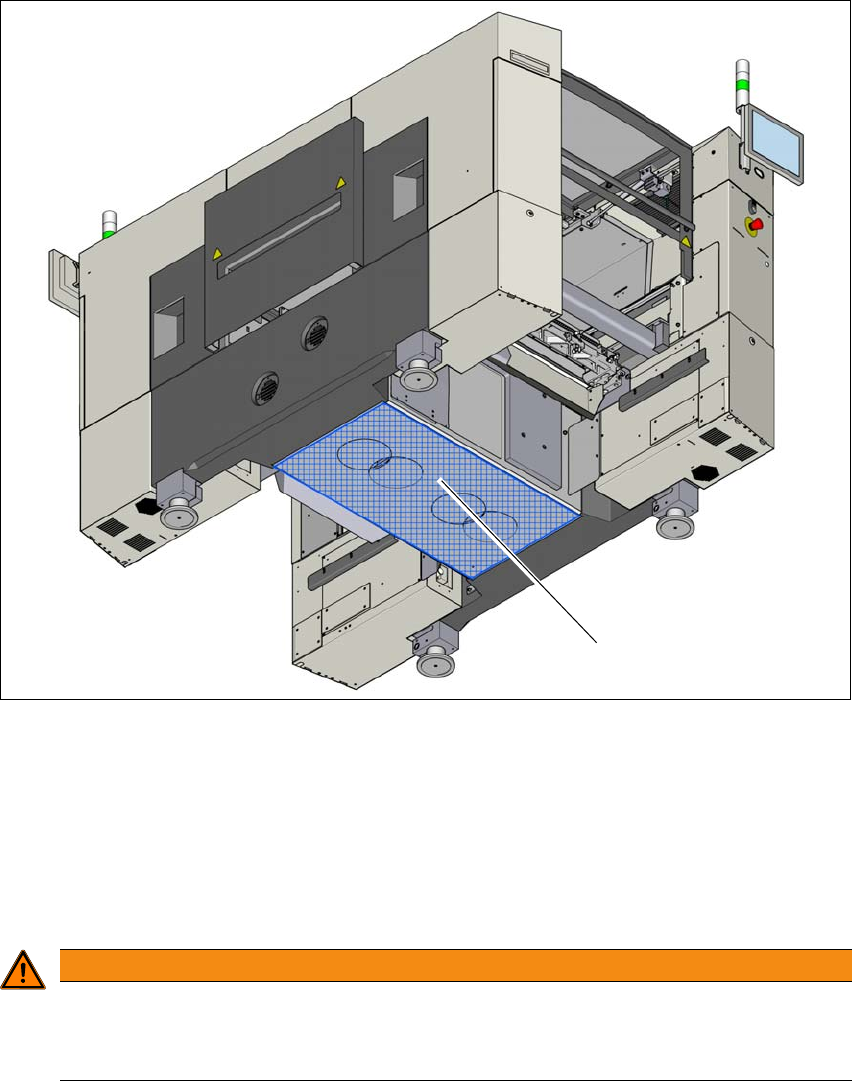
Fig. 4.3 - 1 Contact surface - forks at right angles to the direction of PCB transport
(1) Contact surface for fork lift truck forks
Position the fork-lift truck at right angles to the PCB conveyor and open the forks until the con-
tact surfaces of the placement machine lie evenly on the forks.
Please note the following warnings before you raise the placement machine in order to avoid
irreversible damage to the placement machine:
4
WARNING
Aligning the forks!
– The forks must be aligned parallel to the PCB conveyor.
– The forks must be aligned parallel to the placement machine.
(1)
Instruction manual SIPLACE SX1/SX2 Edition V2 and V3 4 Setting up and commissioning
From software version SC.713.1 Edition 12/2020 4.3 Setting up the placement machine
205
4
4
4
4.3.3 Fitting attached parts
The placement machine is delivered with the monitor, operating panel, keyboard and indicator
lamp dismantled. To fit these components, proceed as follows:
– To fit the indicator lamps see section 4.3.3.2
, page 206
– To fit the monitors see section 4.3.3.3, page 206
In addition for the SIPLACE SX1/SX2 V2 or as an option for the SIPLACE SX1/SX2 V3 4
– Hook up the keyboard fixture and connect the keyboard
4.3.3.1 Checking and setting the protective cover switch
Check the protective cover switch function.
Adjust the protective cover switch if necessary (see service manual).
WARNING
Risk of damage due to excessive fork spacing!
Increased fork spacing, which means that the placement machine is raised at points out-
side its contact surface, can lead to deformation of the placement machine frame and
cause damage to cables and lines.
The forks may only be opened to a degree which ensures that they are still within the
contact area of the machine underside (see fig. 4.1 - 3
, page 189).
WARNING
Risk of damage due to one-sided loading!
One-sided loading of the machine feet e.g. from tilting the machine, can lead to deforma-
tion of the machine feet.
Make sure that the forks are evenly loaded when you lift the placement machine.
Use a firm support layer between the forks and the placement machine.
Enlist the help of a second person to watch while you lift the placement machine and
make sure that the placement machine does not tip over to one side.
WARNING
Risk of damage!
The thread for the machine feet in the machine frame could be damaged by being
dragged along the floor or from impact.
When you are transporting the machine, make sure that all the feet are clear of the
floor.

4 Setting up and commissioning Instruction manual SIPLACE SX1/SX2 Edition V2 and V3
4.3 Setting up the placement machine From software version SC.713.1 Edition 12/2020
206
4.3.3.2 Fitting the indicator lamp
Insert the indicator lamp into the hole until the lamp tube projects sufficiently into the terminal
beneath.
Connect the cable for the indicator lamps to the plug. The cable with plug is located in the
tube.
Tighten the two screws on the terminal so that the indicator lamp is clamped into place.
4.3.3.3 Fixing the monitors
Use the 4 fastening screws to fix the monitor to the monitor mount and then connect the cable.
Check the cable connections.
4.3.4 PCB conveyor height on the placement machine
The placement machine can be set to the following PCB conveyor heights:
900 mm ± 15 mm
4
930 mm ± 15 mm (standard height) 4
950 mm ± 15 mm (SMEMA height) 4
4
PLEASE NOTE
The PCB conveyor height is the distance between the top edge of the PCB conveyor belt
and the bottom edge of the machine feet.