00198661-02_UM_SX12-V3_EN.pdf - 第263页
Instruction manual SIPLACE SX1/SX2 Edition V2 and V3 5 Tasks at the placement machine From software version SC.713.1 Edition 12/2020 5.9 Carrying out a sight check 263 5.9.3 Checking the PCB supports Check the position…
5 Tasks at the placement machine Instruction manual SIPLACE SX1/SX2 Edition V2 and V3
5.9 Carrying out a sight check From software version SC.713.1 Edition 12/2020
262
5
Check the multicolor status display (item 3 in fig. 5.9 - 1, page 261).
– If it lights up green, the feeder module is on standby.
– If it lights up orange, it is signaling a warning. The LEDs will shine accordingly.
– If the status display lights up red, a malfunction has occurred. The LEDs will shine ac-
cordingly.
A list of the LED and status displays on the Smart Feeder operator panel is given in sec-
tion 5.11.1
, page 277. 5
If the status display is off, the cause may be as follows: 5
– The feeder module is not in the current setup.
– The feeder module is defective.
– The feeder module has been disabled (due to a drop in pressure, for example)
5.9.2 Splicing the tapes in good time
5
5
CAUTION
Problems with cover foil withdrawal!
If the cover foil tears, this could lead to problems with the cover foil withdrawal.
PLEASE NOTE
Late splicing of tapes
Late splicing of tapes can lead to prolonged down times.
Splice the tapes early enough so that the feeder modules do not run out of compo-
nents.
PLEASE NOTE
Early splicing of tapes
Early splicing of tapes can have the following consequence: when the old tape is rolled up
onto the new reel, the new reel could become too full and the tape will slide off it and get
caught up. This will again result in pick-up errors and prolonged down times.
Splice the tapes at the right time so that the old and new tapes do not get caught.
Instruction manual SIPLACE SX1/SX2 Edition V2 and V3 5 Tasks at the placement machine
From software version SC.713.1 Edition 12/2020 5.9 Carrying out a sight check
263
5.9.3 Checking the PCB supports
Check the position of the magnetic PCB supports on the lifting table:
– Make sure that the PCB supports do not collide with components on the underside of the
PCBs.
– In addition, make sure that the PCB supports do not collide with the PCB conveyor pan-
els.
– To ensure safe and automatic positioning of the board supports, we recommend that you
use the Smart Pin Support option. See also section 6.15
, page 334.
5.9.4 Mount of additional tape reel
5
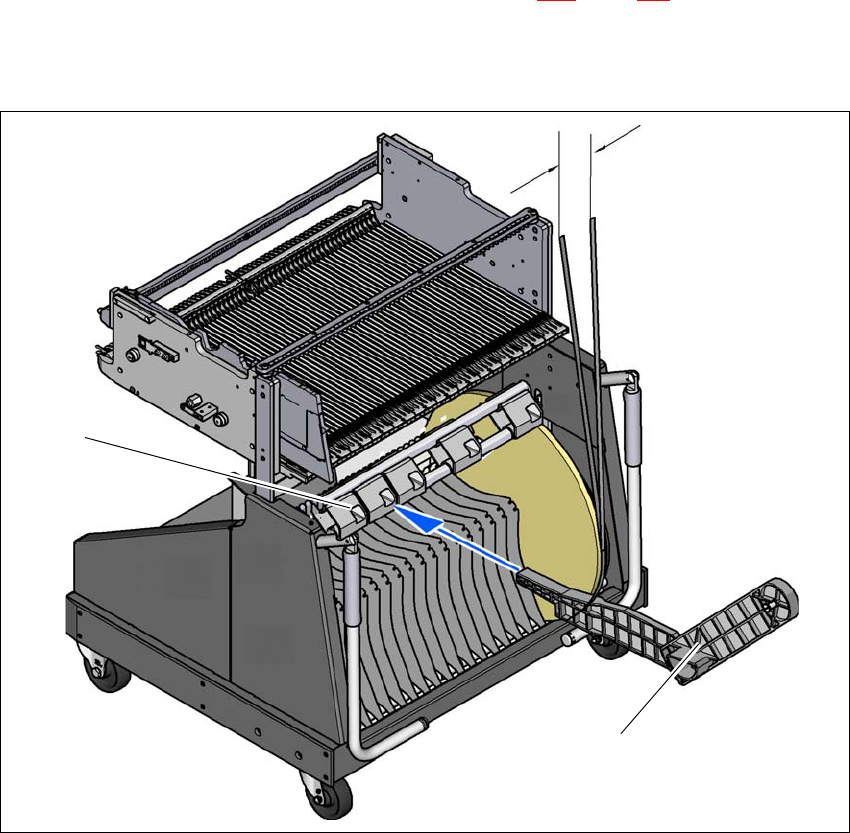
Fig. 5.9 - 2 Mount of additional tape reel
(1) Mount of additional tape reel, item no. 00141217-xx
(2) Mounting device for the support
5
Max. 60 mm
(1)
(2)

5 Tasks at the placement machine Instruction manual SIPLACE SX1/SX2 Edition V2 and V3
5.9 Carrying out a sight check From software version SC.713.1 Edition 12/2020
264
X-Series feeder modules can process component tapes without problems if the lateral offset be-
tween the feeder module and the tape reel does not exceed 60 mm. If a predefined setup means
that the maximum permitted offset cannot be maintained, we recommend that you use the mount
for an additional tape reel (item 1). Simply insert the mount into the holder (item 2) and push it until
the offset is less than the maximum permitted value of 60 mm. The component trolley has 5 hold-
ers in total. Each tape reel mount can hold 2 tape reels, which means that up to ten 15" (381 mm)
tape reels can be positioned above the tape container.
5.9.5 Inserting separating plates into the tape container
The separating plate has different edges and can be inserted into the tape container in two
ways. If spindles are used, the recesses for the spindles in the separating plate point upwards
(see item 4 in fig. 5.9 - 3
). If you do not use spindles, the rounded edge of the separating
plate points up (see item 5 in fig. 5.9 - 3
).
Insert the separating plates as shown in fig. 5.9 - 3 and remember that the smallest division
of the tape container is a 2x division. This will help avoid placement errors.
Check that the separating plates engage in the same positions on the three guide rails. Oth-
erwise the separating plate will be offset or bent.