Programming_mail.pdf - 第86页
III- 12 Programming Manual Part III Inspection Algorithm 1.5 ChipMissing3 1.5.1 Inspection Ov er view ChipMissing3 is the algorithm to inspect solder at either end of the chip component with T opLight and SideLight used.…
III-11
Programming Manual
Part III Inspection Algorithm
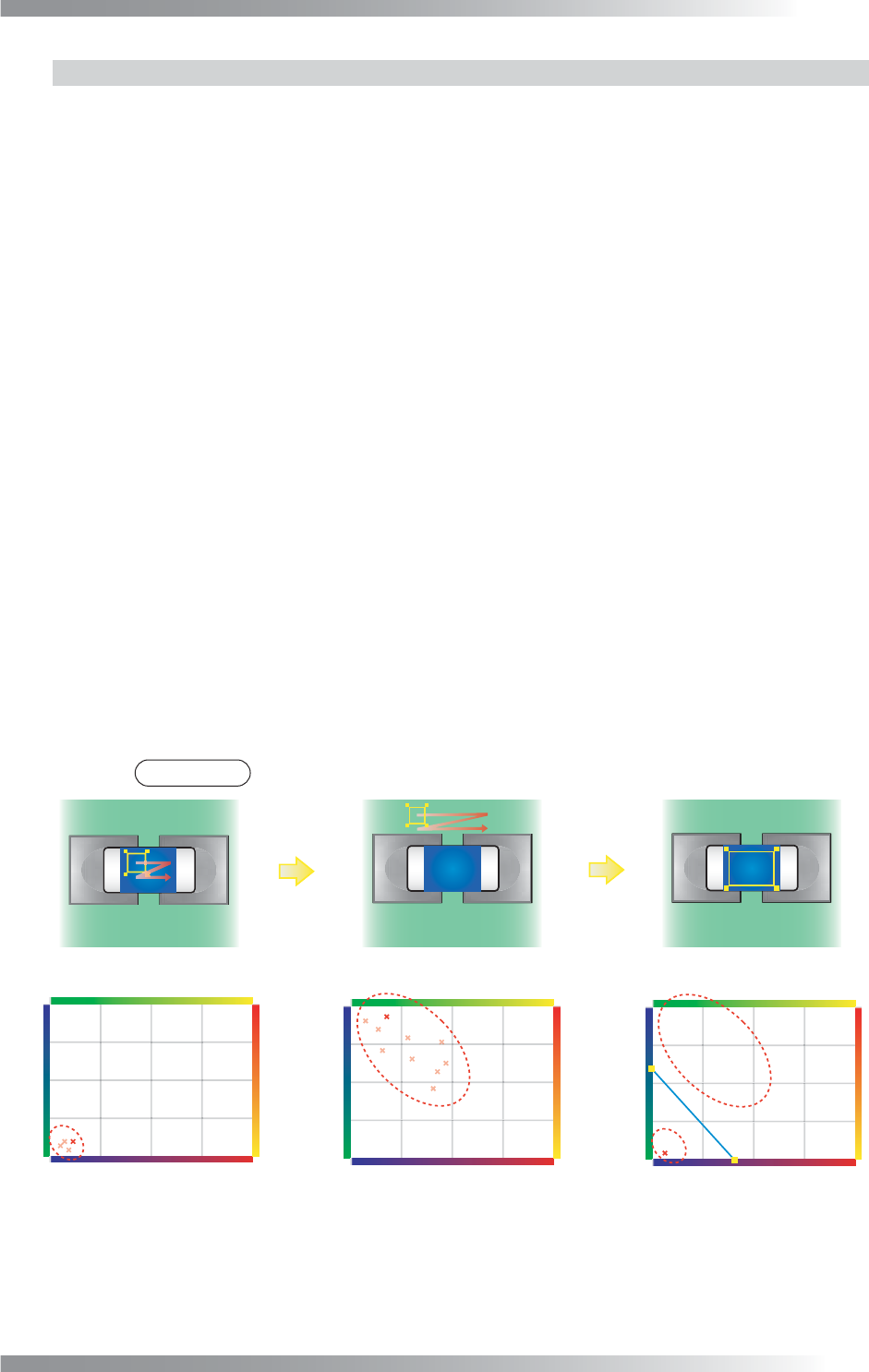
1.4.3 Setting Procedure
Step1: Select SideLignt from the Lighting drop-down list.
Step2: Make sure of the OK area’s average color. Adjust the window size smaller and make sure
of the x marking distribution in the graph in the lower right side of the dialog. The x marking
position is changed according to the window position.
Step3: Make sure of the NG area’s average color. Adjust the window size smaller and make sure
of the x marking distribution in the graph in the lower right side of the dialog. x marking
position is changed according to the window position.
Step4: Set an inspection window on the component.
Step5: Set the borderline between the position of the x marking if the window is in OK area and the
position of the x marking if the window is in NG area.
Step6: If the average color of the area which is to be OK is in the left side of the blue borderline, enter 255
in the Upper fi eld and 0 in the Lower fi eld. If the average color of the area which is to be OK color
is in the right side of the blue borderline, enter 0 in the Upper fi eld and -255 in the Lower fi eld.
Step7: Enter the appropriate vector into the Shift fi eld. Any value from V1 to V8 is available.
Select the vector according to the Memorize to fi eld of the Adjust window.
Step8: Press Inspect. Make sure that the inspection is completed properly.
NOTE
Sample value is the distance of x marking to blue borderline.
㪪㫋㪼㫇㪉 㪪㫋㪼㫇㪊 㪪㫋㪼㫇㪌
㪈㪇㪇 㪈㪏㪇
㪈㪇㪇
㪈㪏㪇
㪯
㪰
㪈㪇㪇 㪈㪏㪇
㪈㪇㪇
㪈㪏㪇
㪯
㪰
㪈㪇㪇 㪈㪏㪇
㪈㪇㪇
㪈㪏㪇
㪯
㪰
Figure 1-11 Setting Procedure of ColorXY
III-12
Programming Manual
Part III Inspection Algorithm
1.5 ChipMissing3
1.5.1 Inspection Overview
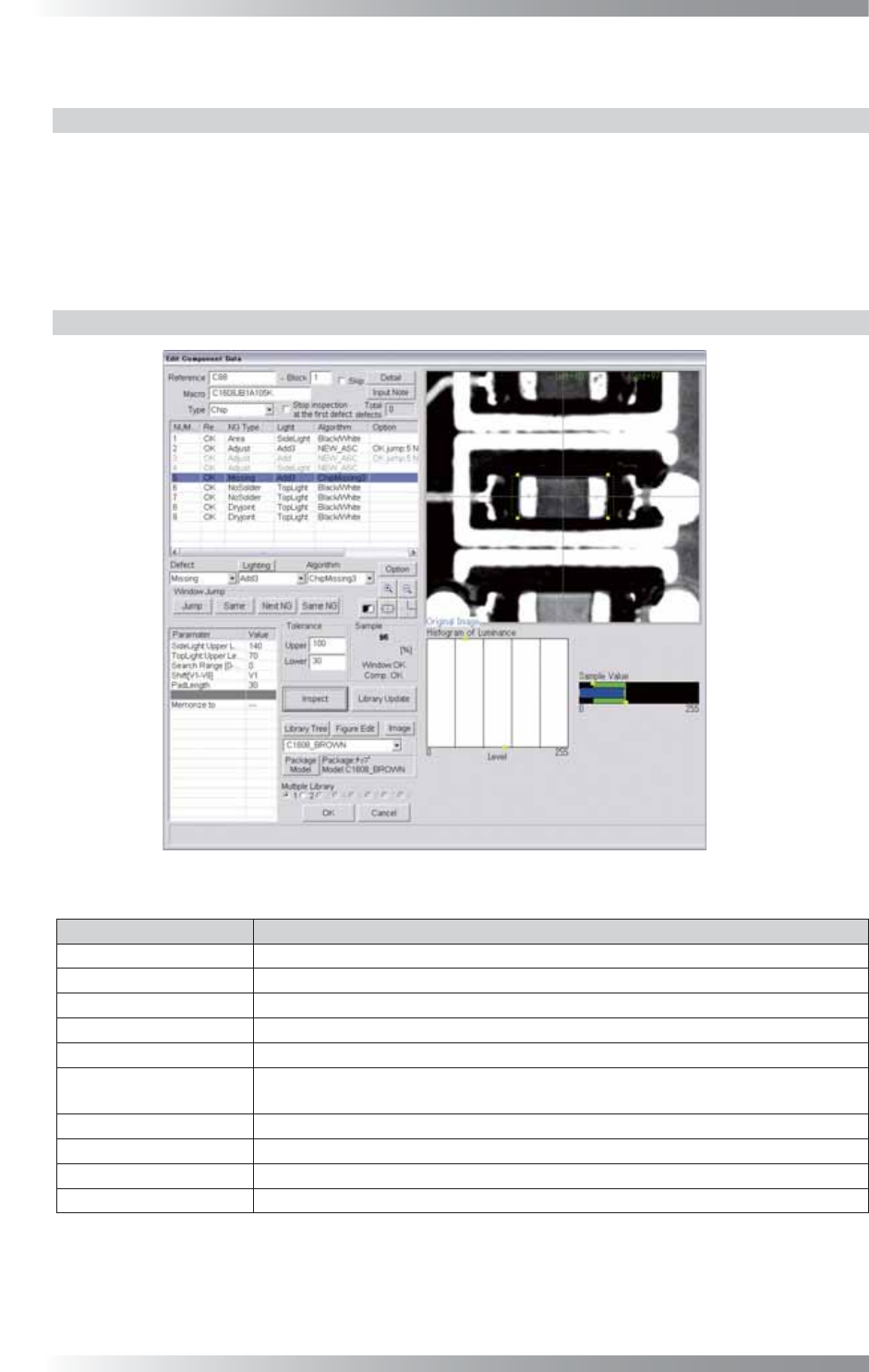
ChipMissing3 is the algorithm to inspect solder at either end of the chip component with TopLight and
SideLight used.
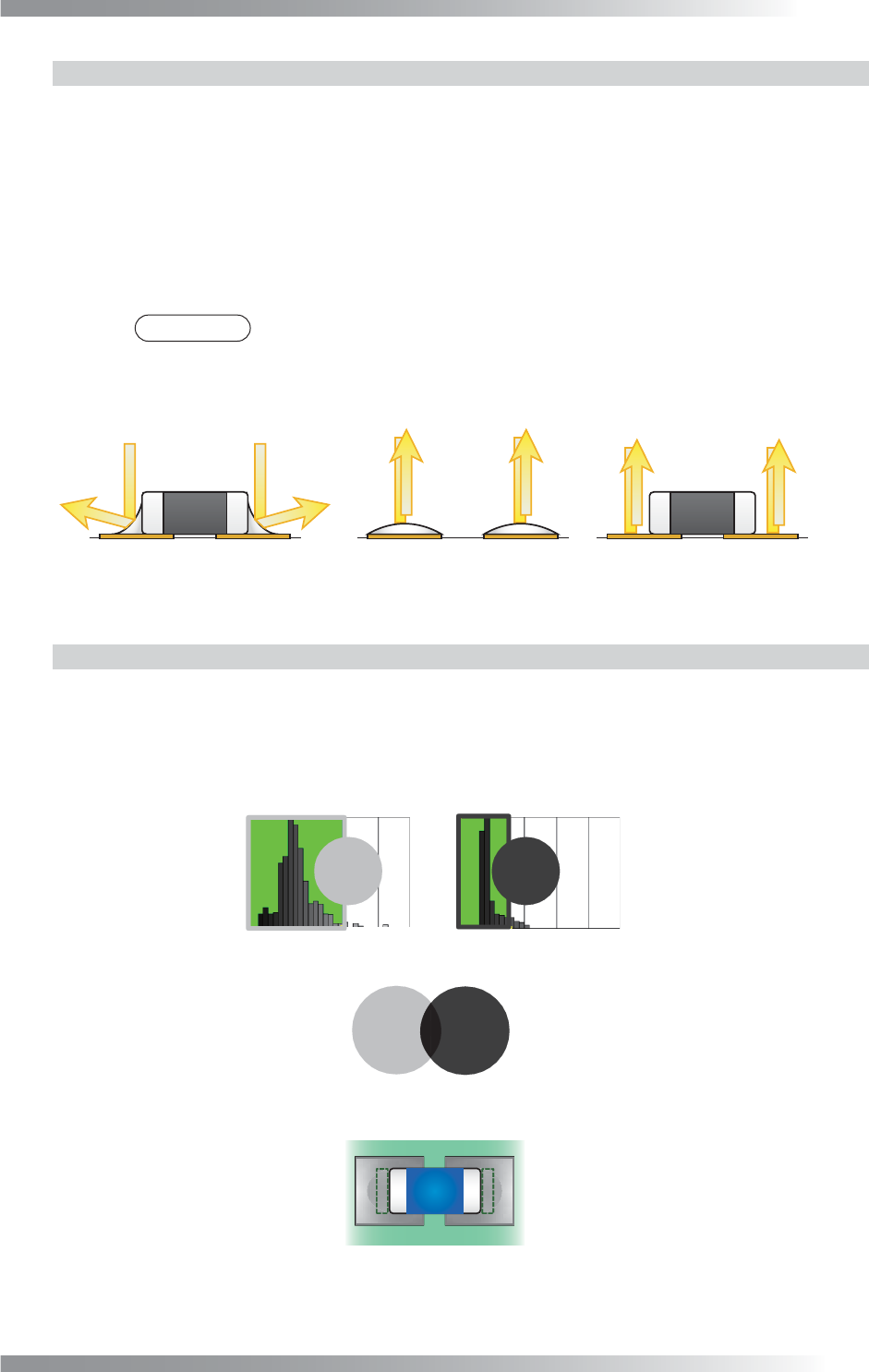
The brightness level of a solder is lower if a solder fi llet is formed. The brightness level of a solder is
higher if a solder fi llet is not formed, or a component is missing (refer to Figure 1-13).
ChipMissing3 is suitable for a chip missing inspection or solder inspection.
1.5.2 Parameter Setting
Figure 1-12 ChipMissing3
Parameter Description
Lighting Select SideLight.
Algorithm Select ChipMissing3.
SideLight Upper Level Upper limit of brightness level in OK range (SideLight).
TopLight Upper Level Upper limit of brightness level in OK range (TopLight).
Search Range[0-30] Enter 0.
Shift[V1-V8]
Enter the appropriate vector. Any value from V1 to V8 is available.
Select the vector according to the Memorize to fi eld of the Adjust window.
PAD Length Default is 30. Enter the bigger value to enlarge the inspection area.
Memorize to -
Upper, Lower Set the upper and lower limit of the OK range.
Sample Refer to Part III 1.5.4 Calculation of Sample Value.
Table 1-5 Parameter of ChipMissing3
III-13
Programming Manual
Part III Inspection Algorithm
1.5.3 Setting Procedure
Step1: Select SideLignt from the Lighting drop-down list.
Step2: Enter the appropriate vector into the Shift fi eld by selecting from V1 to V8 according to the
vector used in the Memorize to fi eld in the Adjust window.
Step3: Check if the sample value is in OK range. If it is out of OK range, change values in SideLight
Upper Level or TopLight Upper Level.
NOTE
If the inspection area is too small, change values in PAD Length to larger.
Step4: Press Inspect. Make sure that the inspection is completed properly.
(a) Normal (b) Missing (c) No Solder
Low Brightness High Brightness High Brightness
Figure 1-13 Missing / Solder inspection by ChipMissing3
1.5.4 Calculation of Sample Value
Set the OK brightness range of SideLight and TopLight by adjusting SideLight Upper Level /
TopLight Upper Level values. The percentages of the area that the result is OK in solder inspection
window at either end of the chip component with TopLight and SideLight are calculated.
The lower value is shown as the sample value.
㪇 㪏㪇 㪉㪌㪌㪈㪌㪇㪇 㪉㪌㪌
㪧㪘㪛㩷㪪㫀㪻㪼㩷㪤㪸㫏 㪧㪘㪛㩷㪫㫆㫇㩷㪤㪸㫏
㪐㪇㩼 㪏㪇㩼
Calculate the Rate of the Overlapping Parts
TopLightSideLight
TopLight
0䌾80
SideLight
0䌾150
Sample Value
OK Range
OK
Range
Figure 1-14 Calculation of Sample Value