sh030106u.pdf - 第407页
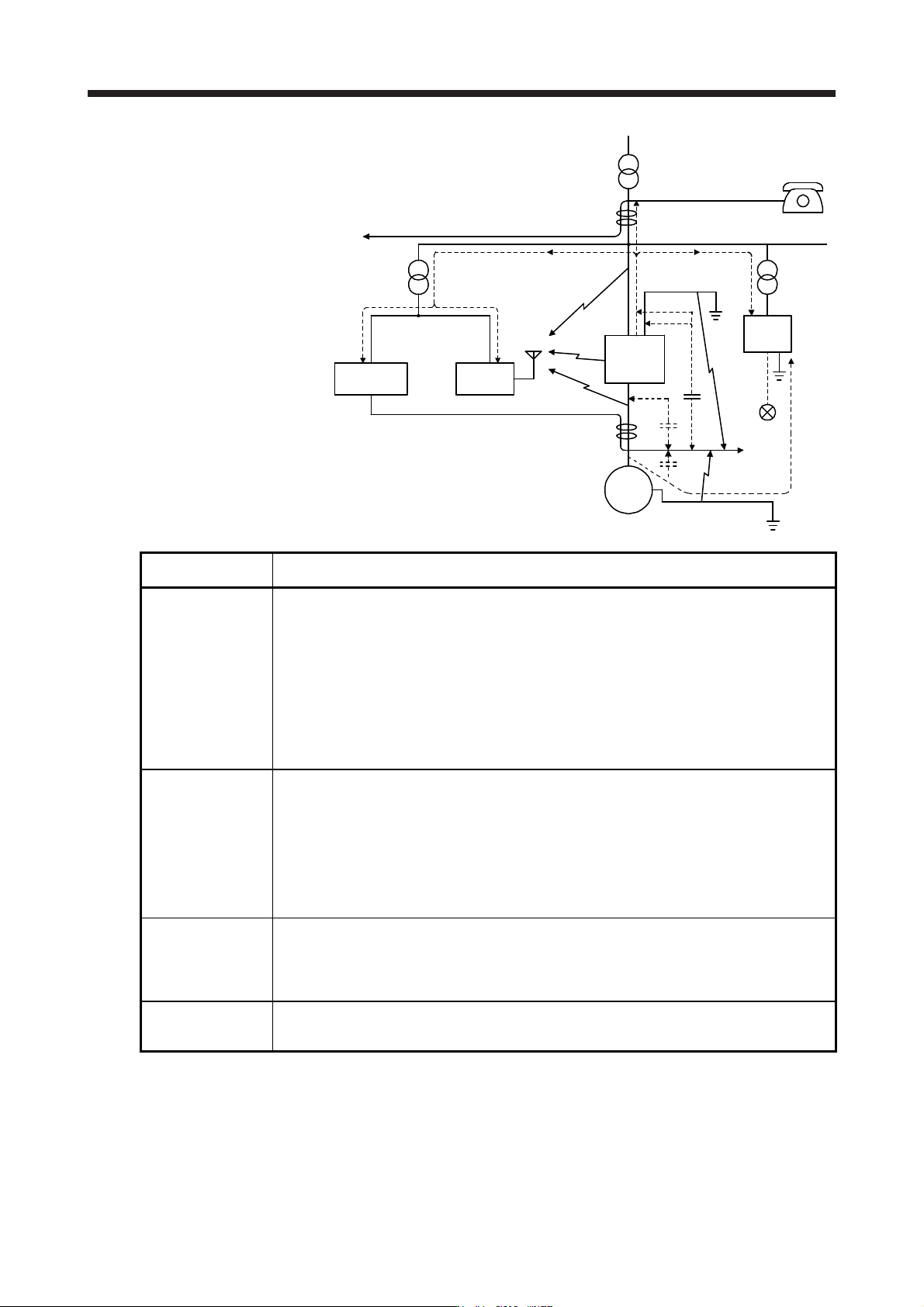
11. OPT I ONS AND PER IPH ERA L EQU IPM ENT 11 - 8 6 Instrument Receiver Servo amplifier Servo motor M 2) 2) 8) 1) 7) 7) 7) 5) 3) 4) 6) 3) Sensor power supply Sensor Noise trans mission route Suppression techniques 1) 2)…
11. OPTIONS AND PERIPHERAL EQUIPMENT
11 - 85
11.14 Noi
se reduction techniques
Noises are classified into external noises which enter the servo amplifier to cause it to malfunction and those
radiated by the servo amplifier to cause peripheral equipment to malfunction. Since the servo amplifier is an
electronic device which handles small signals, the following general noise reduction techniques are required.
Also, the servo amplifier can be a source of noise as its outputs are chopped by high carrier frequencies. If
peripheral equipment malfunctions due to noises produced by the servo amplifier, noise suppression
measures must be taken. The measures will vary slightly with the routes of noise transmission.
(1) Noise reduction techniques
(a) General reduction techniques
Avoid bundling power lines (input/output) and signal cables together or running them in parallel to
each other. Separate the power lines from the signal cables.
Use a shielded twisted pair cable for connection with the encoder and for control signal
transmission, and connect the external conductor of the cable to the SD terminal.
Ground the servo amplifier, servo motor, etc. together at one point. (Refer to section 3.11.)
(b) Reduction techniques for external noises that cause the servo amplifier to malfunction
If there are noise sources (such as a magnetic contactor, an electromagnetic brake, and many relays
which make a large amount of noise) near the servo amplifier and the servo amplifier may
malfunction, the following countermeasures are required.
Provide surge absorbers on the noise sources to suppress noises.
Attach data line filters to the signal cables.
Ground the shields of the encoder connecting cable and the control signal cables with cable clamp
fittings.
Although a surge absorber is built into the servo amplifier, to protect the servo amplifier and other
equipment against large exogenous noise and lightning surge, attaching a varistor to the power
input section of the equipment is recommended.
(c) Techniques for noises radiated by the servo amplifier that cause peripheral equipment to malfunction
Noises produced by the servo amplifier are classified into those radiated from the cables connect
ed
to the servo amplifier and its main circuits (input and output circuits), those induced
electromagnetically or statically by the signal cables of the peripheral equipment located near the
mai
n circuit cables, and those transmitted through the power supply cables.
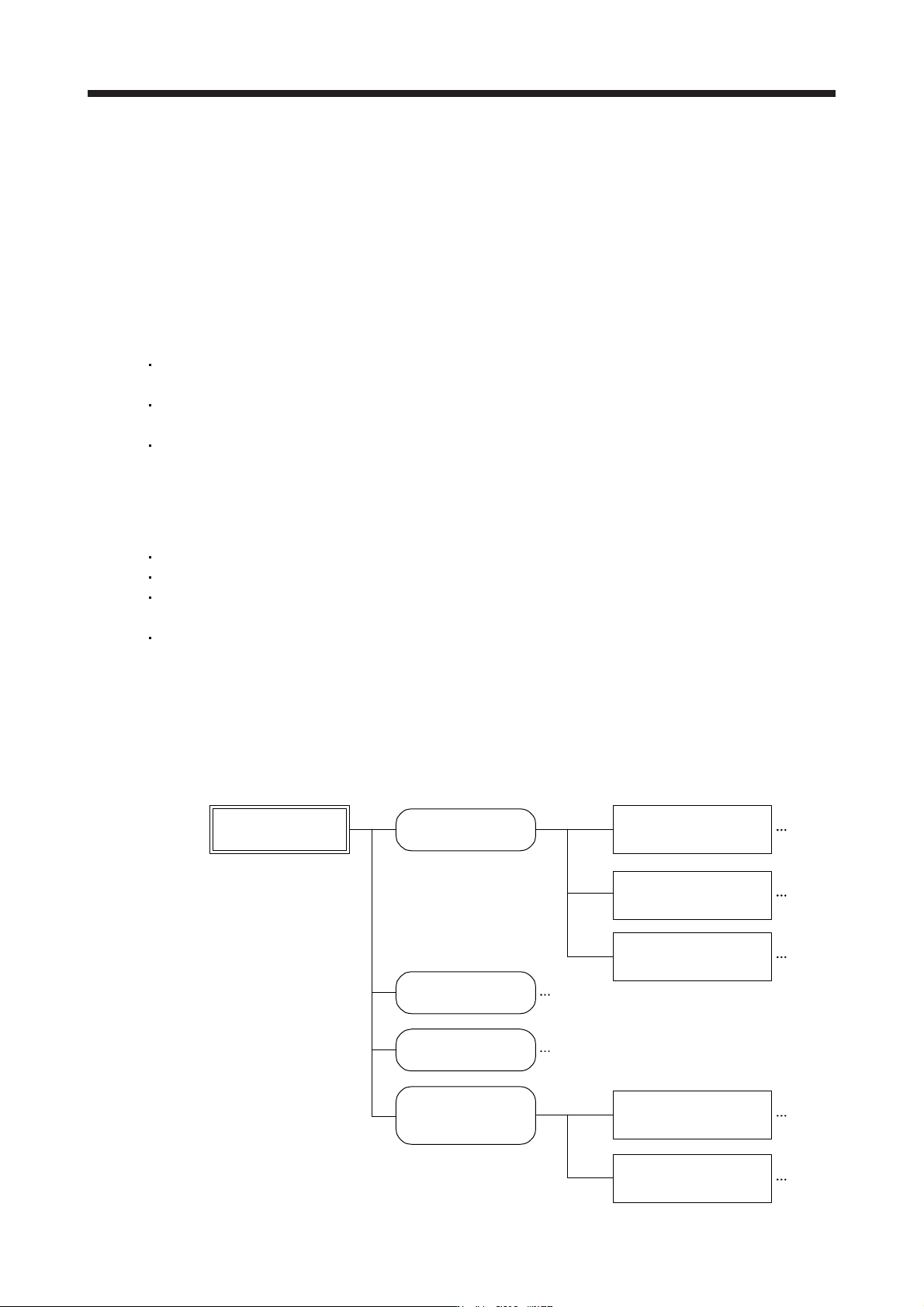
Noises produced
by servo amplifier
Noises transmitted
in the air
Noise radiated directly
from servo amplifier
Magnetic induction
noise
Static induction
noise
Noises transmitted
through electric
channels
Noise radiated from the
power supply cable
Noise radiated from
servo motor cable
Noise transmitted through
power supply cable
Noise sneaking from
grounding cable due to
leakage current
Routes 4) and 5)
Route 1)
Route 2)
Route 3)
Route 7)
Route 8)
Route 6)
11. OPTIONS AND PERIPHERAL EQUIPMENT
11 - 86
Instrument Receiver
Servo
amplifier
Servo motor M
2)
2)
8)
1)
7)
7) 7)
5)
3)
4)
6)
3)
Sensor
power
supply
Sensor
Noise transmission
route
Suppression techniques
1) 2) 3)
When measuring instruments, receivers, sensors, etc. which handle weak signals and may
malfunction due to noise and/or their signal cables are contained in a cabinet together with the servo
amplifier or run near the servo amplifier, such devices may malfunction due to noises transmitted
through the air. The following techniques are required.
1. Provide maximum clearance between easily affected devices and the servo amplifier.
2. Provide maximum clearance between easily affected signal cables and the I/O cables of the servo
amplifier.
3. Avoid wiring the power lines (input/output lines of the servo amplifier) and signal lines side by side
or bundling them together.
4. Insert a line noise filter to the I/O cables or a radio noise filter on the input line.
5. Use shielded wires for the signal and power lines, or put the lines in separate metal conduits.
4) 5) 6)
When the power lines and the signal lines are laid side by side or bundled together, magnetic
induction noise and static induction noise will be transmitted through the signal cables and
malfunction may occur. The following techniques are required.
1. Provide maximum clearance between easily affected devices and the servo amplifier.
2. Provide maximum clearance between easily affected signal cables and the I/O cables of the servo
amplifier.
3. Avoid wiring the power lines (input/output lines of the servo amplifier) and signal lines side by side
or bundling them together.
4. Use shielded wires for the signal and power lines, or put the lines in separate metal conduits.
7)
When the power supply of peripheral equipment is connected to the power supply of the servo
amplifier system, noises produced by the servo amplifier may be transmitted back through the power
supply cable and the devices may malfunction. The following techniques are required.
1. Install the radio noise filter (FR-BIF(-H)) on the power lines (Input lines) of the servo amplifier.
2. Install the line noise filter (FR-BSF01/FR-BLF) on the power lines of the servo amplifier.
8)
If the grounding wires of the peripheral equipment and the servo amplifier make a closed loop circuit,
leakage current may flow through, causing the equipment to malfunction. In this case, the
malfunction may be prevented by the grounding wires disconnected from the equipment.
11. OPTIONS AND PERIPHERAL EQUIPMENT
11 - 87
(2) Nois
e reduction techniques
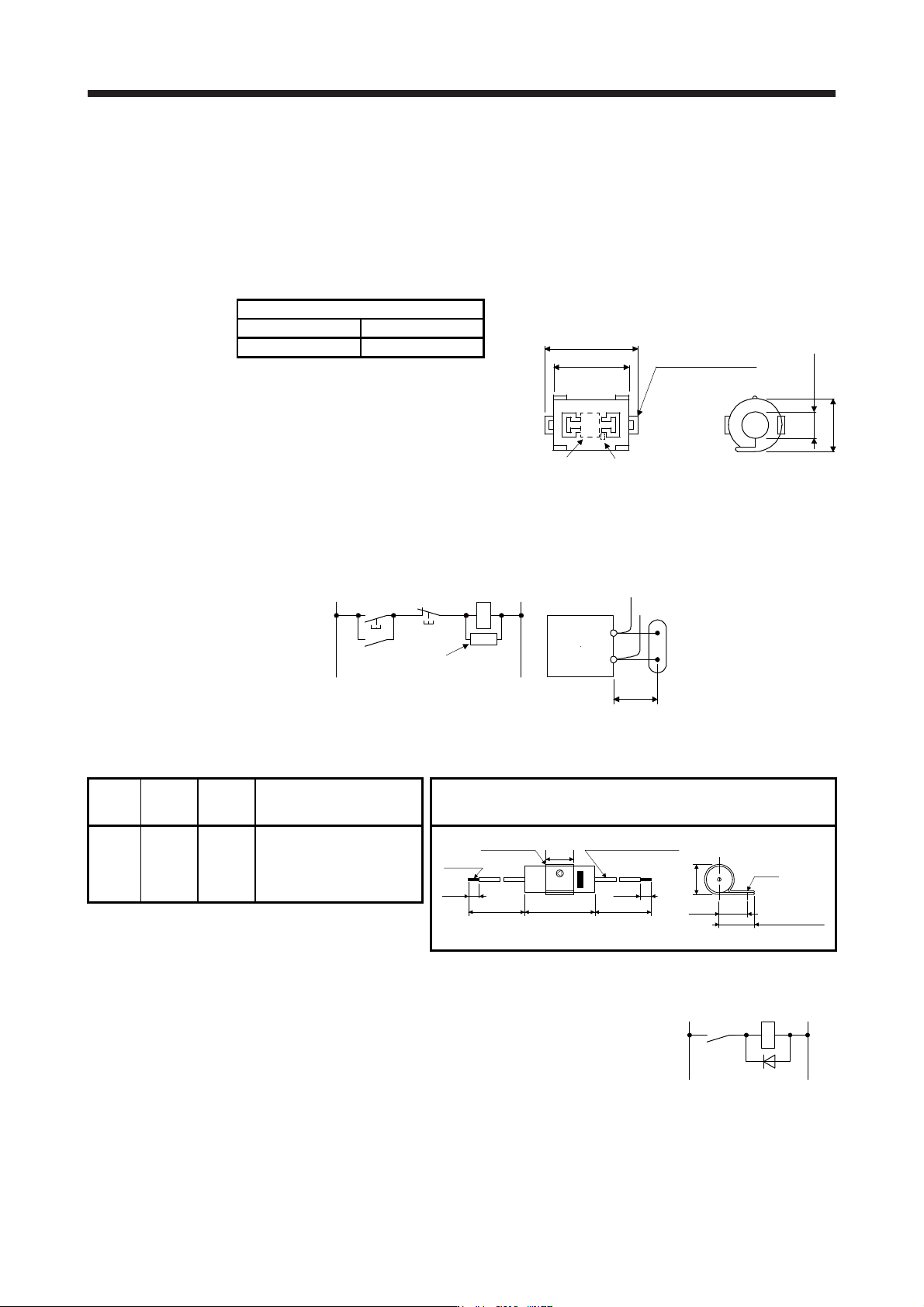
(a) Data line filter (recommended)
Noise can be prevented by installing a data line filter onto the encoder cable, etc.
For example, ZCAT3035-1330 by TDK, ESD-SR-250 by TOKIN, GRFC-13 by Kitagawa Industries,
and E04SRM563218 by SEIWA ELECTRIC are available as data line filte
rs.
As a reference example, the impedance specifications of the ZCAT3035-1330 (TDK) are indicated
below. These impedances are reference values and not guaranteed values.
Impedance [Ω]
[Unit: mm]
Outline drawing (ZCAT3035-1330)
Loop for fixing the
cable band
Lot number
Product name
TDK
39 ± 1
34 ± 1
φ13 ± 1
φ30 ± 1
10 MHz to 100 MHz 100 MHz to 500 MHz
80 150
(b) Surge killer (recommended)
Use of a surge killer is recommended for AC relay, magnetic contactor or the like near the servo
amplifier. Use the following surge killer or equivalent.
MC
SK
Surge kille
r
Relay
Surge killer
MC
ON
OFF
This distance should be short
(within 20 cm).
(Ex
.) CR-50500 Okaya Electric Industries)
Rated
voltage
AC [V]
C
[µF ± 20%]
R
[Ω ± 30%]
Test voltage Dimensions [Unit: mm]
250 0.5 50 (1/2 W)
Between terminals: 625 V AC,
50 Hz/60 Hz 60 s
Between terminal and case:
2000 V AC
50/60 Hz 60 s
6 ± 1
300 min. 300 min.
Soldered
Band (clear) AWG 18 Twisted wire
15 ± 1
48 ± 1.5
CR-50500
6 ± 1
16 ± 1
(18.5 + 5) max.
φ3.6
φ(18.5 + 2) ± 1
Note that a d
iode should be installed to a DC relay or the like.
Maximum voltage: Not less than four times the drive voltage of the relay or
the like.
Maximum current: Not less than twice the drive current of the relay or the
like.
-+
Diode
RA