sh030106u.pdf - 第74页
2. INSTALLATION 2 - 5 (2) Prohibi tion of vinyl tape us e Migrating p lastic izer is used for vinyl tape. Keep the M R-J3BUS _M, and MR-J3BU S_M-A cab les away from viny l tape b ecause t he opt ical ch aracter istic may…

2. INSTALLATION
2 - 4
2.2 Keeping out of foreign materials
(1) When drilling in the cabinet, prevent drill chips and wire fragments from entering the servo amplifier.
(2) Prevent oil, water, metallic dust, etc. from entering the servo amplifier through openings in the cabinet or
a cooling fan installed on the ceiling.
(3) When installing the cabinet in a place where toxic gas, dirt and dust exist, conduct an air purge (force
clean air into the cabinet from outside to make the internal pressure higher than the external pressure) to
prevent such materials from entering the cabinet.
2.3 Encoder cable stress
(1) The way of clamping the cable must be fully examined so that bending stress and cable's own weight
stress are not applied to the cable connection.
(2) For use in any application where the servo motor moves, fix the cables (encoder, power supply, and
brake) with having some slack from the connector connection part of the servo motor to avoid putting
stress on the connector connection part. Use the optional encoder cable within the bending life range.
Use the power supply and brake wiring cables within the bending life of the cables.
(3) Avoid any probability that the cable insulator might be cut by sharp chips, rubbed by a machine corner or
stamped by workers or vehicles.
(4) For installation on a machine where the servo motor moves, the bending radius should be made as large
as possible. Refer to section 10.4 for the bending life.
2.4 SSCNET III cable laying
SSCNET III cable is made from optical fiber. If optical fiber is added a power such as a major shock, lateral
pressure, haul, sudden bending or twist, its inside distorts or breaks, and optical transmission will not be
available. Especially, as optical fiber for MR-J3BUS_M/MR-J3BUS_M-A is made of synthetic resin, it melts
down if being left near the fire or high temperature. Therefore, do not make it touched the part, which can
become hot, such as heat sink or regenerative option of servo amplifier.
Read described item in this section carefully and handle it with caution.
(1) Minimum bend radius
Make sure to lay the cable with greater radius than the minimum bend radius. Do not press the cable to
edges of equipment or others. For SSCNET III cable, the appropriate length should be selected with due
consideration for the dimensions and arrangement of servo amplifier. When closing the door of cabinet,
pay careful attention for avoiding the case that SSCNET III cable is hold down by the door and the cable
bend becomes smaller than the minimum bend radius. For the minimum bend radius, refer to section
11.1.3.
2. INSTALLATION
2 - 5
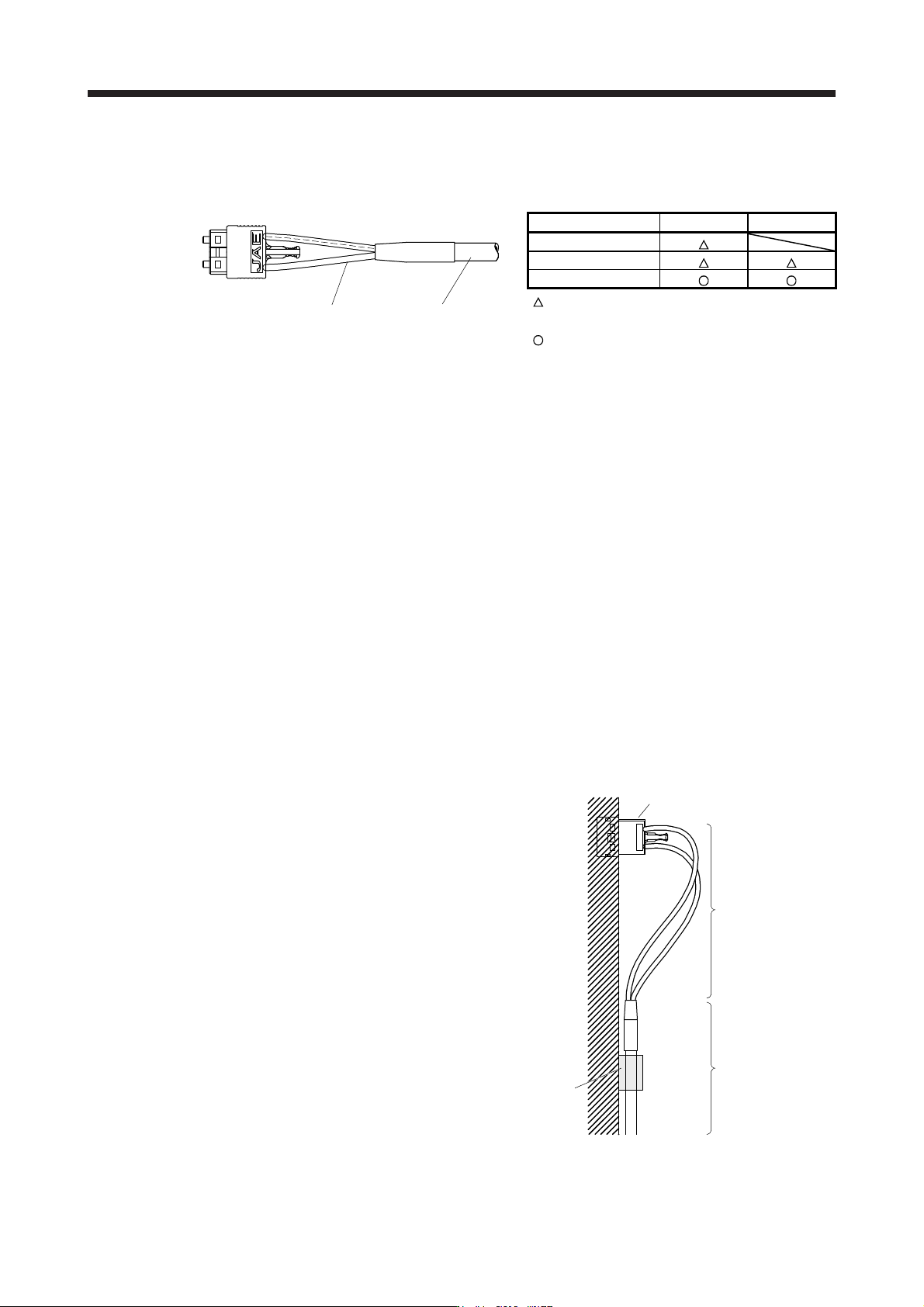
(2) Prohibition of vinyl tape use
Migrating plasticizer is used for vinyl tape. Keep the MR-J3BUS_M, and MR-J3BUS_M-A cables away
from vinyl tape because the optical characteristic may be affected.
Optical cord
Cable
SSCNET III cable Cord Cable
MR-J3BUS_M
MR-J3BUS_M-A
MR-J3BUS_M-B
: Phthalate ester plasticizer such as DBP and DOP
may affect optical characteristic of cable.
: Cord and cable are not basically affected by
plasticizer.
(3) Precautions for migrating plasticizer added materials
Generally, soft polyvinyl chloride (PVC), polyethylene resin (PE) and fluorine resin contain non-migrating
plasticizer and they do not affect the optical characteristic of SSCNET III cable. However, some wire
sheaths and cable ties, which contain migrating plasticizer (phthalate ester), may affect MR-J3BUS_M
and MR-J3BUS_M-A cables (plastic).
In addition, MR-J3BUS_M-B cable (silica glass) is not affected by plasticizer.
A chemical substance may affect its optical characteristic. Therefore, previously check that the cable is
not affected by the environment.
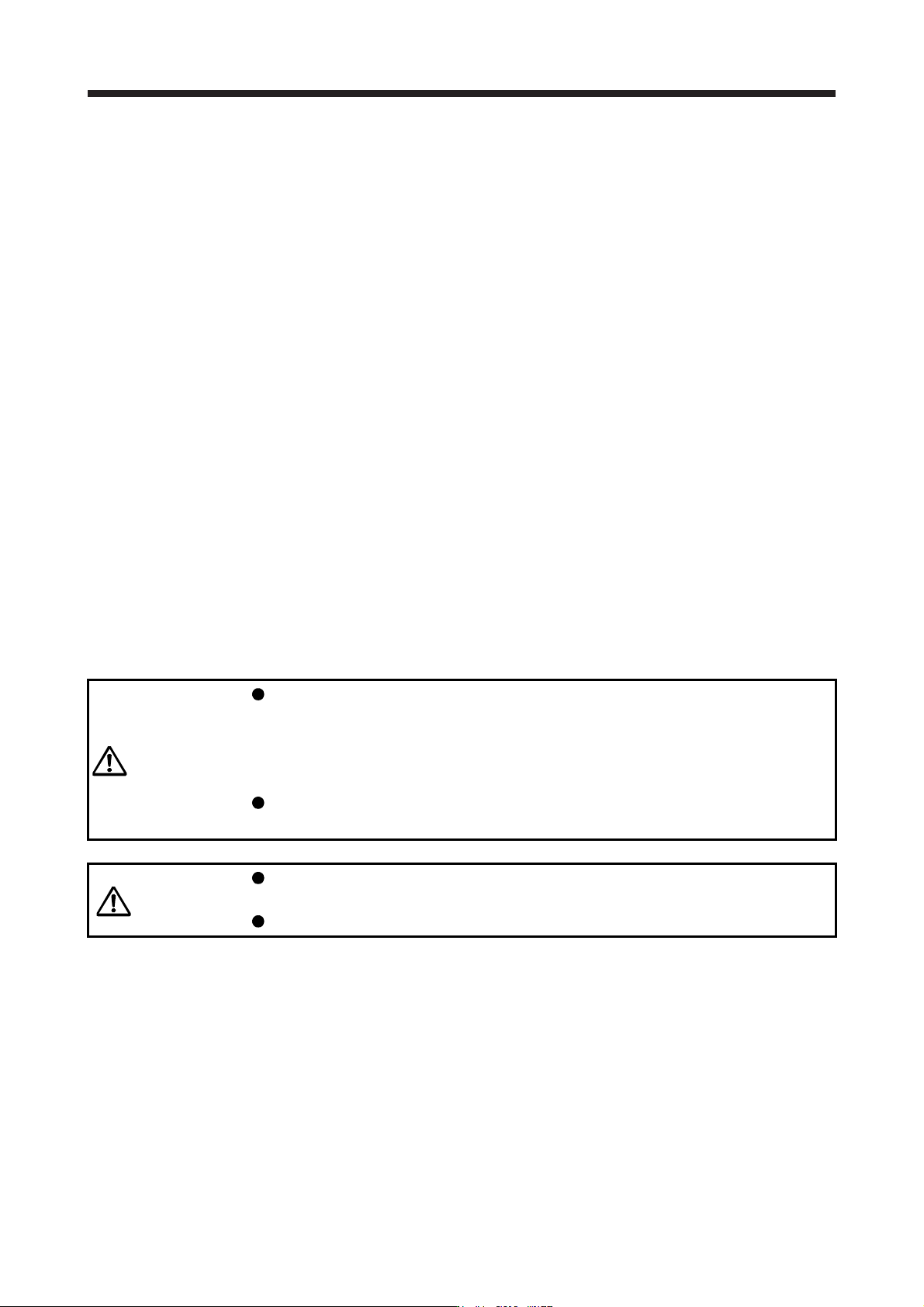
(4) Bundle fixing
Fix the cable at the closest part to the connector with bundle material in order to prevent SSCNET III
cable from putting its own weight on CN1A/CN1B connector of servo amplifier. Optical cord should be
given loose slack to avoid from becoming smaller than the minimum bend radius, and it should not be
twisted.
When bundling the cable, fix and hold it in position by using cushioning such as sponge or rubber which
does not contain migratable plasticizers.
If adhesive tape for bundling the cable is used, fire resistant acetate cloth adhesive tape 570F (Teraoka
Seisakusho Co., Ltd) is recommended.
Optical cord
Loose slack
Bundle material
Recommended product: NK clamp SP type
(NIX, INC)
Cable
Connector
2. INSTALLATION
2 - 6
(5) Tension
If tension is added on optical cable, the increase of transmission loss occurs because of external force
which concentrates on the fixing part of optical fiber or the connecting part of optical connector. Doing so
may cause the breakage of the optical fiber or damage of the optical connector. For cable laying, handle
without putting forced tension. For the tension strength, refer to section 11.1.3.
(6) Lateral pressure
If lateral pressure is added on optical cable, the optical cable itself distorts, internal optical fiber gets
stressed, and then transmission loss will increase. Doing so may cause the breakage of the optical
cable. As the same condition also occurs at cable laying, do not tighten up optical cable with a thing
such as nylon band (cable tie).
Do not trample it down or tuck it down with the door of cabinet or others.
(7) Twisting
If optical fiber is twisted, it will become the same stress added condition as when local lateral pressure or
bend is added. Consequently, transmission loss increases, and the breakage of optical fiber may occur.
(8) Disposal
When incinerating optical cable (cord) used for SSCNET III, hydrogen fluoride gas or hydrogen chloride
gas which is corrosive and harmful may be generated. For disposal of optical fiber, request for
specialized industrial waste disposal services who has incineration facility for disposing hydrogen
fluoride gas or hydrogen chloride gas.
2.5 Inspection items
WARNING
Before starting maintenance and/or inspection, turn off the power and wait for 15
minutes or more until the charge lamp turns off. Then, confirm that the voltage
between P+ and N- is safe with a voltage tester and others. Otherwise, an electric
shock may occur. In addition, when confirming whether the charge lamp is off or
not, always confirm it from the front of the servo amplifier.
To avoid an electric shock, only qualified personnel should attempt inspections.
For repair and parts replacement, contact your local sales office.
CAUTION
Do not perform insulation resistance test on the servo amplifier. Otherwise, it may
cause a malfunction.
Do not disassemble and/or repair the equipment on customer side.
It is recommended that the following points periodically be checked.
(1) Check for loose terminal block screws. Retighten any loose screws.
(2) Check the cables and the like for scratches or cracks. Inspect them periodically according to operating
conditions especially when the servo motor is movable.
(3) Check that the connector is securely connected to the servo amplifier.
(4) Check that the wires are not coming out from the connector.