3OM-1075-002.pdf - 第119页
*8 [Search] Button This button is used to search a component ID. Fig. 3B166 Arrangement (Example) of "Component ID List" Window (Provided with Multi-Layer T ray Feeder 2) The tab sheet may look different, depen…
4.3.2 "Component ID List" Window
• Window Layout
When the [Component ID List] icon (
) is pressed in the "Pattern
Program" window, the "Component ID List" dialog box opens.
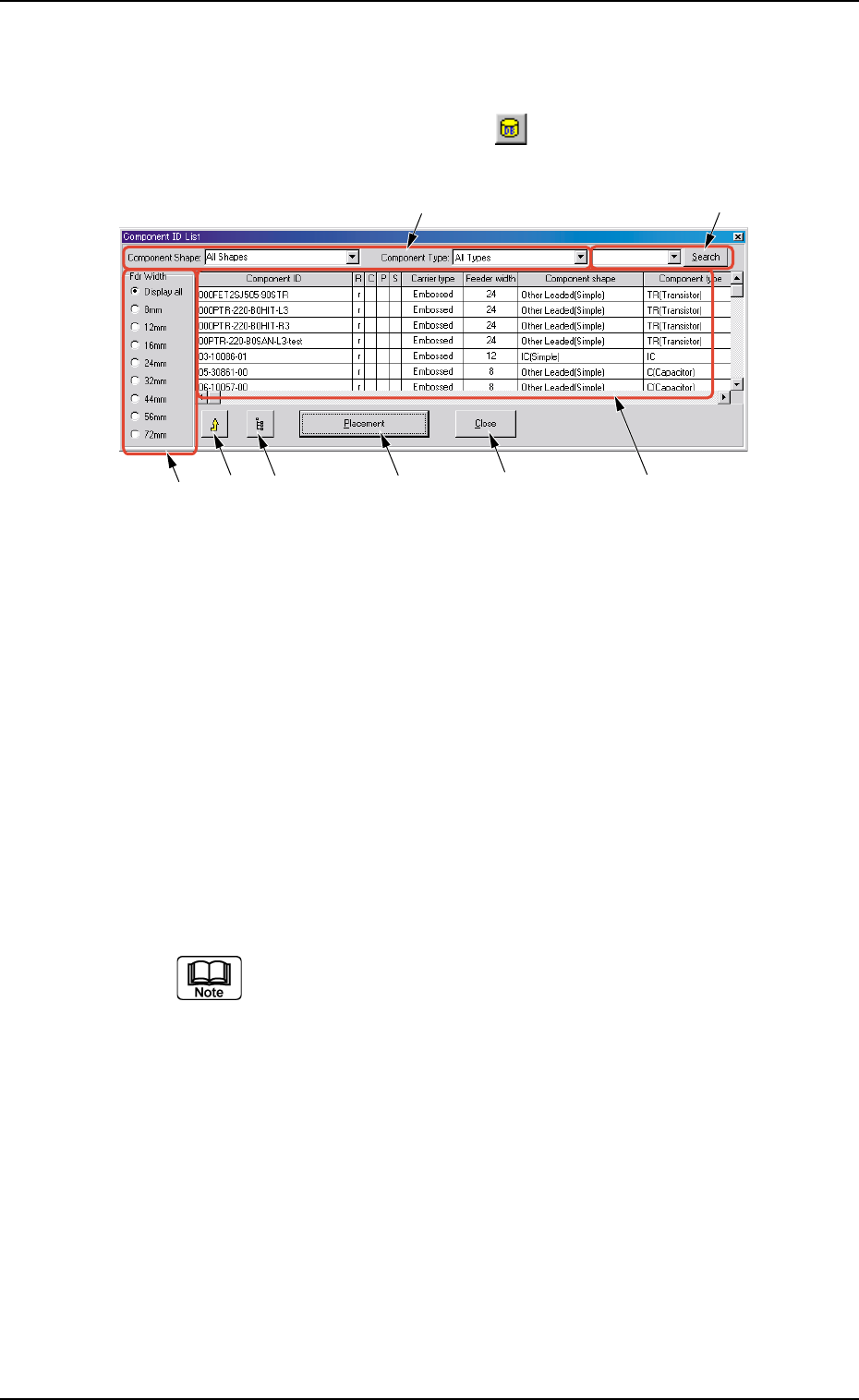
Fig. 3B165 "Component ID List" Window
• Sheet Composition
*1 Component Shape, Component Type
Enter parameters in these text boxes.
When parameters are set in the text boxes, a list of the correspond-
ing component types appears in "*6".
*2 "Fdr Width" Group Box
Select the desired option button to specify the feeder width.
*3 "Component Library" Edit Button
When pressed, this button opens the "Component Library" edit win-
dow, making it possible to edit the component library data.
Refer to "Section 3 Component Library" for the detailed in-
formation on how to edit the component library data.
*4 [Link ID Tree View] Button
Link and root IDs are arranged side by side and displayed in the
hierarchical (tree) file system.
*5 [Placement] Button
When this button is pressed, the component selected from the list
of component IDs is set in the placement feeder location data.
*6 [Close] Button
When this button is pressed, the "Component ID List" window closes.
*7 List of Component IDs
A list of component IDs is displayed.
*5 *6
*2
*3
*1
*8
*4 *7
0308-002 2-99 AHB01EDTP
4.3 "Placement Feeder Location" Tab
*8 [Search] Button
This button is used to search a component ID.
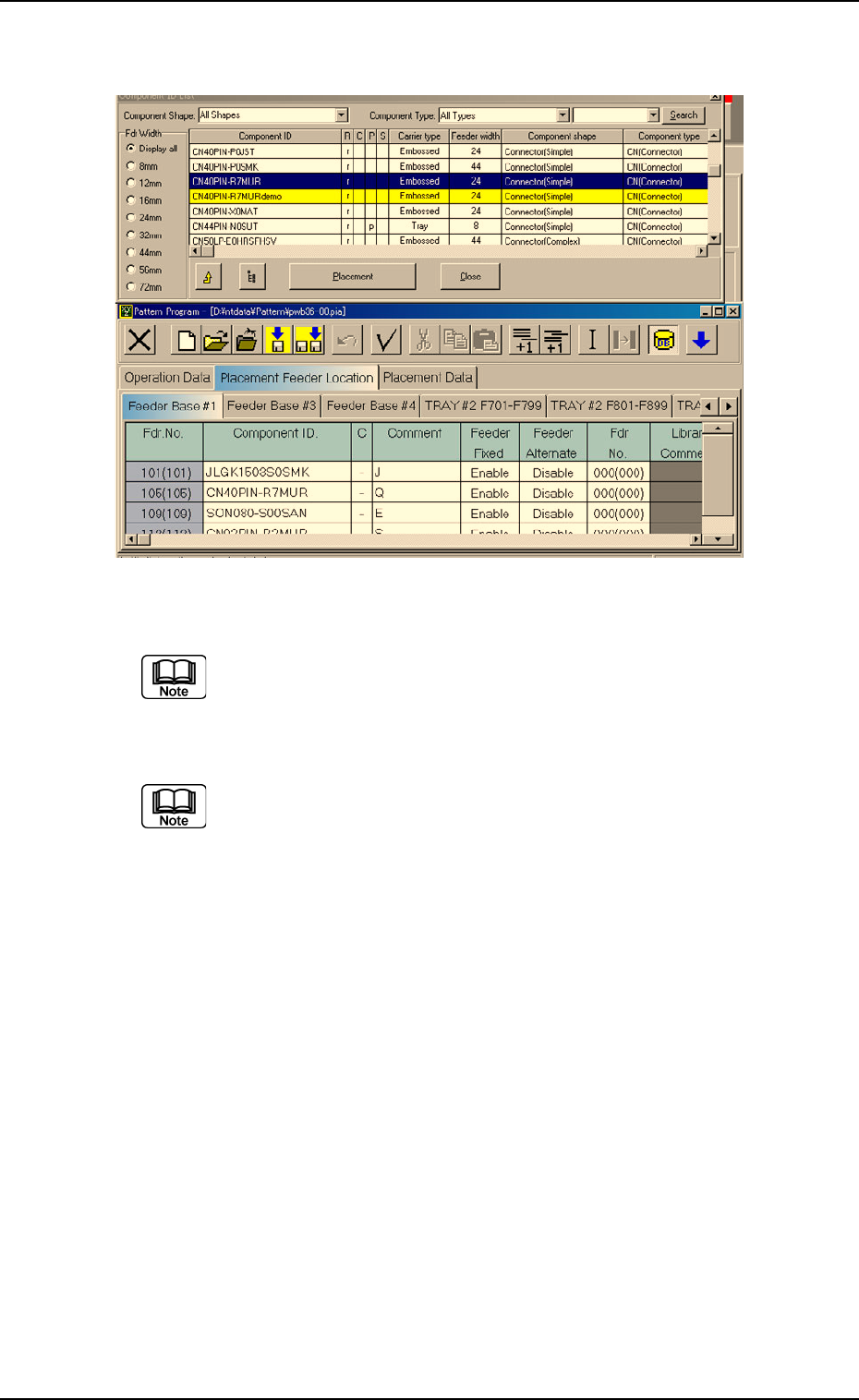
Fig. 3B166 Arrangement (Example) of "Component ID List" Window
(Provided with Multi-Layer Tray Feeder 2)
The tab sheet may look different, depending on which options
are selected.
• Operation Procedure
It is recommended to drag and drop the "Component ID List"
dialog box at a place where it can be arranged for easier navi-
gation as shown in Fig. 3B166.
Selection of Feeder Width
When several items (functions) are grouped and one of them must be
selected, option buttons are provided in front of the items, allowing you
to choose a single item (function) from a group of options.
A list of components related to the selected feeder width is displayed in
the "List of Component IDs" pane (*6).
Option Buttons
~ : A dot inside the circle indicates that the corresponding function
is selected.
{ : The corresponding function is not selected.
Turning on or off an option button
When a dot is not in an option button, it means that the item (func-
tion) is not selected. When such an option button is pressed, a dot
appears inside the circle, indicating that the item (function) is se-
lected.
When an option button having a dot in the circle is pressed, the dot
disappears, indicating that the selection of the item (function) is can-
celed.
0308-002 2-100 AHB01EDTP
4.3 "Placement Feeder Location" Tab
Allocation of Component ID
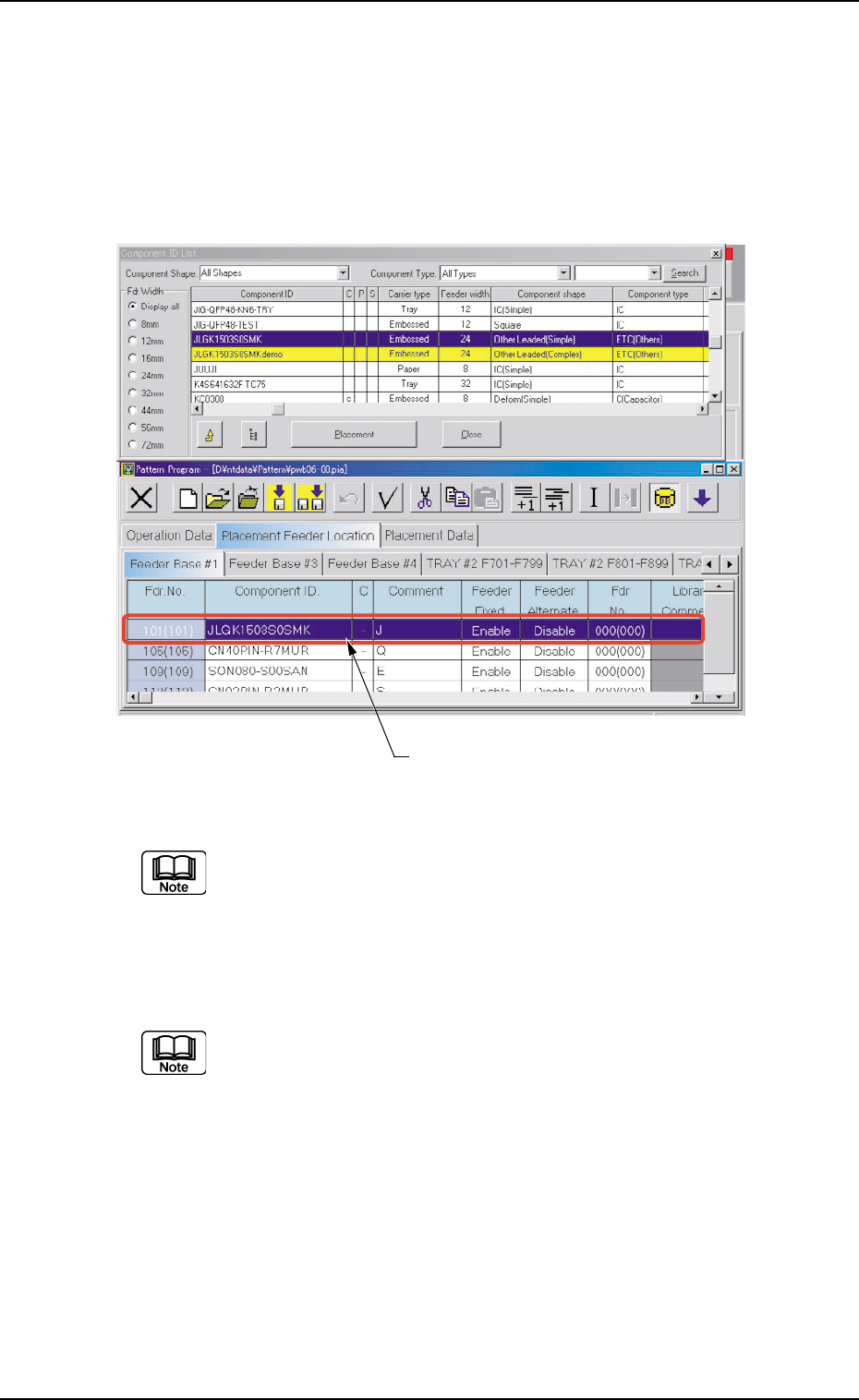
(1) Select the "Feeder Base #" tab where a component ID should be
allocated.
(2) Select the feeder No. (Fdr. No.) where a component ID should be
allocated.
The selected line (Fdr. No.) turns blue, indicating that it is selected.
Fig. 3B167 Edit Window (Example) (Provided with Multi-Layer Tray Feeder 2)
The tab sheet may look different, depending on which options
are selected.
(3) Select the desired component ID to be allocated in the "Component
ID List" window.
Select the desired options from the "Component Shape" and
"Component Type" drop-down lists and the desired option but-
ton in the "Fdr Width" group box to determine the properties of
the component ID as the requirements to be fulfilled.
(4) Press the [Placement] button.
The selected component ID is allocated to the "Fdr No." line that
has turned blue.
Selected Fdr.No.
0308-002 2-101 AHB01EDTP
4.3 "Placement Feeder Location" Tab