operation-cp45.pdf - 第191页
PCB Edit Command 1 1-37 <Device> combo box To move the XY axis, select the corresponding device. Applicable devices are as follows. Head1: Selects Head1. Head2: Selects Head2. Head3: Selects Head3. Head4: Selects…
Samsung Component Placer CP-45F(V)/FS Operations Manual
11-36
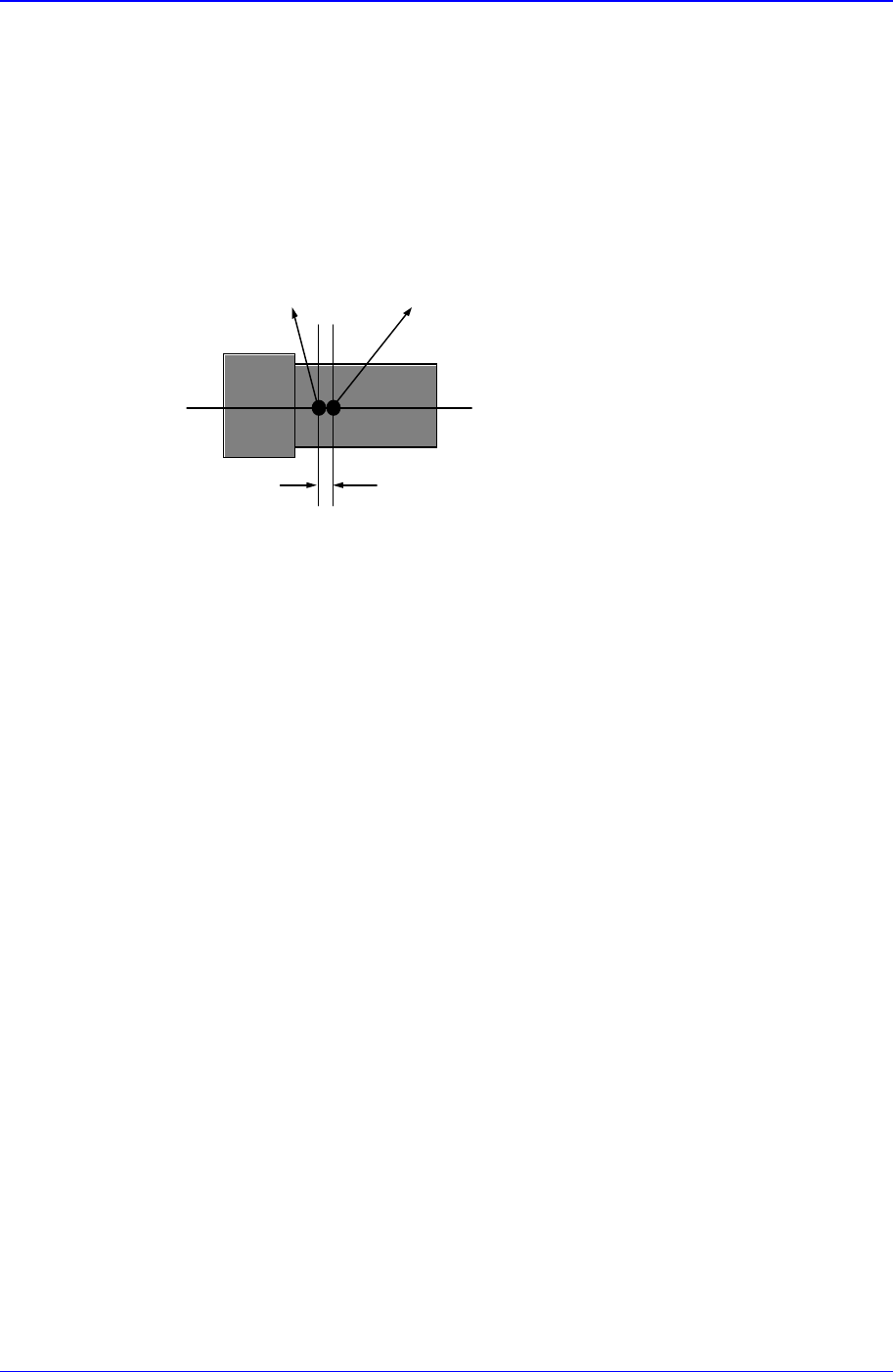
Set the X offset value to be added when the component is placed (After
component recognition, it is the value added after placement point adjustment). If
a component is not top/down or right/left symmetry and when the component
center(centroid) is calculated after component recognition, it does not coincide
with the actual component center. The purpose of this value is to do regular
adjustment by setting the offset value between the obtained component
center(centroid) and the actual component center.
<Offset Y> edit box
Set the Y offset value to be added when the component is placed. (After
component recognition, the value added after component placement point
adjustment)
<Offset R> edit box
Set the R offset value to be added when the component is placed.(After
component recognition, it is the value added after component placement point
adjustment)
<Area Margin> edit box
Sets the range for the image to be off the center of the screen when recognizing a
component. For example, if this value is set to 5mm, it means that the image
should be within 5mm of the center
<Outline> button
Displays the outline of the component on the vision monitor by using the set align
data.
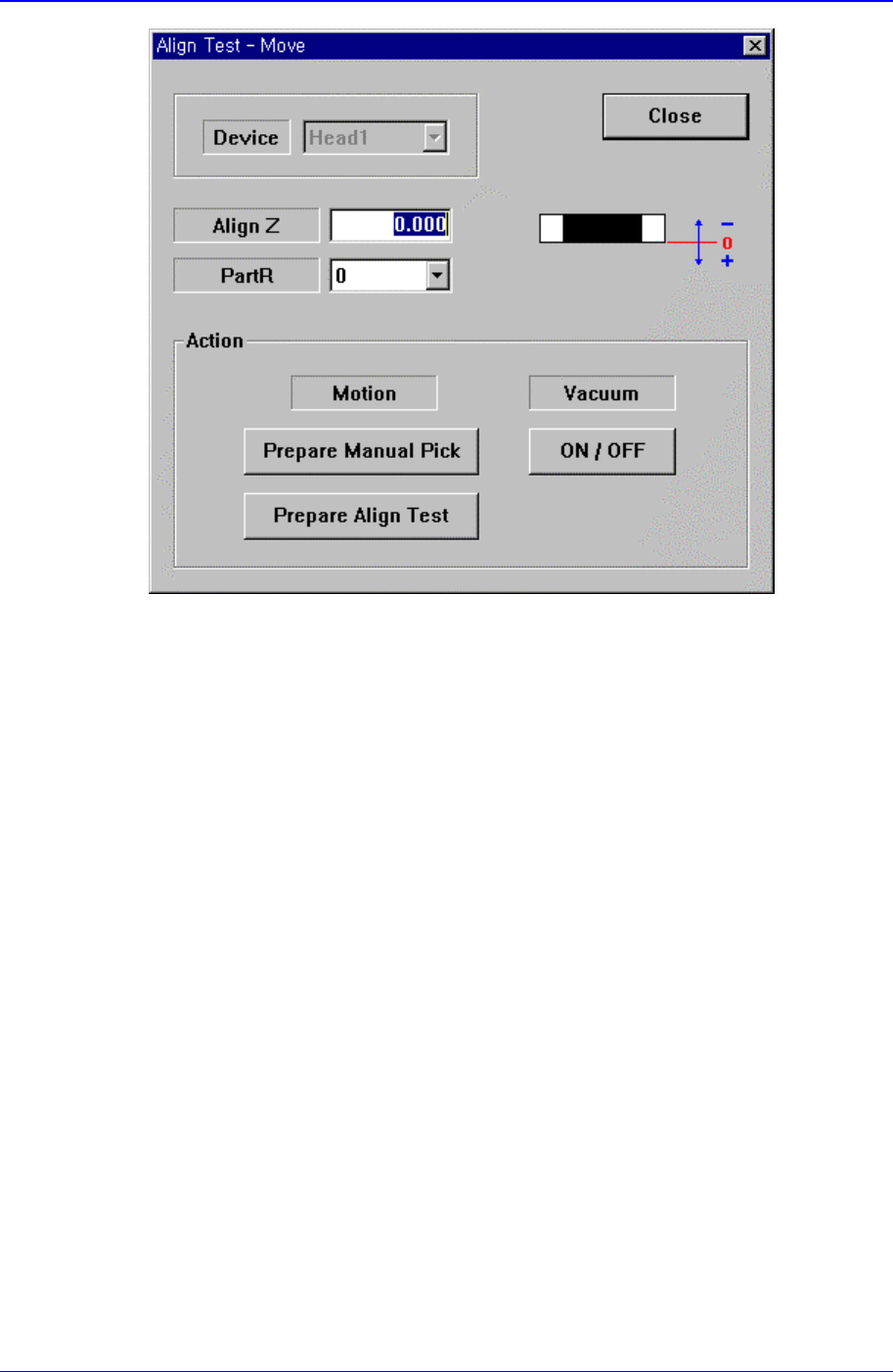
<Move…> button
Performs component pickups or moves to the fix camera. When this button is clicked
on, the following dialog box is displayed.
<Image Capture> button
Helps to specify the optimum lighting value. The lighting is gradually changed
automatically and the images are saved. The user can check the best image and
identify the optimum lighting value.
Component center(centroid)
after component recognition
Actual component center
Offset X
PCB Edit Command
11-37
<Device> combo box
To move the XY axis, select the corresponding device. Applicable devices are as
follows.
Head1: Selects Head1.
Head2: Selects Head2.
Head3: Selects Head3.
Head4: Selects Head4.
Head5: Selects Head5.
Head6: Selects Head6.
When the <Camera No> has been set to the head camera in component align data,
the <Device> combo box is inactivated.
<Align Z> edit box
Set the height for recognition. Based on the component surface, if the top is to be
recognized, set - value, and if the bottom is to be recognized, set + value.
<Action> group
<Prepare Manual Pick> button
Moves the head block to the pickups point when the component is to be
adsorbed to the head manually. Moves to the Home position of the
equipment.
<Prepare Align Test> button
Prepares for the component align test. If the <Camera No.> to be aligned is
the fly camera, moves the Z axis of the head to the align height, closes the
mirror and sets the light. If the <Camera No.> to be aligned is the fix camera,
moves the Z axis of the head to a safe height, moves the head block to the fix
camera position, and then moves the Z axis of the head to the align height.
Samsung Component Placer CP-45F(V)/FS Operations Manual
11-38
<Vacuum ON/OFF> button
Turns on/off the vacuum generator of the head for component pickups or
release.
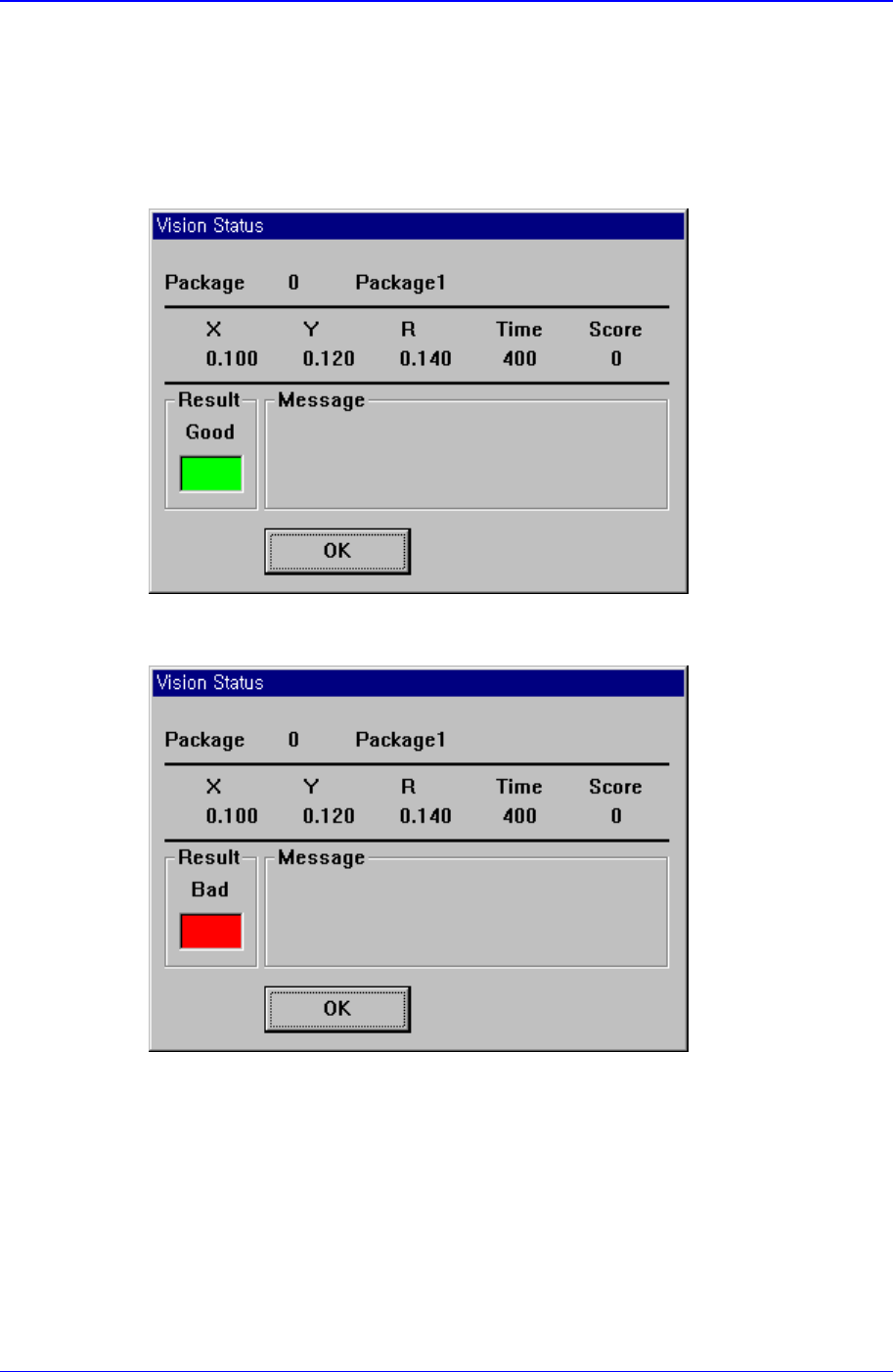
<Test> button
Tests component recognition by using the set align data. When the test is successful,
the following message box is displayed.
When the test is not successful, the following message box is displayed.
<Auto Teach> button
Automatically finds out the component align data. When auto teach is successful, the
following message box is displayed.