operation-cp45.pdf - 第69页
Basic Configuration and Name of Each Part 2-17 2.10. Component Alignment Met hod (Component Centering Method) 2.10.1. Flying V ision 2.10.1.1. Overview The flying vision system is a vision syst em attached on the head th…

Samsung Component Placer CP-45F(V)/FS Operations Manual
2-16
Lead plating
Gold plating
Hot-wing repeller solder coating
Flux coating
The surface of a fiducial mark should appear in complete contrast to printed circuit part
so that it is clearly distinguishable from the circuits that are already printed. It should
always be clean without dirt or contamination.
2.9.1.5. Evenness of fiducial marks
The surface of a fiducial mark should be even and smooth. Unevenness of the surface
should be within 0.02mm, and a material covering the surface of a fiducial mark should
also be even and smooth (That is, the protruding portion from the fiducial mark surface
should be within 0.02mm.).
2.9.1.6. Bad-Marks
If you don't want a component to be placed on a PCB, indicate the bad-mark on the PCB
(The position of bad-mark should be consistent).
It should appear in complete contrast to the background color of PCB, and have a
diameter of more than 2.5mm.
In the production program, a shading(dark or light) indication with respect to the
background color of PCB may be designated arbitrarily as a bad-mark.
Warning
Pressing the Start switch without checking the presence
of worker nearby could cause injury.
Be sure to check if there is any worker near the machine
before pressing the Start switch.
Memo
Basic Configuration and Name of Each Part
2-17
2.10. Component Alignment Method (Component Centering Method)
2.10.1. Flying Vision
2.10.1.1. Overview
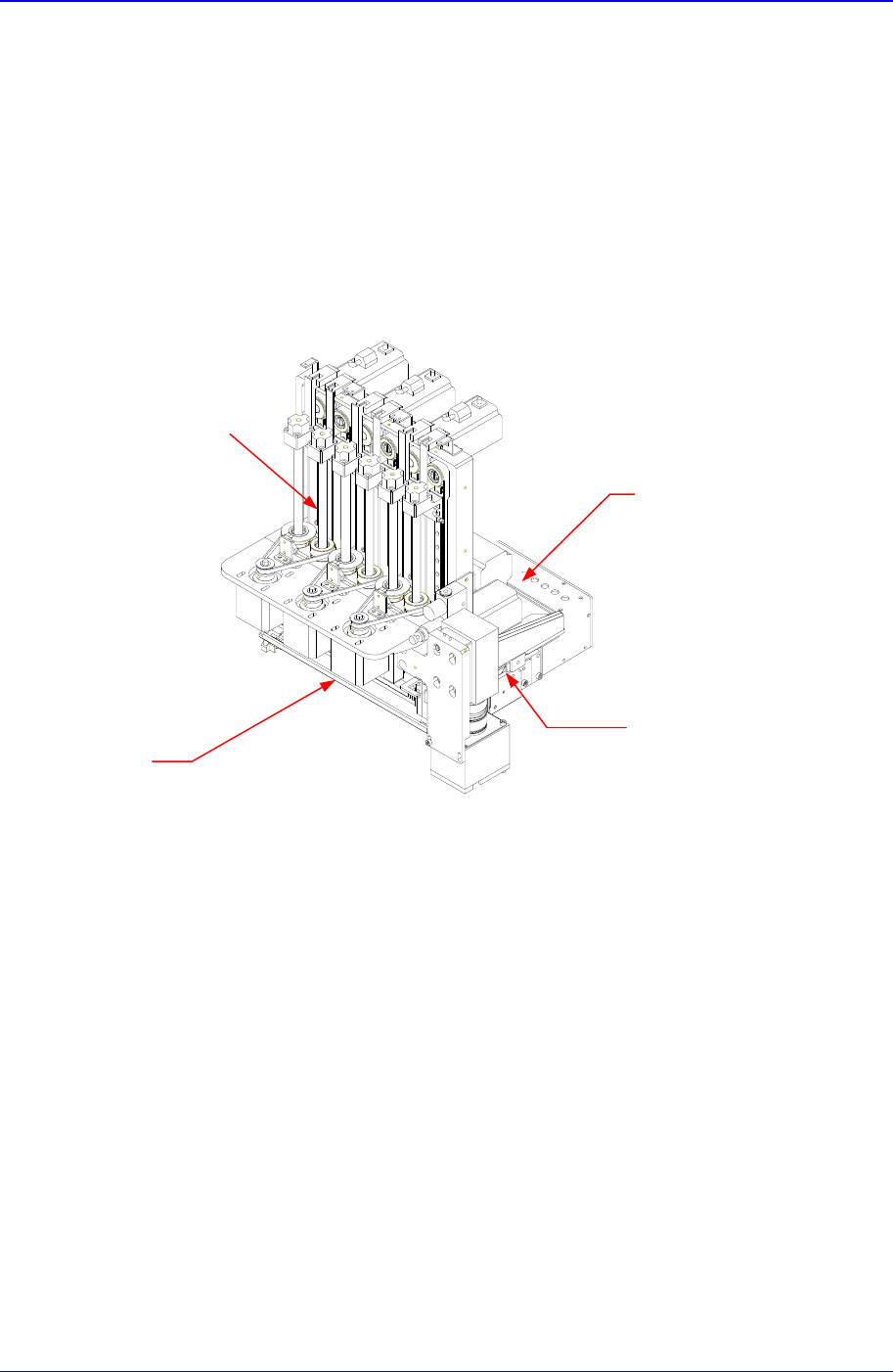
The flying vision system is a vision system attached on the head that recognizes a
component when it moves from the pickups position to the placement position. 6 CCD
cameras attached on the head recognize components on 6 heads simultaneously. 3 types
of multiple step digital lights can be selected for each head.
Figure 2-11. Samsung Flying Vision
2.10.1.2. Light Path Control
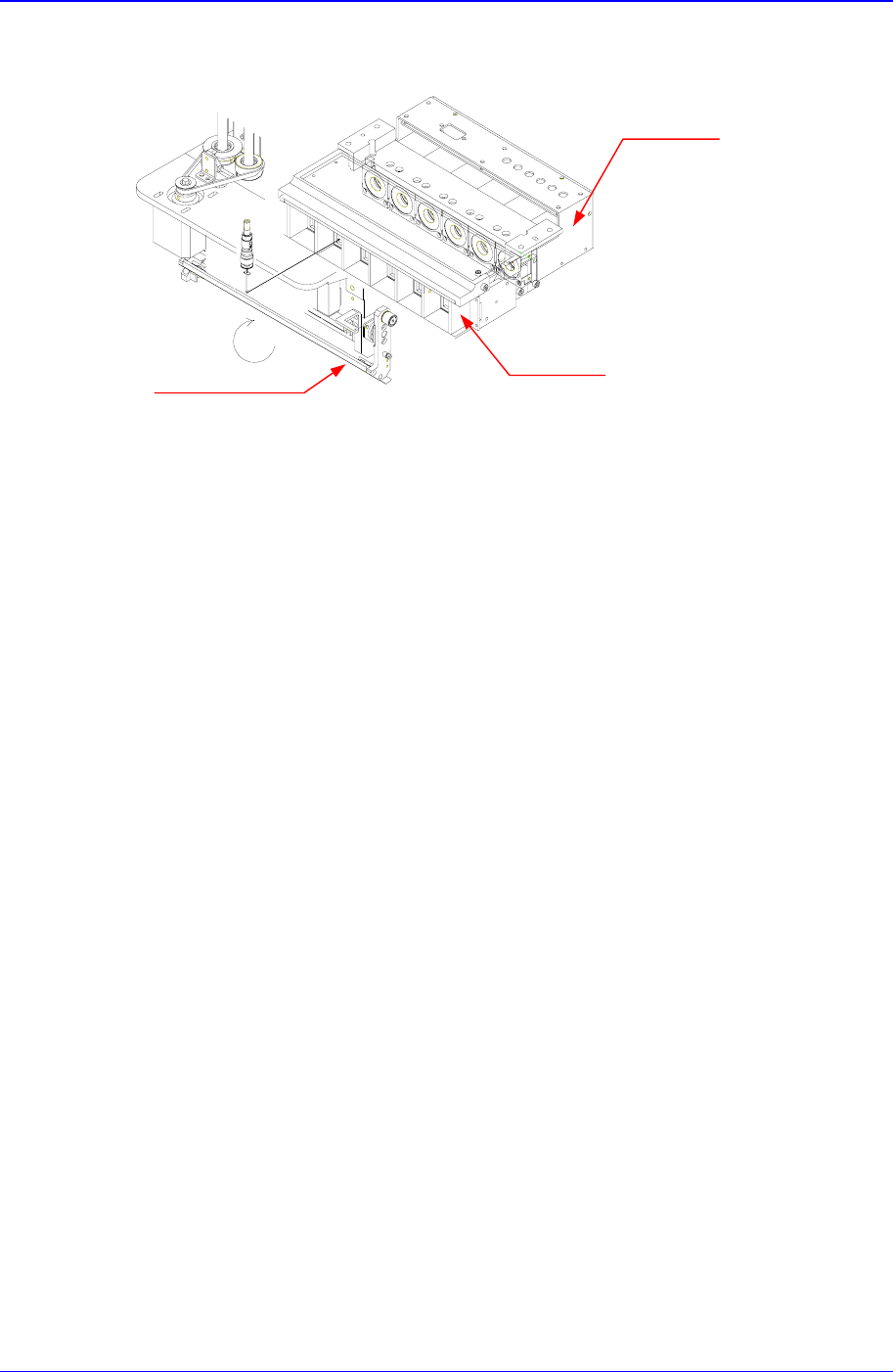
The flying vision system has a mirror on the light path. To avoid a collision with the Z
axis, it rotates during pickups, recognition, and placement.
6-CCD Camera
Multi-Step digital
lighting system
Mirror
6-Head
Samsung Component Placer CP-45F(V)/FS Operations Manual
2-18
Figure 2-12. Light path control
During component pickups, the mirror attached on the head rotates and moves to the front
of the head. When the component is on the move to the placement position after it has
been picked up, the mirror rotates and moves to the bottom of the head, and the image of
the component is formed through the mirror on the CCD camera attached on the head.
The image is vision treated and the position and angle of the component is recognized. By
using the recognized position and angle of the component, the coordinates of placement
position are adjusted. When the component is placed on the adjusted position, the mirror
rotates and moves to the front of the head again.
Multi-Step digital
lighting system
6 – CCD Camera
Mirror