CP643 系统参考.pdf - 第61页
Each index position is referred to as a “station” and the stations are labeled as ST1, ST2, and ST3~ST20 respectively. The following roles are assigned to each station. • STN 1: Parts Pick-up Parts are picked from the fe…
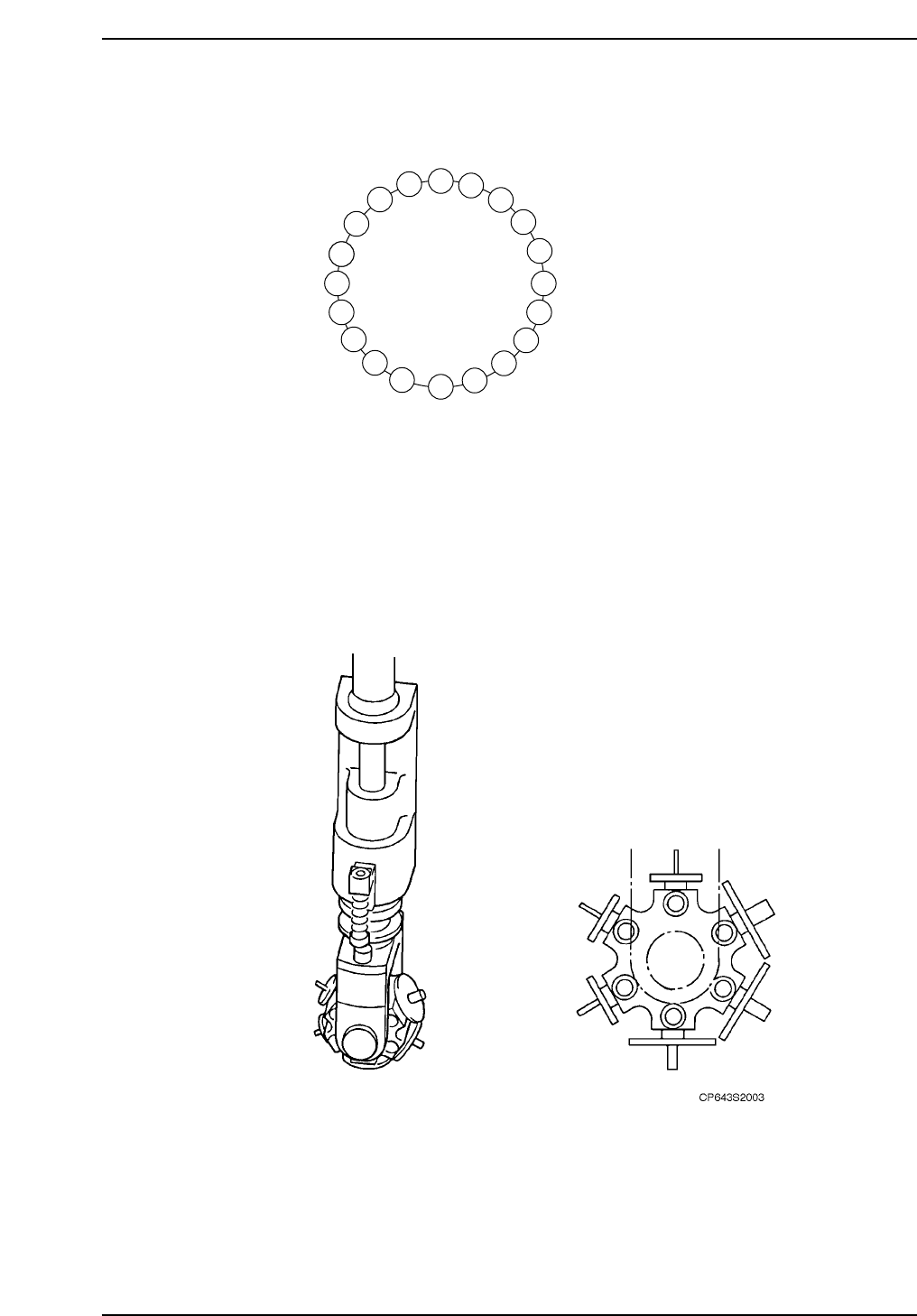
(4) Functions of Each Station
The machine has twenty placing heads, labeled A to T, which rotate clockwise.
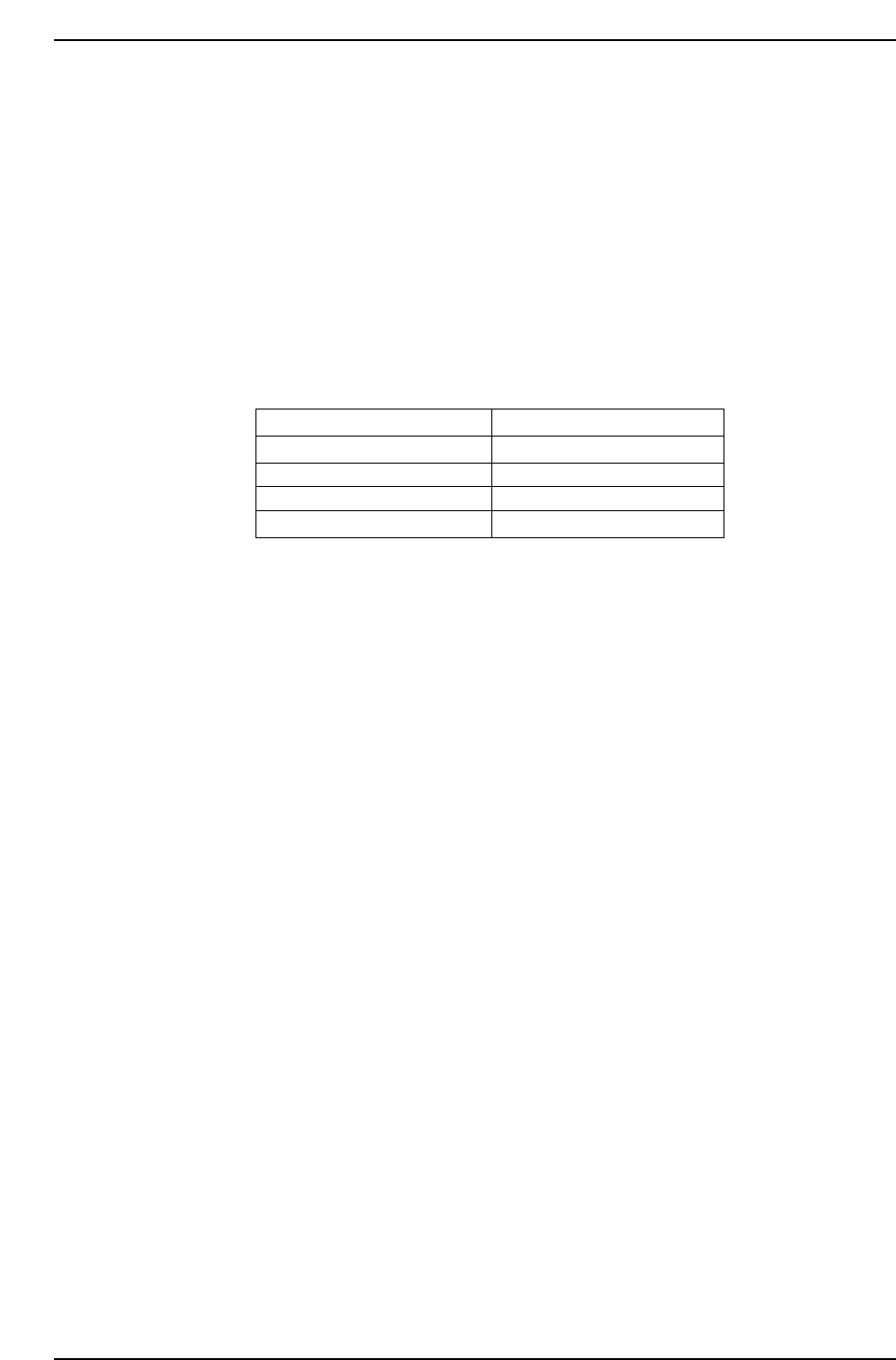
Each placing head has six nozzle holders. The nozzle position is determined before part
pickup.
The nozzle holder is shown in the following figure.
A
K
P F
G
H
I
J
L
M
N
O
Q
R
S
T
B
C
D
E
ST1
ST2
ST3
ST4
ST5
ST6
ST7
ST8
ST9
ST10
ST11
ST12
ST13
ST14
ST15
ST16
ST17
ST18
ST19
ST20
CP643S2002
Part 2 Chapter 1 Basic Operation
Edition 1.1 2-1-3 CP643E System Reference
Each index position is referred to as a “station” and the stations are labeled as ST1, ST2,
and ST3~ST20 respectively. The following roles are assigned to each station.
• STN 1: Parts Pick-up
Parts are picked from the feeder.
• STN 2: Large Parts Pick-up Check
Checks to see if a large part has been picked up.
• STN 3: Pθ (Pre Theta)
Picked up parts are rotated in 90-degree increments. Rotation angles are
shown below.
Further adjustments are made at station 10.
• STN 4: No Function
• STN 5: Nozzle θ-positioning
Nozzle clutch deviations are corrected prior to vision processing to prevent
angle deviations at ST10:Fθ.
• STN 6: The picked up part's image is acquired.
• STN 7: From the results of station 6, the corrections are computed.
• STN 8: No Function
• STN 9: No Function
• STN 10: Fθ (Fine Theta)
In conjunction with the coordinates obtained from reading the fiducial marks
on the board and using the calculations derived from the processed image at
station 6, the final adjustments of the parts rotation are made.
• STN 11: Parts Placement
The part is placed on the board using the previously obtained coordinate
data.
Rotation (Pickup --> Placing) Pθ Corrective Rotation Angle
0° ~ less than 45°
45° ~ less than 180°
180° ~ less than 315°
315° ~ 0°
0°
90°
-90°
0°
CP643S2004
Part 2 Chapter 1 Basic Operation
Edition 1.1 2-1-4 CP643E System Reference

• STN 12: Reverse Fθ (Fine Reverse Theta)
The theta rotation angle that was performed at ST 10 is reversed. (If there
was no Pθ rotation at ST 3, at this point, the nozzle is returned to the original
position.)
Nozzle origin search is performed for all nozzle clutches when automatic
operation begins after the power is turned on, or after an emergency stop or
other alarms. (Nozzle Origin Search Sensor: Refer to Part 2, Chapter 1, 1.4.7
“Nozzle Origin Search Sensor”.)
• STN 13: Reverse Pθ (Pre Reverse Theta)
The theta rotation angle that was performed at ST 3 is reversed (At this point,
the nozzle has returned to the original position).
• STN 14: Head A detection
Head A detection is performed.
• STN 15: Confirm Nozzle Clutch Origin Position
At this station the origin position of the head is confirmed. Heads that are
not at the origin position will be skipped and returned to the origin position
next revolution at station 12.
• STN 16: Reject Parts
Parts deemed defective by the vision system and/or outside dimensional
tolerances are dumped at this station.
• STN 17: Detect Nozzle Type
Detects the selected nozzle type (No.1 to No.6) prior to nozzle changes.
• STN 18: Nozzle Change
The nozzle that will be used for the next part pick-up is selected.
• STN 19: Nozzle Change Check
Verifies that the correct nozzle is being used following a nozzle change. If
nozzle change error occurs, the erroneous head will be stopped at this
position.
• STN 20: No Function
Part 2 Chapter 1 Basic Operation
Edition 1.1 2-1-5 CP643E System Reference