YV180X_Ope_E.pdf - 第23页
1 -13 EPD8013110 Operation Chapter 1 1 Par t names and functions 5.1 YPU The YPU is a hand-held remote control device ha ving easy-to-use functions and command ke ys frequently used to operate the machine and edit the ma…
1
-12
EPD8013110
Operation
Chapter 1
1
Part names and functions
5. Data input and operation devices
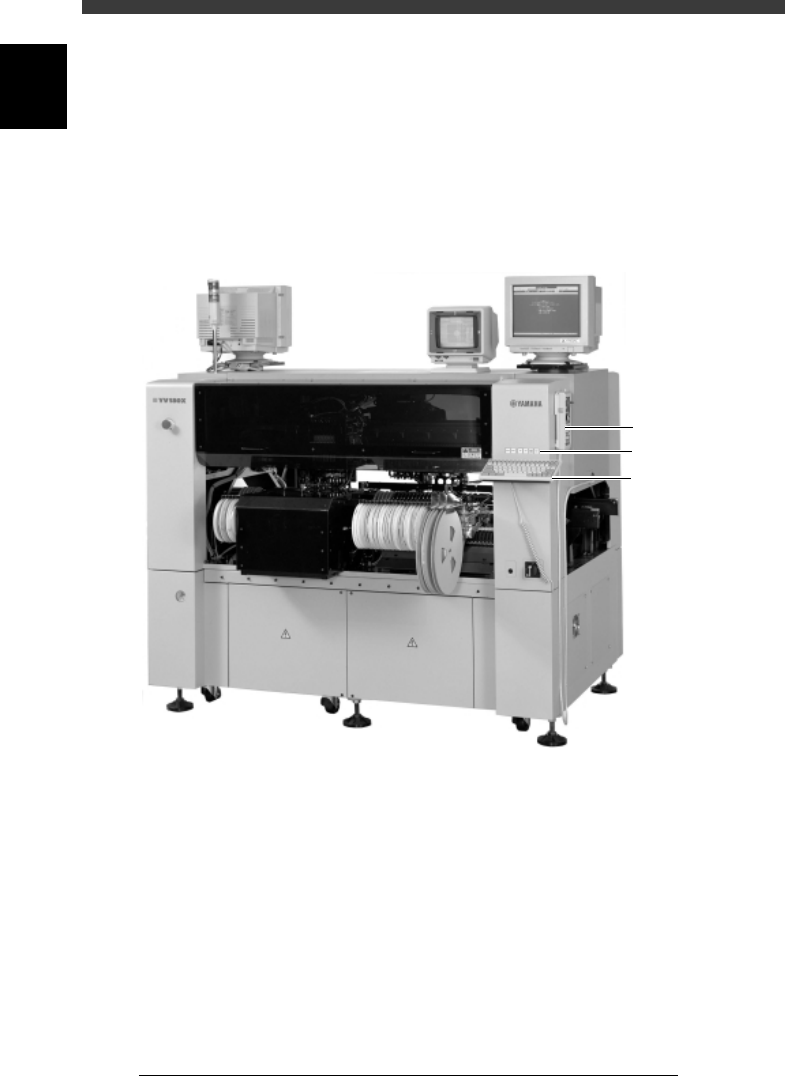
A YPU (hand-held remote control device) and a keyboard are supplied with
the machine as standard accessories. Using these accessory devices, you
can easily operate the machine, create data and make adjustments.
Data input and operation unit
28103-D8-00
Keyboard
YPU
Operation panel keys
1
-13
EPD8013110
Operation
Chapter 1
1
Part names and functions
5.1 YPU
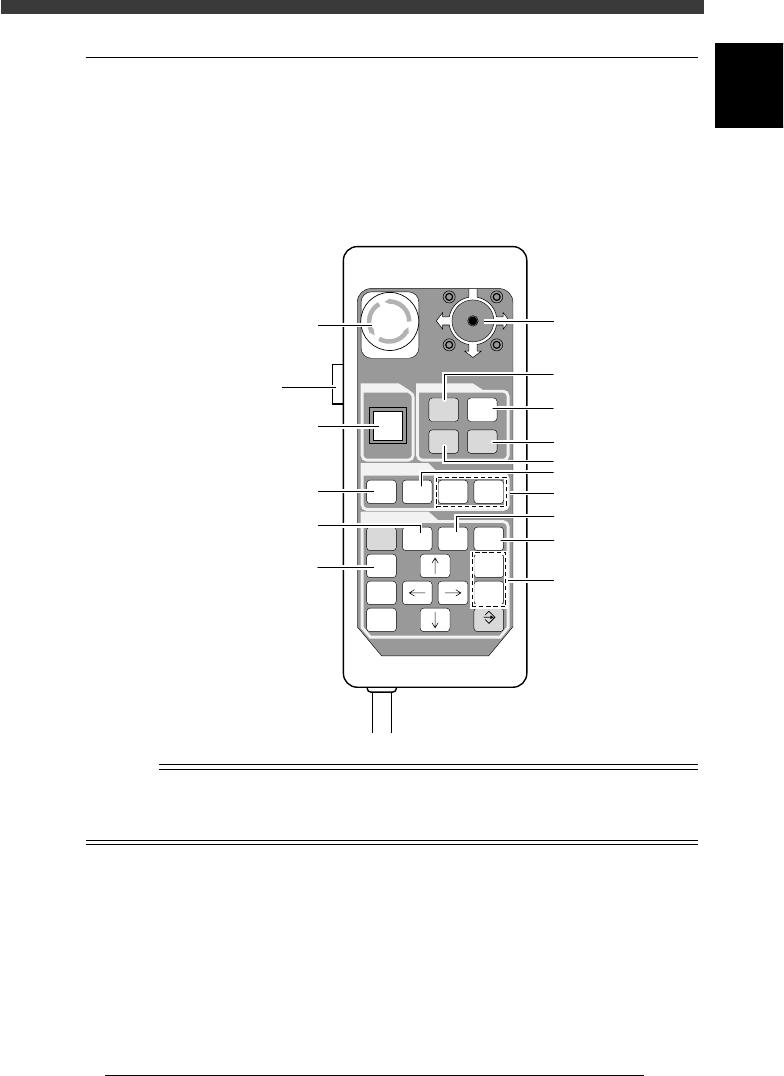
The YPU is a hand-held remote control device having easy-to-use functions
and command keys frequently used to operate the machine and edit the
machine data. The YPU also has an emergency stop button and a joystick
for axis movement in MANUAL mode. The illustration and table below
show the YPU key arrangement and functions.
YPU key arrangement
23107-C0-00
O
STOP
I
RUN
RESET
ERROR
CLEAR
JOY
STICK
AXIS
GROUP
SPEED
SEL
AXIS
HELP
ESC F9 F10
CTRL
DEL
TAB INS
SHIFT
ENTER
EMERGENCY STOP
SCREEN
MANUAL
READY RUNNING
4
1
2
3
5
6
9
10
13
12
11
8
7
Emergency stop button
[ACTIVE] key
Joystic
k
n
NOTE
The YPU keys are enabled only when the [ACTIVE] key on the left side of the YPU is
turned on. (The [STOP] and [ERROR CLEAR] keys and the emergency stop button can be
used regardless of whether the [ACTIVE] key is on or off.)
1
-14
EPD8013110
Operation
Chapter 1
1
Part names and functions
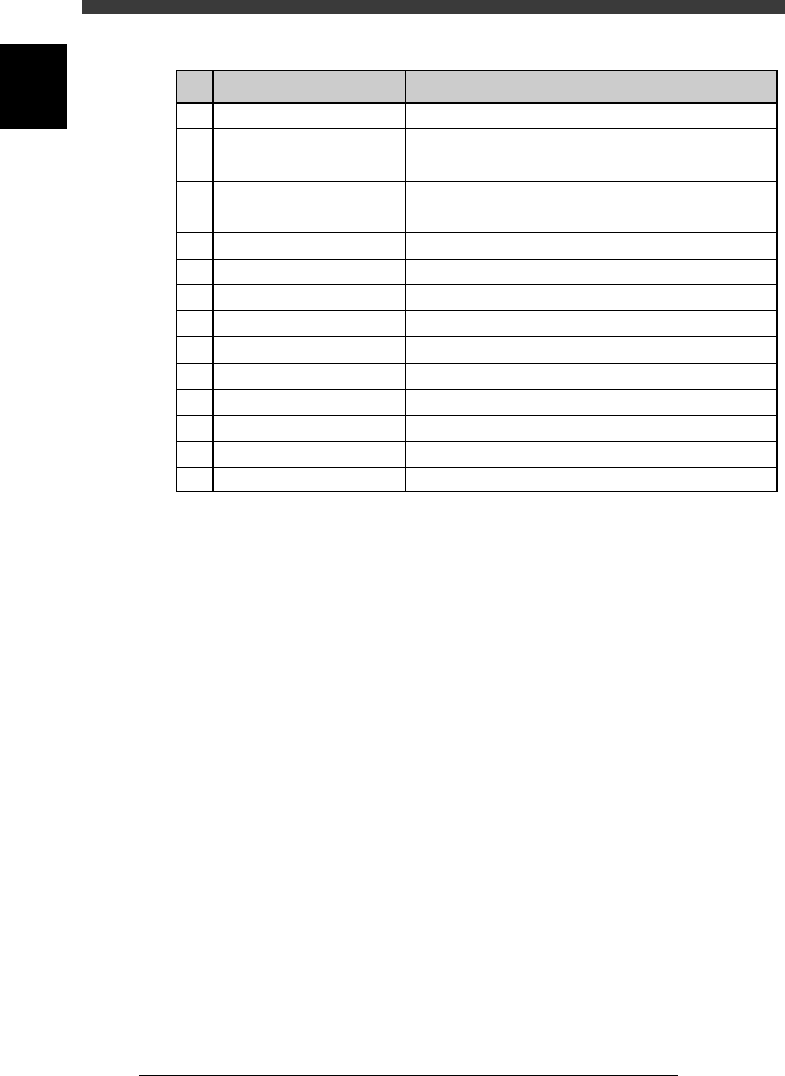
Key functions
25103-C0-00
1
2
3
4
5
6
7
8
9
10
11
12
13
RUN
STOP
RESET
ERROR
READY
JOY STICK
SPEED
SEL AXIS, AXIS GROUP
TAB
HELP
F9
F10
INS, DEL
Perform component mount according to PCB data.
Interrupt automatic operation.
(Press RUN to resume operation.)
Stop automatic operation and return to standby
state for PCB production.
Stop buzzer sound and clear error screen.
Release emergency stop and turn the servo on.
Move the axis manually.
Switch speed in 5 steps.
Select the axis.
Move the cursor between the right and left windows.
Display the help message for the selected item.
Perform tracing.
Perform teaching.
Switch parameter setting on the screen or sub-window.
Key name Use the key to: