Q170226E01.pdf - 第152页
5.16 Replacing Anvil Distortion Gauge SERVICE MANUAL RH5 5.16−3 DA3SEC−83−8YO−A0 =CHECK= x Lay a polyethylene sheet under an eraser or elastic products that can hold the distortion gauge entirely by hand. x Don’t perform…
RH5
5.16 Replacing Anvil Distortion Gauge
SERVICE MANUAL
5.16−2
DA3SEC−83−8YO−A0
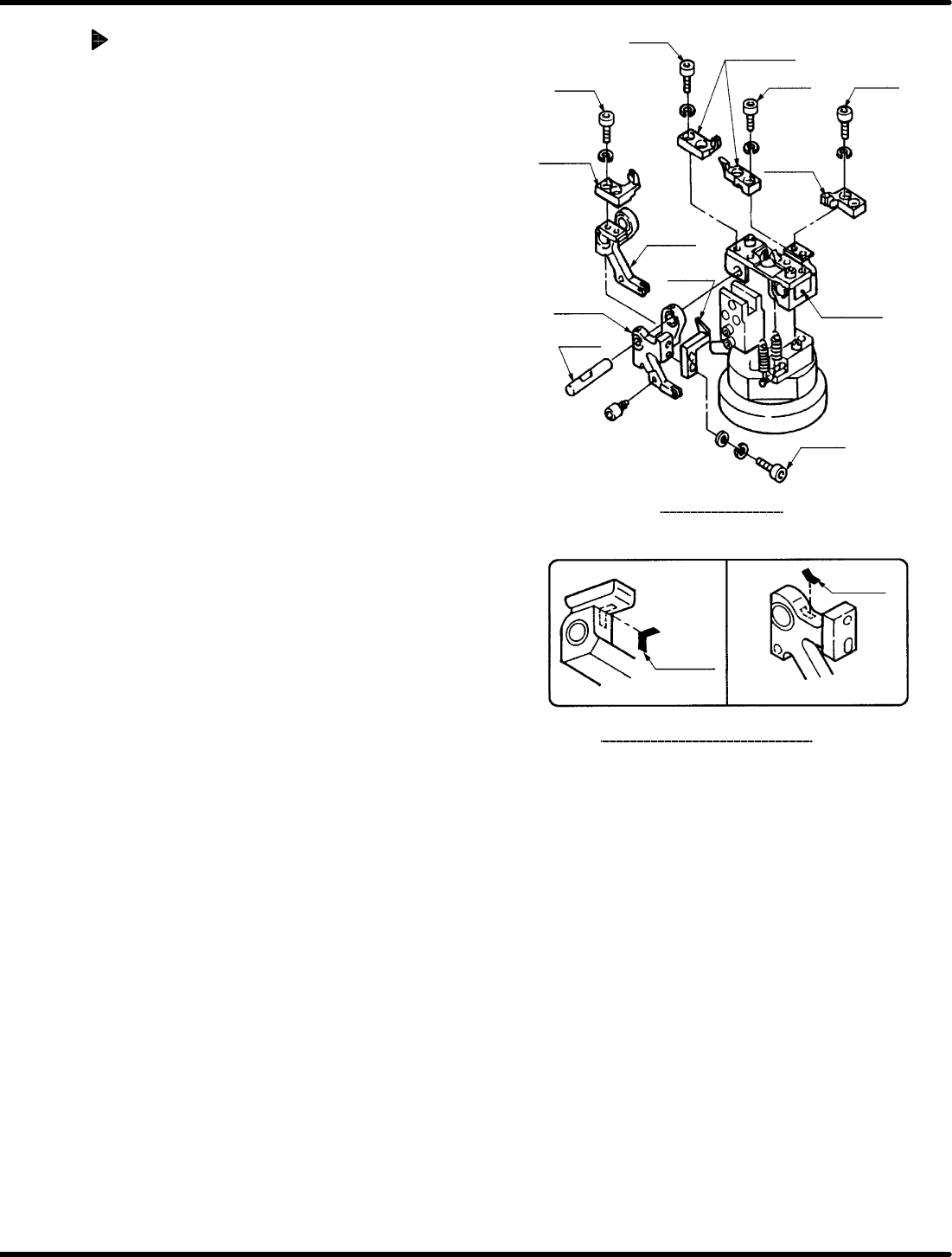
Replacing distortion gauge
1. Loosen bolt A (x 4), bolt B (x 2) and bolt C (x 4)
and remove movable blade A (x 2)/B (x 1) and
fixed blade (x 2).
2. Loosen the set screw and remove the shaft to
detach the chuck levers A and B.
3. Use a cutter , etc. to remove any coating from
the chuck levers A and B, the distortion gauge
and gauge terminal.
4. Finish the attaching plane of the distortion
gauge on the chuck lever A/B and gauge
terminal with a piece of sand paper (#320−400)
until they are flat. After doing this, remove any
fits and oils completely from them with Industrial
alcohol or wash solvent.
5. Apply adhesive to the chuck levers A/B so that it
may not bulge out from the chuck levers. Then
attach it to the distortion gauge and gauge terminal
to one another . At this time, press the attaching
planes at least for one minute.
Bolt C
Bolt C Bolt A
Bolt B
Fixed blade
Movable
blade A
Set screw
Shaft
Movable
blade B
Movable
blade A
Bolt A
Chuck
lever A
Chuck
lever B
Anvil
disassembling
Distortion
gauge
Distortion
gauge
Distortion gauge installing
position
5.16 Replacing Anvil Distortion Gauge
SERVICE MANUAL
RH5
5.16−3
DA3SEC−83−8YO−A0
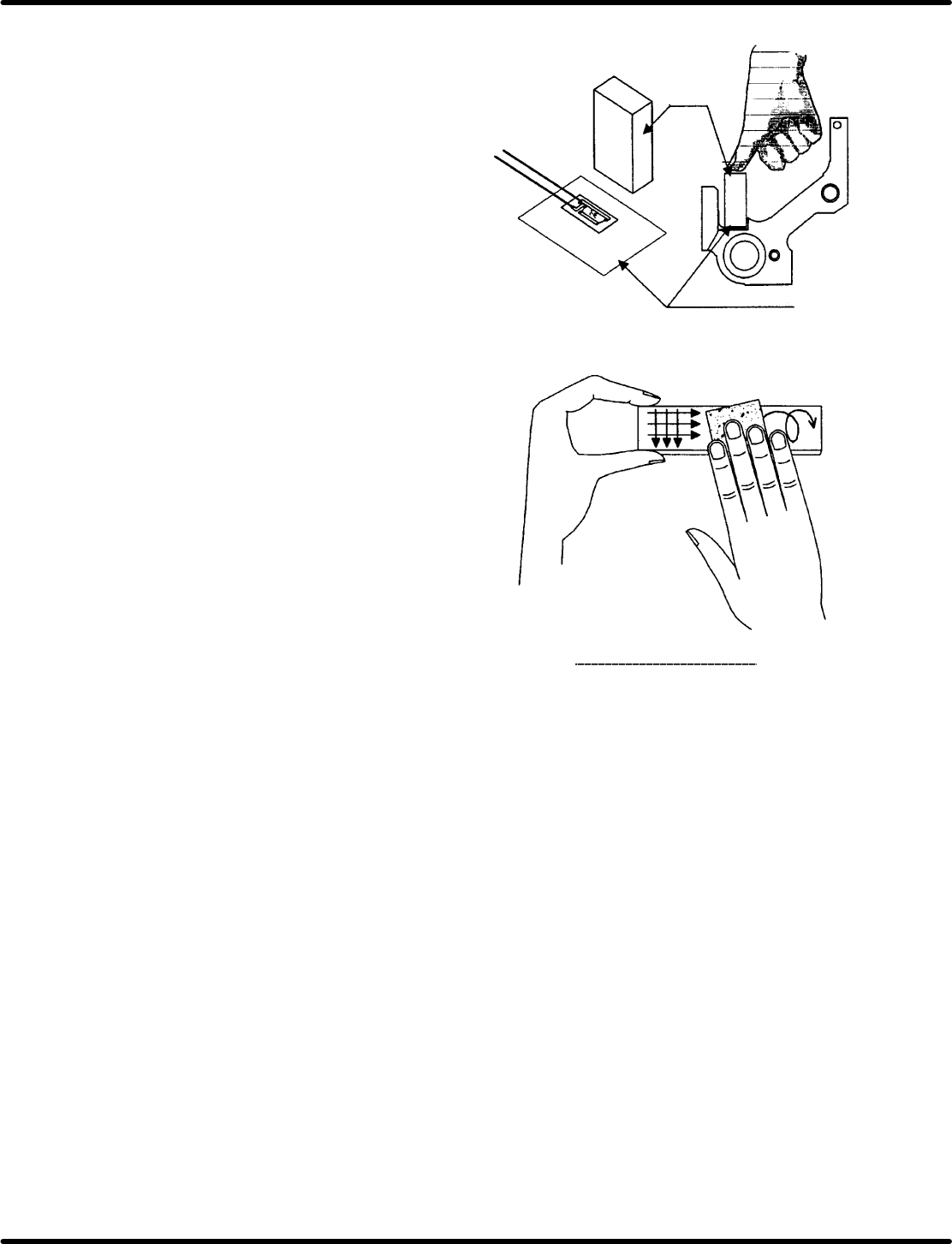
=CHECK=
x Lay a polyethylene sheet under an eraser or
elastic products that can hold the distortion
gauge entirely by hand.
x Don’t perform the mirror finishing on the
attaching surface with a piece of sand
paper. (Finish it crosswise or circularly.)
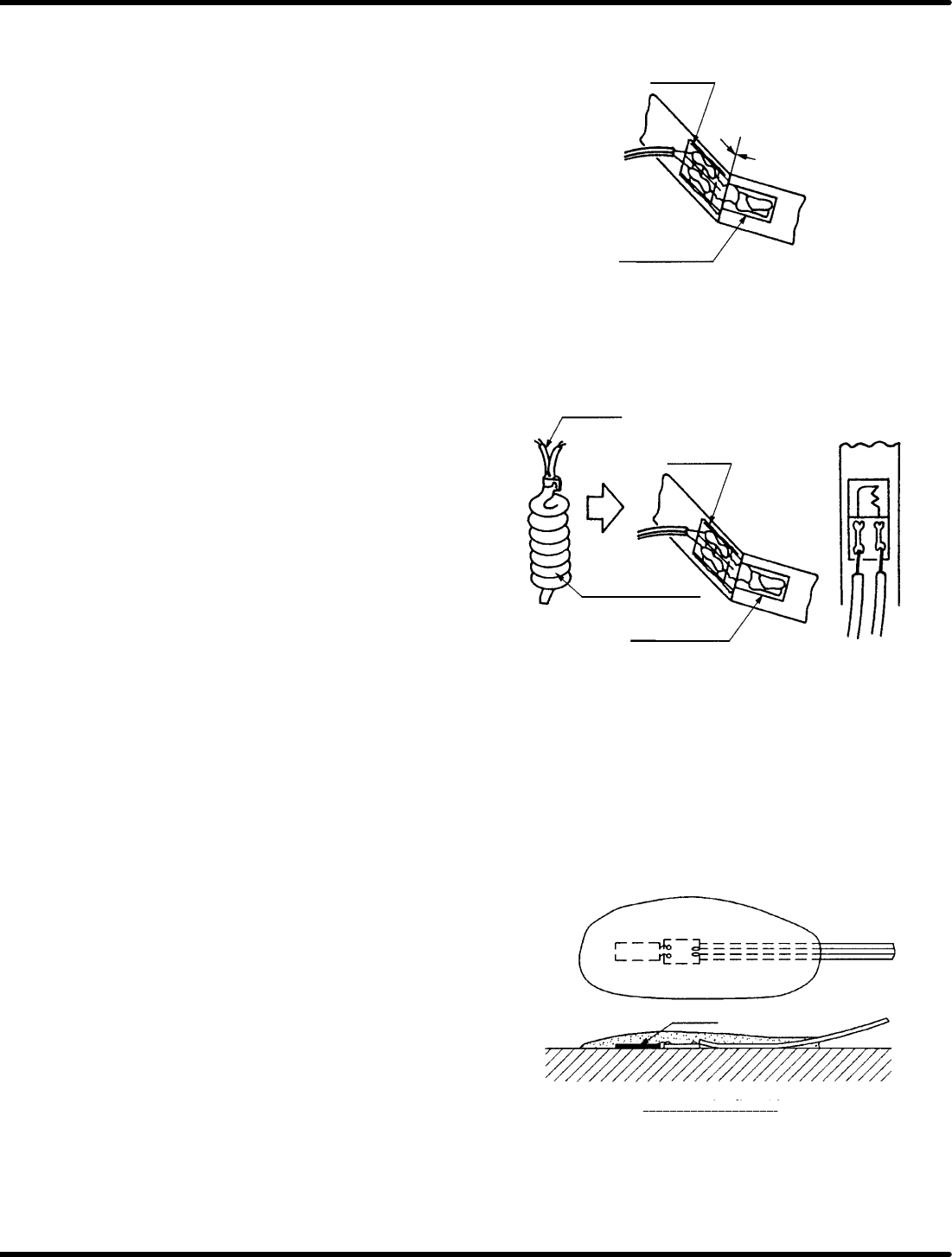
x When attaching the distortion gauge and
gauge terminal, check that no gap is
found between them.
Precautions in handling adhesive
x Take out the adhesive from the container
immediately before attaching the units.
x When attaching the gauge, keep the
pressure between 49.5 and 98.1 KPa.
x Attach the gauge rapidly before the
adhesive is cured by reaction with moisture
in the air.
x After applying adhesive and pressing down
the gauge for more than one minute, it aside
for three or four hours to increase the
adhesive strength before coating.
x After using adhesive, do not leave it in high
temperature environment. (Put it into cold
storage.)
Finishing with a piece of sand
Eraser
Polyethylene sheet
RH5
5.16 Replacing Anvil Distortion Gauge
SERVICE MANUAL
5.16−4
DA3SEC−83−8YO−A0
6. Cut the lead wire from the distortion gauge
and solder it to the gauge terminal.
7. Make sure that the difference of the
resistance between the marking of the
resistor on the package and the measured
value after having been attached is within
r5:.
=REFERENCE=
If the difference is outside the given
range, the distortion gauge was not
attached evenly. When this happens, it
is advised to remove and reattach the
distortion gauge.
8. Solder the lead wire (2 each) of the spiral
tube to the gauge terminal.
=CHECK=
Do not overheat the solder in soldering.
(Use 100V AC/15W soldering iron with a
thin tip.)
=REFERENCE=
Connect the lead wires of the spiral tube to
he following items:
x Chuck lever A (reference side):
Red, green
x Chuck lever B (center foot side):
Blue, brown
x Chuck lever A (outer foot side):
Yellow , brown
x Chuck lever B (7.5 mm side):
White, black (RHU series only)
9. Measure the resistance with the connectors
of spiral tube and check for short−circuit.
=REFERENCE=
Resistance: 110−130:
10. After soldering, cover pile up the coating
(two−liquid quick bonding) to cover the
distortion gauge and gauge terminal.
=CHECK=
x Apply coating, not to bulge it it out of the
chuck levers.
x Hold the lead wire and chuck levers in
place until coating is cured completely .
Distortion
gauge
No gap
Gauge terminal
Distortion
gauge
Gauge terminal
Lead wire
Coating state drawing
Gauge