KE2010.Instruction Manual.Ver.2.01,Rev.08.pdf - 第288页
4 – 181 (3) Copying a feeder Select a f eeder , and while holding t he CT RL key , drag it. T he selected f eeder is copied. Note: − The select ed feeder is copied on t he mounting position near est the or iginal feeder …
4 – 180
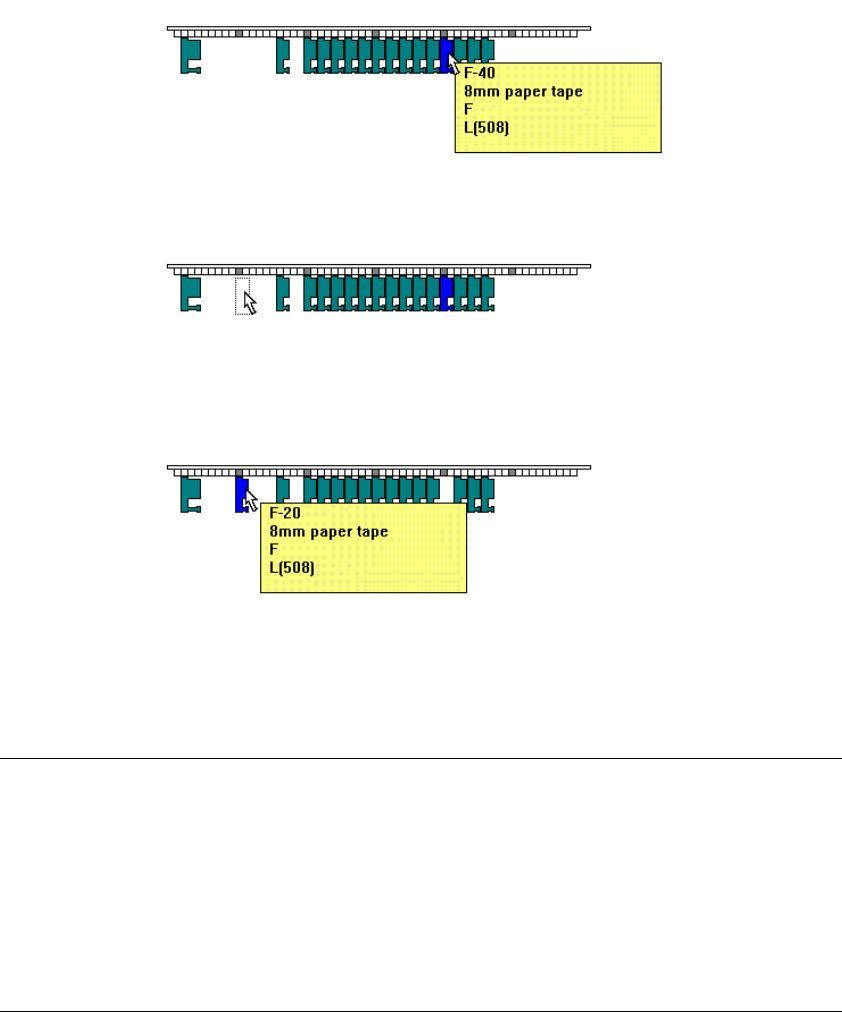
(2) Moving a feeder (within the same station)
Select a feeder to be moved, drag it to the desired position, then release the
trackball button. The selected feeder moves the the feeder mountable position
nearest to the position at which you released the button.
Figure 4.11.1.10 Figure example for moving a feeder
Note:
•
If the feeder mountable area cannot be prepared on the mountable side
(front or rear) to which you want to move the feeder, the beep sounds, then
your moving feeder operation is canceled. Even if there is any space on
the opposite side, the feeder will not be moved there.
•
After moving a feeder, the moved feeder is selected.
•
When you select two or more feeders to be moved, the beep sounds and
your operation is canceled if those feeders cannot be mounted with
maintaining the same space between the consecutive two feeders.
Point a feeder.
Drag it.
Release the
trackball button.
4 – 181
(3) Copying a feeder
Select a feeder, and while holding the CTRL key, drag it. The selected feeder
is copied.
Note:
−
The selected feeder is copied on the mounting position nearest the original
feeder position. Although the machine tries to copy a feeder on the side
(front or rear) nearest to the position at which you released the trackball
button, the beep sounds and your copy operation is canceled if the
machine cannot occupy the appropriate feeder mounting area on the side
(front or rear) where the selected feeder is copied. Even though there is
the sufficient area on the opposite side, the selected feeder cannot be
copied on that side.
−
After copied, the copied (not original) feeder is selected.
−
When you select two or more feeders to be copied, the beep sounds and
your copy operation is canceled if the copied feeders cannot be mounted
with maintaining the same space between them as the original feeders
maintained.
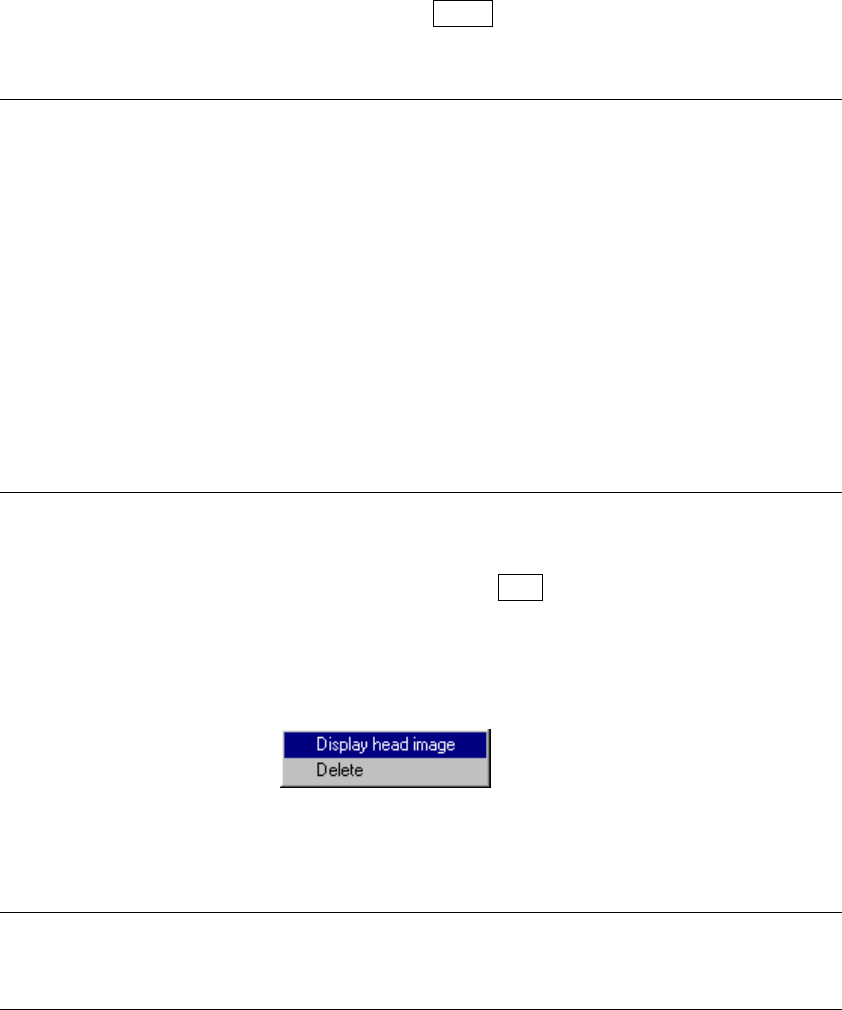
(4) Deleting a feeder
Select a feeder to highlight it, then press the DEL key. The selected feeder is
deleted. When you press the right button of a trackball while a feeder is being
selected, the following pop-up menu appears on the screen which allows you to
delete the selected feeder.
Figure 4.11.1.11 Pop-up menu displayed on the
Feeder layout window
Note: If all feeders associated with a certain component are deleted, its specified
supply position is canceled, then set to “Auto” and the data disappears from
the screen.
3. Copying a stick component
− If there is no stick feeder at the destination, the same type of stick feeder is
newly assigned to the destination. A component is assigned to a Lane 1.
The stick feeder is mounted at the position nearest the copy destination so
that the feeder can occupy the appropriate mounting area.
− A stick component can be copied between the same type of stick feeders.
4 – 182
4. Copying a stick changer component
− If there is no stick changer at the destination, the same type of stick
changer is newly assigned to the destination. A component is assigned to
a Lane 1. The stick changer is mounted at the position nearest the copy
destination so that the changer can occupy the appropriate mounting area.
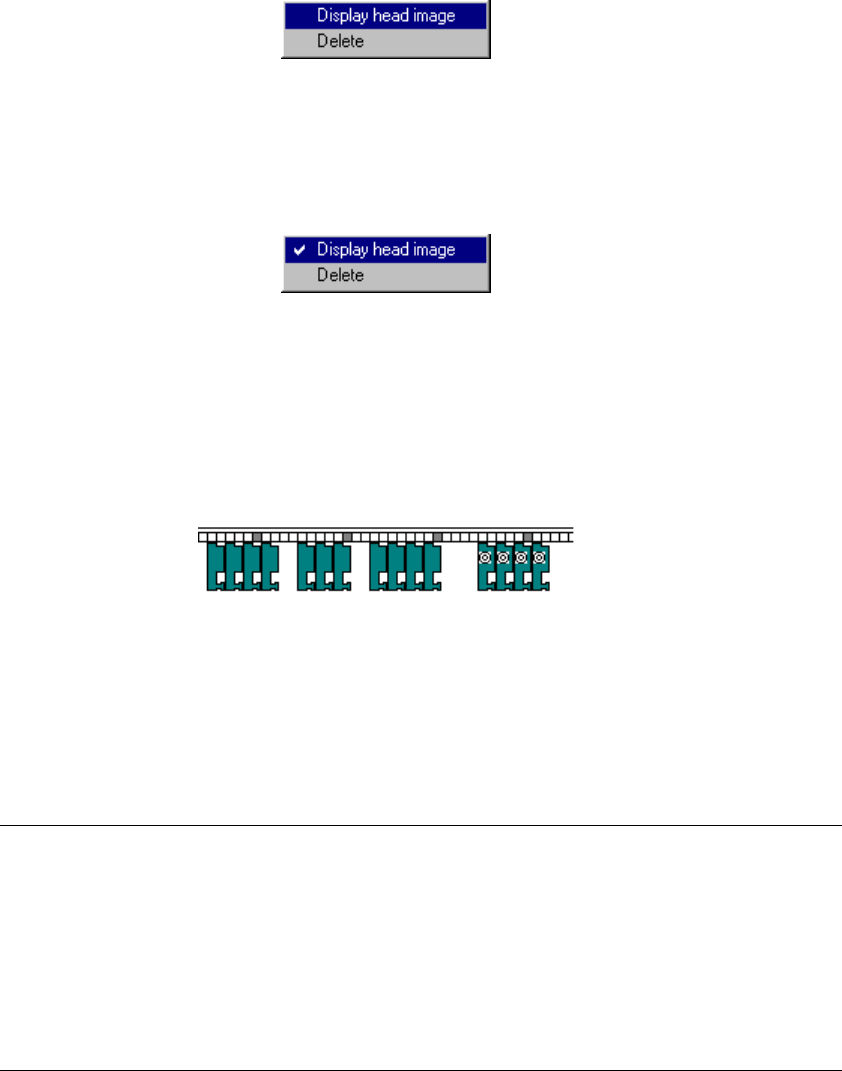
5. Display head image
This command changes Feeder layout window display mode to Head image
display mode. Click the right button of a trackball to open the pop-up menu,
then select the [Display head image] command.
Figure 4.11.1.12 Selecting the [Display head image] command
When you are already in Head image display mode, the check mark appears
next to the [Display head image] command on the pop-up menu.
Figure 4.11 1.13 When you are in Head image display mode
In Head image display mode, the trackball cursor is displayed instead of the
head image figure. If you assign feeders according to the head assignments
and execute the Optimization utility, components will be very likely to be picked
up simultaneously.
Figure 4.11.1.14 Screen example in Head image display mode
Head image display mode is canceled when you click the left button of a
trackball or select the [Display head image] command again after opening the
pop-up menu.
Note:
•
Although it becomes likelier that feeders pick up components
simultaneously after you assign the feeders according to the head
assignments and execute the Optimization utility, those feeder may pick up
components at the same time as other feeders do.
•
The trackball arrow mark cursor position indicates the same position as the
reference head (normally the left head) of the head image cursor figure
indicates. When you move this reference head over the figure of a feeder,
and click the right button of a trackball, the copy operation functions rapidly.