KE2010.Instruction Manual.Ver.2.01,Rev.08.pdf - 第622页
8 − 33 6) PWB check at WAIT/OUT snsr . This item moves a board that is locat ed between the IN sensor and W AIT sensor of the IN buff er to a posit ion where the WAIT sensor is activated. Or , it moves a board that is lo…
8 − 32
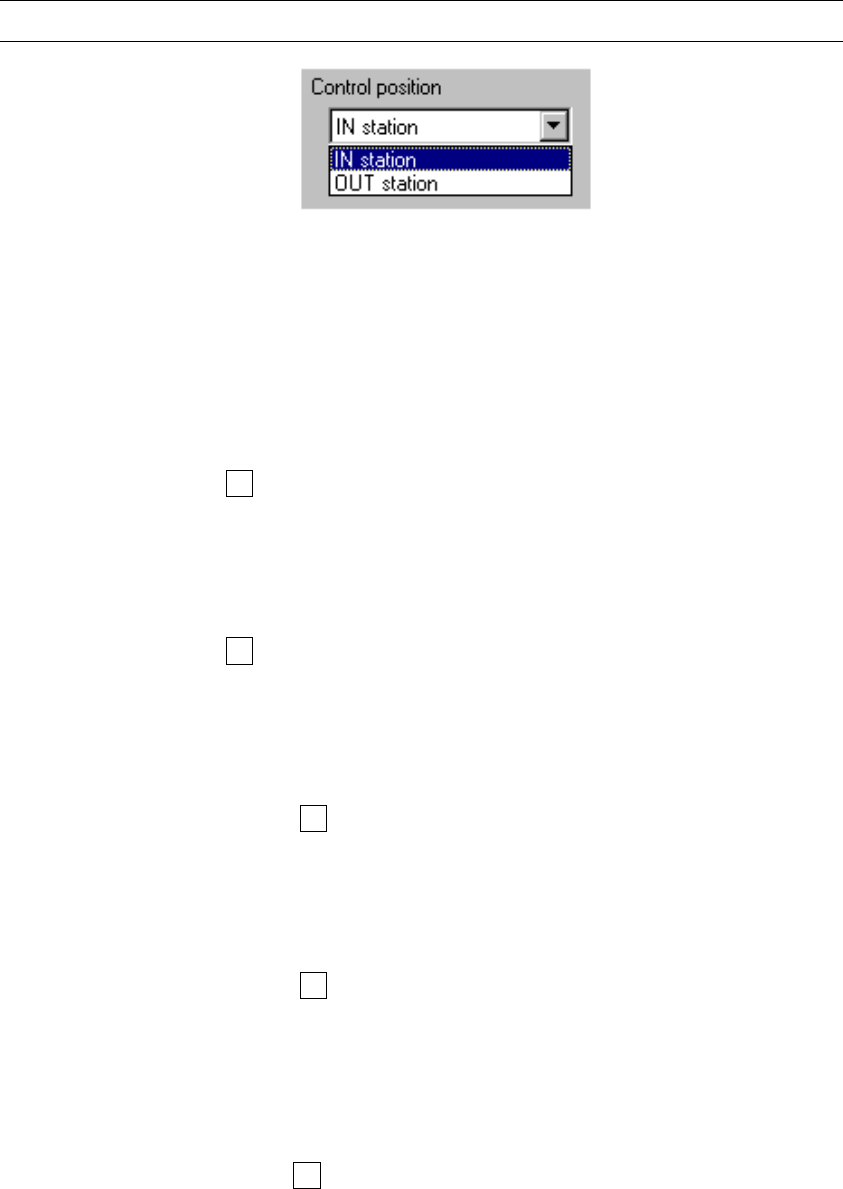
(4) Control position
With the corresponding radio button, select the position to be used when the
transport system is automatically controlled.
This item is not available when you select “Initialization” as the control item.
Note: "2 station" cannot be set with a model other than a KE-2030.
(5) Control button
Each control button executes the associated control item.
1) Initialization
This item initializes the PWB transport operation operation.
When the control item “Initialization” is checked, select the <EXEC> button,
or press the F3 key to control the initialization.
2) PWB load
This item loads a PWB according to the setting of "Positioning method".
When the control item “PWB load” is checked, select the <EXEC> button,
or press the F3 key to control the PWB loading.
3) PWB ejection
This item ejects a PWB.
When the control item “PWB ejection” is checked, select the <EXEC>
button, or press the F3 key to control the PWB ejection.
4) PWB release
This item releases a clamped PWB.
When the control item “PWB release” is checked, select the <EXEC>
button, or press the F3 key to control the PWB release.
5) PWB re-clamp
This item re-clamps a board located on the PWB transport path according
to the “Positioning method” selected.
When the control item “PWB re-clamp” is checked, select the <EXEC>
button or press the F3 key to control the PWB re-clamping function.
8 − 33
6) PWB check at WAIT/OUT snsr.
This item moves a board that is located between the IN sensor and WAIT
sensor of the IN buffer to a position where the WAIT sensor is activated.
Or, it moves a board that is located so that it cannot activate the OUT
sensor of the OUT buffer to a position where the OUT sensor is activated.
◇ When the control item “PWB check at WAIT/OUT snsr.” is checked,
select the <EXEC> button or press the F3 key to move a board to the
regulated position.
7) PWB move and clamp
This item moves a board located on the IN station to the OUT station, then
clamps it according to the method specified with the menu item “Positioning
method”.
When the control item “PWB move and clamp” is checked, select the
<EXEC> button or press the F3 key to move and clamp a board.
Note: This menu item is available only when you use a KE-2030.
(6) State display
The state items to be always monitored are that of:
− Machine operation
− Each sensor
− Each signal
− Each unit
■
■■
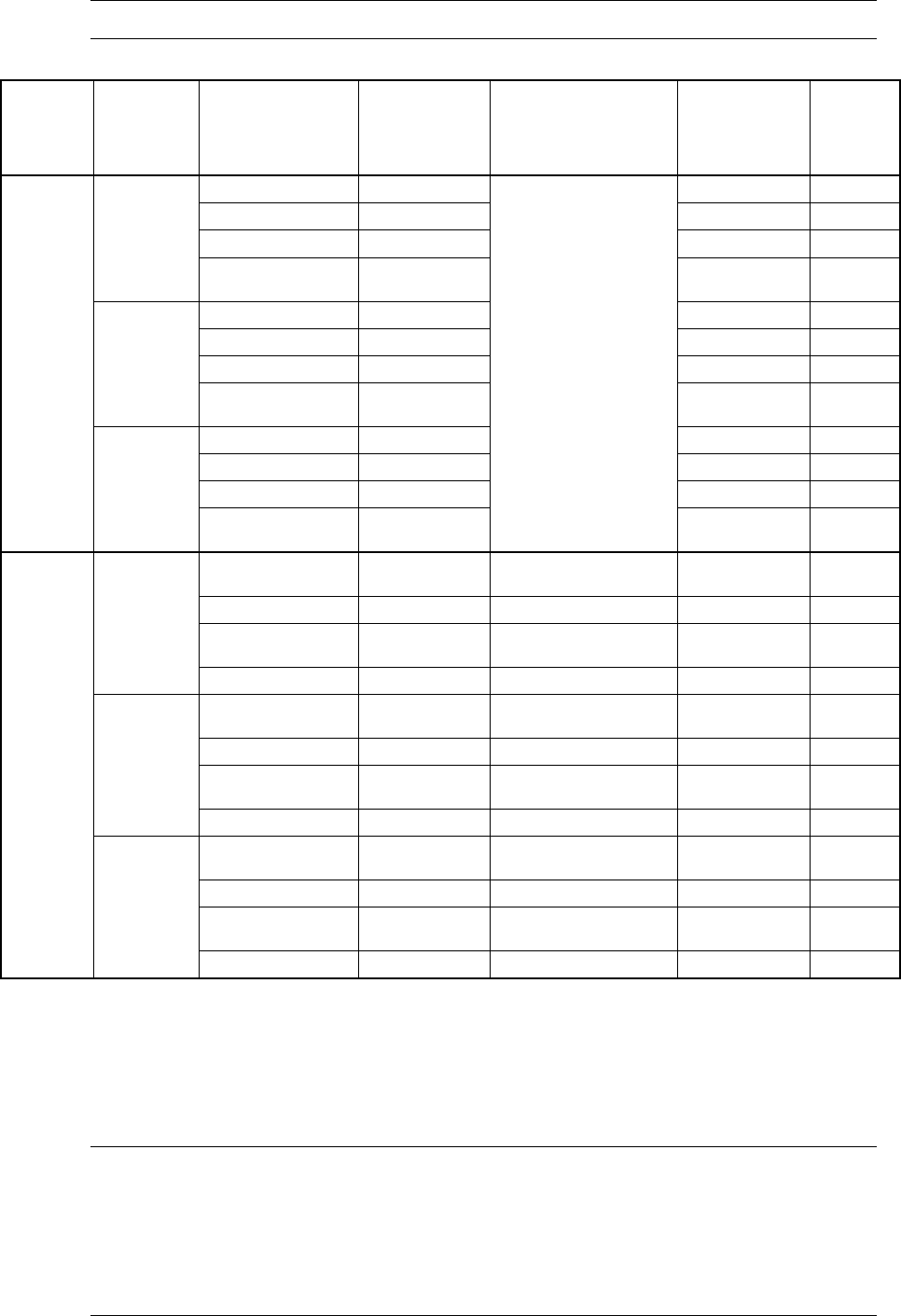
■Description of the machine status indicated when the conveyor moves between the
PWB stations
- How a PWB is loaded (hole reference or shape reference) varies depending on the
status of the machine before a PWB is loaded.
A PWB is loaded in various ways according to the machine (whose version number is
1.12 or later) status as shown below.
8 − 34
Note: You cannot set this menu item for models other than a KE-2030.
Between
PWB
Station
moving
Control
position
①
①①
①
Status of the
machine before
loading a PWB
(IN station/OUT
station)
②
②②
②
PWB
ejection
③
③③
③
Conveyor moving
between the PWB
stations
④
④④
④
PWB
loading
Remarks
1 (None/ None)
None
C (Both stations)
2 (Existing/None) I (IN station) C (Both stations)
3 (None /Existing) II (OUT station) C (Both stations)
2 station
4 (Existing/Existing) III (Both
stations)
C (Both stations)
1 (None/ None)
None
A (IN station)
2 (Existing/None) I (IN station) A (IN station)
3 (None /Existing) None
A (IN station) (Note 3)
IN station
4 (Existing/Existing) III (Both
stations)
A (IN station)
1 (None/ None)
None
B (OUT station)
2 (Existing/None) I (IN station) B (OUT station)
3 (None /Existing) II (OUT station) B (OUT station)
Don’t
Move
OUT station
4 (Existing/Existing) III (Both
stations)
The conveyor does not
move.
B (OUT station)
1 (None/ None)
None
The conveyor does not
move.
A (IN station) (Note 4)
2 (Existing/None) None
The conveyor moves.
A (IN station) (Note 1)
3 (None /Existing) II (OUT station)
The conveyor does not
move.
A (IN station)
2 station
4 (Existing/Existing) II (OUT station)
The conveyor moves.
A (IN station) (Note 2)
1 (None/ None)
None
The conveyor does not
move.
A (IN station)
2 (Existing/None) None
The conveyor moves.
A (IN station) (Note 1)
3 (None /Existing) None
The conveyor does not
move.
A (IN station) (Note 3)
IN station
4 (Existing/Existing) II (OUT station)
The conveyor moves.
A (IN station) (Note 2)
1 (None/ None)
None
The conveyor does not
move.
B (OUT station)
2 (Existing/None) None
The conveyor moves.
None
3 (None /Existing) II (OUT station)
The conveyor does not
move.
B (OUT station)
Move
OUT station
4 (Existing/Existing) II (OUT station)
The conveyor moves.
None
Existing: There is a PWB on the station.
None: There is not any PWB on the station.
1 to 4:
①
Status of the machine before
loading a PWB (see the next page)
I to III:
②
PWB ejection (see the next page)
A to C:
④
PWB loading (see the next page)
Note 1: A PWB located on the IN (entrance) station is moved onto the OUT (exit) station (see
3 on the next page) at the same time a PWB is loaded onto the IN station (see 4-A
on the next page).
Note 2: All operations are performed at the same time.
Note 3: A PWB is not ejected from the OUT station.
Note 4: A PWB is not loaded onto the OUT station.