Omron V-TS Teaching Manual.pdf.pdf - 第19页
1.2 Basic Oper ations 1-5 Drag After f ixing the mouse cursor on t he correct position , move the cursor while pressing t he mouse butt on. This is us ed for actions s uch as sele cting multiple wind ows. Drop Releas…
Chapter 1 Before Getting Started
1-4
1.2 Basic Operations
The mouse and the keyboard can also be used as input devices for creating inspection
program. This section describes the basics for how to use each.
1.2.1 Using the Mouse
The mouse is used for selecting menus and clicking options in dialog boxes. Moving the
mouse on a flat surface will move the mouse cursor on the screen.
The mouse has two (2) buttons and a wheel and the left button is used for actions such as
selecting indicated options. Clicking the right button shows a pull down menu alongside the
mouse cursor. The wheel is used for scrolling the indicated contents in dialog boxes.
The mouse button is used for many purposes, including the following:
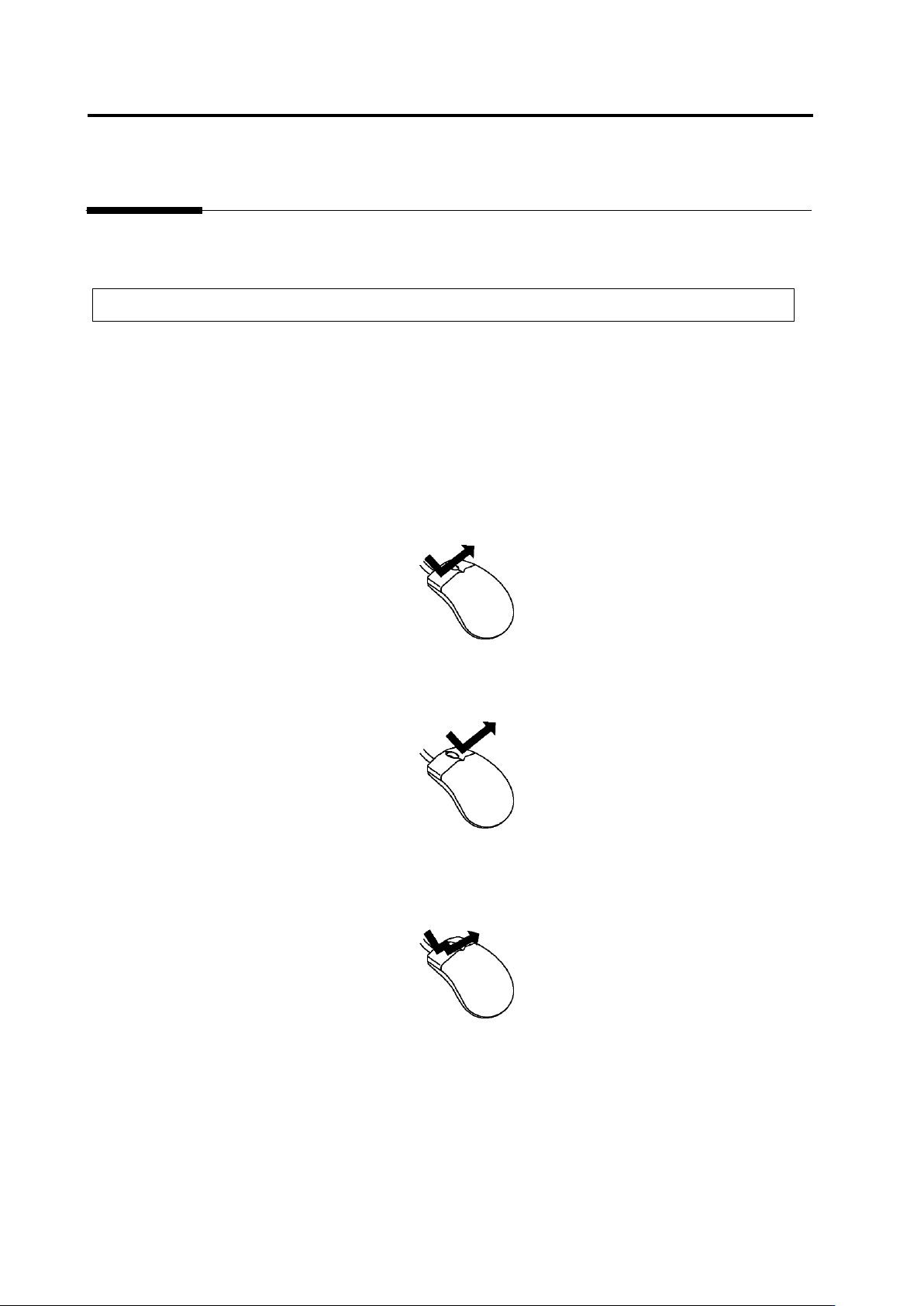
Click
After positioning the mouse cursor on the correct position, press the mouse button once.
This is used in cases such as selecting an option in a dialog box or using an operation
command.
Right Click
Clicking the right button once lightly shows a pull down menu alongside the mouse cursor.
Double Click
After positioning the mouse cursor on the correct position, press the mouse button twice in a
row, succession. This is used for actions such as selecting and opening a file.
1.2 Basic Operations
1-5
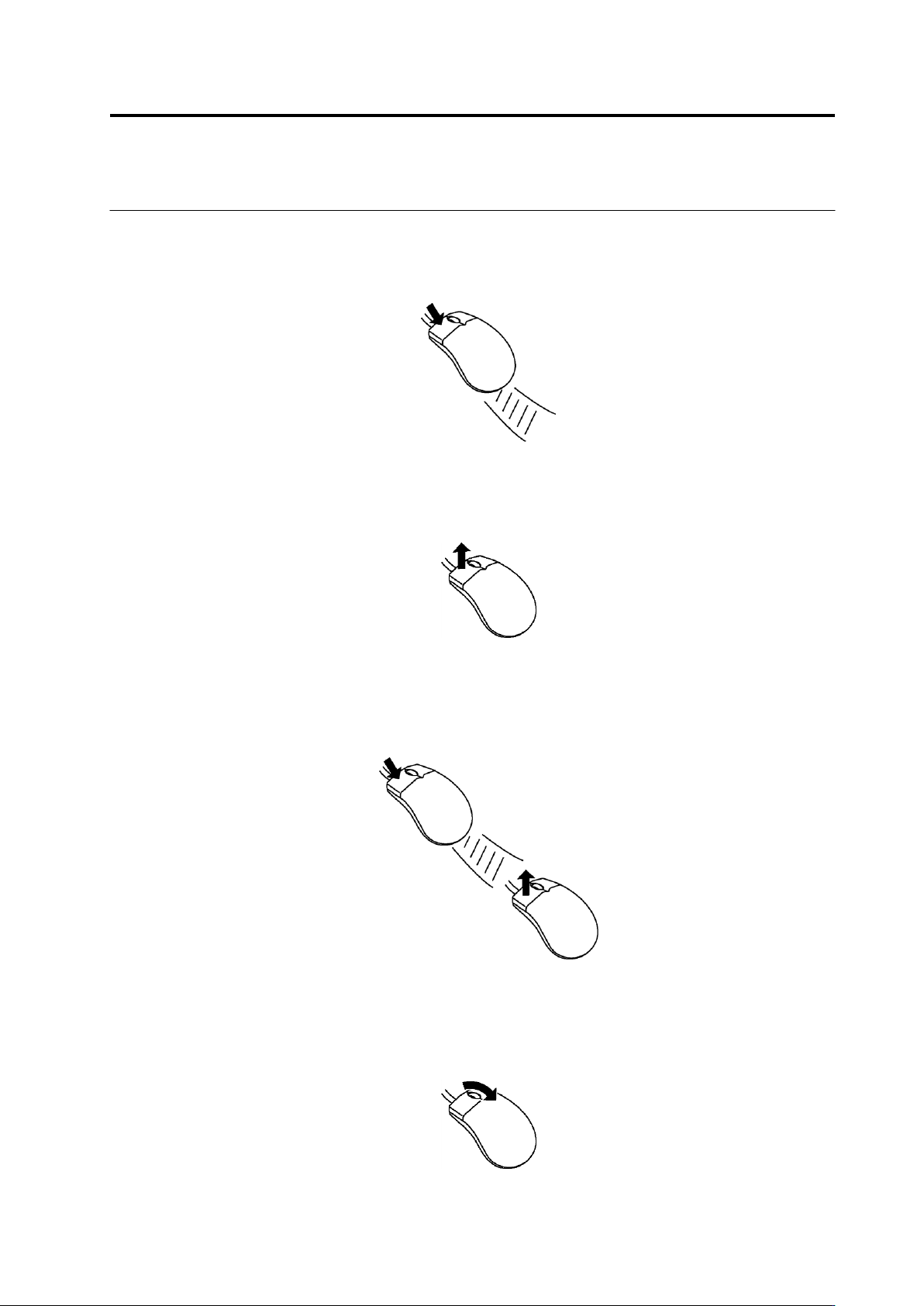
Drag
After fixing the mouse cursor on the correct position, move the cursor while pressing the
mouse button. This is used for actions such as selecting multiple windows.
Drop
Release the mouse button that was being pressed. This is used for executing the area
selected by dragging.
Drag and Drop
After fixing the mouse cursor on the correct position, move the cursor while pressing the
mouse button and release the button at the desired place. This is used for actions such as
moving a window.
Scrolling the Wheel
Turning the wheel in dialog boxes where the scroll bar appears will scroll the contents. This
is used for actions such as checking a list of inspection programs.
Chapter 1 Before Getting Started
1-6
1.2.2 Using the Keyboard
The keyboard is used for actions such as inputting file names and shortcut keystrokes. The
types of keys are listed below.
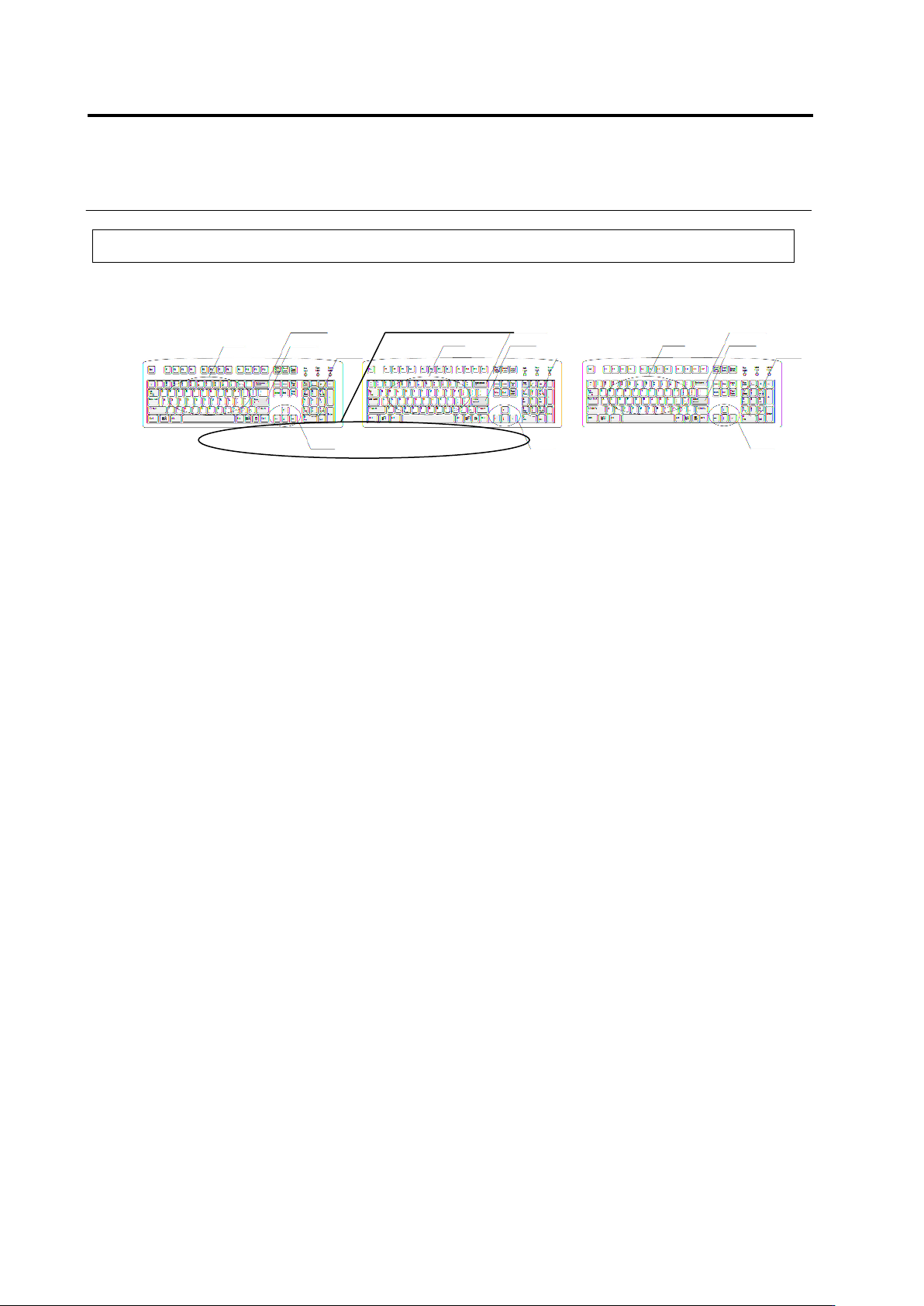
Alphabet Keys
These keys input letters. These are used for things like inputting the name of the inspection
program, comments, component number names, circuit numbers, etc., in dialog boxes.
Numeric Keys
These keys input numbers. These are used for inputting numeric values in the dialog boxes.
Back Space Key
Erases the character to the left of the cursor.
Enter Key
Confirms the input data and sets them.
Cursor Keys
Moves the cursor in the direction indicated by the arrow.
Function keys
Executes the following function:
F2: Switching of the mouse tool button.
Alphabet Keys
Cursor Keys
Enter Key
Back Space Key
Function Keys
Numeric Keys