Omron V-TS Teaching Manual.pdf.pdf - 第298页
Appendix 7. Positio n Correction/Extractio n a- 21 4. Inspection items adjustable with characteristic parameters W hen false call or detection failure occurs and the characteristic param eters regarding th e inspection i…
Appendix 7. Position Correction/Extraction
a-20
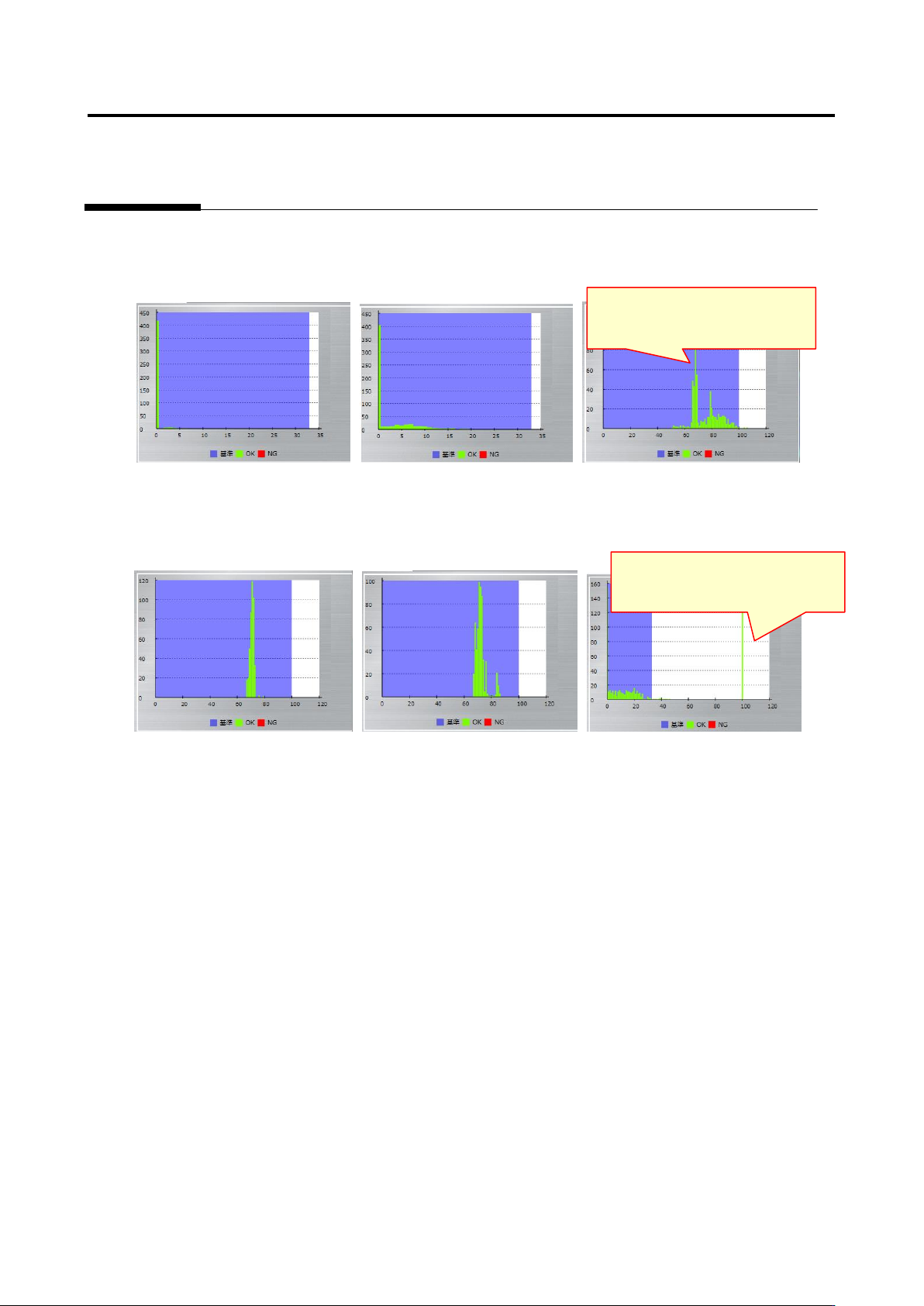
Example 2: Verifying extraction offset of QFP
On the left and center figures the distribution widths are within 20% so they are judged as no offset. On
the right figure the distribution width is larger than 20% so it is judged as an offset.
Example 3: Verifying extraction offset of QFP
On the left and center figures the distribution widths are within 20% so they are judged as no offset. On
the right figure the distribution width is larger than 20% so it is judged as an offset.
The minimum and maximum values
are 0% and 100% respectively, and the
distribution width is 100%, making it
larger than 20%.
The minimum and maximum values
are 49% and 106% respectively, and
the distribution width is 57%, making it
larger than 20%.
Appendix 7. Position Correction/Extraction
a-21
4. Inspection items adjustable with characteristic parameters
When false call or detection failure occurs and the characteristic parameters regarding the inspection
items can be adjusted, characteristic parameters should be adjusted.
1) For a false call, adjust that the measurement value of the good component is within the inspection
criteria.
2) For a detection failure, adjust that the good and fault can be separated using the histogram.
* Adjust the good component so that the value is within the inspection criteria, as shown in (1).
Component
Electrode
Land
Inspection range
Adjustable
Missing
component
Component
difference
Polarity difference
Upside down
component
X position gap
Y position gap
Component skew
Side overhang
End overhang
End overlap
Electrode length
Electrode area
Side bend
Electrode height
(oblique)
Exposed land
Land error
Foreign object (land)
Exposed land
(oblique)
Solder ball
Solder bridging
Foreign object
Solder ball (oblique)
Solder bridging
(oblique)
Not
adjustable
None
Exposed
electrode tip
(oblique)
Electrode color
deviation
Exposed
electrode tip
(oblique)
Electrode color
deviation
(oblique)
Fillet inspection (all)
None
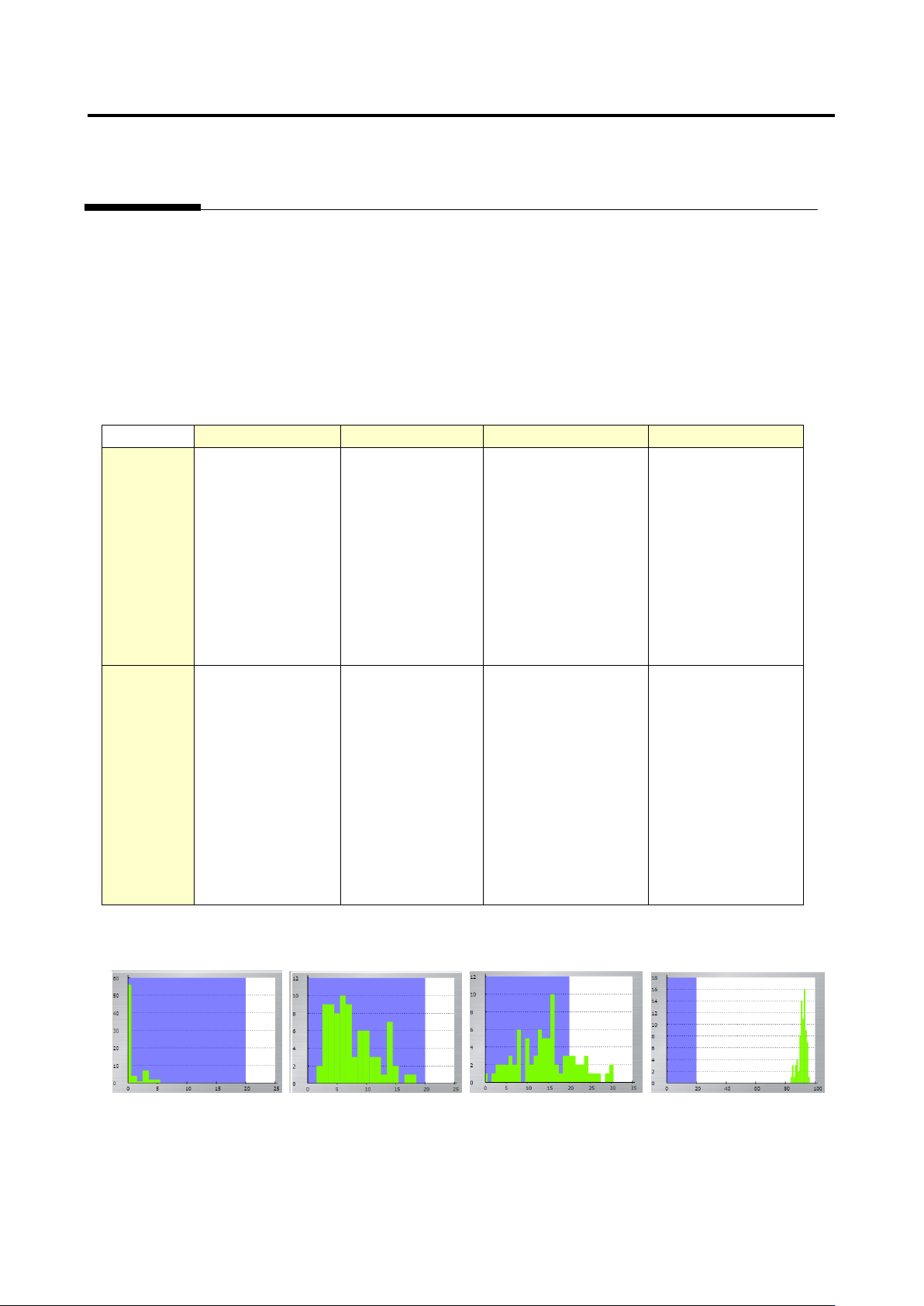
In the two figures on the left, the values are within the inspection criteria, and in the two figures on the
right, the values are not within the inspection criteria.
Appendix 7. Position Correction/Extraction
a-22
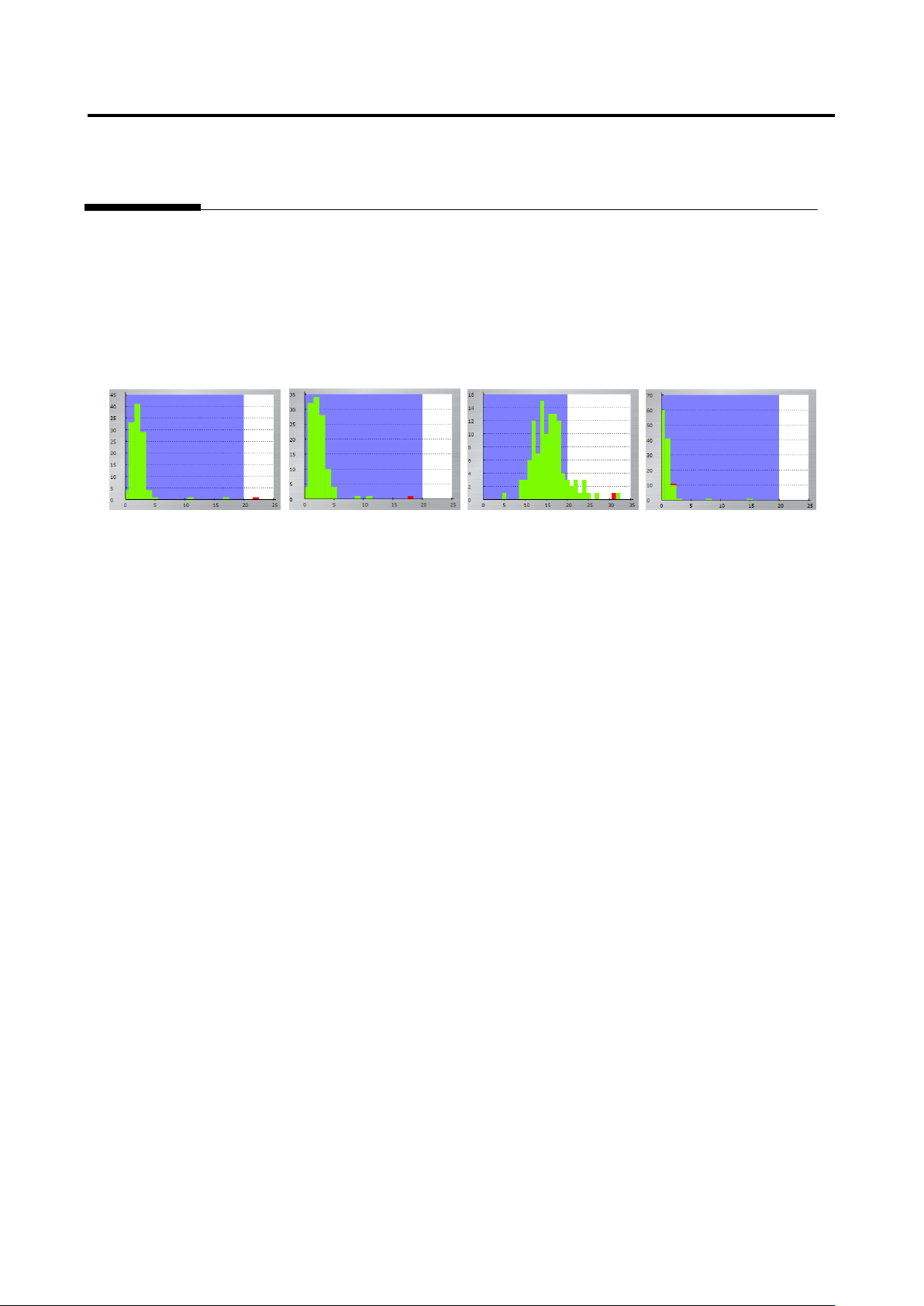
In the two figures on the left, the values are within the inspection criteria, and in the two figures on the
right, the values are not within the inspection criteria. “The good and fault can be separated” means all
the good components are within the inspection criteria, and faulty components are not. Even if faulty
components are inside the inspection criteria, there is no problem if the interval between the measured
value of the good component closest to the fault and the measured value of the fault is as follows:
Unit of %: 5%
Unit of angle: 1
Unit of mm: 0.05 mm