Hanwha SM481 PLUS Series Administrator’s Guide Eng.pdf.pdf - 第158页
6-48 Fast Flexible Placer SM481(L) PLUS Administ r ator’s Guide <4. Block P osition> group When Block PCB type i s selected in the <Model T ype > combo box; The offse t coordinate of the placement origin of…
6-47
Board Definition
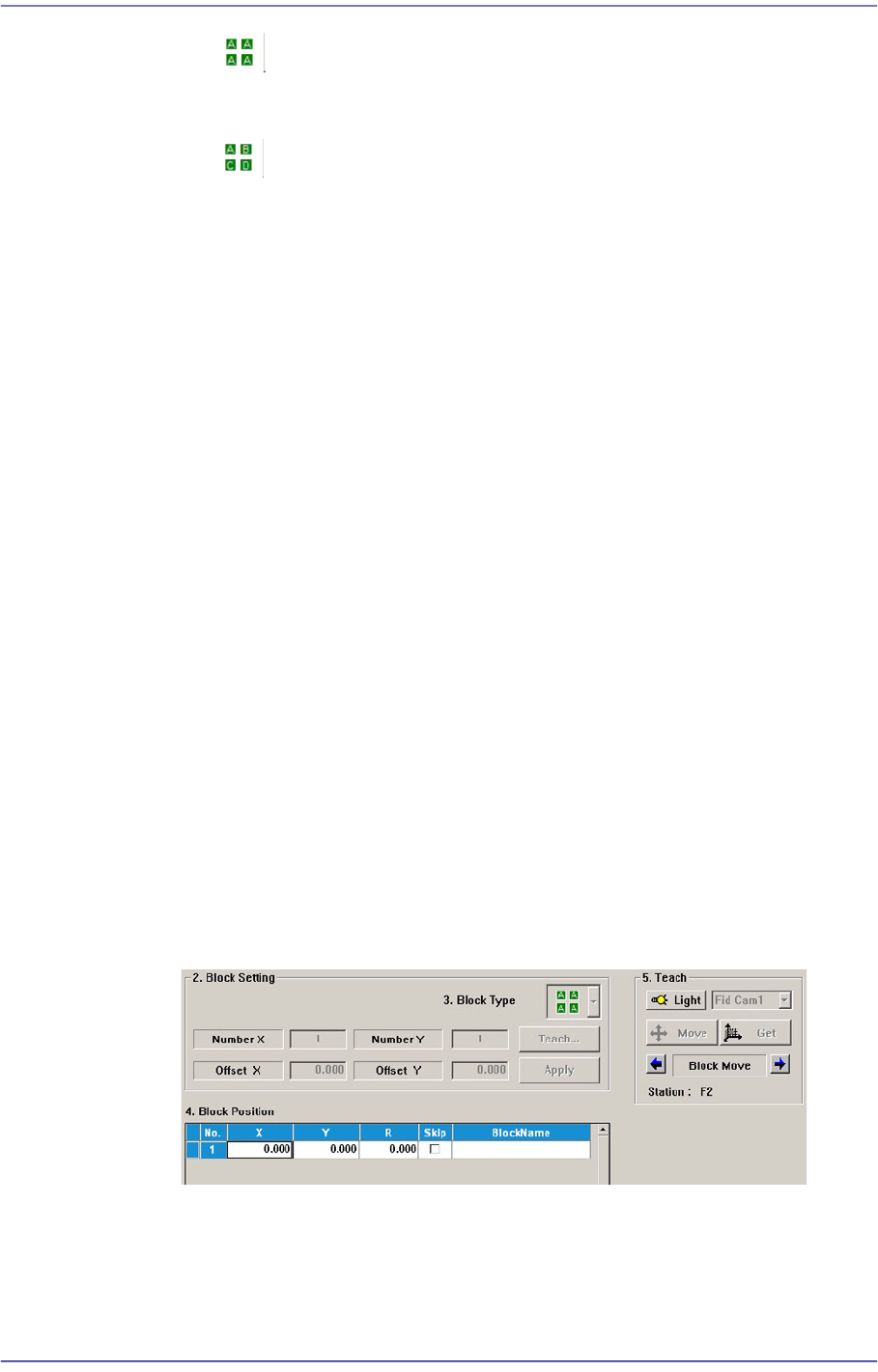
[Block PCB - Same Type]
The CAD information (placement point and part) on the block is identical.
[Block PCB - Different Type]
The CAD information (placement point and part) on the block is different.
When the Block PCB type is selected in the <Model Type> combo box
Perform setup for the block in the same manner as performing setup for an array PCB.
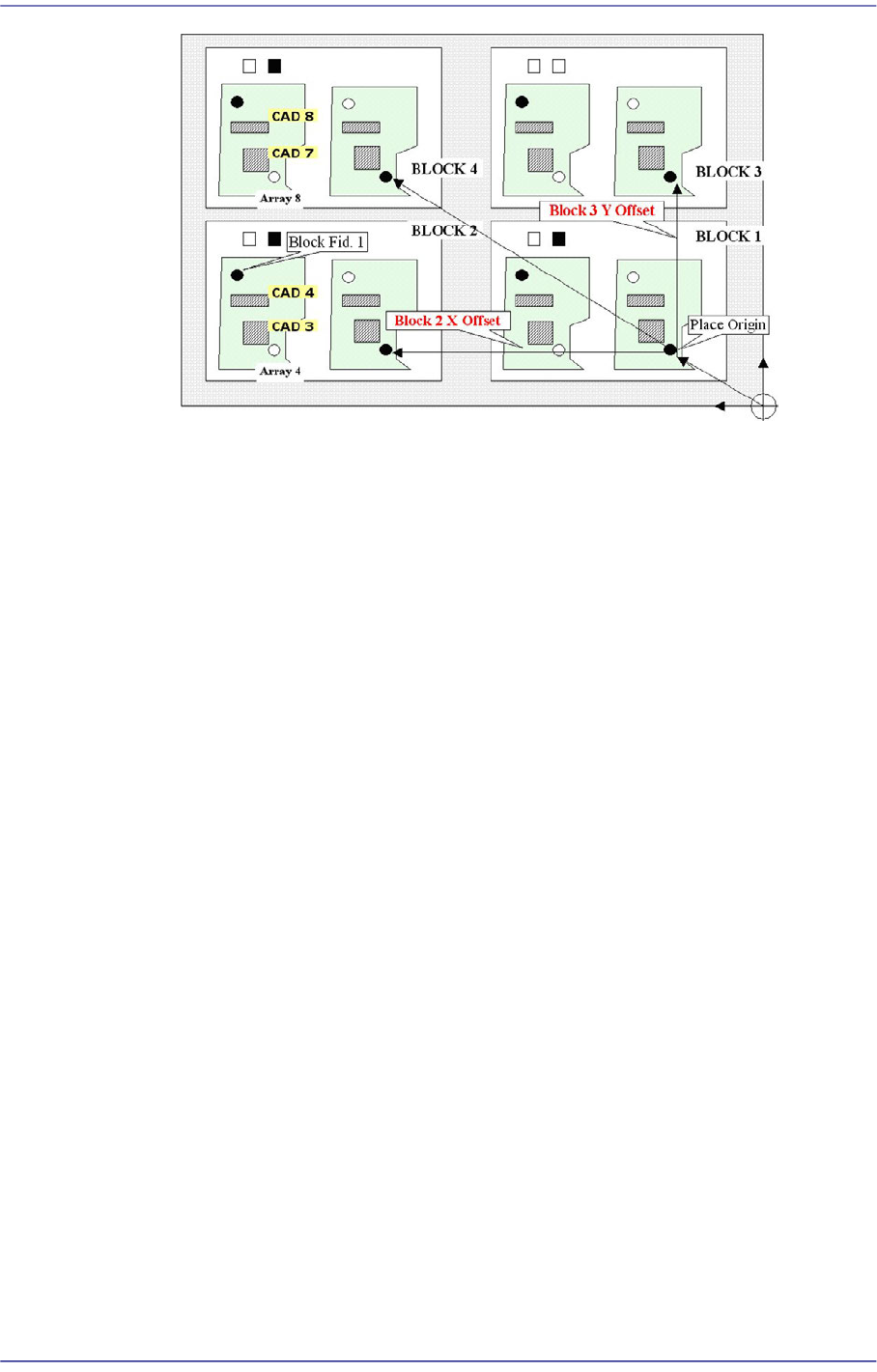
First, determine the number of blocks to be configured and apply the offset for the
placement origin of the reference block to set the placement origin of the entire block.
<Number X> edit box
Input the number of blocks in the X direction.
<Number Y> edit box
Input the number of blocks in the Y direction.
<Offset X> edit box
Input the offset in the X direction based on the placement origin of the existing
block.
<Offset Y> edit box
Input the offset in the Y direction based on the placement origin of the existing
block.
<Teach...> button
Teach the XY offset based on the placement origin of the existing block..
<Apply> button
Creates the data in the <3.Model Position> group according to the number of X
and Y blocks as well as the X and Y offset.
6-48
Fast Flexible Placer SM481(L) PLUS Administrator’s Guide
<4. Block Position> group
When Block PCB type is selected in the <Model Type> combo box;
The offset coordinate of the placement origin of each block is indicated. Select <Skip>
column when placement is not performed for the corresponding block.
The procedure to teach the placement origin offset of each block
Select the fiducial camera corresponding to the workstation to which the block
PCB is transferred.
Select the placement origin offset of the block in the <3. Model Position> group.
Click the <Move> button to move to the currently set position.
Click the <Get> button to input the current coordinate.
<Update> button
Saves the PCB model related setup data and closes the “PCB Model” dialog box.
<Cancel> button
Closes the “PCB Model” dialog box without saving the PCB model related setup data.
7-1
Part Registration
Chapter7. Part Registration
The <Part> command is used to register components necessary for PCB operation and edit
data.
Part data is composed of “Align Data” and “Common Data”.
Align Data
Consists of information related to part recognition
Common Data
Consists of parameters related to part feeding device, nozzle for part pickup and
placement, pneumatic condition and driving speed
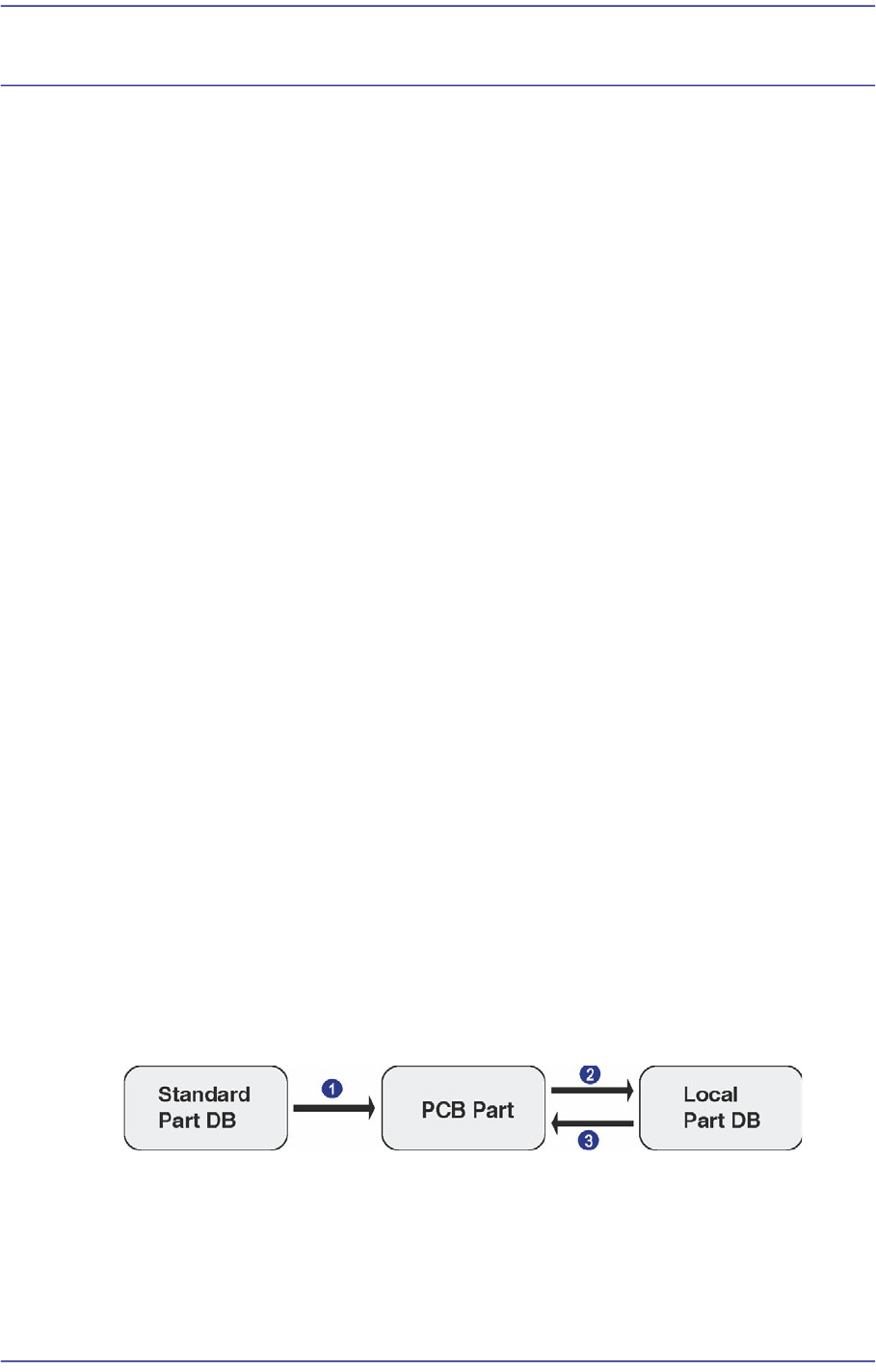
The component data managed by MMI include PCB Part, Local Part, and Standard Part
DB.
PCB Part: Parts registered in the PCB file
Local Part DB [UPD.mdb]: Parts registered after installing MMI in the equipment
Standard Part DB [STDUPD.mdb]: Simultaneous installation with MMI is DB
managing the data for standard parts (Read only)
Each PCB controls component data on all components operated on the corresponding PCB
and saves the component data in the Local Part DB of the machine.
To create component data for a new PCB, component data stored in the Local Part DB can
be copied. To create component data for a new component whose data is not stored in the
Local Part DB, data for a similar component stored in the Local Part DB can be copied and
edited or standard component data can be copied from the Standard Part DB and edited.
The Standard Part DB is a DB of generally used components developed and supplied by
this machine manufacturer. The relationship between component data is shown in the
following.
Figure7.1 Relationship between component DBs
When the ‘Part’ submenu is selected, the initial screen is as follows.
Applied to all PCBs Controlled by each PCB Controlled by
each machine
1) Create new part
2) Save
3) Copy