Hanwha SM481 PLUS Series Administrator’s Guide Eng.pdf.pdf - 第296页
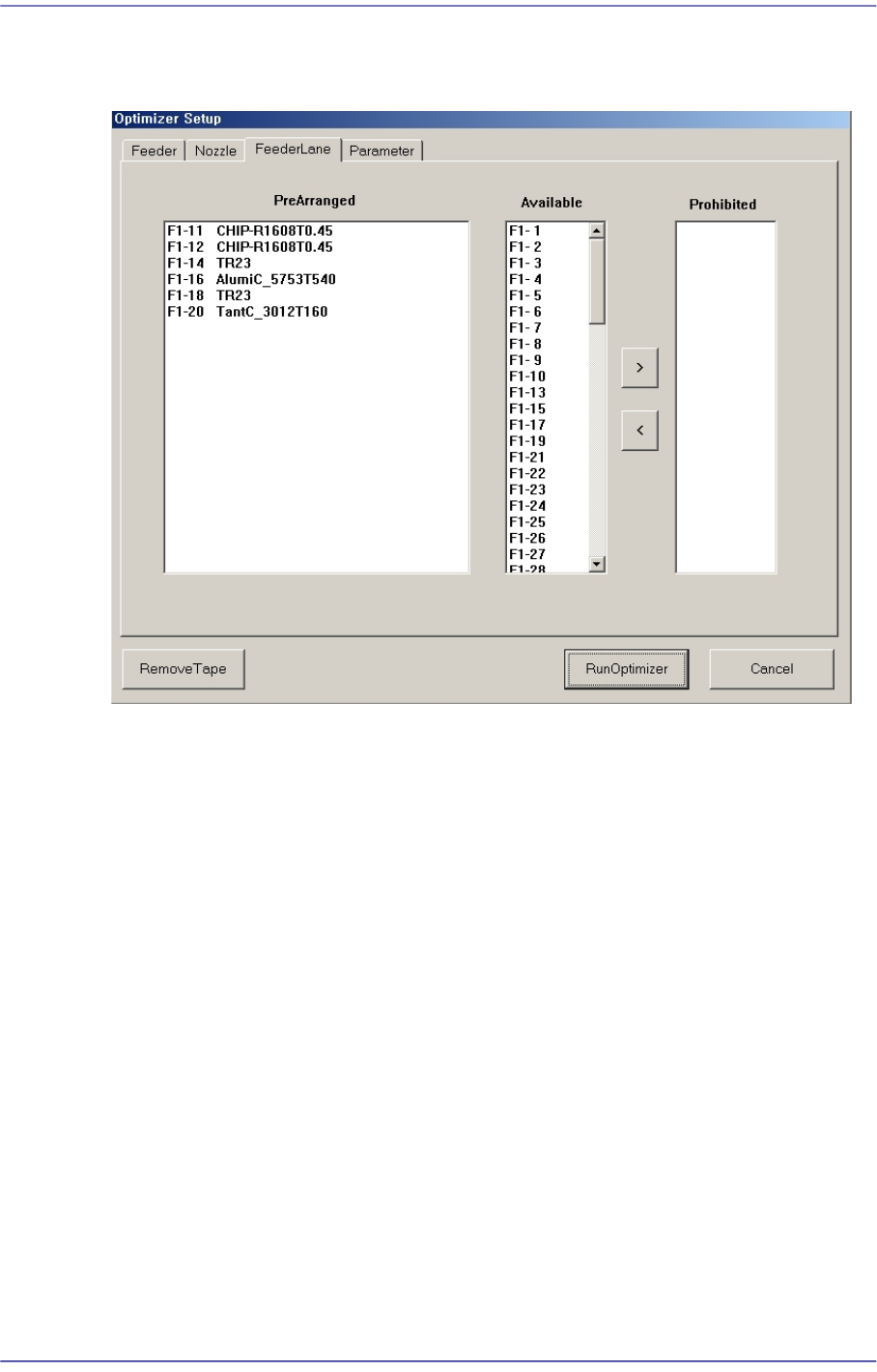
10-6 Fast Flexible Placer SM481(L) PLUS Administ r ator’s Guide 10.3. F eeder Lane Figure10.4 “Optimi zer Setup: Feeder Lane” dialog box This dialog box to set the feederbase sl o t to be used for feeder arrange ment by …

10-5
Optimization
<Useful Heads> check box group
The heads that can be used by the selected nozzle type. As a standard, check so that
Head1 ~ Head10can be used.
<Mounting Points> group
This group shows the number of components used by the nozzle selected for the
current PCB. This can be used as a reference data when the user assigns the applicable
heads to each nozzle.
#1 shows the total number of placement points of the component for which #1 nozzle
is selected and #10 shows the total number of placement points of the component for
which #10 nozzle is selected.
Figure 10.3 shows that CN040 is selected for 1# nozzle of three components and for
2# nozzle of one component.
<OK> button
Saves the selected options and closes the dialog box..
<Cancel> button
Cancels the selected options and closes the dialog box.
10-6
Fast Flexible Placer SM481(L) PLUS Administrator’s Guide
10.3. Feeder Lane
Figure10.4 “Optimizer Setup: Feeder Lane” dialog box
This dialog box to set the feederbase slot to be used for feeder arrangement by the
Optimizer. The devices that can be arranged on the feederbase slot include tape feeder and
stick feeder unit.
Current status of feeder arrangement in the feeder base slots is indicated. If the optimizer
cannot arrange the devices due to a defective feeder base slot or for other reasons, the
feeder base slot that must not be arranged can be designated.
<PreArranged> list box
Indicates the arrangement status of feeders currently installed in the feeder base slots.
Of the feeder base slot number, ‘F’ refers to the front feeder base and ‘R’ the rear
feeder base
For parts which are transferred to the tape feeder, a part name is indicated after the
number of the slot in which the feeder is installed. For stick feeder or tray feeder,
corresponding feeder type is indicated. In addition, the slot of the feeder base that
cannot be used due to interference with other devices is indicated by a dotted line.
<Available> list box
Displays the feederbase slot where devices can be arranged in the Optimizer.
<Prohibited> list box
For the feeder base slot in which no device is desired to be arranged, click the arrow
10-7
Optimization
button ( ) to move it to the <Prohibited> list box group.
The optimizer arranges no device in the feeder base slot indicated in the <Prohibited>
list box. Clicking the arrow button ( ) can undo the command.
The optimizer arranges the devices considering the interference between the devices
that are arranged as feeder base slots or which will be newly arranged.
10.4. Setup Menu /Parameters
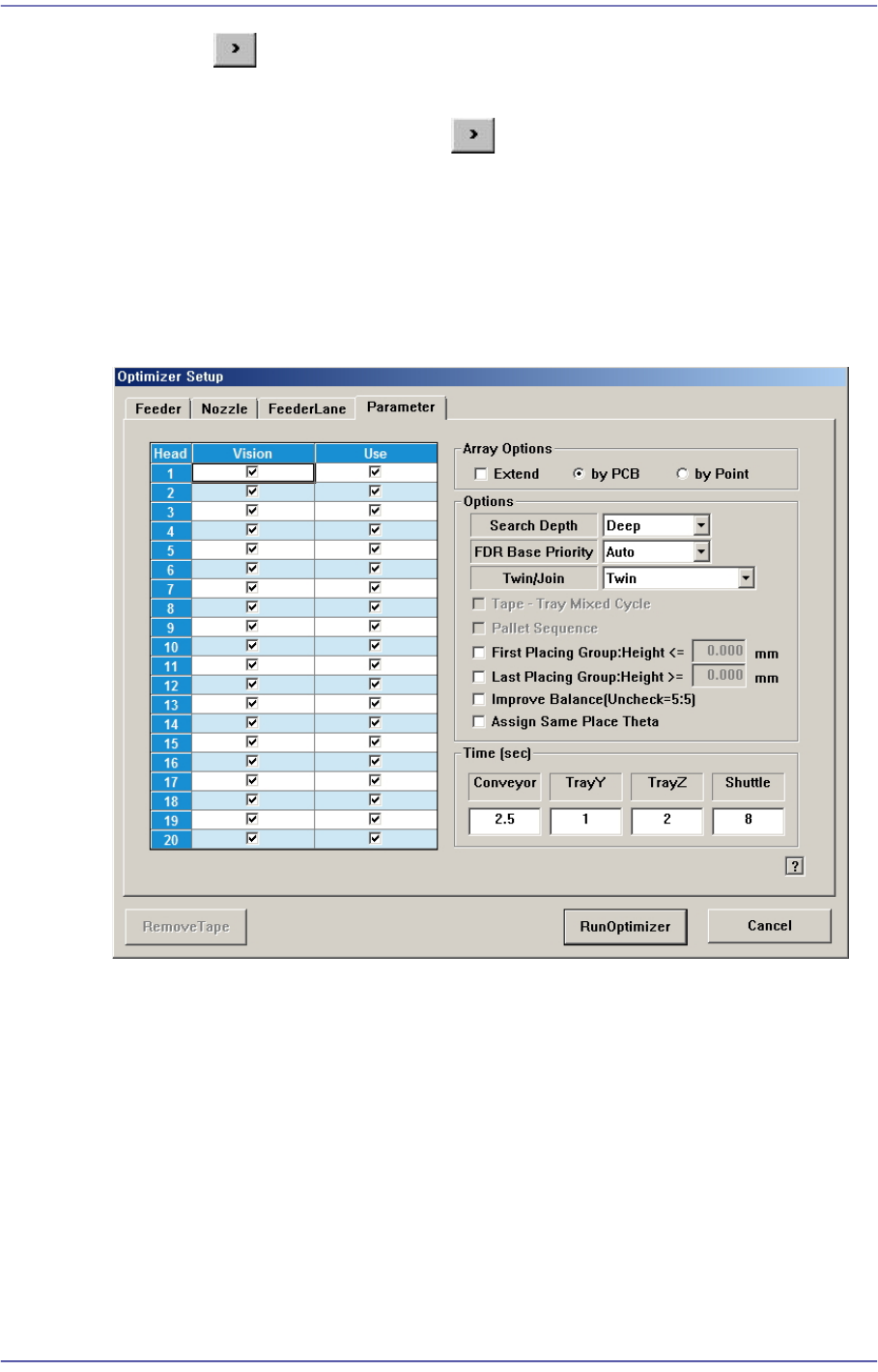
Figure10.5 “Optimizer Setup: Parameters” tab dialog box
This dialog box to set the options and parameters for the Optimizer execution.
<Head> check box group
Sets whether to use for each head.
<Use> check box
The “Use check box” indicates whether to use the corresponding head. For
example, when it is difficult to perform work if Head 3 has a problem, select the
check box of Head 3 and leave it blank.
Doing so, the optimizer will create a job program with the head except for the one
whose use is suspended. If all heads to be used are stopped, the optimizer cannot
perform optimization.