IPC-TM-650 EN 2022 试验方法.pdf - 第241页
1.0 Scope This test method is designed to determine the flexural strength of laminates of the thicknesses greater than, or equal to, 0.51 mm [0.020 in] by applying a specific load to a specified sized and shaped specimen…

5.2.3
Specimens
shall be at room temperature. Center the
specimen on the supports with the long axis of the specimen
perpendicular to the loading nose and supports.
5.2.4
Apply
the load at the speed of testing from Table 1
until the specimen breaks. The load at breakage shall be
recorded in pounds. (P).
5.3
Calculation and Report
5.3.1
Calculate
the flexural strength for each specimen
using the formula below:
S = 3PL
2bd
2
S
= Flexural strength in psi
P = Load at breaking (pounds)
L = Span, inch
b = Width of specimen
d = Thickness, inch
5.3.2
Average
the flexural strengths and record in psi.
5.3.3
Report
the specimen thicknesses, individual psi val-
ues, and average psi for each direction; note the orientation of
the sample panel or sheet associated with the direction of the
specimen.
6.0 Notes None
6.1
Additional
information and background useful to the per-
formance of the test may be found in ASTM-D-790.
IPC-TM-650
Number
2.4.4
Subject
Flexural
Strength of Laminates (at Ambient Temperature)
Date
12/94
Revision
B
P
age2of2
电子技术应用 www.ChinaAET.com
1.0
Scope
This
test method is designed to determine the
flexural strength of laminates of the thicknesses greater than,
or equal to, 0.51 mm [0.020 in] by applying a specific load to
a specified sized and shaped specimen at elevated tempera-
ture.
2.0
Applicable Documents
ASTM-D-790
Flexural
properties of unreinforced and rein-
forced plastics and electrical and insulating materials.
IPC-TM-650
Method
2.3.6, Etching Ammonium Persulfate
Method 2.3.7, Etching Ferric Chloride
Method 2.3.7.1, Cupric Chloride Etching
Method 2.4.25, Glass Transition Temperature and Cure
Factor by DSC
3.0
Test Specimens
3.1 Size and Configuration
Dimensions
of the specimens
shall be as shown in Table 1. Edges of the specimens shall be
free of fractures, delamination, or roughness by means of
sanding or other equivalent means (do not radius the edges).
3.2
Quantity and Sampling
Unless
otherwise specified,
four test specimens shall be cut from the lengthwise direction
of the sample sheet or panel.
4.0
Apparatus or Material
4.1 Tester
A
standard tension and compression test appa-
ratus, which can be operated at a constant rate of crosshead
movement shown in Table 1. The error in the load measuring
system shall not exceed ± 1%. The loading nose and supports
shall have cylindrical surfaces. The radius of nose and support
shall be at least in accordance with ASTM-D-790 (in order to
avoid excessive indentation).
4.2
Test
chamber designed to shroud the specimens, test
jaws and movable shafts as an integral part of the tester, or
equivalent. Chambers must be capable of maintaining the test
temperature as shown in Table 2 to within ± 3°C [5.4°F].
4.3
Etching
system capable of complete removal of metallic
cladding.
4.4
Measuring
devices capable of measuring specimen
width to the nearest 0.025 mm [0.001 in] and specimen thick-
ness to the nearest 0.0025 mm [0.0001 in].
5.0
Procedure
5.1 Specimen Preparation
5.1.1
When
applicable, etch off all metallic cladding in
accordance with accepted industry practices. For referee test-
ing, etching shall be in accordance with 2.3.6, 2.3.7, or
2.3.7.1
5.1.2
Cut
specimens to the size as shown in Table 1 and
smooth the edges of specimens. Measure and record speci-
men width to the nearest 0.0025 mm [0.001 in], and thickness
to the nearest 0.0025 mm [0.0001 in].
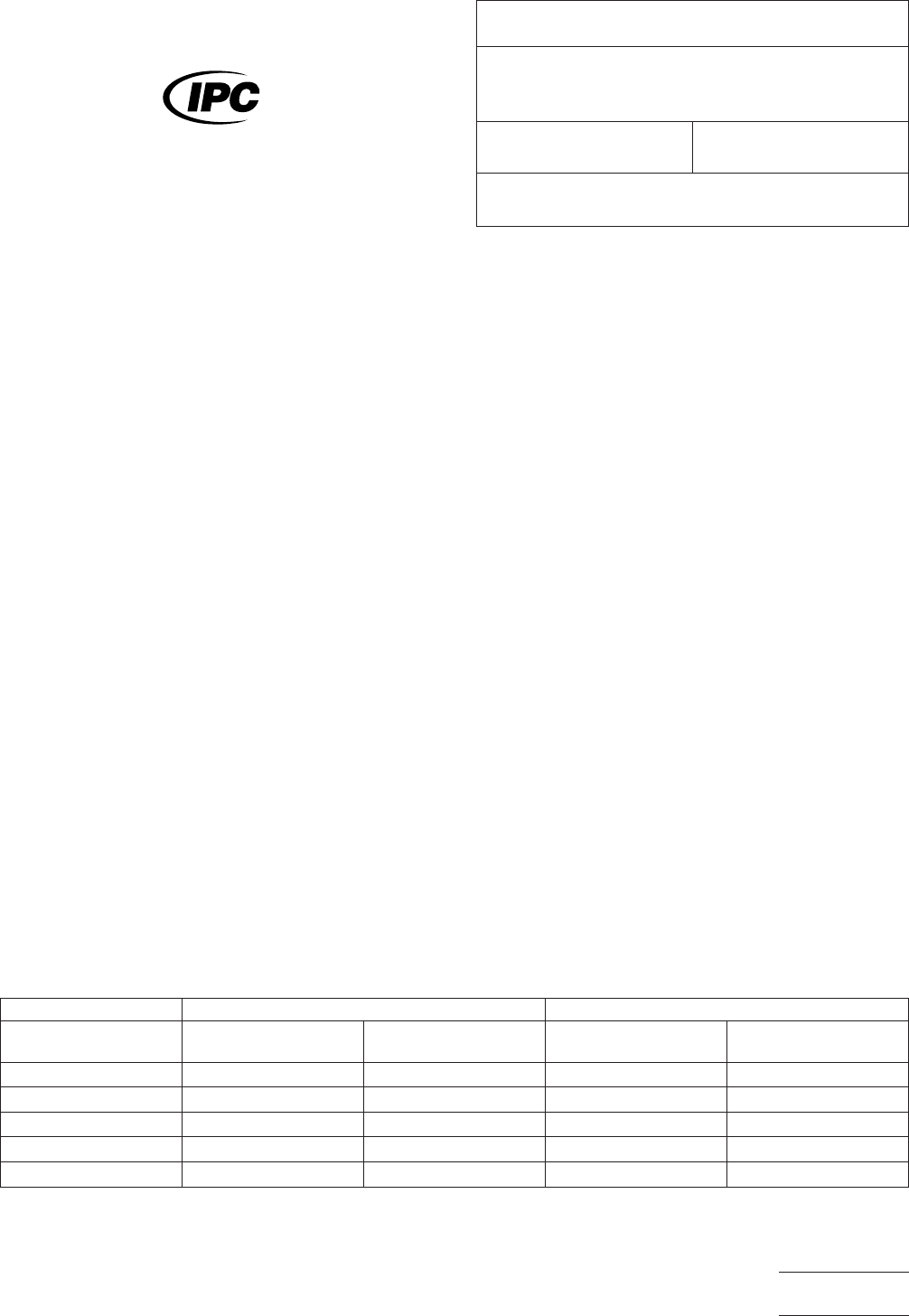
T
able 1
Specimen
Dimensions Test Parameters
Nominal thickness
1
mm
[inches]
Width
2
mm
[inches]
Length
3
mm
[inches]
Span
mm [inches]
Speed of testing
mm [inches] per min.
0.79
[0.031] 25.4 [1.0] 63.5 [2.5] 15.9 [0.625] 0.51 [0.020]
1.57 [0.062] 25.4 [1.0] 76.2 [3.0] 25.4 [1.0] 0.76 [0.030]
2.36 [0.093] 25.4 [1.0] 88.9 [3.5] 38.1 [1.5] 1.02 [0.040]
3.18 [0.125] 25.4 [1.0] 101.6 [4.0] 50.8 [2.0] 1.27 [0.050]
6.35 [0.250] 12.7 [0.5] 152.4 [6.0] 101.6 [4.0] 2.03 [0.080]
1.) Nominal thicknesses other than those listed shall be prepared and tested in accordance with the next greater nominal thickness.
2.) Width as cut and smoothed to within 5% of nominal shown.
3.) Length as cut (not necessary to smooth) to within 10% of nominal shown.
The
Institute for Interconnecting and Packaging Electronic Circuits
2215 Sanders Road • Northbrook, IL 60062-6135
IPC-TM-650
TEST
METHODS MANUAL
Number
2.4.4.1
Subject
Flexural
Strength of Laminates (at Elevated
Temperature)
Date
12/94
Revision
A
Originating Task Group
MIL-P-13949 Test Methods Task Group (7-11b)
Material
in this Test Methods Manual was voluntarily established by Technical Committees of the IPC. This material is advisory only
and its use or adaptation is entirely voluntary. IPC disclaims all liability of any kind as to the use, application, or adaptation of this
material. Users are also wholly responsible for protecting themselves against all claims or liabilities for patent infringement.
Equipment referenced is for the convenience of the user and does not imply endorsement by the IPC.
P
age1of2
电子技术应用 www.ChinaAET.com
5.2
Measurement
5.2.1
Set
tester for the required span and crosshead verti-
cal speeds, as specified in Table 1.
5.2.2
Align
the loading nose and supports so that the axis of
the cylindrical surfaces are parallel, and the loading nose is
midway between the supports.
5.2.3
Condition
specimens within the test chamber, for one
hour at the temperature specified (see Table 2, or the appli-
cable specification).
5.2.4
Center
the specimen on the supports with the long
axis of the specimen perpendicular to the loading nose and
supports and stabilize for 2 minutes at temperature.
5.2.5
Apply
the load at the speed of testing from Table 1
until the specimen breaks. The load at breakage shall be
recorded in pounds (P).
5.3
Calculation and Report
5.3.1
Calculate
the flexural strength for each specimen
using the formula below:
S = 3PL
2bd
2
S
= Flexural strength in Psi
P = Load at breakage (pounds)
L = Span, inch
b = Width of specimen
d = Thickness
5.3.2
Average
the flexural strengths and record in psi.
5.3.3
The
specimen thicknesses, average Psi, and test tem-
perature shall be reported.
6.0 Notes
None
6.1
Additional
information and background useful to the per-
formance of the test may be found in ASTM-D-790.
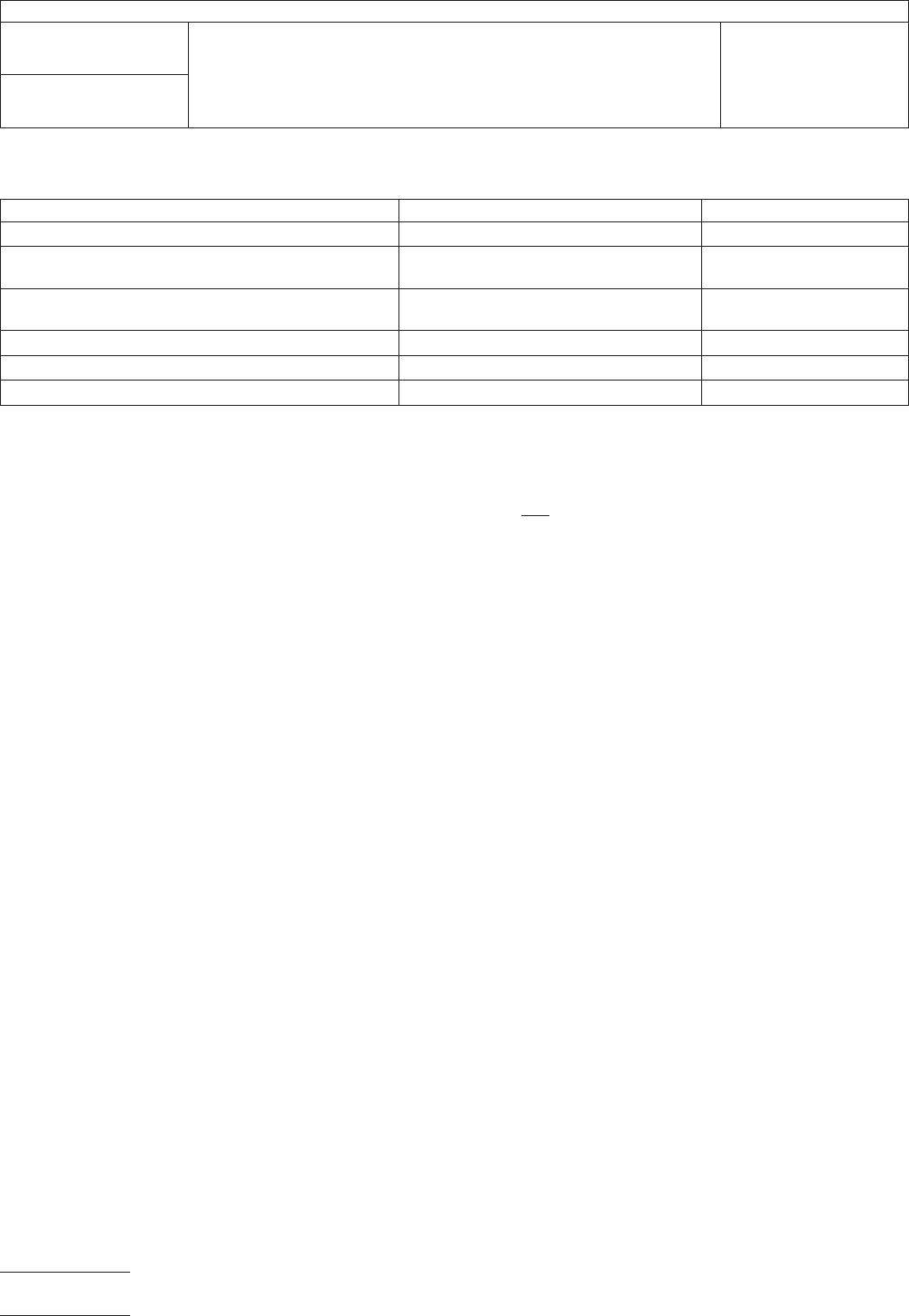
T
able 2
Resin
Type Thickness Test Temperature
Difunctional,
tetrafunctional epoxies ALL 125°C
Hot Strength Retention Epoxies
High Temperature Epoxies
Up to 1.6 mm [0.063 inch]
1.6 mm [0.063 inch] and over
190°C
170°C
BT- epoxies
Modified epoxies
ALL 170°C
Polyimide of T
g
greater
than 250°C
1
ALL
204°C
Polyimides of T
g
less
than or equal to 250°C
1
ALL
170°C
Cyanate Esters ALL 204°C
1
T
g
measured
by IPC-TM-650, Test Method 2.4.25
IPC-TM-650
Number
2.4.4.1
Subject
Flexural
Strength of Laminates (at Elevated Temperature)
Date
12/94
Revision
A
P
age2of2
电子技术应用 www.ChinaAET.com