IPC-TM-650 EN 2022 试验方法.pdf - 第805页
5.3.3 Resonant modes of the test sample shall be deter- mined by varying the frequency of the applied sinusoidal vibra- tion slowly through the frequency range from 55 to 2000 Hz at an amplitude of less tha n±2G peak. Th…
IPC-3-12-3
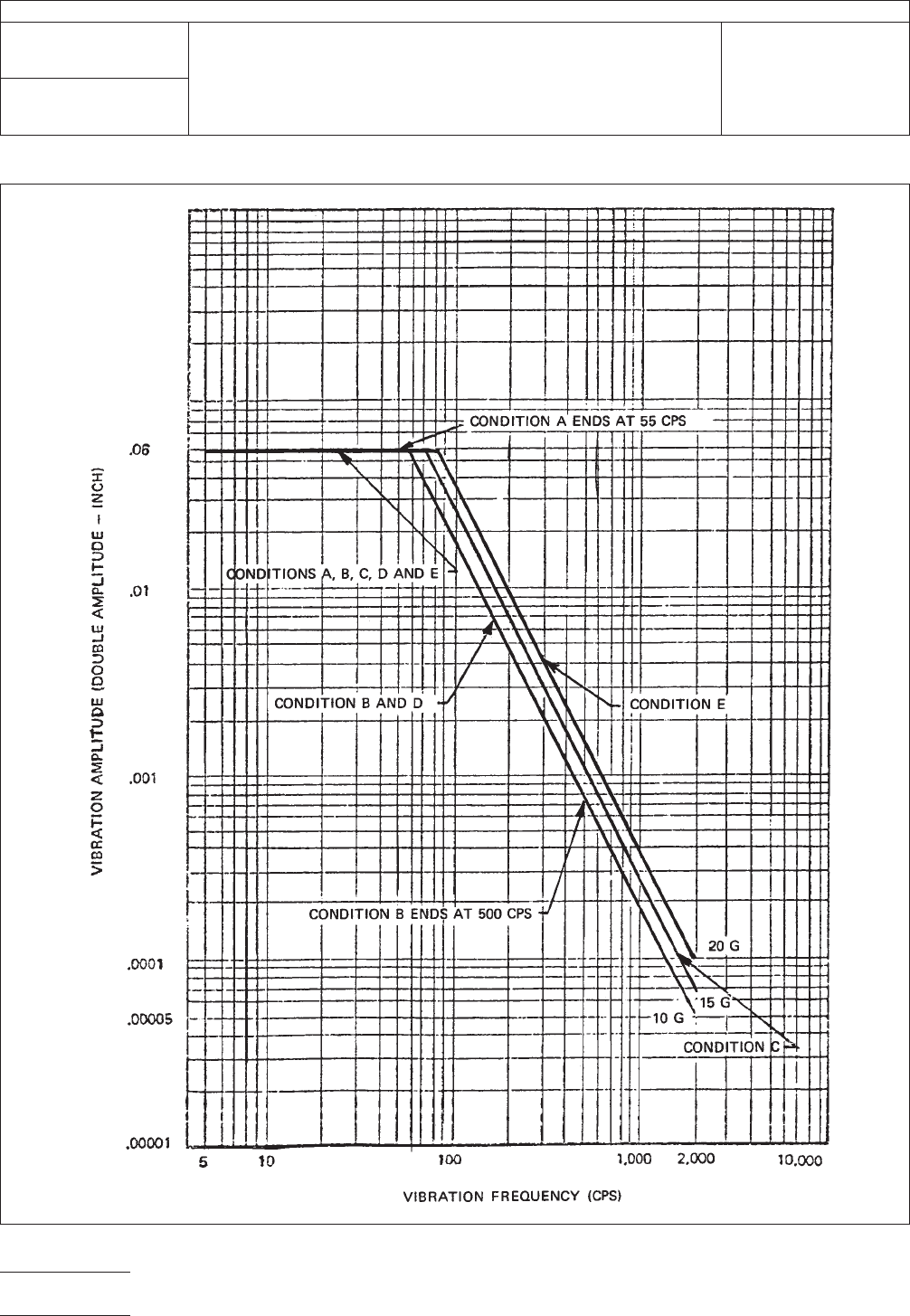
Figure 3 Vibration Test Curves
IPC-TM-650
Number
3.12
Subject
Vibration, Connectors
Date
7/75
Revision
A
Page4of6
5.3.3 Resonant modes of the test sample shall be deter-
mined by varying the frequency of the applied sinusoidal vibra-
tion slowly through the frequency range from 55 to 2000 Hz
at an amplitude of less than±2Gpeak. The test sample shall
be vibrated at a peak acceleration of ± 10G for 5 minutes at
each critical resonant frequency observed (see Table 1, Note
3).
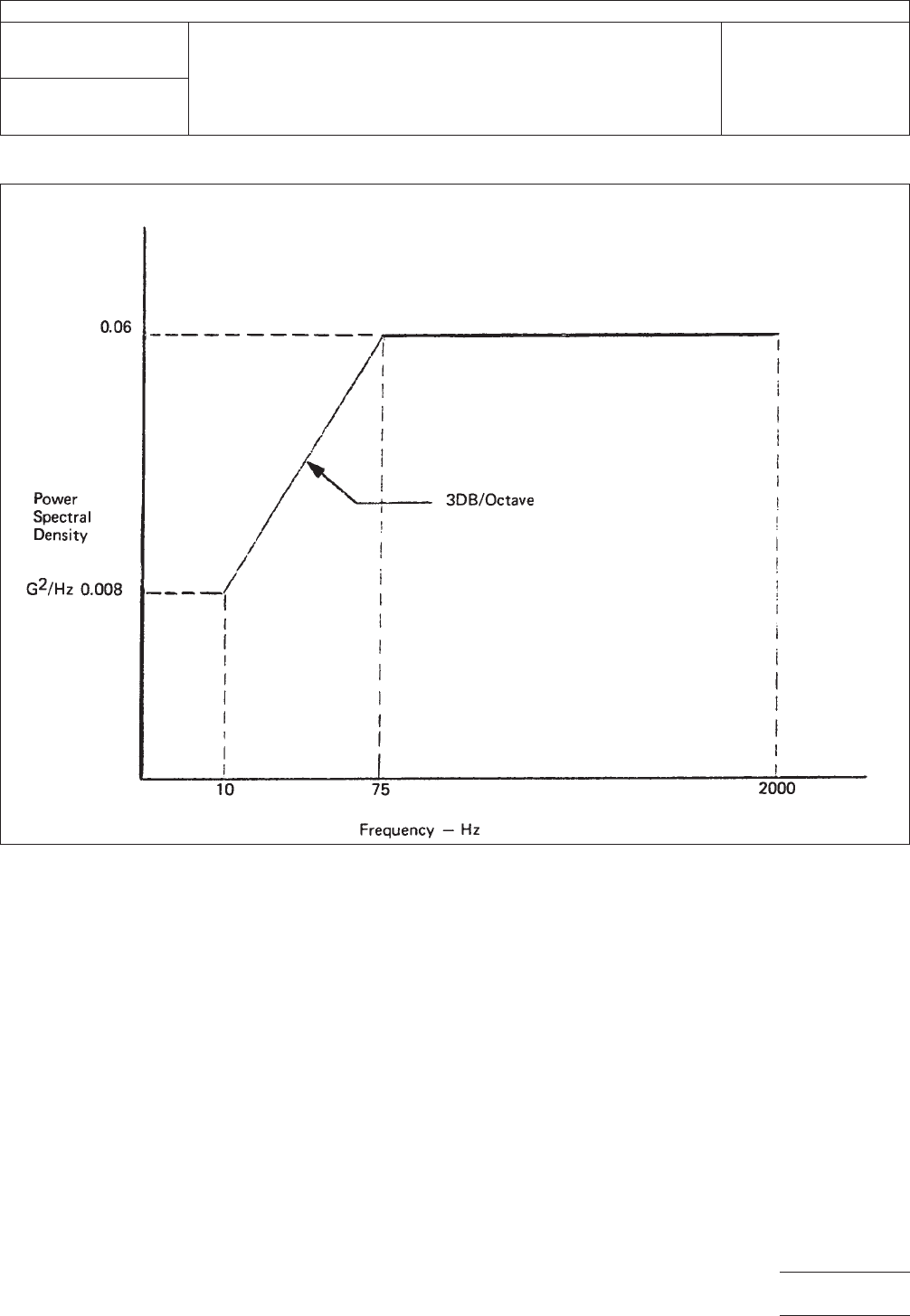
5.3.4 The test sample shall be subjected to random vibration
in accordance with Test Condition F, Table 1 and Figure 4.
5.3.5 During the test along each axis, the contacts shall be
continuously monitored for discontinuities in excess of 1
microsecond.
6.0 Notes
6.1
Acceptance criteria shall be established in terms of one,
or any combination, of the following:
A. Loss of continuity during or after any imposed shock.
B. Mechanical damage.
C. Increase in contact resistance.
D. Decrease in contact normal force.
6.2 A linear rate of change of frequency is permissible in
place of the specified logarithmic rate under the following con-
ditions:
A. The frequency range above 55 Hz shall be subdivided into
not less than three bands. The ratio of the maximum fre-
quency to the minimum frequency in each band shall not
be less than two.
IPC-3-12-4
Figure 4 Random Vibration Input
IPC-TM-650
Number
3.12
Subject
Vibration, Connectors
Date
7/75
Revision
A
Page5of6

B. The rate of change of frequency (Hz/min.) shall be con-
stant for any one band.
C. The ratio of the rate of change of frequency of each band
to the maximum frequency of that band shall be approxi-
mately the same as that ratio for every other band.
EXAMPLE:
As an example of the computation of rates of
change, assume that the frequency spectrum has been
divided into three bands, 55 to 125 Hz, 125 to 500 Hz,
and 500 to 2000 Hz, in accordance with 6.2A. Let the
(constant) ratio of rate of frequency change in Hz/min. to
maximum frequency in Hz be k for each band. Then the
rates of change for the three bands will be 125k, 500k
and 2000k, respectively. The times, in minutes, to traverse
the three frequency bands will therefore be, respectively,
125−55
125k
500−125
500k
and 2000−500
2000k
EXAMPLE:
If the range traverse time is 30 minutes –
30 =
70
125k
+
375
500k
±
1500
2000k
from which: k = 0.0687
The required maximum constant rates of frequency
change for the three bands are therefore 8.55, 34.2 and
137 Hz/min., respectively, and the times of traverse of the
bands are 8.2, 10.9 and 10.9 minutes, respectively.
IPC-TM-650
Number
3.12
Subject
Vibration, Connectors
Date
7/75
Revision
A
Page6of6