IPC-TM-650 EN 2022 试验方法.pdf - 第744页
IPC-3408-fig4 Figure 3 Four Probe Interconnect Resistance Measurement T echnique for Flex to PWB and Flex to ITO Glass VI Ih, Vh I1 R1= AV/I 6th trace IPC-3408-fig3 Figure 2 Interconnection Resistance T est Assembly; Fle…
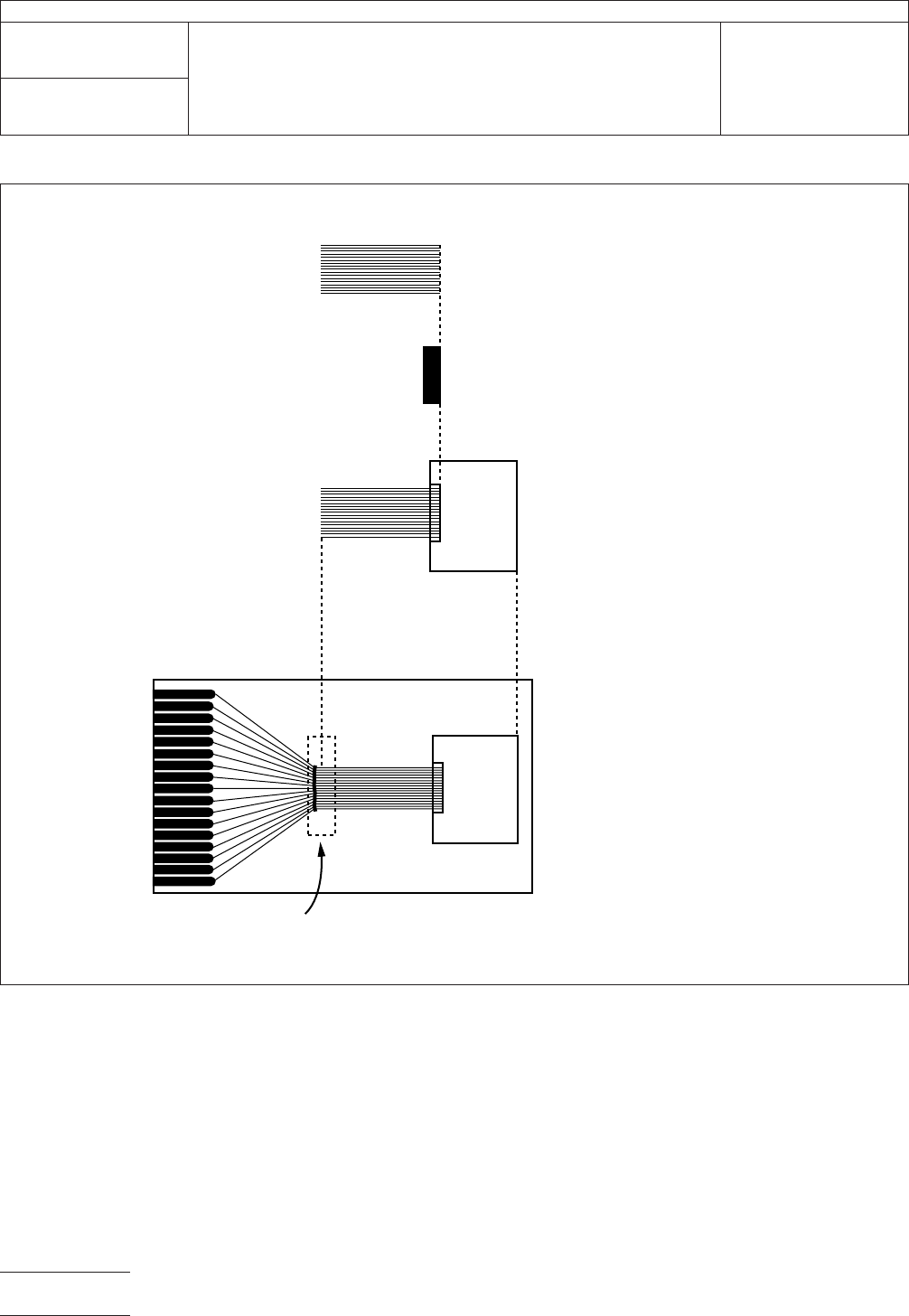
IPC-3408-3-1
Figure
1 Interconnection Resistance Test Assembly; Flex to ITO Glass
0.4 mm Flex, 9 x 25 mm
9.0 mm x 2.5 mm nom.
ZAF, 0.025 mm, 3.2 x 10 mm
Bonded Test Sample
0.2 mm line/space
Pitch Flex-ITO Glass
Test Sample Clamped
to 0.4 mm Pitch Test Board
Clamp
IPC-TM-650
Number
2.6.24
Subject
Junction
Stability Under Environmental Conditions
Date
11/98
Revision
P
age2of3
电子技术应用 www.ChinaAET.com
IPC-3408-fig4
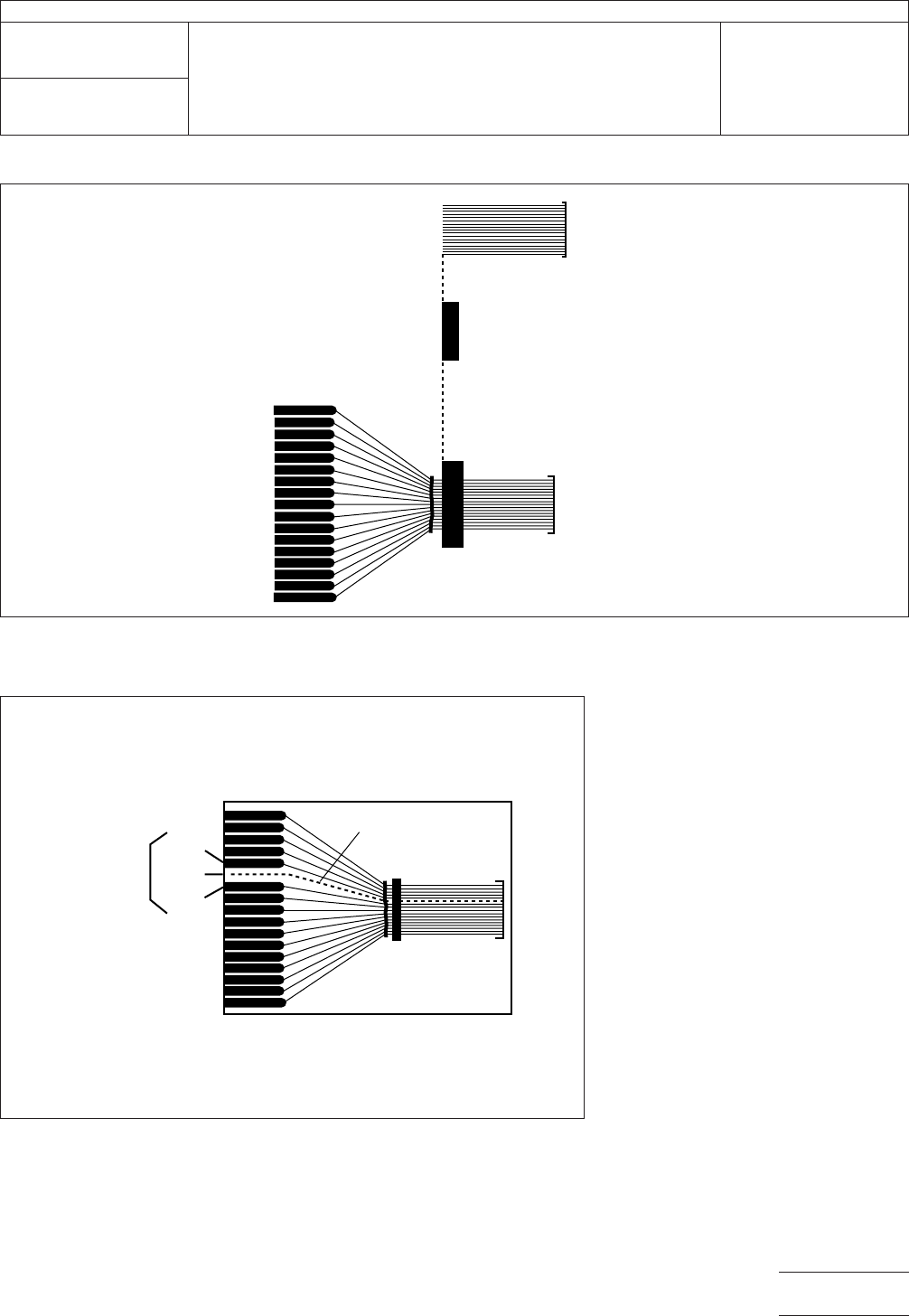
Figure
3 Four Probe Interconnect Resistance Measurement Technique for
Flex to PWB and Flex to ITO Glass
VI
Ih, Vh
I1
R1= AV/I
6th trace
IPC-3408-fig3
Figure
2 Interconnection Resistance Test Assembly; Flex to PWB
0.4 mm Flex, Shortened on End
17 Traces, 9 mm x 25 mm
ZAF, 0.050 mm, 3.2 mm x 10 mm
Bonded Test Sample
0.2 mm line/space
Pitch Flex Board
IPC-TM-650
Number
2.6.24
Subject
Junction
Stability Under Environmental Conditions
Date
11/98
Revision
P
age3of3
电子技术应用 www.ChinaAET.com

1 Scope
This test method provides a means to assess the propensity
for conductive anodic filament (CAF) growth and other forms
of electrochemical migration failure modes within a printed
board (PB). This test method can be used to assess PB lami-
nate materials, PB design and application parameters, PB
manufacturing process changes and other applications such
as press-fit connectors.
Warning 1: This IPC test method has not been designed for
use with voltages exceeding 100 Vdc bias, however higher
voltage bias testing is being routinely required to be per-
formed, such as for electric vehicle electronics. Note that at
100 Vdc using 20 mA cut-off means 2 watts of power being
dissipated per channel, so using a much lower cut-off current
is recommended for better root cause failure analysis.
Warning 2: As voltage bias is increased, the wiring insulation
required needs to change in order to ensure operator safety.
2 Applicable Documents
2.1 IPC
IPC-9253
CAF Test Board Design (Available in the ‘‘Drafts’’
section of the 5-32e Task Group Home Page)
IPC-9254 CAF Test Board Design (Available in the ‘‘Drafts’’
section of the 5-32e Task Group Home Page)
IPC-9255 CAF Test Board Design (Available in Free Down-
loads in IPC Home Page)
IPC-9256 CAF Test Board Design (Available in Free Down-
loads in IPC Home Page)
IPC-9691 CAF Test Method User Guide for the IPC-TM-650,
Method 2.6.25
IPC J-STD-001 Requirements for Soldered Electrical and
Electronic Assemblies
IPC J-STD-004 Requirements for Soldering Fluxes
IPC J-STD-006 Requirements for Electronic Grade Solder
Alloys and Fluxed and Non-Fluxed Solid Solders for Electronic
Soldering Applications
IPC-TM-650 Test Methods
2.3.25 Detection and Measurement of Ionizable Surface
Contaminants by Resistivity of Solvent Extract
2.6.27 Thermal Stress, Convection Reflow Assembly
Simulation
2.2 American Society for Testing and Materials (ASTM)
ASTM D-257
Standard Test Methods for DC Resistance or
Conductance of Insulating Materials
3 Test Specimens
The IPC-9254 CAF test board design is the older coupon and
has been superseded by the IPC-9253. The new smaller CAF
test coupons are IPC-9255 and IPC-9256 and are used for
evaluating PTH-PTH spacings only. These smaller CAF test
coupons allow users to put a CAF test coupon at the perim-
eter of their panels for testing. All IPC CAF test coupon design
Gerber files are down-loadable and are available on the IPC
committee and free download web sites.
3.1 CAF Test Board Designs The IPC-9253 and IPC-
9254 have 10 layers and dimensions are approximately
125x175 mm [nominally 5x7 in]. Test board designs for evalu-
ating CAF resistance shall have varying drilled hole wall to
drilled hole wall distances for plated holes. These distances
can range from as low as 0.15 mm [0.00591 in] separation for
alternate laminate materials expected to have very high CAF
resistance and minimal copper wicking out from the plated-
through hole (PTH), to as high as 0.89 mm [0.0350 in] sepa-
ration for evaluating press-fit connector applications. The
drilled hole size, rather than the finished hole size, is specified
in the chart on the bare board fabrication drawing to ensure
consistent spacing. Internal layer thieving may be added to
plane layers around the perimeter. Test boards should be
manufactured so that the machine/grain direction of the
woven fiber reinforcement is perpendicular to the rows of
same-net daisy chain vias for A1-A4 (machine/grain direction
tends to fail first). Test board designs shall have sufficient
minimum spacings on outer layers to ensure that surface insu-
lation resistance failures do not occur. Layouts of the IPC-
9253 and IPC-9254 test board structures (CAF Test Boards)
are shown in Figure 1.
3000 Lakeside Drive, Suite 105N
Bannockburn, IL 60015-1249
IPC-TM-650
TEST METHODS MANUAL
Number
2.6.25
Subject
Conductive Anodic Filament (CAF) Resistance Test:
X-Y Axis
Date
02/21
Revision
C
Originating Task Group
Electrochemical Migration Task Group (5-32e)
Material in this Test Methods Manual was voluntarily established by Technical Committees of IPC. This material is advisory only
and its use or adaptation is entirely voluntary. IPC disclaims all liability of any kind as to the use, application, or adaptation of this
material. Users are also wholly responsible for protecting themselves against all claims or liabilities for patent infringement.
Equipment referenced is for the convenience of the user and does not imply endorsement by IPC.
Page1of11