IPC-TM-650 EN 2022 试验方法.pdf - 第711页
1.0 Scope This non-destructive inspection method is needed to ascertain the following conditions: a. Innerlayer shift is within acceptable tolerances. b. One or more inner layers have not been reversed. c. Drilled holes …
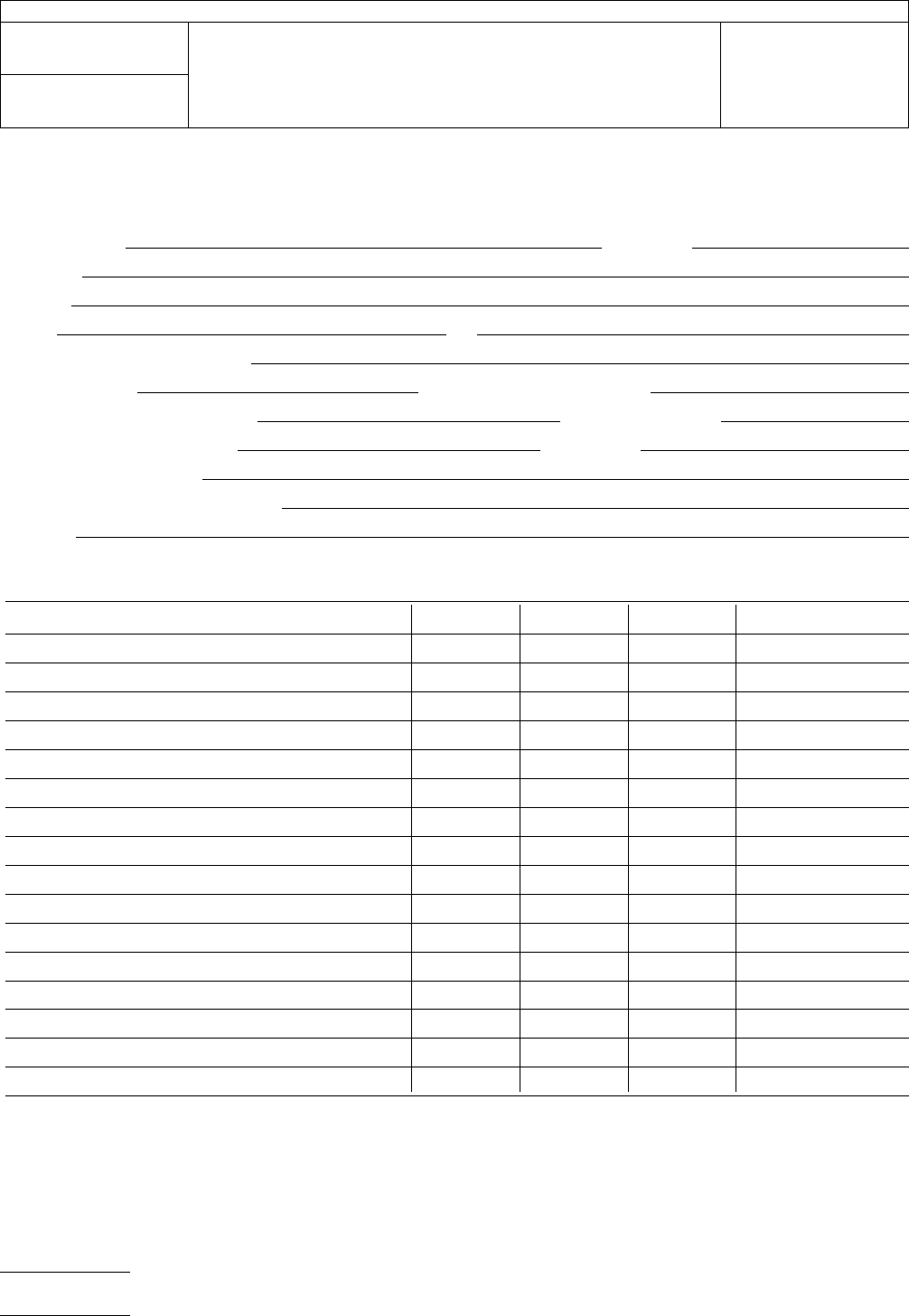
Ultrasonic
Test Data Record
Name
of tester
Date
Company
Address
Phone Fax
Make
and model of equipment
T
ank size (liters)
Dimensions
(cm x cm x cm)
Generator
output power (watts)
Frequency
(KHz)
No.
of boards tested per trial
Substrate
Exposure
time (minutes)
Other
stress testing (pre- or post-)
Describe
Component
tested No. tested Passed Failed Comments
Type Mfgr Part #
Mail
to: IPC Fax to: 847-509-9798
2215 Sanders Road
Northbrook, IL 60062-6135
Attn: Ultrasonic Cleaning Task Group
IPC-TM-650
Number
2.6.9.2
Subject
Test
to Determine Sensitivity of Electronic Components to
Ultrasonic Energy
Date
1/95
Revision
P
age4of4
电子技术应用 www.ChinaAET.com
1.0
Scope
This
non-destructive inspection method is
needed to ascertain the following conditions:
a. Innerlayer shift is within acceptable tolerances.
b. One or more inner layers have not been reversed.
c. Drilled holes are aligned with pads to the extent that any
break-out is within acceptable tolerances.
d. The minimum distance between a drilled hole and a
ground plane clearance is within acceptable tolerances.
The test method will entail passing X-rays through the test
specimen and converting the transmitted X-ray image into a
visual image through the use of either X-ray film or a flouro-
scopic (real time) device.
Cautionary notes:
The construction of the multilayer with respect to; number of
layers, thickness of copper and presence other metals such
as heat sinks (e.g. Invar), will determine the power and sensi-
tivity of the X-ray apparatus which can be used. All X-ray
apparatus should be registered with the appropriate state or
regional Radiation Control agency.
A radiation safety program should be implemented.
2.0
Applicable Documents
MIL-STD-883
Method
2012.5, Radiography
3.0
Test Specimen
The
Test specimen shall be a multi-
layer printed wiring board having a maximum size of 20 x 24
inches.
4.0
Apparatus or Material
(Ref.
MIL-STD-883C).
The apparatus and materials for this test shall include:
4.1
A
radiographic (X-ray) source for generating X-rays of
sufficient voltage and power to penetrate the test specimen.
The focal distance and focal spot size of the source shall be
adequate to produce a well defined image of a 0.001 inch
copper wire.
4.2
If film is the imaging medium
The
film used is to be
a fine grain single emulsion X-ray film with resolution capable
of resolving a 0.001 copper wire and fray scale capable of
detecting the shift of a single layer.
4.3
Film holder
A
lead backed film holder to prevent back
scatter of radiation.
4.4
Radiographic Viewer
Capable
of 0.001 inches resolu-
tion.
4.5
Radiographic quality standards
Suitable
Image Qual-
ity Indicator capable of verifying the ability to detect all speci-
fied defects.
4.6
Film processing means
Manual
tray development or a
film processor is to be used. If the film processor has a glove
box and suitable film holders, a dark room is not required. If
manual tray development is used, a dark room is required.
4.7
Silver film densitometer
Capable
of measuring silver
film density up to 3.0.
4.8 If
a fluoroscopic (real time) X-ray inspection system is
used, the X-ray image detecting device or x-ray camera
should be capable of resolving a 0.001 copper wire and a
gray scale capable of detecting the shift of a single layer of the
specimen.
4.8.1
A means is to be provided for recording or making a
hard copy of the fluoroscopic (real time) X-ray image.
4.9
Image Identification
Each
radiographic image (film or
real time) shall be identified with the following information:
• Manufacturer’s name
• Part number
• Serial number (when applicable)
• Date code (if marked on specimen)
• View number
• Reference code for x-ray procedures used.
5.0
Procedure
5.1 Preparation
Alignment
of the X-ray beam center line,
specimen inspection area and image detector field of view
must be insured so that parallax distortion does not adversely
effect the interpretation of the result. (See reference)
The
Institute for Interconnecting and Packaging Electronic Circuits
2215 Sanders Road • Northbrook, IL 60062-6135
IPC-TM-650
TEST
METHODS MANUAL
Number
2.6.10
Subject
X-Ray
(Radiography), Multilayer Printed Wiring
Printed Board Test Methods
Date
8/97
Revision
A
Originating Task Group
Board T.M. Task Group, 7-11d
Material
in this Test Methods Manual was voluntarily established by Technical Committees of the IPC. This material is advisory only
and its use or adaptation is entirely voluntary. IPC disclaims all liability of any kind as to the use, application, or adaptation of this
material. Users are also wholly responsible for protecting themselves against all claims or liabilities for patent infringement.
Equipment referenced is for the convenience of the user and does not imply endorsement by the IPC.
P
age1of2
电子技术应用 www.ChinaAET.com

Parallax
displacement distortion will be indicated when round
holes appear oval or ‘‘cats eyed’’ on the X-ray image. For a
hole drilled through a panel of thickness, t, and offset from the
center of the X-ray beam axis by the angle A, the parallax dis-
placement between the top and bottom of the hole will be
equal to
txT
ran A.
5.2
Radiographic Quality Standard
A
radiographic qual-
ity standard such as an ASTM Image Quality Indicator or other
agreeable indicator shall be used on all radiographic studies.
5.3
Exposure when film is used
The
necessary X-ray
penetration exposure will depend on the construction of the
multilayer, X-ray source anode voltage, the anode current, the
distance from the source to the film plane and the speed or
sensitivity of the film. The exposure should be sufficient to
produce an optical density of at least 2.0 at those portions of
the film receiving the highest X-ray exposure, such as, holes
or unattenuated areas. In addition the conditions of paragraph
1.0 with respect to resolution and gray scale must be met.
The exposure apparatus for film can consist of an industrial
shielded X-ray cabinet with a nominal anode voltage of 80
kilovolts, nominal anode current of
3
millgrams
and
a focal
spot to film distance adequate to avoid parallax distortion of
the X-ray film image.
5.4
Exposure for realtime systems
The
X-ray source
operating parameters must be matched to the X-ray camera
sensitivity of the system to produce an X-ray image of suffi-
cient quality to comply with the conditions of paragraph 1.0.
6.0 Notes
None
IPC-TM-650
Number
2.6.10
Subject
X-Ray
(Radiography), Multilayer Printed Wiring Printed Board
Test Methods
Date
8/97
Revision
A
P
age2of2
电子技术应用 www.ChinaAET.com