IPC-TM-650 EN 2022 试验方法.pdf - 第304页
1.0 Scope This method covers the measurement of bow and twist by maximum vertical displacement of an unre- strained panel of either cut to size panels or finished rigid printed boards including single- and double-sided, …
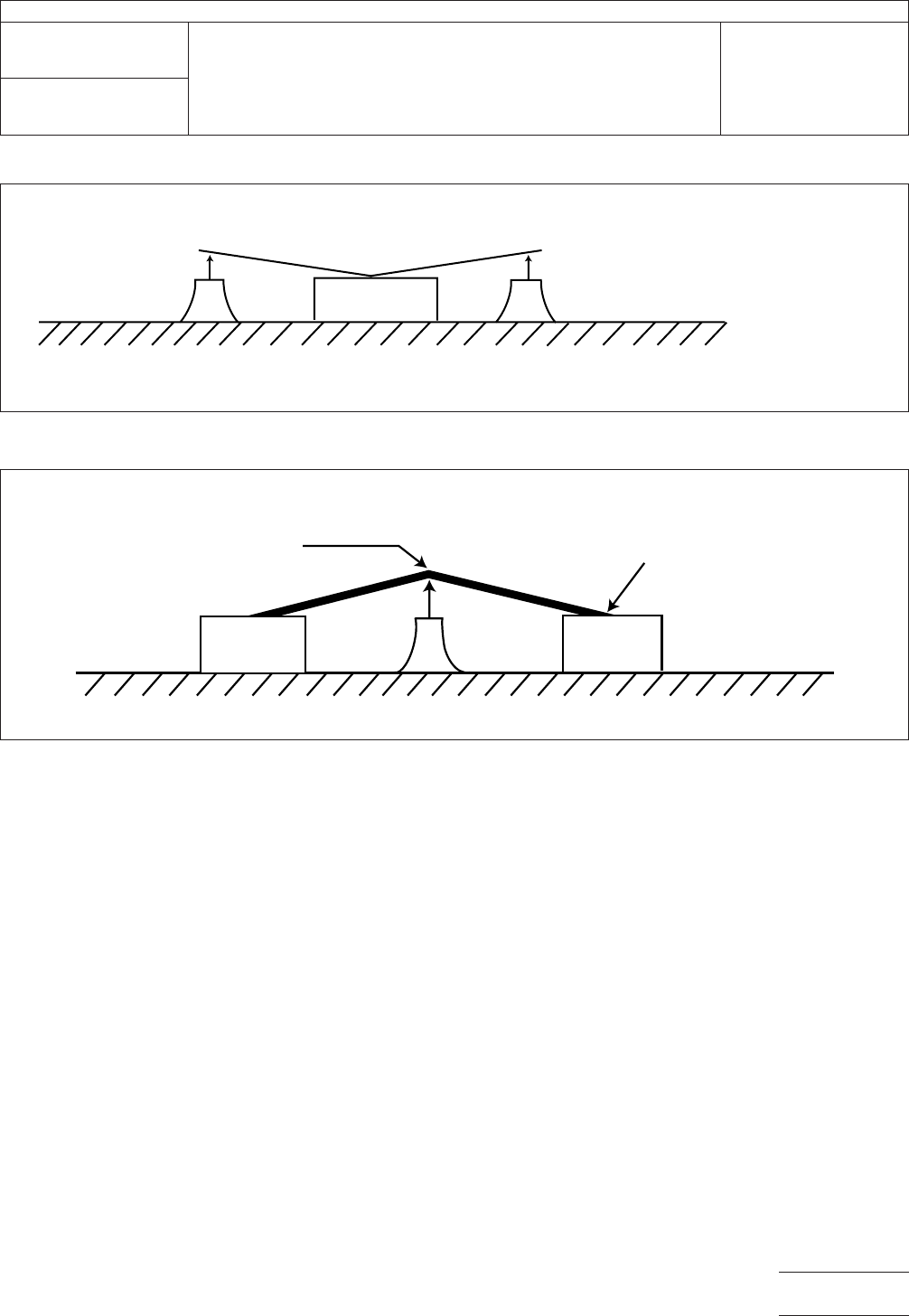
IPC-2422-7
Figure
7 Corners Supports
R1
R1
R2
Supporting Jacks or Blocks
IPC-2422-8
Figure
8 Highest Point Measurement
Measure at
This Point
Measure at
This Point
R2
R2
R1
IPC-TM-650
Number
2.4.22
Subject
Bow
and Twist (Percentage)
Date
6/99
Revision
C
P
age5of5
电子技术应用 www.ChinaAET.com
1.0
Scope
This
method covers the measurement of bow
and twist by maximum vertical displacement of an unre-
strained panel of either cut to size panels or finished rigid
printed boards including single- and double-sided, multilayer,
and the rigid segments of rigid flex printed circuits. This test
method is only applicable to laminates greater than or equal to
0.5 mm [0.020 in] in thickness. This test method can also be
used after etching or after thermal stress with requirements as
agreed between user and vendor.
2.0
Applicable Documents
None
3.0 Test Specimen
The
test specimen for incoming
inspection shall be 300 x 300 mm ± 2mm[12x12in±0.08
in] in size. For smaller panel sizes and finished printed wiring
boards, use actual size. A minimum of three specimens is
required per sample, when evaluating pressed laminate
sheets.
4.0
Apparatus
4.1
Sample
Shear
4.2
Granite
Surface Plate or Equivalent
4.3
Feeler
Gauges or Equivalent
4.4
Micrometer
5.0
Test Procedure
5.1 Preparation of the Test Specimen
5.1.1
For
laminate sheet, the test specimens are to be cut
in such a fashion as to minimize mechanical flexing.
5.1.2
For
cut to size panels or printed wiring boards, use
actual size.
5.1.3
Mark
the specimen for traceability. No mechanical or
chemical pre-cleaning is permitted on the specimens.
5.2
Measurement of Bow and Twist
5.2.1
Place
the test panels on the surface plate such that
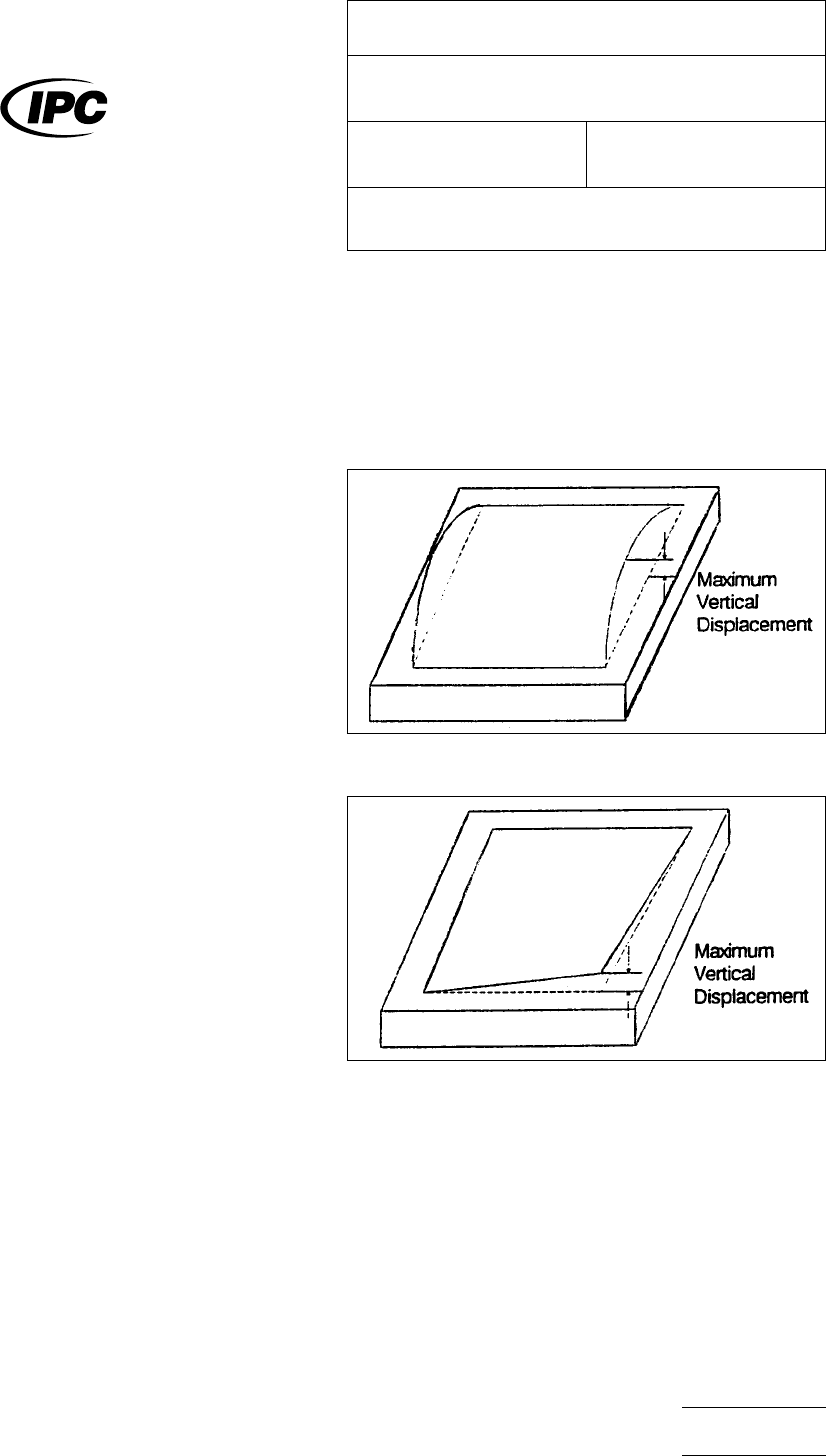
the maximum vertical displacement is observed. The panel
should be turned over in establishing the maximum vertical
displacement. The maximum vertical displacement may be a
corner or a side of the test specimen as illustrated in Figures
1 and 2.
5.2.2
Measure
the maximum vertical displacement by
inserting the feeler gauges between the surface plate and the
bottom surface of the laminate.
5.2.3
Verify
the thickness measurement by measuring the
total thickness of the feeler gauges with the micrometer.
5.2.4
Record
the maximum vertical displacement in 0.25
mm [0.01 in]. One value is recorded per test specimen. This is
the bow and twist of the test specimen.
IPC-24221-1
Figure
1
IPC-24221-2
Figure
2
The
Institute for Interconnecting and Packaging Electronic Circuits
2215 Sanders Road • Northbrook, IL 60062-6135
IPC-TM-650
TEST
METHODS MANUAL
Number
2.4.22.1
Subject
Bow
and Twist—Laminate
Date
5/93
Revision
C
Originating Task Group
Material
in this Test Methods Manual was voluntarily established by Technical Committees of the IPC. This material is advisory only
and its use or adaptation is entirely voluntary. IPC disclaims all liability of any kind as to the use, application, or adaptation of this
material. Users are also wholly responsible for protecting themselves against all claims or liabilities for patent infringement.
Equipment referenced is for the convenience of the user and does not imply endorsement by the IPC.
P
age1of2
电子技术应用 www.ChinaAET.com

5.3
Calculation of Results
5.3.1 Average Bow and Twist Results
Bow and Twist =
Sum of the Measured Maximum
Vertical Displacements in mm [in]
Number
of Test Specimens
5.3.2
Maximum Bow and Twist Results
The
maximum
vertical displacement in mm [in] obtained for each lot of
material.
6.0 Notes
6.1
This
is the referee method; other methods of measure-
ment are allowable, if agreed upon between user and vendor.
IPC-TM-650
Number
2.4.22.1
Subject
Bow
and Twist—Laminate
Date
5/93
Revision
C
P
age2of2
电子技术应用 www.ChinaAET.com