Operating Instructions_VF335_en.pdf - 第135页
6|Function description ü Automatically logging out a user a) Click on the [Automatic user logoff] input field. b) Enter the user auto logout time in [min]. ð The user is automatically logged out when the entered time e…
6|Function description
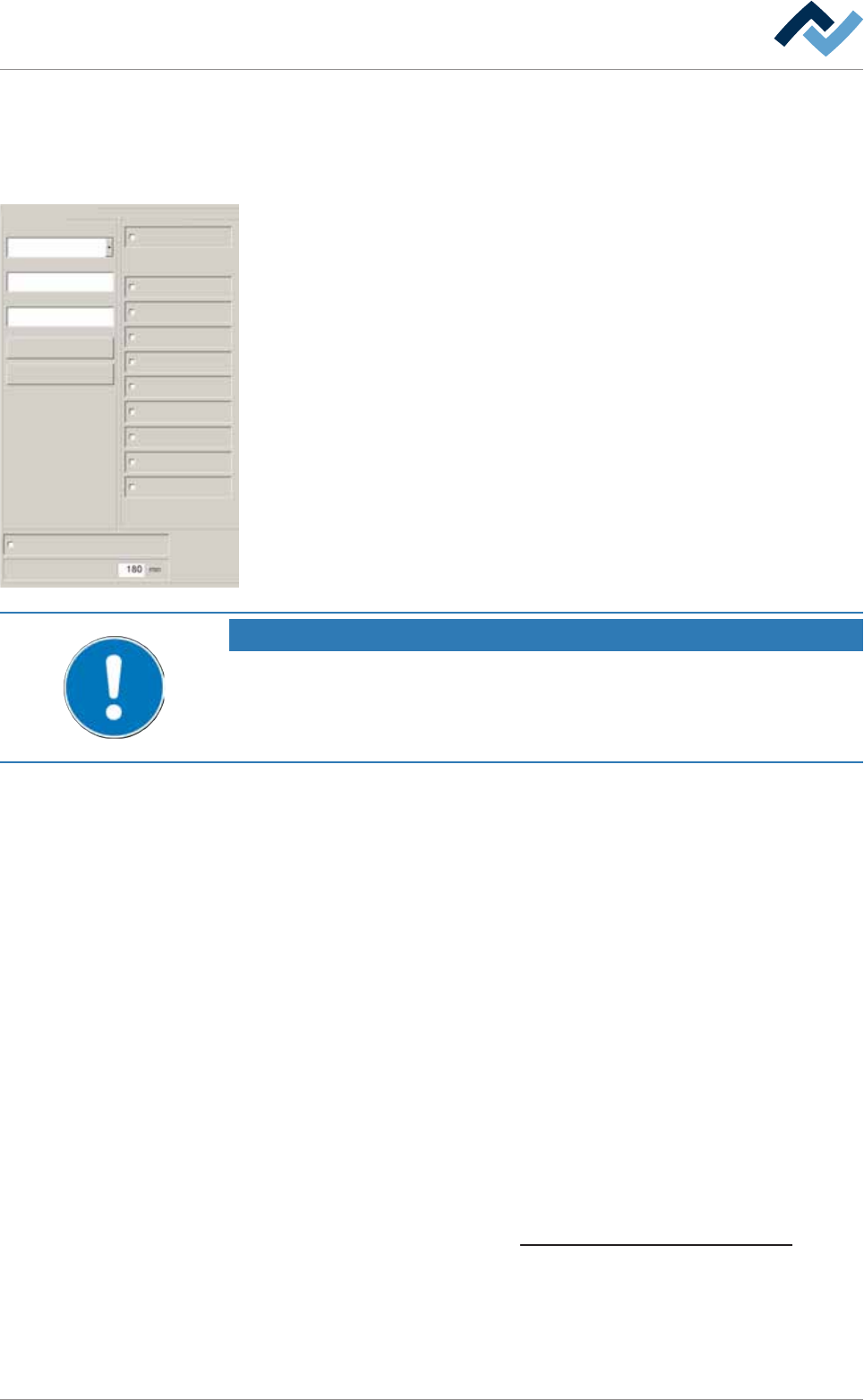
6.5.3 The [Accessibility] frame
This frame includes several checkboxes, which can be enabled with a click. A check-
mark indicates that a checkbox has been enabled and the related authorization
given.
Profile
User administration
Logging
File path
General settings
Settings
User maintenance mode
Add user
User administration active
User ersa maintenance mode
Automatic log off after
General settings
Process recorder
Weekly timer
Messages administration
Acknowledge messages
Edit soldering program
Select soldering program
Set value pages
Module properties
Administrator
Delete
Name
Password:
Confirmation password
User Accessibility
User administration
– [Administrator]: a user with administrator rights has the right to enable/disable
the user administration function as well as to create new users. If this checkbox
is enabled, the user is automatically granted all rights. (Except for configuration
settings).
NOTE
Are any changes possible?
Without administrator rights, nothing can be changed in this dialog. Without log-in
name and password, the settings can only be displayed. In this case, press the [ESC]
key on your keyboard, or click on the button [Cancel] when a password is required.
– [Module properties]: The user has access to the setting dialogs of the module
properties.
– [Set value pages]: The user has access to the editing dialogs to operate the
modules.
– [Select soldering program]: The user may select and enable an existing solder-
ing program. On this regard , please read chapter Selecting and starting a sol-
dering program.
– [Edit soldering program]: The user may edit soldering programs. On this regard,
please read chapter The soldering program editor.
– [Acknowledge messages]: The user may acknowledge messages. On this re-
gard, please read chapter The [Messages] editing dialog.
– [Messages administration]: the user has access to the [Message administra-
tion] dialog. On this regard, please read chapter The [Messages] editing dialog.
– [Weekly timer]: The user may change settings in the [Weekly timer] dialogs. On
this regard, please read chapter The [Weekly timer] setting dialog..
– [Process recorder]: The user may perform settings in the process recorder dia-
logs. On this regard, please read chapter The process recorder.
– [General settings]: The user may change the settings in the [Profile] dialog. On
this regard, please read chapter The [General settings] editing dialog [
}131].
– [User administration active]: If this checkbox is empty, the user administration
function is disabled. In that case, unrestricted operation is possible for each
person. If this checkbox is enabled, the user administration function is active as
well. In that case, a user can only operate the system if he/she has been given
the required rights.
Ersa GmbH Operating Instructions_VF335_en|Rev. 14|30/11/2017 134/695

6|Function description
ü Automatically logging out a user
a) Click on the [Automatic user logoff] input field.
b) Enter the user auto logout time in [min].
ð The user is automatically logged out when the entered time elapses.
ð If the [0] value is entered, the automatic logout is disabled.
ð The process has now been completed.
Ersa GmbH Operating Instructions_VF335_en|Rev. 14|30/11/2017 135/695
6|Function description
6.5.4 Creating a new user
Profile
User administration
Logging
File path
General settings
Settings
User maintenance mode
Add user
User administration active
User ersa maintenance mode
Automatic log off after
General settings
Process recorder
Weekly timer
Messages administration
Acknowledge messages
Edit soldering program
Select soldering program
Set value pages
Module properties
Administrator
Delete
Name
Password:
Confirmation password
User Accessibility
User administration
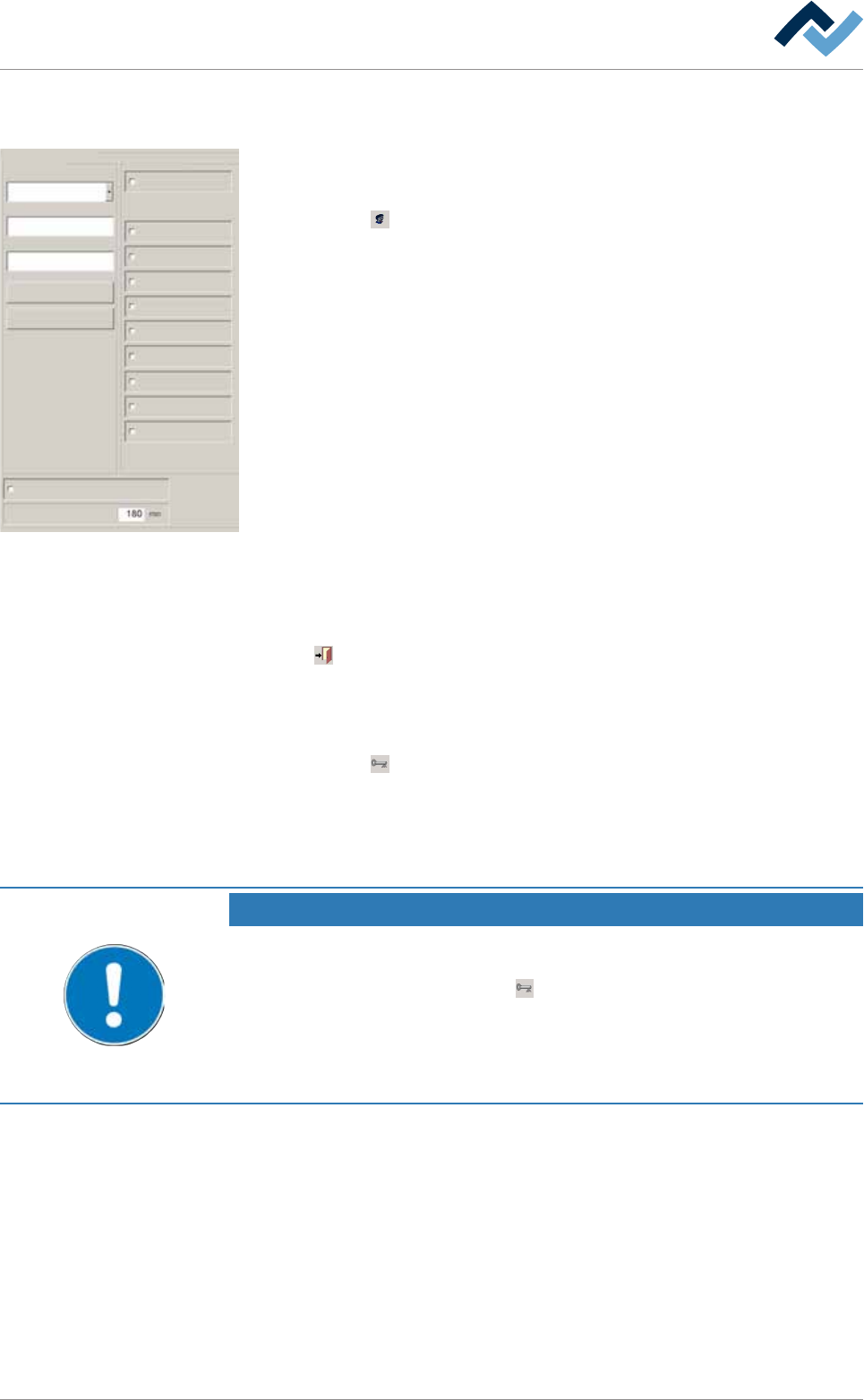
Creating a new user and assigning rights
ü Creating a new user, assigning rights:
a) click on the
button in the start dialogue.
ð When the input field [Password:] appears:
b) enter the administrator user name and password.
c) Click the [User administration] radio button in the [General settings] dialogue.
d) Activate the [User administration active] checkbox.
ð The user administration function has now been enabled.
e) Enter a new user name in the [Name] input field.
ð When entering characters, remember that commands are case-sensitive!
f) Select the rights that will be assigned to the user in the [Accessibility] frame.
g) Insert a password in the input field [Password:]. The password is not shown
when it is entered but displayed in a coded way (******).
ð When typing, remember that commands are case-sensitive!
h) Enter the password in the [Confirmation password] input field again.
i) Click the [Add user] button.
ð The new user has been added.
Click on
to close the dialog.
Logging in the user
ü To log out the administrator and log in the new user:
a) click on the
button in the start dialogue.
ð The administrator has now been logged out.
b) Log in the user and check their rights.
ð The process has now been completed.
NOTE
Which user is logged in?
The name of the currently logged in user appears in the status bar at the bottom left
of the screen. If a user is logged in, the
button is visible in the top toolbar of the
start dialogue. You can click on this button to log out the user. When logging in to the
edit dialogue [Log in]: When entering the user name, remember that commands are
case-sensitive. If, for example, a user with the name [User1] was created, an error
message is triggered if [user1] is entered.
Ersa GmbH Operating Instructions_VF335_en|Rev. 14|30/11/2017 136/695