Operating Instructions_VF335_en.pdf - 第407页
8|Service and maintenance f) If necessary, remove any soiling (oxides, dross) using a silicone brush (4). Re- move any stuck solder residue with a wooden scraper. ð The process has now been completed. Ersa GmbH Operati…
8|Service and maintenance
Cleaning the nozzle plate
1
5 6
2
2 6
6
6
34
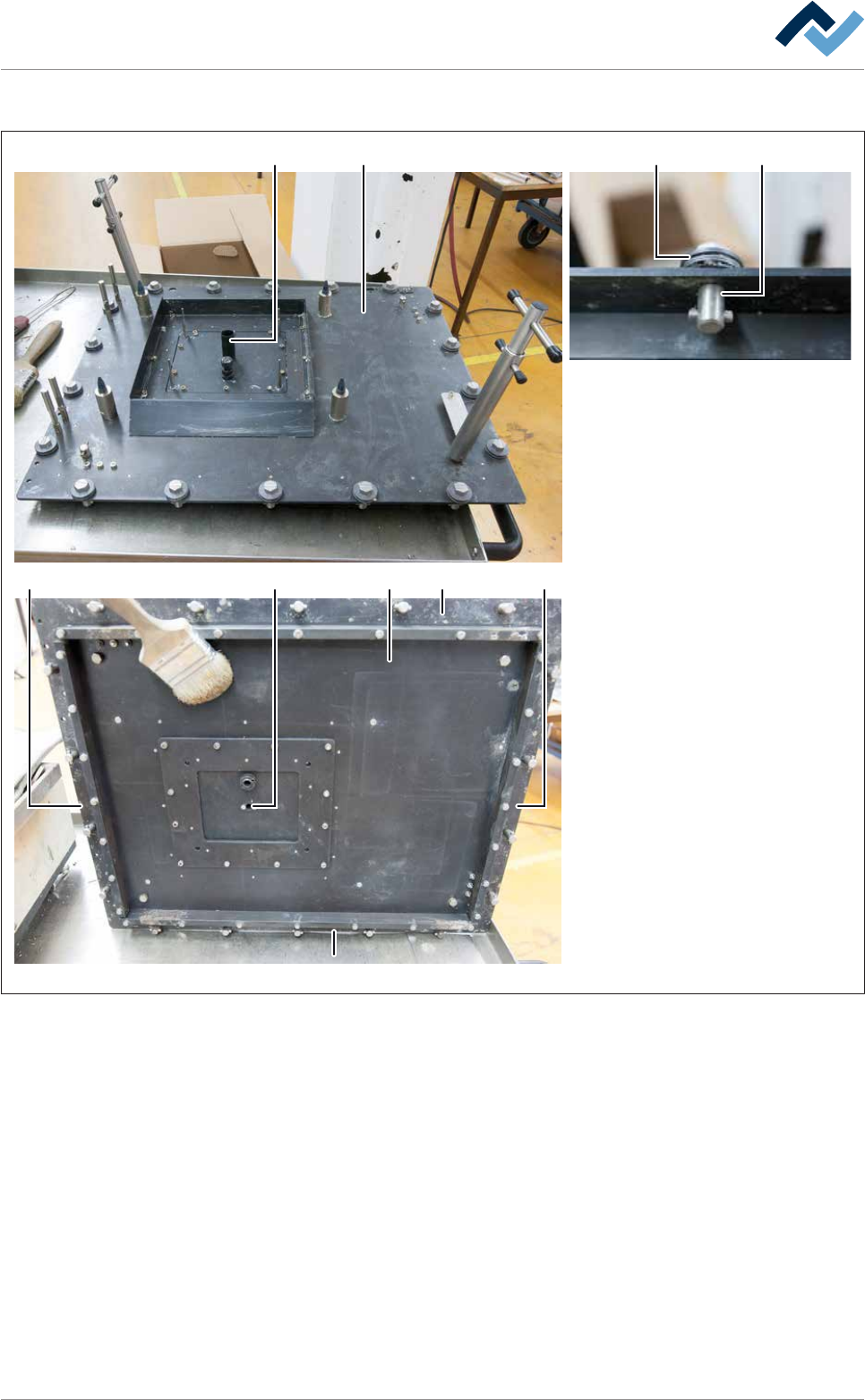
Fig.151: Clean the nozzle plate. In this figure, only one nozzle (2) is present. Your nozzle plate may have several nozzles of different
shapes.
ü To clean the nozzle plate:
ü Please note: The parts coming into contact with solder can be cleaned more
easily as long as they are still hot!
a) Thoroughly clean all bayonet catches (3) and disc springs (4).
ð Bayonet catches and disc springs must be easy to move.
b) Clean the underside (5) of the nozzle plate.
c) Carefully clean sealing surfaces (6)!
ð In the case of soiled nozzles (2).
d) Clean all nozzles (2) inside and outside.
e) Visually inspect the top of the nozzle plate.
Ersa GmbH Operating Instructions_VF335_en|Rev. 14|30/11/2017 406/695

8|Service and maintenance
f) If necessary, remove any soiling (oxides, dross) using a silicone brush (4). Re-
move any stuck solder residue with a wooden scraper.
ð The process has now been completed.
Ersa GmbH Operating Instructions_VF335_en|Rev. 14|30/11/2017 407/695
8|Service and maintenance
Cleaning the solder surface
4
5 5
67
1
2
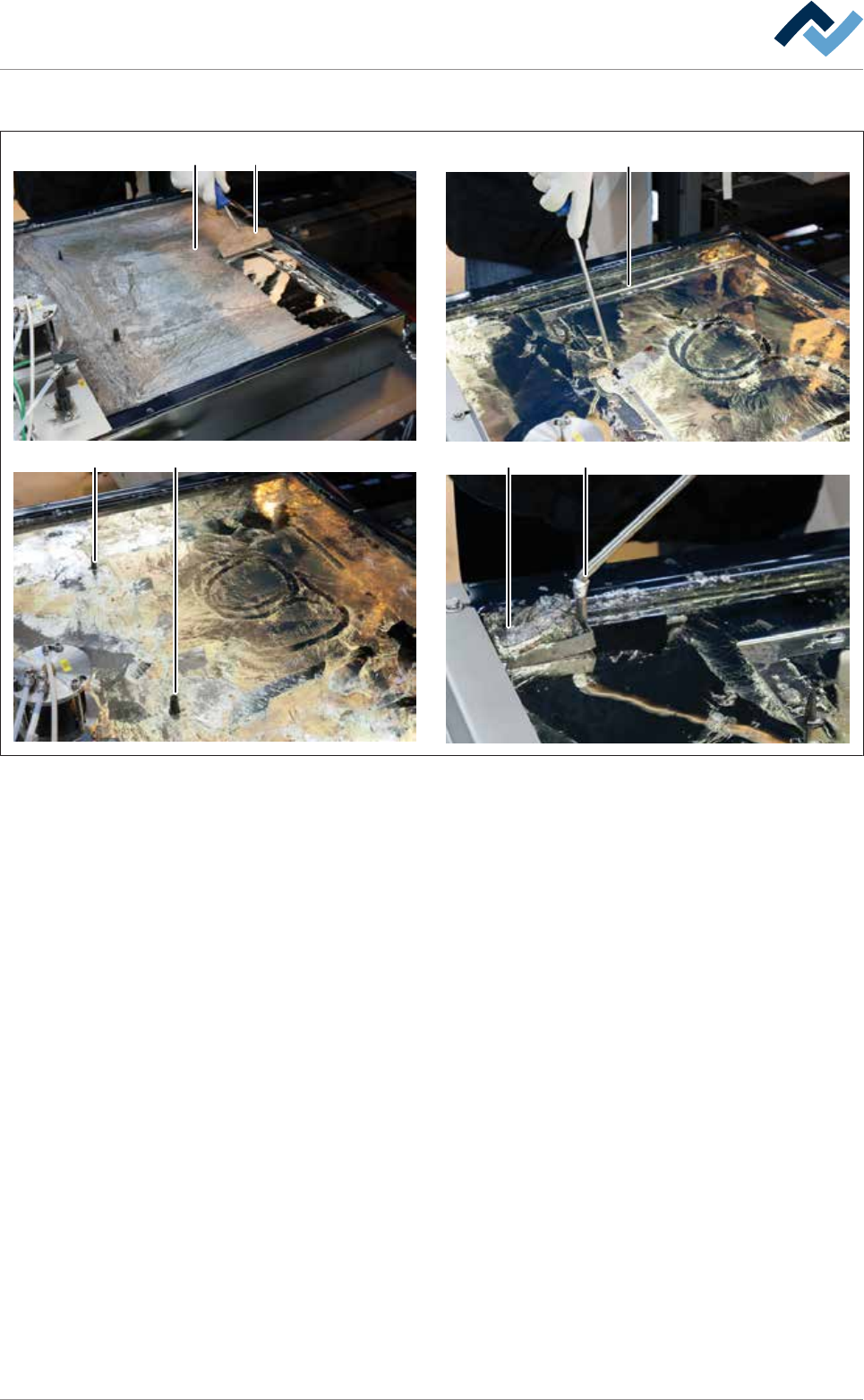
Fig.152: Cleaning the solder surface
ü To clean the solder surface:
a) Remove any solder dross from the entire solder surface (1) with the solder
scraper (2) or a silicone scraper.
b) Collect the solder dross in a corner of the solder pot.
ð Please note: Work carefully and exerting little pressure to avoid damaging
coated surfaces!
c) Use a perforated scoop (6) to remove the solder dross (7).
ð The process has now been completed.
Ersa GmbH Operating Instructions_VF335_en|Rev. 14|30/11/2017 408/695