RS-1_instruction manual.pdf - 第246页
Part 1 B asic O peration Chapter 2 Pr oduction 2- 135 Deleting a continuous production file If there is a cont inuous pr oduction fi le, the [Cont . prod. f ile Delete] comm and on t he “File” menu invoked from the “Prod…
Part 1 Basic Operation Chapter 2 Production
2-134
Continuous PWB production
Overview
If a PWB production is terminated abnormally (due to an asynchronous event or abnormal
termination of PWB production), you can perform continuous production with following the
procedure below.
Continuous production is to be performed only after at least one component is picked up or placed
on a board. If the system neither picks up nor places a component on a board, new PWB
production is to be performed.
If a board is located on the conveyor board transport path at start of PWB production, you have to
eject it or re-clamp it before starting the suspended PWB production. This is called “PWB
production without feeding a board.”
- When you resume the suspended PWB production as “PWB production without feeding a
board” although you reload the production program or quit the production program, the
system does not know the board transport condition under which the production was
terminated. Therefore, some component may be missing or placed at a wrong position of
the board.
- When the system tries to re-clamp a board during production without feeding the board, it
may fail to re-clamp the board if the board is very heavy. (For example, if the board is very
large or if many components are already placed on the board)
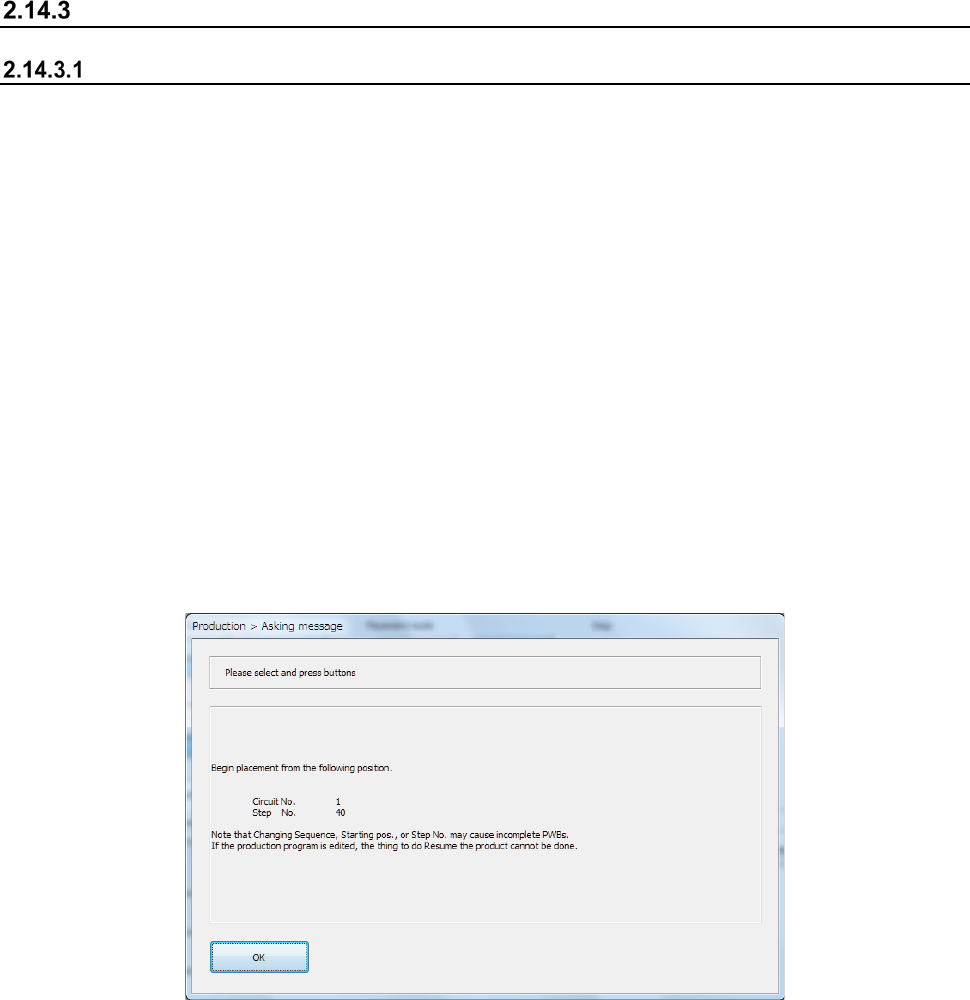
When PWB production is aborted due to an error, the system displays the message that shows you
the production restart position.
This message shows you the start position of the next placement operation for a board on which
any component is not placed yet.
When you press the <OK> button at this point, the screen is switched back to the “Prod Cond”
(production condition) screen.
At start of the next PWB production, the confirmation message appears on the screen to ask you
whether to resume the suspended production from the point recorded in the continuous production
data. At the same time, the system confirms the process to be performed before the production
starts.
However, if you edit the production program after an error is corrected, but before the next
production starts, the screen shown in the next section does not appear, and the system performs
normal PWB production.
(If you add or delete a PWB ID and/or a component placement position or change a component to
be placed at the placement position.)
Part 1 Basic Operation Chapter 2 Production
2-135
Deleting a continuous production file
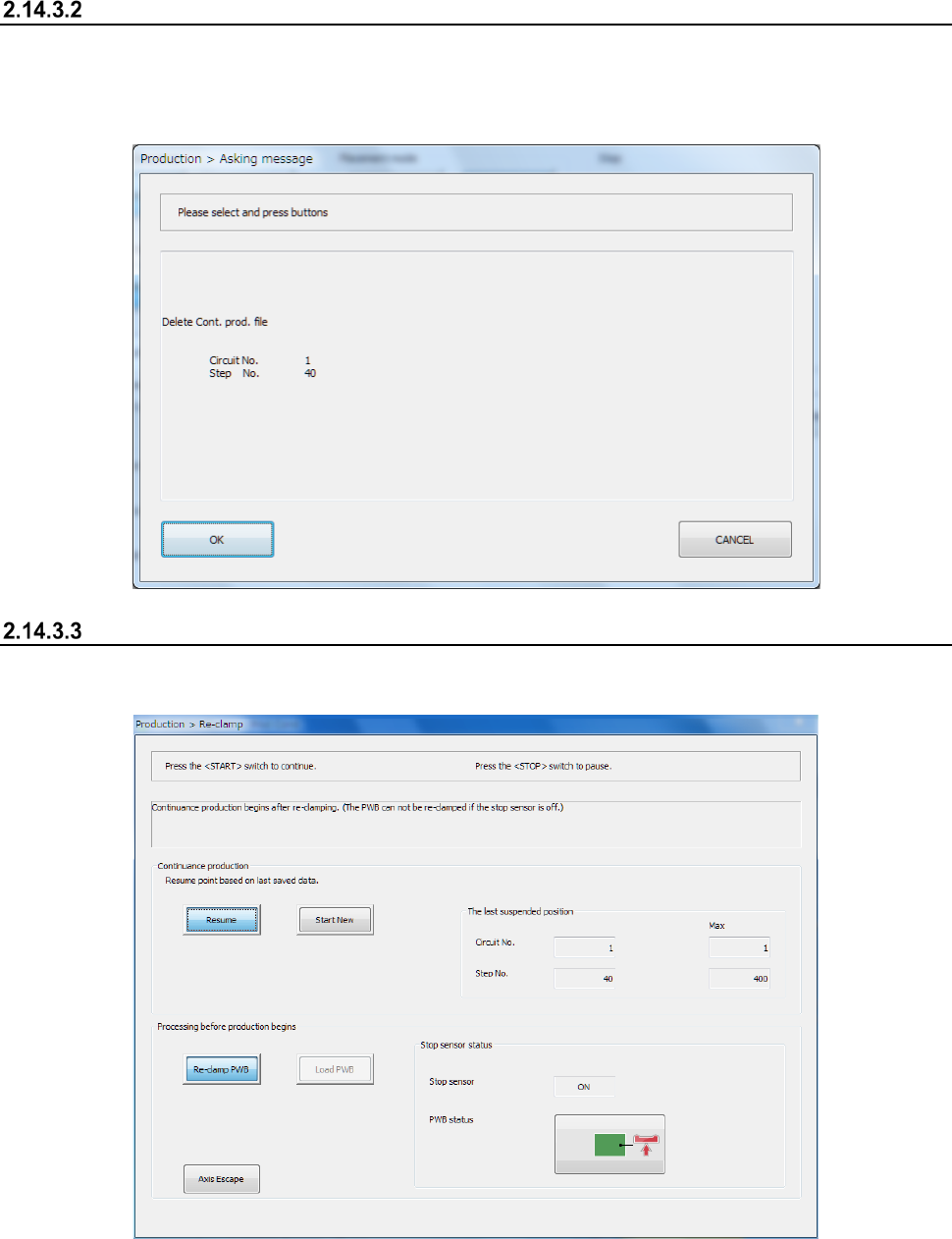
If there is a continuous production file, the [Cont. prod. file Delete] command on the “File” menu
invoked from the “Product” menu become active.
When you select this item, the confirmation message for deleting a continuous production file
appears on the screen.
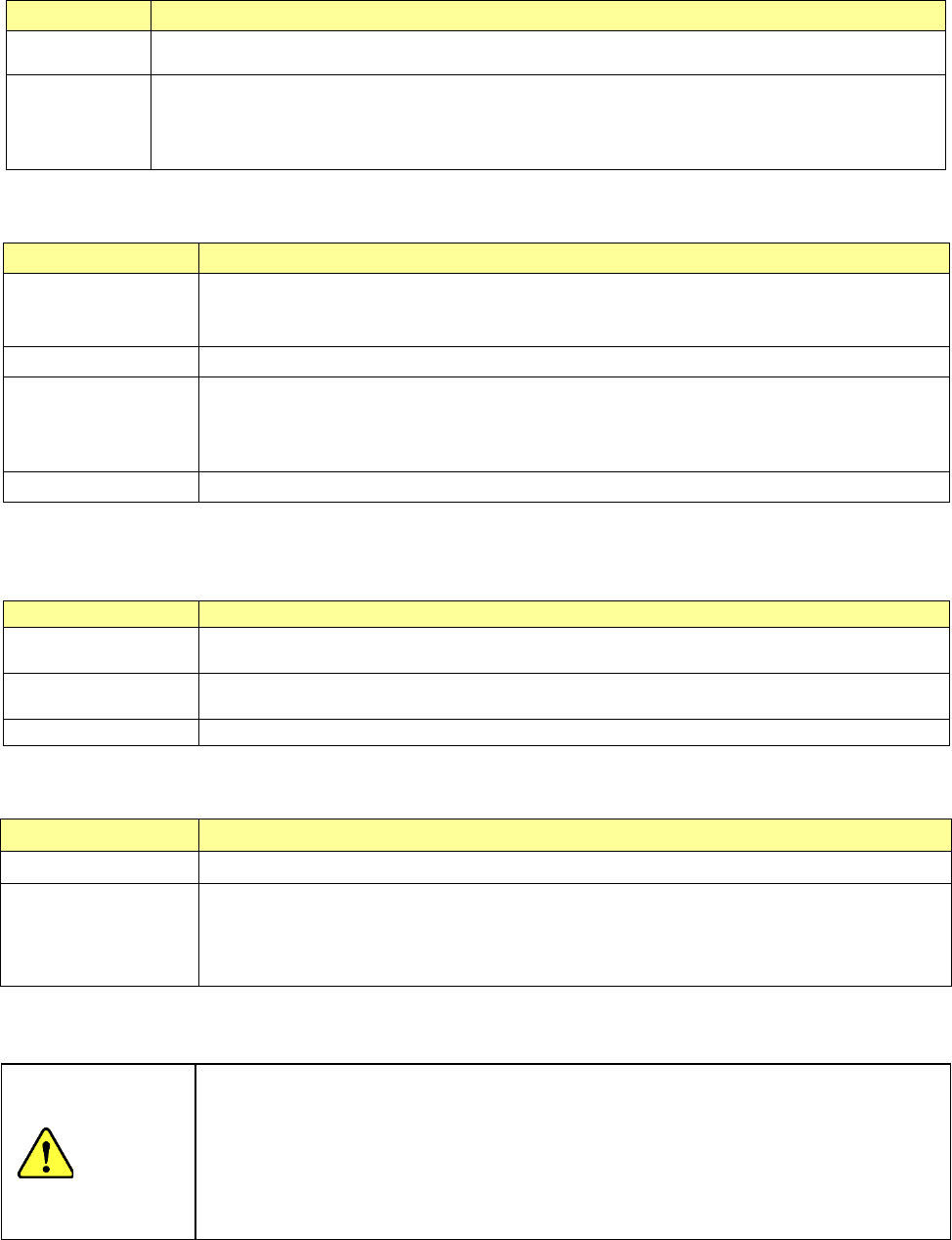
Re-clamping a board
If there is any board on the transport path of the conveyor before start of continuous PWB
production, the “Re-clamp” screen for re-clamping a board appears on the screen.
(1) Message
This screen shows you the condition of the conveyor, notes on re-clamping/loading of a board,
operation to be performed after continuous production and so on for each station.
Part 1 Basic Operation Chapter 2 Production
2-136
(2) Continuance production
Select whether to perform continuous PWB production or not. If there is not any continuous
PWB production data, you can select neither of these buttons.
Menu item Description
Resume The system performs continuous production.
Start New
The system does not perform continuous production. It starts new PWB production from the
position shown in “The last suspended position” field. However, if “0” is set in either the “Circuit
No.” field or the “Step No.” field, the system starts placing a component from the first placement
operation of the station.
(3) The last suspended position
The component placement position for starting PWB production is displayed here.
Menu item Description
Circuit No.
Shows the circuit number from which the system starts production. The circuit number on the
front side and that on the rear side are displayed separately in Simultaneous Production mode.
The maximum value of the circuit number is displayed also.
Circuit No. Max Shows the maximum circuit number.
Step No.
Shows the component placement step number from which the system starts production. The
production step number on the front side and that on the rear side are displayed separately in
Simultaneous Production mode. The maximum value of the production step number is
displayed also.
Step No. Max Shows the maximum component placement step number.
(4) Processing before production begins
Select whether to re-clamp a board located on the conveyor or load a new board into the
machine.
Menu item
Description
Re-clamp PWB
Clamps a board located on the conveyor without loading a new board into the machine at start
of PWB production.
Load PWB
Ejects a board located on the conveyor from the machine, and loads a new board at start of
PWB production.
Axis Escape
Moves the axis to the waiting position.
(5) Stop sensor status
The condition of the board transport path of the conveyor is displayed here.
Item Description
Stop sensor Displays whether a board is located at the stop sensor position or not.
<PWB status> button
Displays the condition of a board on the transport path of the conveyor detected with the stop
sensor as its image.
If you press this button when the stop sensor does not detect a board like a board with a slit,
the machine automatically sets the board on the sensor ON position.
When you press the <START> switch of the operation panel, the system performs the selected
operation.
When you press the <STOP> switch, the system returns to Idle mode.
CAUTION
1. When you select re-clamping of a board without loading a new board into the
machine, the system does not obtain information on how the conveyor was
when the production was aborted if you load a production file to the machine
before restart of production and then quit the production screen. Therefore,
some components may be missing or placed at wrong positions.
2. If the size of a board is too big or too heavy when the system resumes
production without loading a new board, the system may fail to re-clamp the
board.