RS-1_instruction manual.pdf - 第278页
Part 1 B asic O peration Chapter 2 Pr oduction 2- 167 Feeder insertion/removal mode Every time you pr ess the <Feeder insertio n/remova l mode> butt on on the main menu dur ing PWB production, the operat ion mode i…
Part 1 Basic Operation Chapter 2 Production
2-166
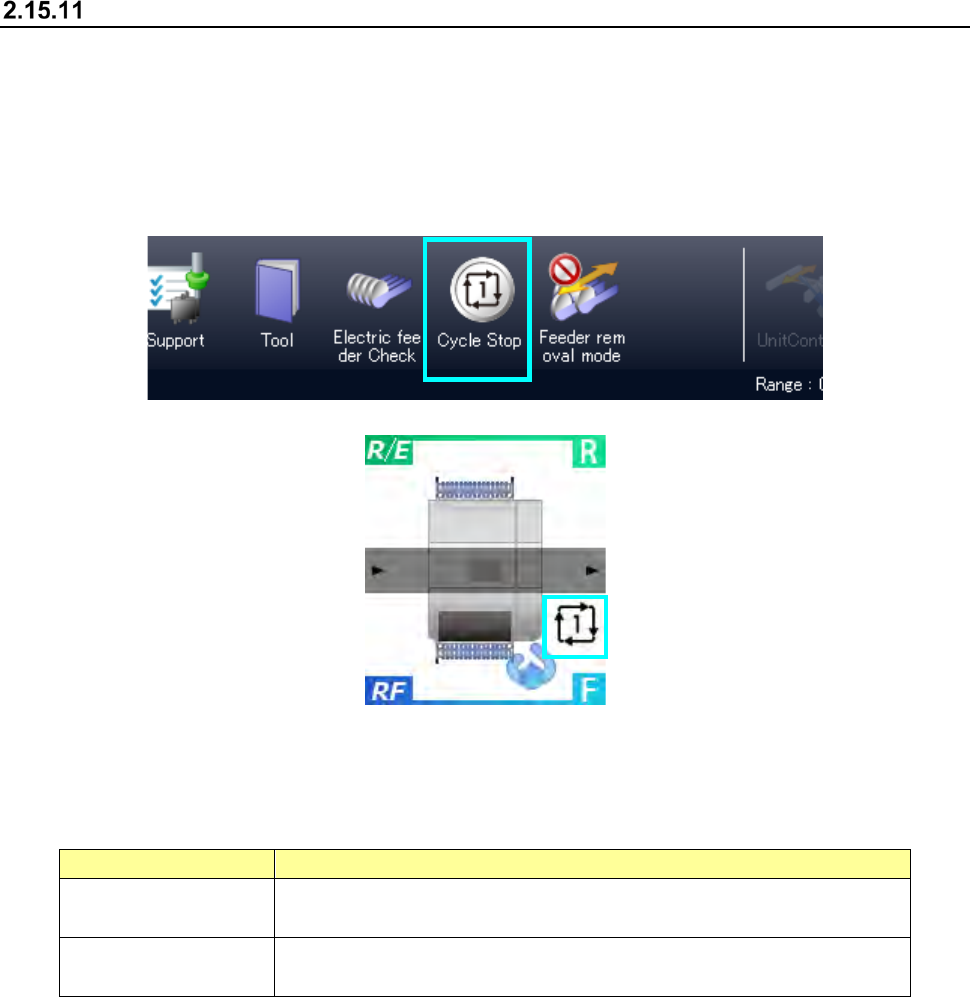
Cycle Stop
When you press the “Cycle Stop” button on the main menu, and the Cycle Stop icon appears on the
event display view, the system enters Cycle Stop mode.
In Cycle Stop mode, the system finishes PWB production with ejecting a board when it finishes
placing a component(s) on the PWB that is being produced.
This is handled as normal termination of PWB production.
When you press the <Cycle Stop> switch again in Cycle Stop mode, Cycle Stop mode is canceled.
You can specify when to terminate PWB production in Cycle Stop mode by specifying the
operation option “Action on cycle-stop” on the “Production (Function)” tab invoked from the
“Operation option” screen.
Menu item
Description
Do not eject PWB. Stops PWB production temporarily without feeding a board after placing all
components on the board.
Eject all WIP PWBs. After the system continues PWB production until it ejects all PWBs on which
all components are placed, it ejects the PWBs to finish the PWB production.
Part 1 Basic Operation Chapter 2 Production
2-167
Feeder insertion/removal mode
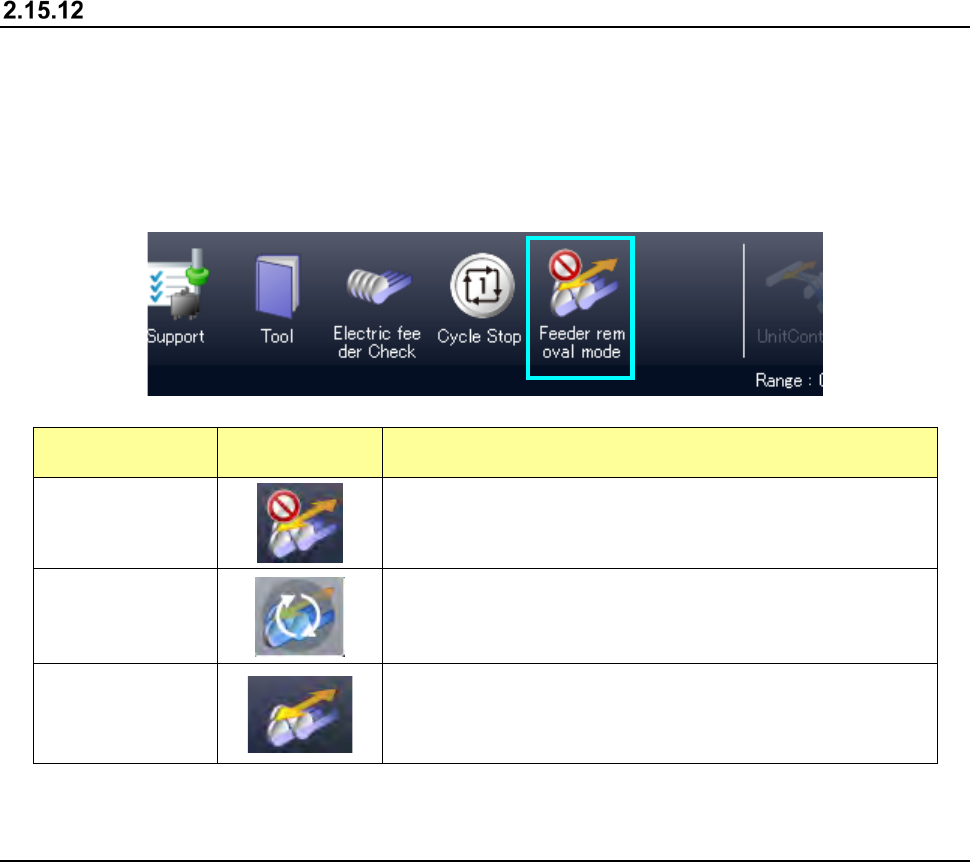
Every time you press the <Feeder insertion/removal mode> button on the main menu during PWB
production, the operation mode is switched between Normal mode and Feeder insertion/removal
mode.
When you remove a feeder in Normal mode during PWB production, the system pauses. When
you remove an RF feeder in Feeder insertion/removal mode during PWB production, the system
does not pause.
State
Displayed
button
Description
Normal mode
Insertion/removal of a feeder during PWB production is
prohibited, and production is paused when a feeder is
removed.
During mode
transition
The system is entering Feeder insertion/removal mode.
While this icon is displayed, the system operates in the
previous state.
Feeder
insertion/removal
mode
An RF feeder can be removed during PWB production.
In Feeder insertion/removal mode, the ZA-axis height is
adjusted under the category 12 or higher.
The feeder float sensors 2 and 3 are ignored.
2.16 FCS
When you select the “Maintenance” button on the main menu, and then the [FCS] command, the
“FCS Setup” screen appears.
The system can automatically measure the total placement offset value to maintain the component
placement accuracy that is ensured at delivery of the machine.
For details, refer to the “RS-1/RS-1XL/RS-1R FCS (Flexible Calibration System) Instruction
Manual”.
Part 1 Basic Operation Chapter 2 Production
2-168
2.17 Non-stop Operation (Option)
This is a mechanism for improving the operation rate of the machine by continuing PWB production
without stopping the machine when components run out.
To perform the Non-stop operation, prepare the same set of feeders both on the front feeder bank
and on the rear feeder bank.
This allows the machine to pick up a component from the feeder installed on the rear feeder bank
even though components run out at the feeder installed on the front feeder bank, and then to
continue to produce a PWB without stopping.
You can remove the cause of the error of the feeder installed on the front feeder bank at which
components run out while the machine is producing a PWB by picking up components from the
feeder on the rear feeder bank, and then allow the machine to pick up components from the feeder
on the front feeder bank again also.
In addition, if you prepare the set of feeders for the next PWB production, you can shorten the time
required for changeover of feeders.
When you install an MTS (TR-5S or TR-5D) on the machine, any feeder cannot be installed on
the rear side. Therefore, you cannot execute the non-stop operation function by using a
feeder to supply the machine with components.
Procedure for creating data
(1) Create data.
Follow the normal data creation procedure to create a production program for feeders installed
on the front side.
(2) Create a non-operation feeder layout with the [Feeder Layout] command.
Use the “Line symmetry” copy or the “Point symmetry” copy of the Feeder Layout function to
assign Pick data to the rear bank.
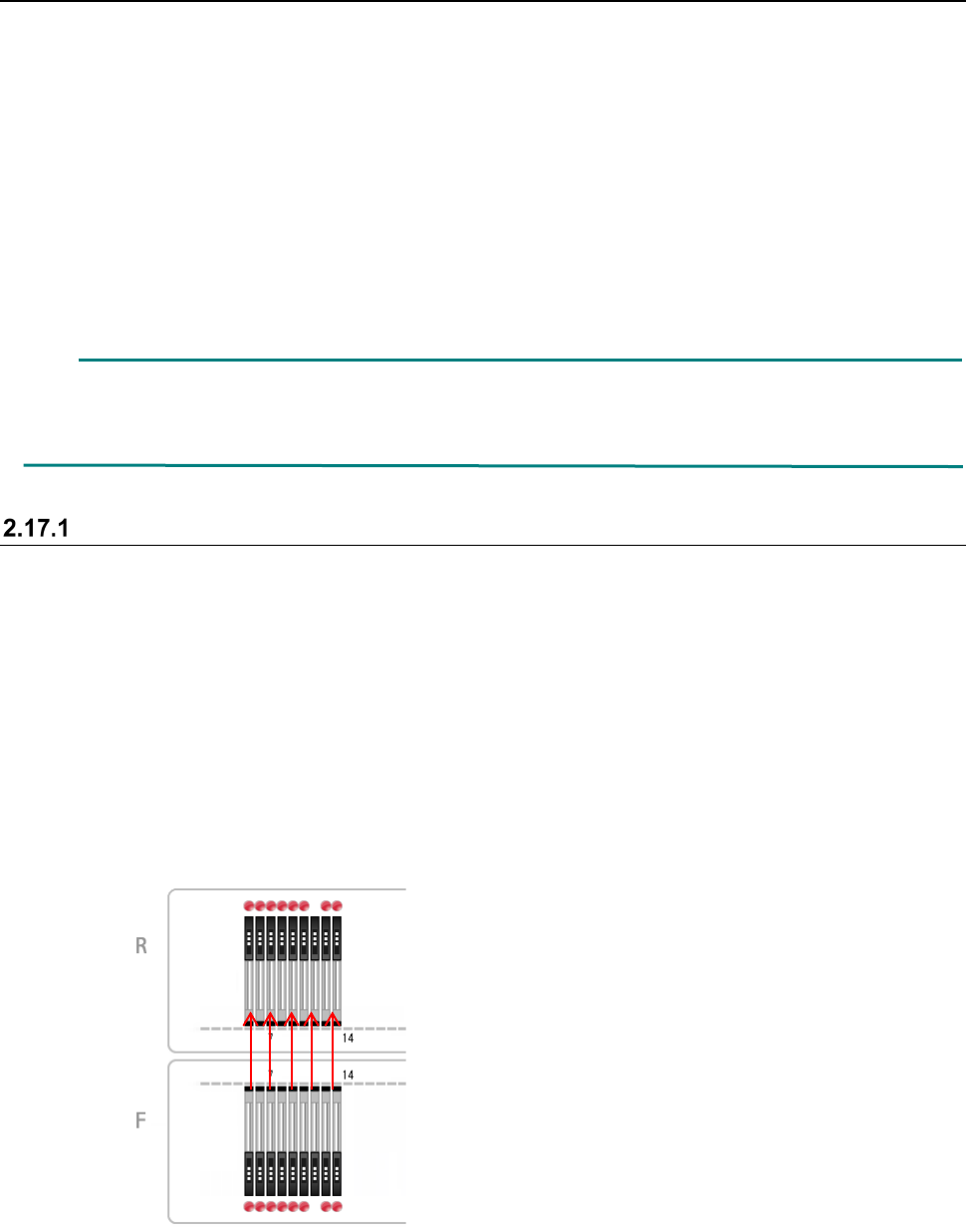
- Line symmetry copy
When you assign Pick data with selecting the “Line symmetry,” priority is given to the “cycle
time.”
Each feeder is copied to the opposite side so that the hole number of a feeder on the front
side will face the hole number of a feeder on the rear side, and the coordinates of a
component pick position on both sides become the same ones.
- Point symmetry
When you assign Pick data with selecting the “Point symmetry,” priority is given to the
“planning” (setup)
Each feeder is copied to the hole position symmetrical with respect that of a feeder on the
opposite side, and the feeder layouts of the rear and the front become the same as each
other when the feeder banks are viewed from the front.