RS-1_instruction manual.pdf - 第301页
Part 1 Basic Operat ion Chapter3 D aily maintenance 3-9 1) C hec k to see if the filter of the feeder exch ange trolley is not st ained and if any foreign sub stance is not put into th e filter wit h your eyes. 2) If i t…
Part 1 Basic Operation Chapter3 Daily maintenance
3-8
Inspection item
Transport pulley
Inspection frequency: Every week
What to inspect
Check of the transport pulley operation
1) Operate the conveyor motor on the “Manual control” screen to check to see if the pulley rotates
smoothly.
2) If the pulley does not rotate well or does not rotate at all, replace it with a new one.
Inspection item
Lock stay
Inspection frequency: Every week
What to inspect
Check the lock stay condition.
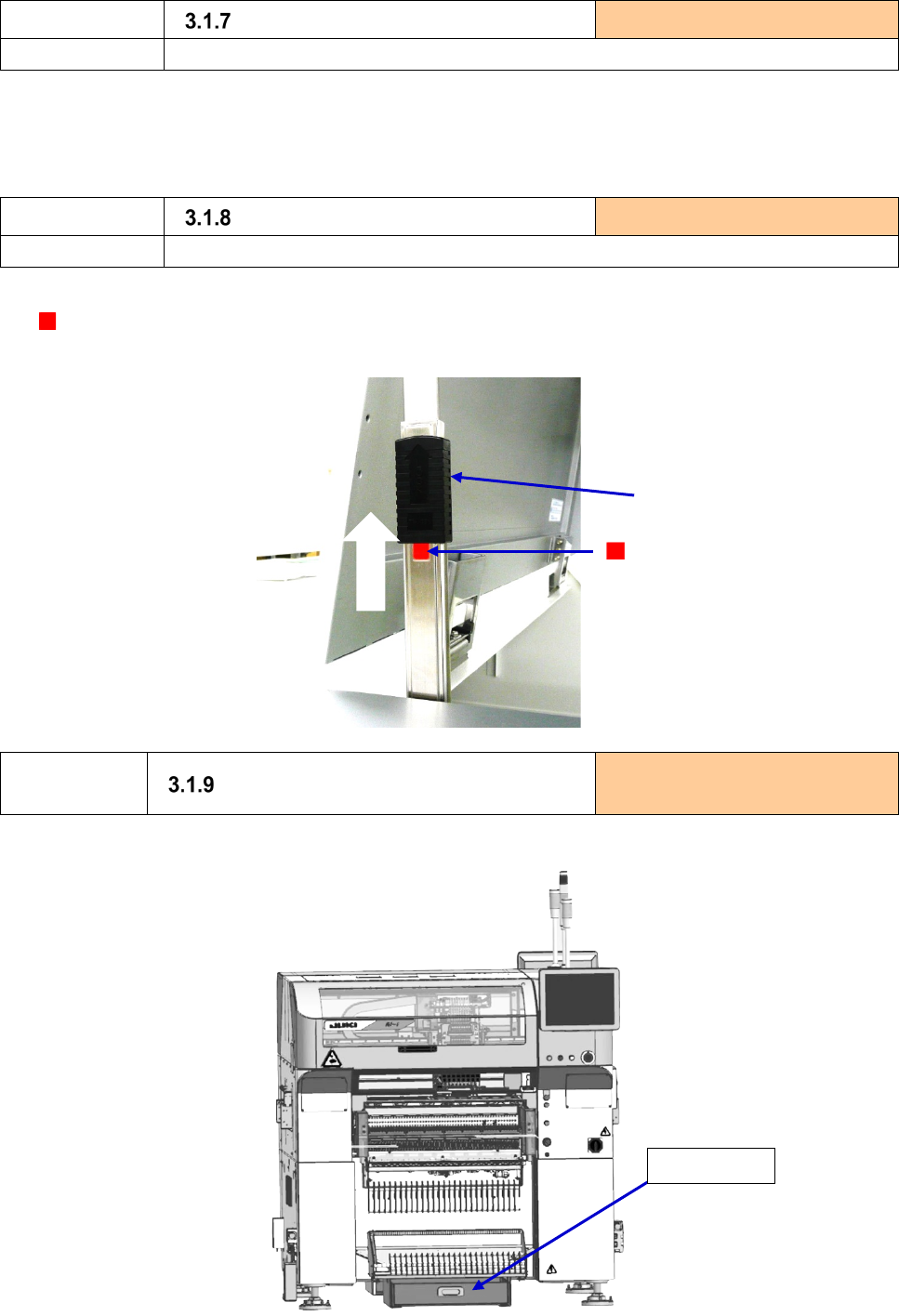
1) Push up the lock lever and check to see if the cover does not drop off at the position where the mark
can be seen (i.e. a locked status). While checking, to prevent possible injury, pay extreme
caution to the cover which may drop.
Inspection/
Replacement
Trash box
Inspection/replacement frequency:
everyday
If the trash box is filled with remaining material tapes, dispose of them.
Lock lever
Lock.
Mark
Trash box
Part 1 Basic Operation Chapter3 Daily maintenance
3-9
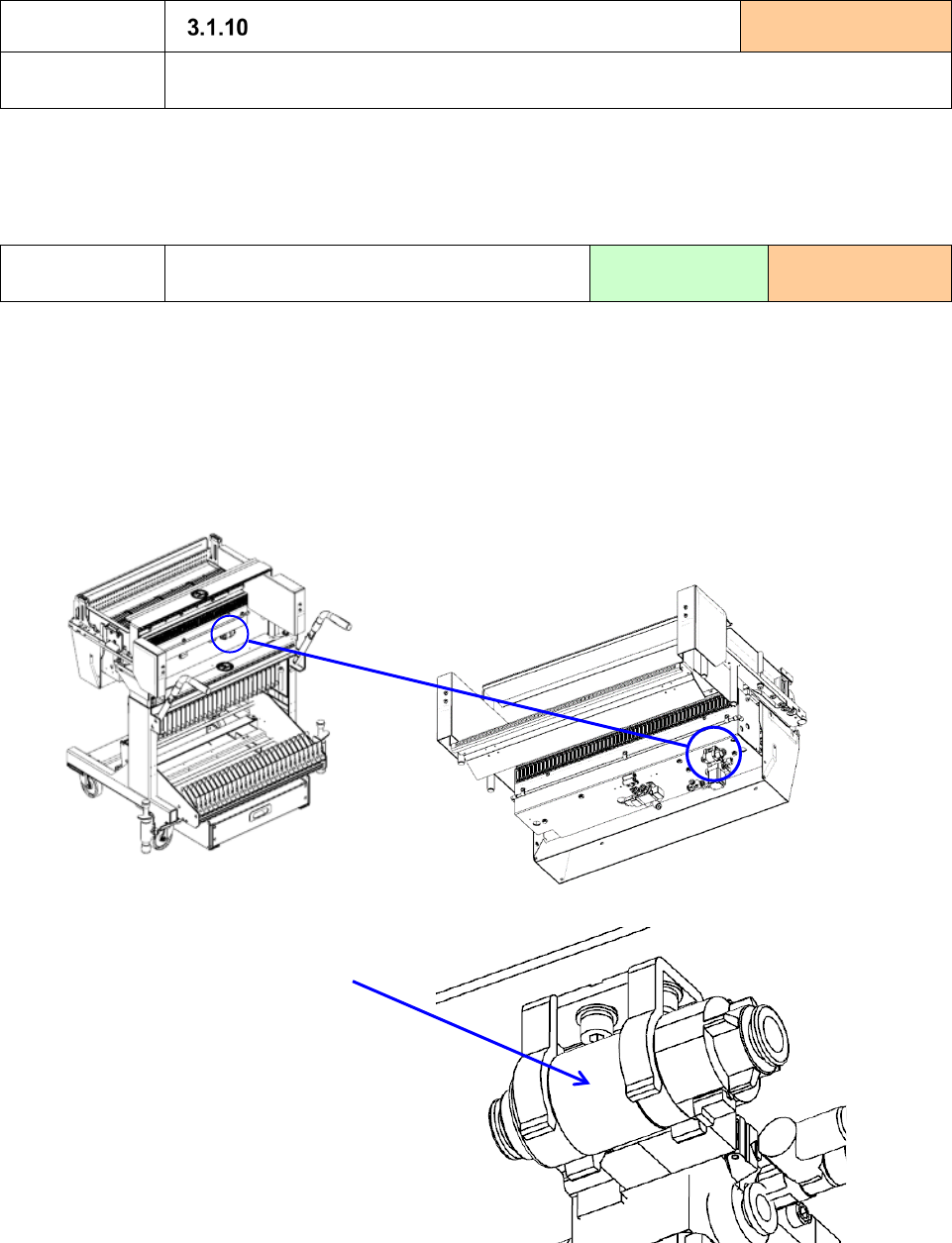
1) Check to see if the filter of the feeder exchange trolley is not stained and if any foreign substance
is not put into the filter with your eyes.
2) If it is stained, replace it with a new one. If any foreign substance is put into the filter, remove it.
1) If the filter is stained, replace it with a new one.
2) Disconnect the air tube connected to the air filter, and then remove the filter box.
3) Remove the filter from the filter box, and then replace it with a new one.
* Slide the cap stopper on one side of the filter box to unlock it, and then rotate the cap by 90
degrees or more.
Inspection item
Air filter (feeder exchange trolley)
Inspection frequency:
every month
What to inspect
Check to see if the filter is not stained and if any foreign substance is not put into the
filter.
Replacement
Replacement of an air filter of the feeder
exchange trolley
Tool to be used: -
When to replace:
every six months
Filter box
Filter (40183167)
Part 1 Basic Operation Chapter3 Daily maintenance
3-10
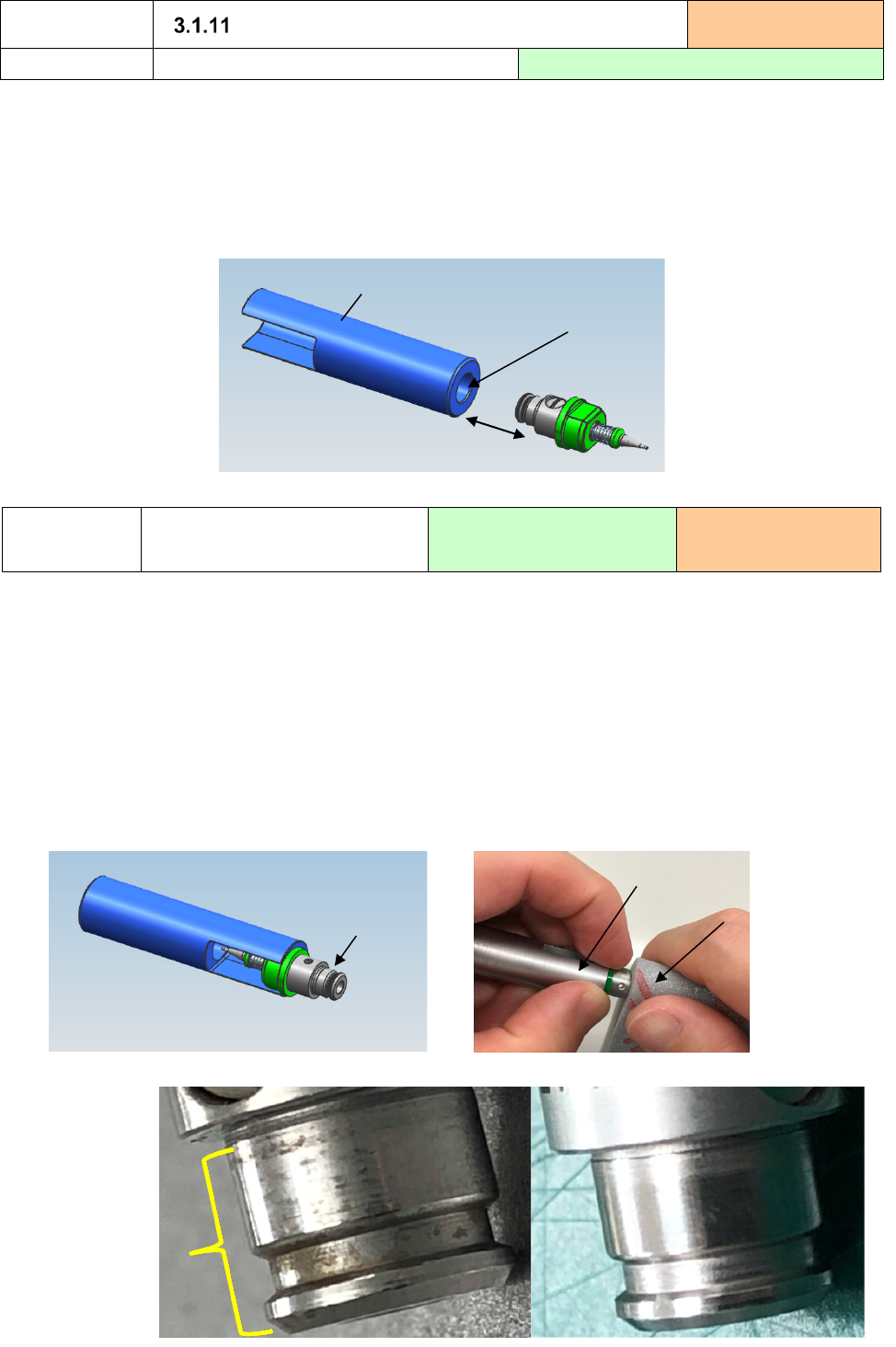
1) Insert a nozzle into the inspection hole of the inspection jig to check to see if the nozzle can be
inserted into the rear end without any resistance.
* You can check the nozzle mounting condition also by mounting a nozzle on the Z-axis shaft
manually.
2) If you cannot insert the nozzle smoothly (with some resistance), check to see if the nozzle is
neither stained nor scratched, and then clean the mounting part.
Cleaning
Polishing of the nozzle mounting
part
Tools to be used:
Nozzle inspection jig
Sponge polishing material
Cleaning frequency:
Every two months
3) Fit the nozzle in the groove on the opposite side of the inspection hole of the nozzle inspection jig.
Push the sponge polishing material against the nozzle mounting part and rotate it to polish the
nozzle mounting part. Be sure to polish the nozzle evenly on the overall circumference thereof.
Do not polish just a part of it.
* You cannot polish a nozzle whose tip diameter is φ8.2 or more or whose length is 10 mm or
more with the inspection jig.
* You can polish standard nozzles other than a No. 7507 nozzle with the inspection jig.
* You can polish approximately 500 nozzles with one piece of sponge polishing material.
4) As a guideline, polish a nozzle for approximately one minute. However, be sure to polish the
nozzle while checking the fitting condition with the inspection hole.
Inspection item
Nozzle
Inspection frequency:
Every two months
What to inspect
Check the nozzle mounting condition Tool to be used: Nozzle inspection jig
Nozzle inspection jig
Inspection hole
Polish here.
Sponge polishing
material
Inspection jig
Before polishing
After polishing
Nozzle mounting part
= Area of a nozzle to
be polished