RS-1_instruction manual.pdf - 第73页
Part 1 B asic O peration Chapter 1 Overv iew of the Machine 1- 55 Operation panel Y ou can use t he operat ion pane l of the machine m ain unit t o contro l the machi ne. Front panel Rear panel Switches an d their functi…
Part 1 Basic Operation Chapter 1 Overview of the Machine
1-54
Display device and Data input devices
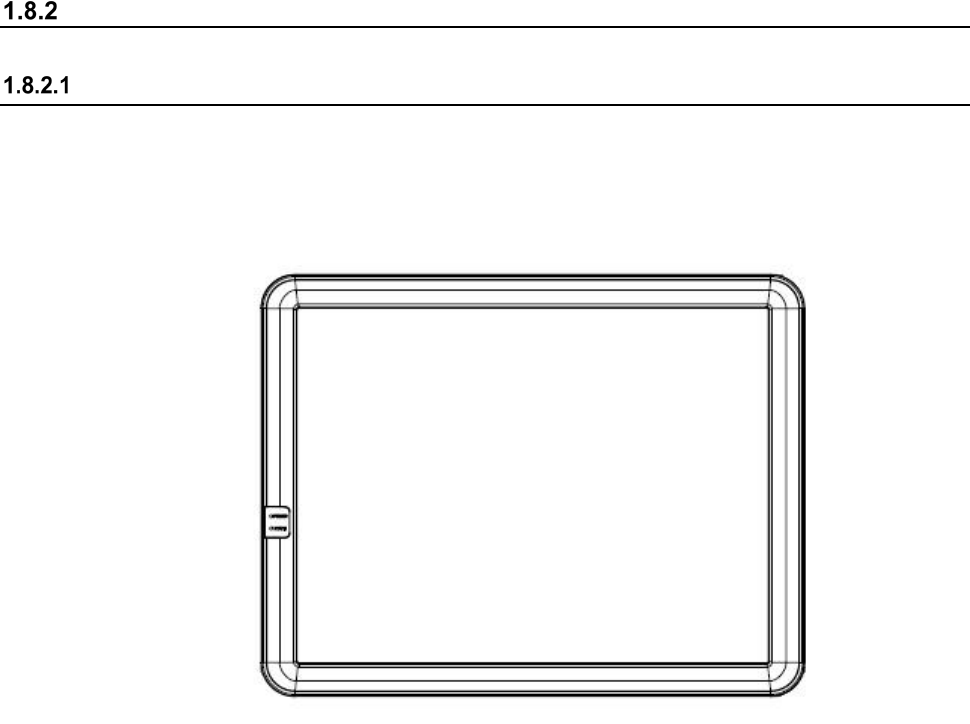
Display device (touch panel)
The display device used in the machine is a color liquid crystal display (LCD) equipped with touch
panel operating functions. (Standard XGA 1024×768 dots) The rear side display is provided as
an optional device.
Part 1 Basic Operation Chapter 1 Overview of the Machine
1-55
Operation panel
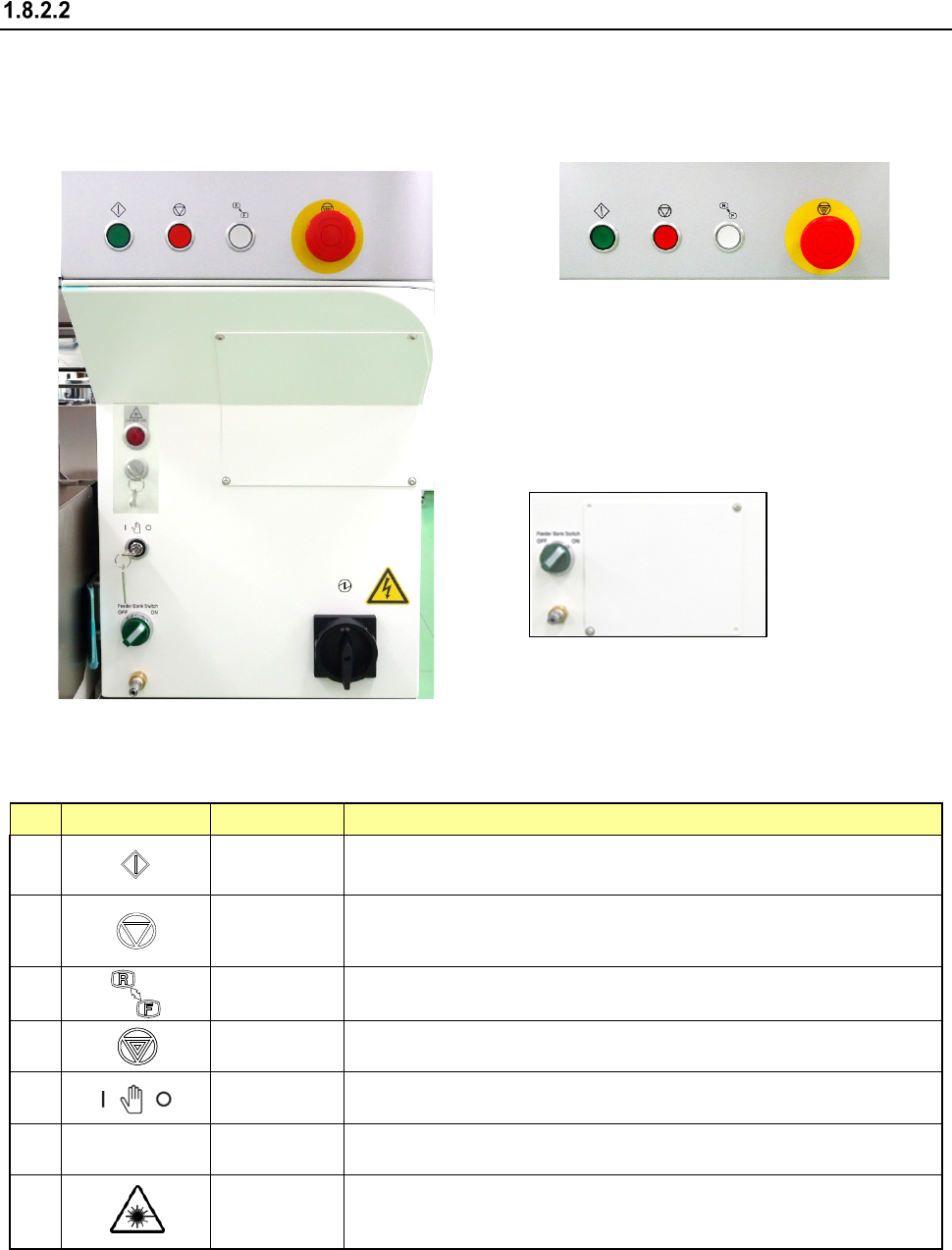
You can use the operation panel of the machine main unit to control the machine.
Front panel Rear panel
Switches and their functions
No.
Switch
Name
Function
1
Start
This is the switch for start.
Use to start an actual production run.
2
Pause/Stop
Use this switch to terminate PWB production or another operation.
Press the switch once to put the production run in a pause status.
Press the switch the second time to stop the production run.
3
Operation
change
Switches the side on which the switches can be operated, <FRONT> or
<REAR>.
4
Emergency
This is the switch for emergency stop. Use this switch to immediately stop
the machine when it malfunctions or when it may pose risks to your safety.
5
Maintenance
Key
Switches between a production mode (a key inserted vertically) and
a maintenance mode (a key inserted horizontally).
6
Feeder Bank
Switch
Feeder Bank
Switch
T Up-and-down switch of the feeder bank (available when a feeder
exchange trolley is used).
7
Caution Lamp
Lights while the coplanarity unit (option) is radiating laser. (As an
exception, it lights when the main unit of the mounter starts up, but
the unit does not radiate any laser in this case.)
① ②
③
④
⑥
⑤
⑦
①
②
③
④
⑥
⑤
⑦
Part 1 Basic Operation Chapter 1 Overview of the Machine
1-56
How to execute a command
Selecting a command
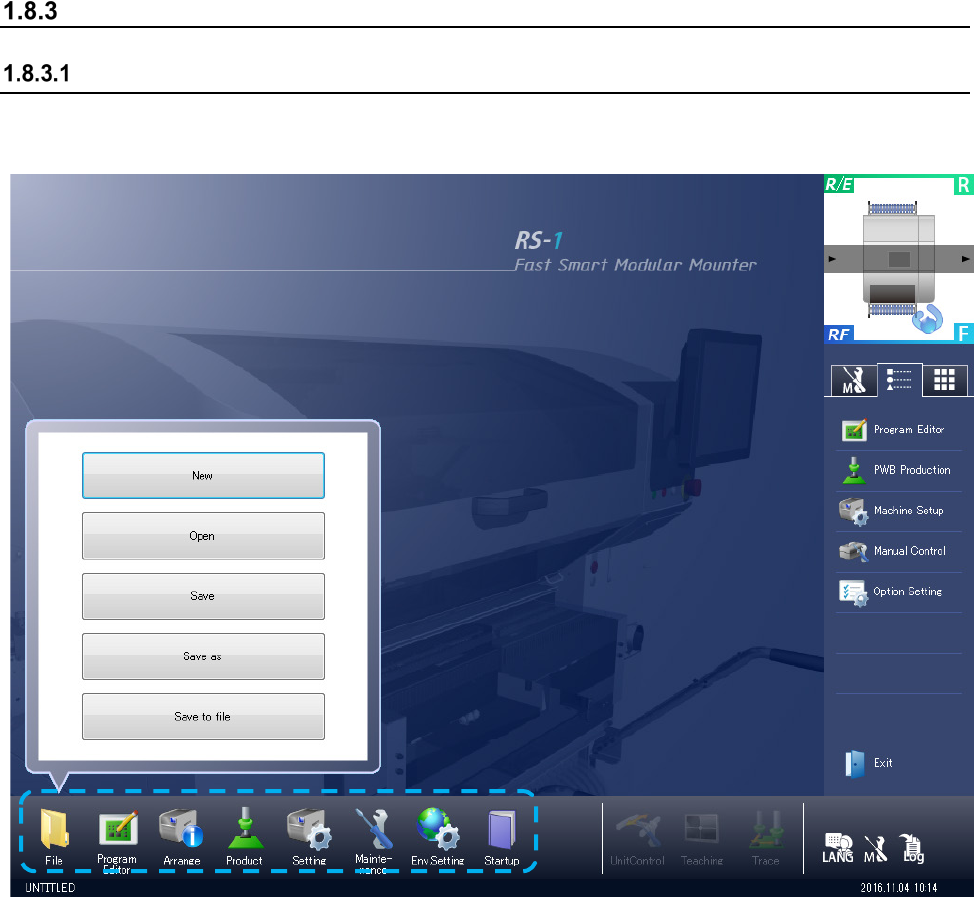
When you select a menu (inside the red dotted frame) displayed in the Operation area, you can
select a command.
In the example above, the “File” menu is selected on the main menu to display its sub menu.
When you select the desired command button from the sub menu, you can execute the
corresponding function.
As for the main commands, you can execute each of them by pressing the corresponding shortcut
menu button displayed in the Information area.
If you press such a menu button while the application program is being executed, it is executed after
the end process of the application is performed.