RS-1_instruction manual.pdf - 第858页
Pa r t 2 Det ai l ed Des c r i pti on o f Ea c h Fu nc ti on Chapter 10 M ach i ne Manage m e nt Infor m ation 10 - 45 10. 5 S etti ngs 10.5.1 Set up – Ope rat io n Inform at io n o f e a ch no zzle Ref er to “ 10.3. 4 O…
Part 2 Detailed Description of Each Function Chapter 10 Machine Management Information
10-44
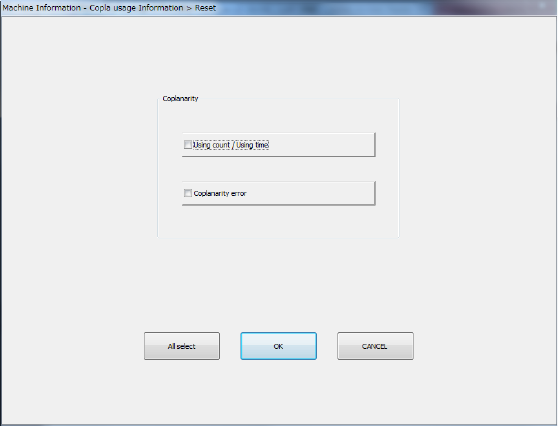
(2) <Reset> button
When you press the [Reset] button or press [Initialize] – [Reset] in the main menu, the
following screen appears.
- The <All select> button allows you to select all check boxes displayed on the
screen.
- When you press the check box of the item whose data you want to reset, and press
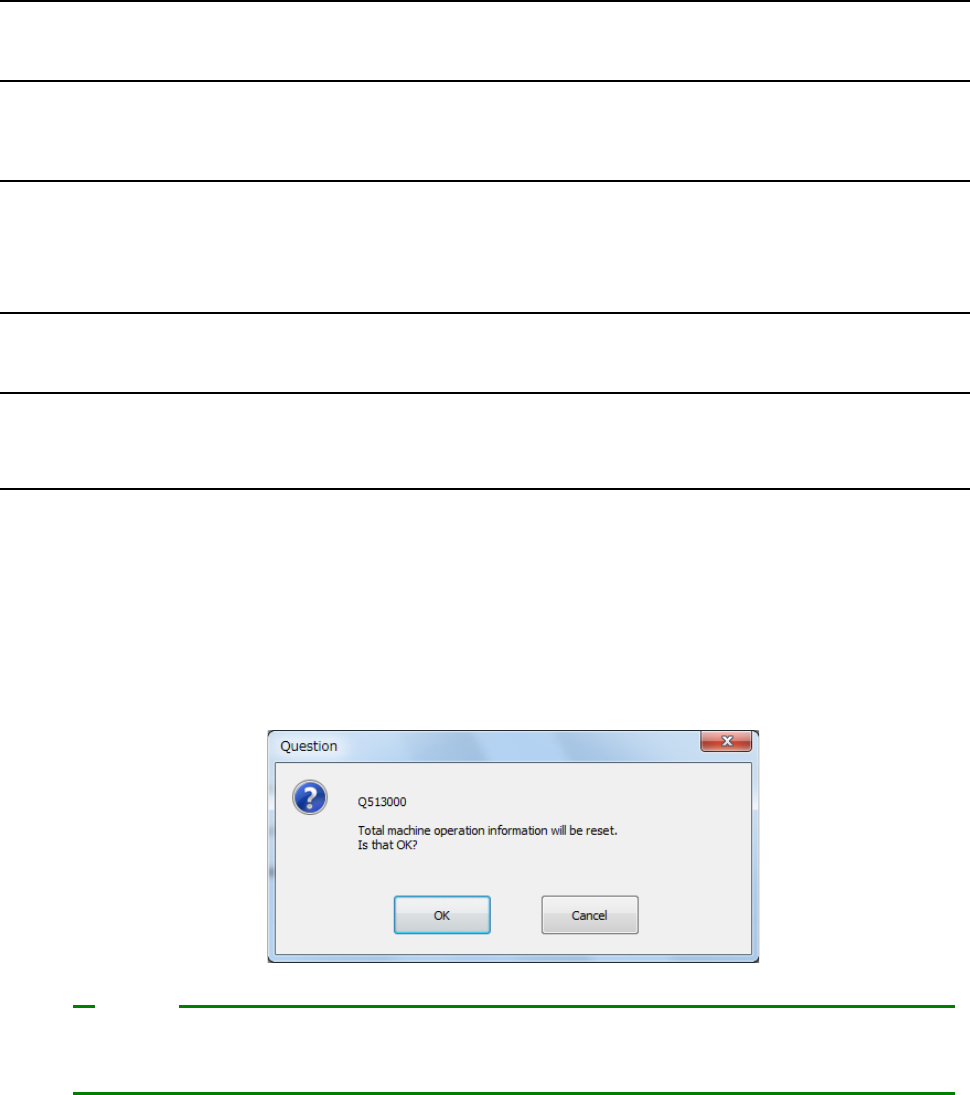
the <OK> button, the “Question” dialog box for asking you whether to reset data
appears on the screen. When you press the <OK> button on this “Question”
message, the system resets the checked items of data, and closes the screen.
- When you press the <CANCEL> button, the system does not reset any data and the
current data is still displayed.
Part 2 Detailed Description of Each Function Chapter 10 Machine Management Information
10-45
10.5 Settings
10.5.1 Setup – Operation Information of each nozzle
Refer to “10.3.4 Operation information by nozzle, (3) Exchange frequency setting.”
10.5.2 Setup – Operation Information of each head
Refer to “10.3.5 Operation information by head, (3) Exchange frequency setting.”
10.6 Initialize
10.6.1 Reset
This function is the same as the <Reset> button provided in each screen in 10.4.
10.6.2 Initializing the total device operation results
From the device operation information screen for each device, all the device operation results are
initialized.
(1) Select [Initialize] – [Initialize total device operation results] in the main menu.
(2) A question message to check total initialization is displayed.
For total initialization, press <OK>.
To cancel a total initialize operation, press <CANCEL>.
[Initialize total device operation information data] permits resetting not only the device operation
information on the screen to be operated but also the operation information of all devices.
Note
Part 2 Detailed Description of Each Function Chapter 11 Self-diagnosis Function
11-1
Chapter 11 Self-diagnosis Function
Outline
The self-diagnosis function gives the support of routine maintenance and preventive maintenance
and an operation record control function for process audit and serviceman’s patrol inspection to
the user.
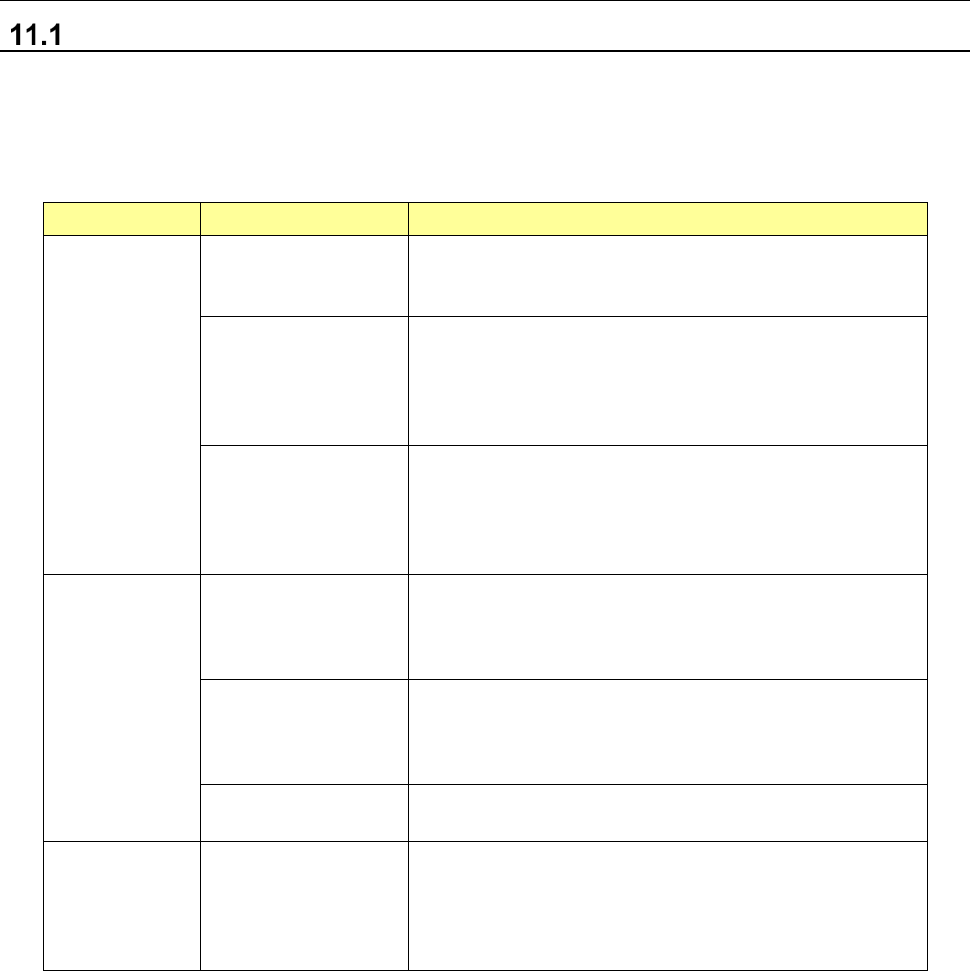
An outline of the functions to be given by the self-diagnosis is shown below.
Item
Sub-item
Description
Display
function
Regular display part
When a component change is required as a result of a
self-diagnosis, a component change notice is made on
the regular display part of the operation screen.
Outline display part
Units are displayed by icons in the maintenance display
part provided in the desktop screen. The icon of a unit
requiring a component change is put in a warning
display status, so that the device status can be known at
a glance.
Detailed display of
replacement
components
The details of a replacement component can be
displayed. When the user opens the detailed display,
the component to be changed can be specified. On the
detailed display, the part number of the replacement
component is also displayed.
Check function
Consumable
component change
notifying function
This function permits grasping the using status of
consumable components and notifying the user that the
replacement must be executed according to each
replacement standard.
Error occurrence
frequency monitoring
function
The error occurrence frequency is monitored. If an
error related to the same portion occurs very frequently,
this function notifies the user that the component must
be replaced.
Individual check
function
A check operation is executed for each operation item
and its result is displayed.
Record saving
function
Check record file
saving
The record of a self-diagnosis is saved in a file. The
record for each month is saved in a single file. The file
is a CSV type text file. The file is surely saved in the
SSD of the main unit and can also be saved in a folder
specified by user.