semi合集-English.pdf - 第1105页
SEMI E5-1104 © SEMI 1982, 2004 47 Name Format Description Value s Class RcpChangeStatus 51 The type of change that o ccurred for the recipe indicat ed in RcpChangeName 0 = No change 1 = Created 2 = Updated (modified) 3 =…
SEMI E5-1104 © SEMI 1982, 2004 46
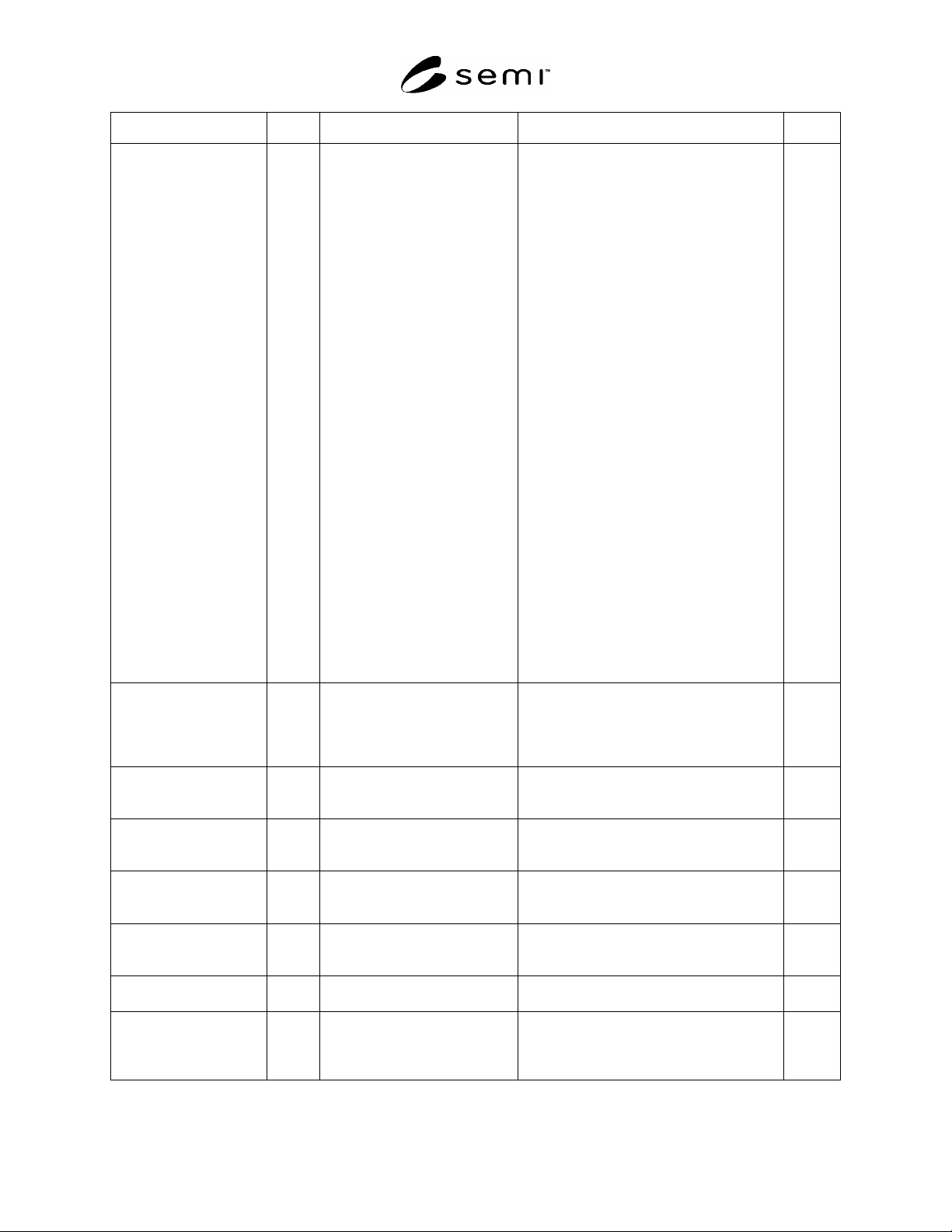
Name Format Description Values Class
PPFormat 51 Indicates the type or types of
process programs and recipes that
are supported
1 = Unformatted process
programs
2 = Formatted process programs
3 = Both unformatted and
formatted process programs
4 = Execution Recipes
5 = Large unformatted process
programs
6 = Large formatted process
programs
7 = Both large unformatted and
large formatted process
programs
8 = Large execution recipes
9 = Both execution recipes and
large execution recipes
10 = Both unformatted and large
unformatted process programs
11 = Both formatted and large
formatted process programs
12 = Both unformatted and large
formatted process programs
13 = Both formatted and large
unformatted process programs
14 = Unformatted, large
unformatted and large formatted
process programs
15 = Formatted, large
unformatted and large formatted
process programs
16 = Formatted, unformatted,
large unformatted, large
formatted process programs
>16 Reserved
SV
PrdRecovery 11 A boolean value that enables
(TRUE) or disables (FALSE) the
equipment-initiated return to
PRODUCTIVE from
UNSCHEDULED DOWNTIME.
ECV
PrdState 20 Default ARAMS Substate Code
for automated transitions to
PRODUCTIVE
SV
PrdTime 5() Accumulation of time in
PRODUCTIVE, reported in
minutes
ECV
PrevARAMSState 20 The ARAMS code corresponding
to the previous state/substate.
Four characters.
SV
PreviousProcessState 51 The previous processing state of
the equipment, before the most
recent process state change
0-63 Reserved
SV
ProcessState 51 The current processing state of the
equipment
0-63 Reserved
SV
RcpChangeName 20 The identifier of the recipe
affected upon the event of the
creation, editing, or deletion of a
recipe
DVVAL
SEMI E5-1104 © SEMI 1982, 2004 47
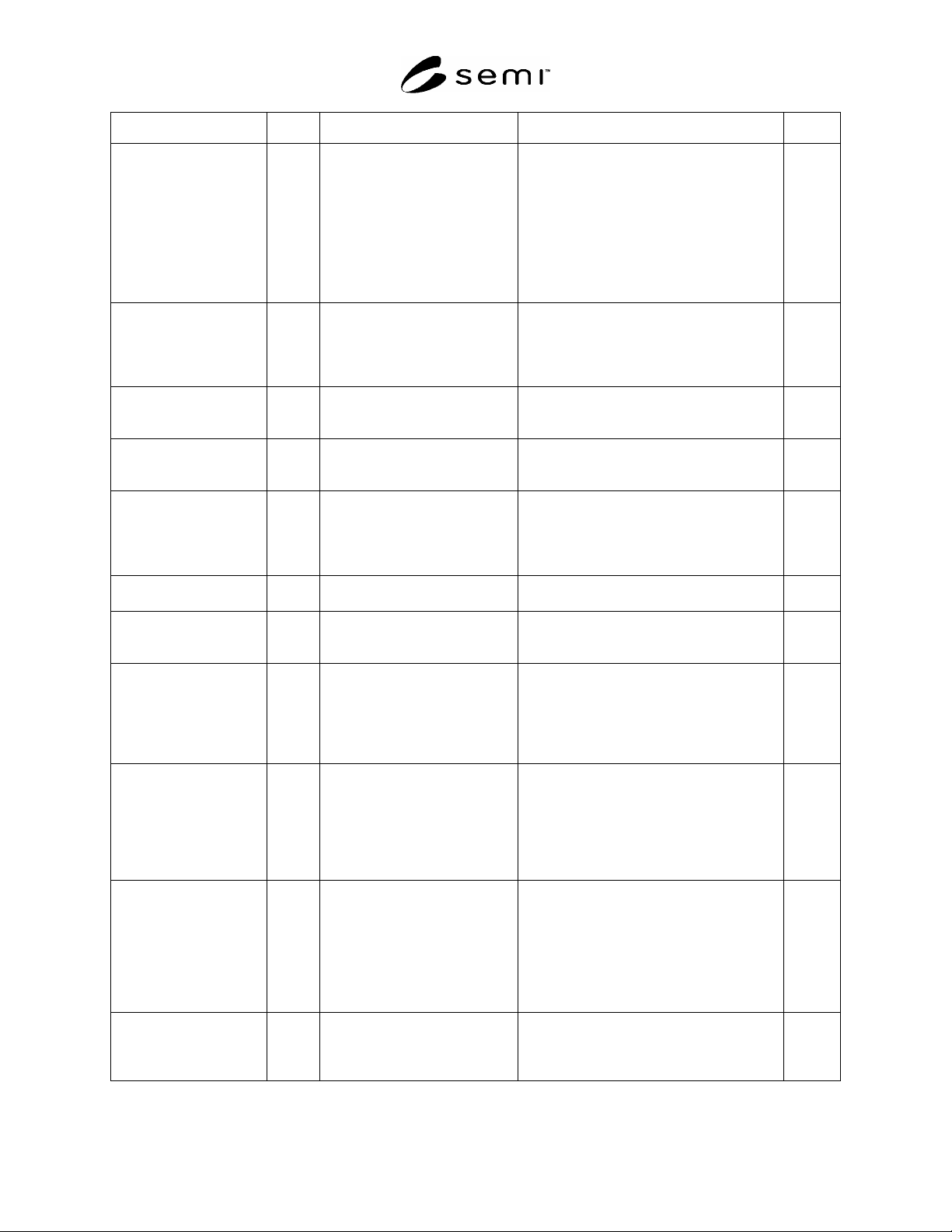
Name Format Description Values Class
RcpChangeStatus 51 The type of change that occurred
for the recipe indicated in
RcpChangeName
0 = No change
1 = Created
2 = Updated (modified)
3 = Stored (new)
4 = Replaced
5 = Deleted
6 = Copied
7 = Renamed
8,9 Reserved
>10 Reserved
DVVAL
RcpExecName 0, 20 The identifier, or a list of
identifiers, of currently selected
recipes. A zero-length item or list
indicates no recipes are currently
selected.
SV
ReticleIDVerification 11 This equipment constant is used
to indicate whether Reticle ID
verification is required
ECV
ReticleParticleInspection 11 This equipment constant is used
to indicate whether Reticle
Particle Inspection in required.
ECV
SbyRecovery 11 A boolean value that enables
(TRUE) or disables (FALSE) the
equipment-initiated return to
STANDBY from
UNSCHEDULED DOWNTIME
ECV
SbyTime 5() Accumulation of time in
STANDBY, reported in minutes
ECV
SDTime 5() Accumulation of time in
SCHEDULED DOWNTIME,
reported in minutes
ECV
SpoolCountActual 5() Used to keep a count of the
messages actually contained in
the equipment’s spool area.
Multi-block inquire/grant
messages are not spooled and not
included in this count.
SV
SpoolCountTotal 5() Used to keep a count of the total
number of primary messages
directed to the spool, regardless of
whether placed or retained in the
spool. Multi-block inquire/grant
messages are not spooled and not
included in this count.
SV
SpoolFullTime 20 Contains the timestamp from the
time the spool last became full. If
the spool was not filled during the
last spooling period, this will
contain a time value prior to the
current SpoolStartTime. Uses the
same format as the CLOCK
variable data item.
SV
SpoolStartTime 20 Contains the timestamp from the
time spooling last became active.
Uses the same format as the
CLOCK variable data item.
SV
SEMI E5-1104 © SEMI 1982, 2004 48
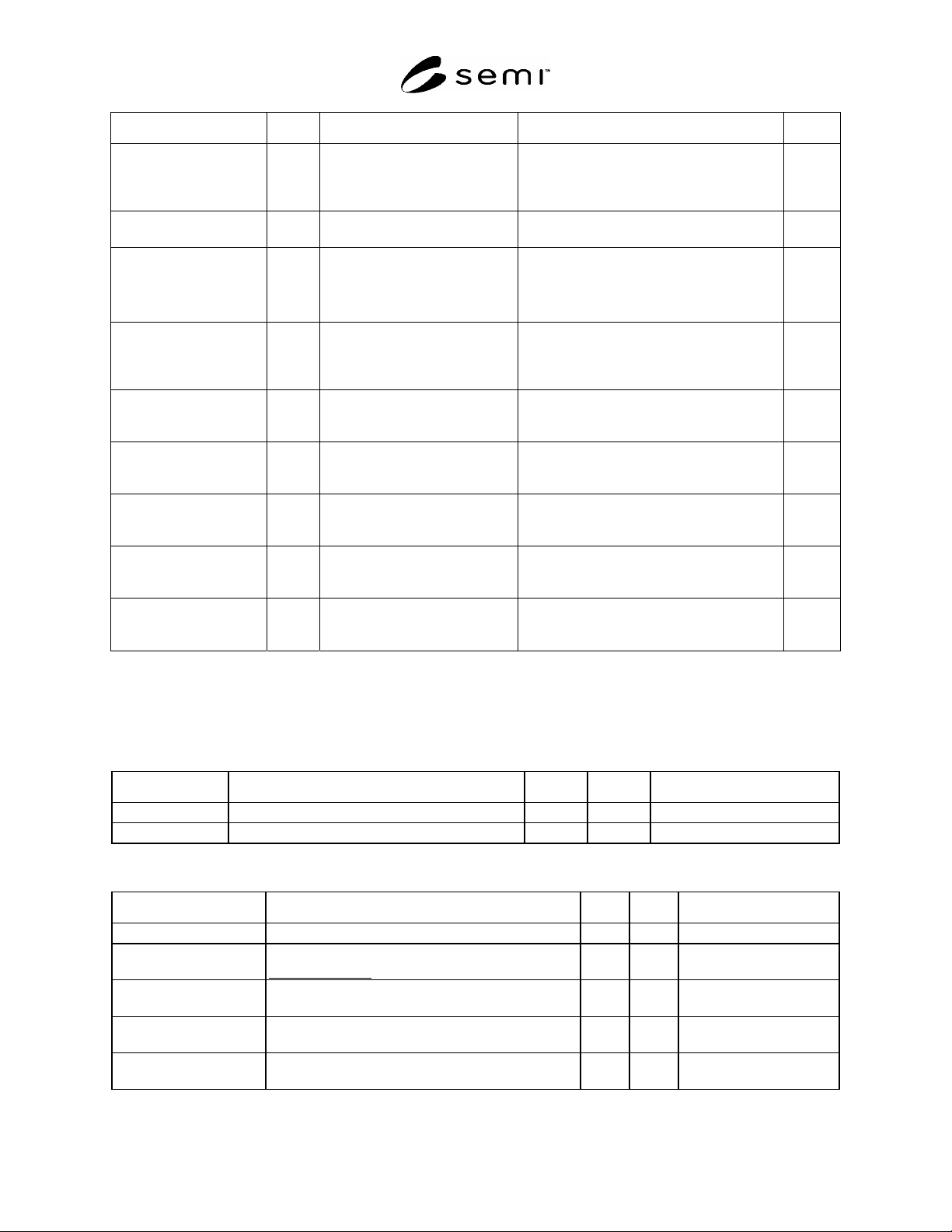
Name Format Description Values Class
SymptomID 5() A numeric code representing the
symptom that initiated the user-
initiated state change. A value of
zero indicates “no symptom”.
SV
SymptomText 20 Text describing the SymptomID.
0–80 characters.
SV
TimeFormat 5()
NOTE 5: The setting of this ECV
controls whether the equipment
shall send the Data Items STIME
and TIME in 12 or 16-byte format.
0 = 12-byte format
1 = 16-byte format
>1 Reserved
ECV
TransitionType 10 Used with the Limits Monitoring
capability, it defines the direction
of the zone transition which has
occurred.
0 = Transition from lower to
upper zone.
1 = Transition from upper to
lower zone.
DVVAL
TRATID 5() Contains the TRATOMICID of
the atomic transfer referenced by
the event.
DVVAL
TRJOBIDENT 5() Contains the TRJOBID for the
transfer job referenced by the
event.
DVVAL
TRJOBNM 20 Contains the TRJOBNAME for
the transfer job referenced by the
event.
DVVAL
TRLNK 5() Contains the TRLNK value for
the atomic transfer referenced by
the event
DVVAL
UDTime 5() Accumulation of time in
UNSCHEDULED DOWNTIME,
reported in minutes
ECV
9.8 Object Dictionary — This section defines the public attributes of objects which are available through SECS-II
messages.
9.8.1 The attributes of an object are defined in a table for each object in the following form:
Table 5 Agent Attribute Definition
Attribute Name Definition Access Format Value
“ObjType” Agent object type. RO 20 “Agent”
“ObjID” The agent’s name, assigned by an authorized user. RO 20
Table 6 Agent-Specific Dataset Object Attribute Definition
Attribute Name Definition Access Format Value
“ObjType” The object type. RO 20 “MRcpASDS”
“ObjID” The object’s identifier. Contains the value in
AgentSpec Agent.
RO 20
“AgentSpec_Agent” The name of the executing agent to which the other
attributes in the dataset apply. Mandatory.
RO 20
“AgentSpec_AttrLength” The length of the agent-specific attributes, in bytes.
Mandatory.
RO 54
“AgentSpec_ChgTime” Timestamp of when an agent-specific attribute was last
changed. Mandatory.
RO 20