semi合集-English.pdf - 第2558页
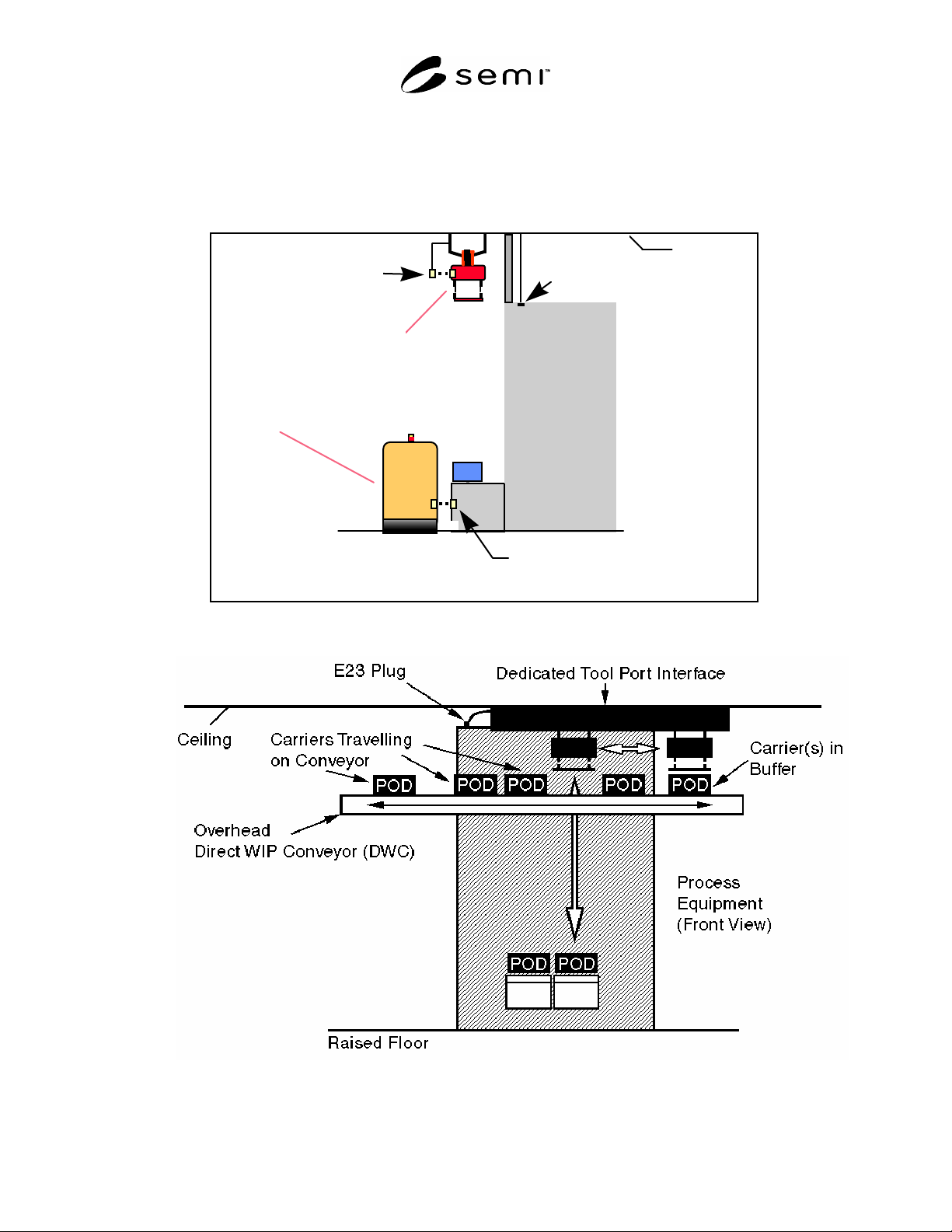
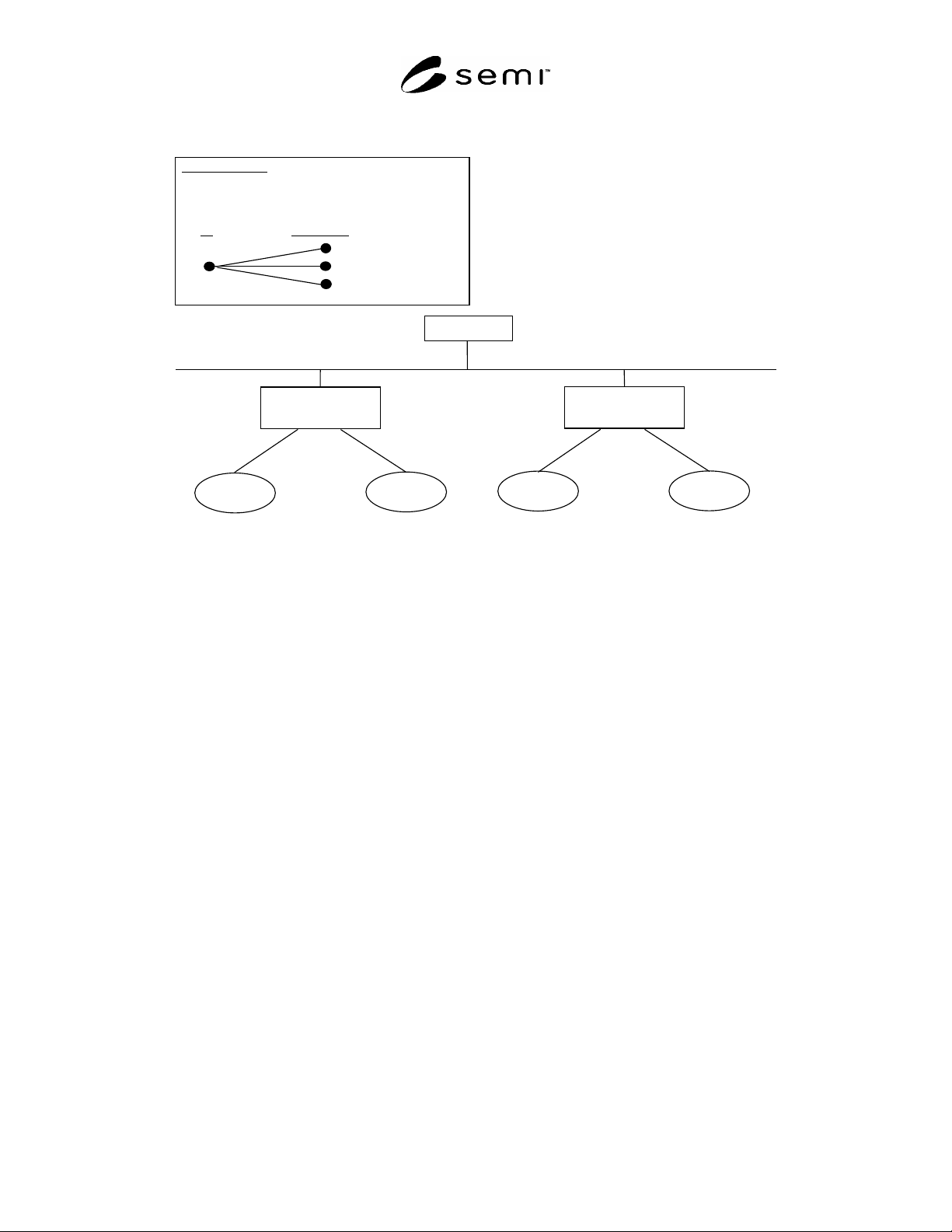
SEMI E88-1104 E © SEMI 1999, 2004 55 A-1.1.1. 9 R1-3 Hardware Architecture Factory Host SC 1 Stocker Unit 1 ... Stocker SEM GEM HSMS-SS LAN ... SC N ... Key Characterist ics • SC provides a single communication connectio…
SEMI E88-1104
E
© SEMI 1999, 2004 54
>
>
>
R1-2 Parallel Interface for Carrier Handoff
POD
Ceiling
Raised Floor
Overhead Vehicle (OHV)
Production
or
AMHS
Equipment
(Side View)
Photocoupled Parallel
I/O Devices
Floor
running
AGV/RGV
Automated or Rail
Guided Vehicle (AGV/RGV)
Female Connector Plug
Photocoupled Parallel
I/O Devices
A-1.1.1.2 Figure R1-1
A-1.1.1.3 Carrier Handoff Example Diagram for OHV/AGV/RGV
A-1.1.1.4
A-1.1.1.5
A-1.1.1.6 Figure R1-2
A-1.1.1.7 Carrier Handoff Example Diagram for DWC
A-1.1.1.8
SEMI E88-1104
E
© SEMI 1999, 2004 55
A-1.1.1.9
R1-3 Hardware Architecture
Factory Host
SC
1
Stocker
Unit 1
...
Stocker SEM
GEM
HSMS-SS
LAN
...
SC
N
...
Key Characteristics
• SC provides a single communication connection to Host
• One-to-many(one or more) mapping of SC’s to stocker units
• Interbay and Intrabay controls decoupled from Stocker controls
SC
Stocker Units
Stocker
Unit M
Stocker
Unit 1
Stocker
Unit M
A-1.1.1.10 Figure R1-3
A-1.1.1.11 SC Architecture (Logical View)
A-1.1.1.12
SEMI E88-1104
E
© SEMI 1999, 2004 56
R1-4 Stocker Command Scheduling Characteristics
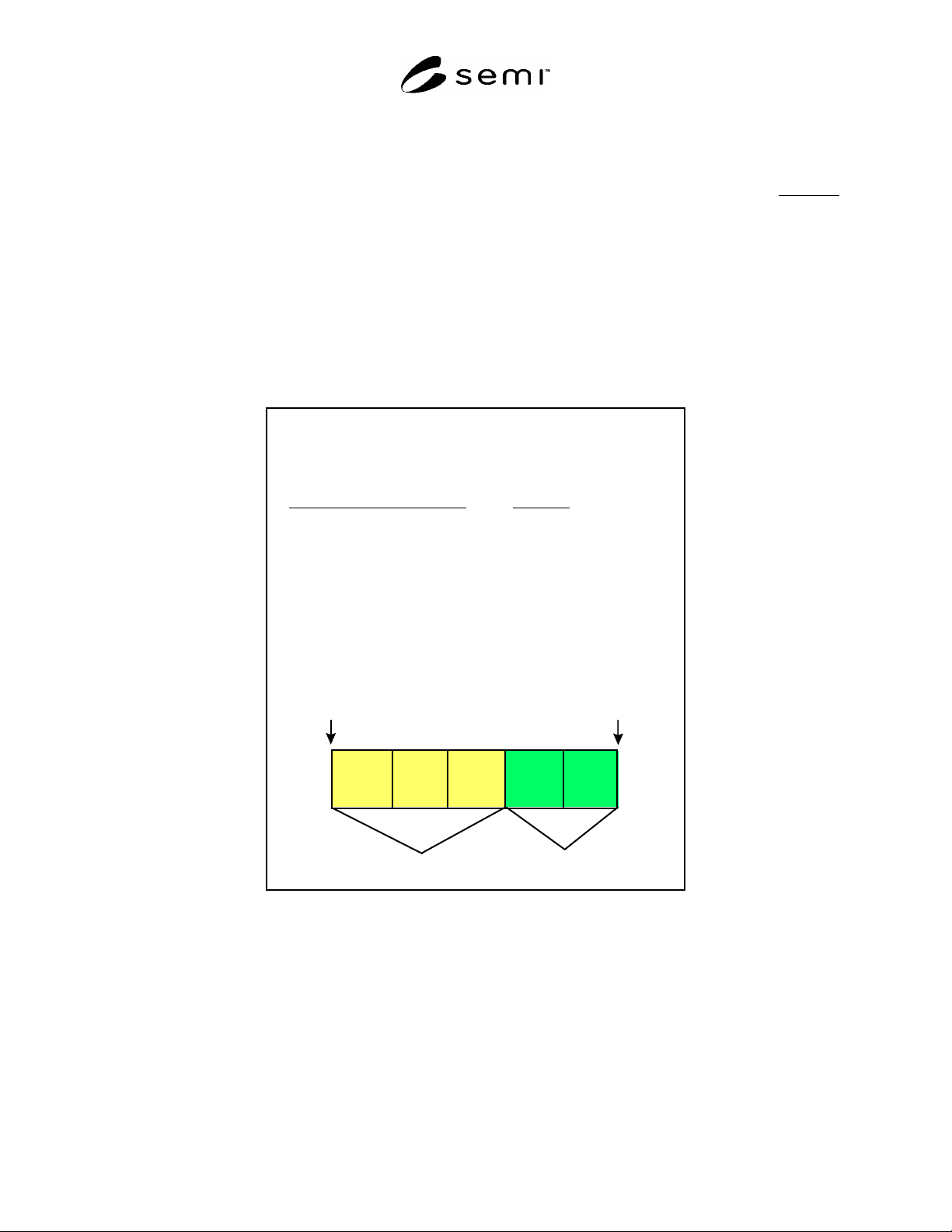
R1-4.1 At a minimum, the SC must offer Priority-based First-In-First-Out (FIFO) queuing of TRANSFER
commands. In other words, all TRANSFER commands which have yet to be processed by the SC must be serviced
in the order in which they are received by the SC based on the priority given in the host command. The minimum
priority levels required to be available on Stocker SEM equipment are “Normal” and “High” (refer to Figure R1-4
for an example). “Normal” and “High” priorities will be denoted by U2 compatible numbers as per the definition of
the priority in the Variable Data and Remote Command sections of this document. Other options may be
implemented, but to be a Stocker SEM equipment it must at a minimum have the ability to be configured to perform
Priority-based FIFO queuing of TRANSFER commands. Additionally, the command priorities are to be utilized
during execution of the commands to the following level: any “High” priority command will cause all other
commands that are not “High” priority to be usurped. That is to say that all other commands will modify the
execution steps to allow the “High” priority commands to be completed in the minimal elapsed time possible.
Multiple “High” priority commands will act upon each other according to the same rules as “Normal” commands act
on each other.
The following TRANSFER commands are
received by the SC in top to bottom order:
TRANSFER Command
Priority
1 Normal
2 Normal
3 High
4 Normal
5 High
4 2 1 5 3
head
tail
Corresponding SC processing queue
for outstanding TRANSFER commands :
Normal
High
A-1.1.1.13 Figure R1-4
A-1.1.1.14 SC Priority-Based FIFO TRANSFER Command Processing Example
A-1.1.1.15
R1-4.2 The SC must manage the resources so that TRANSFER requests are queued for later service if all resources
are currently utilized.