semi合集-English.pdf - 第1774页
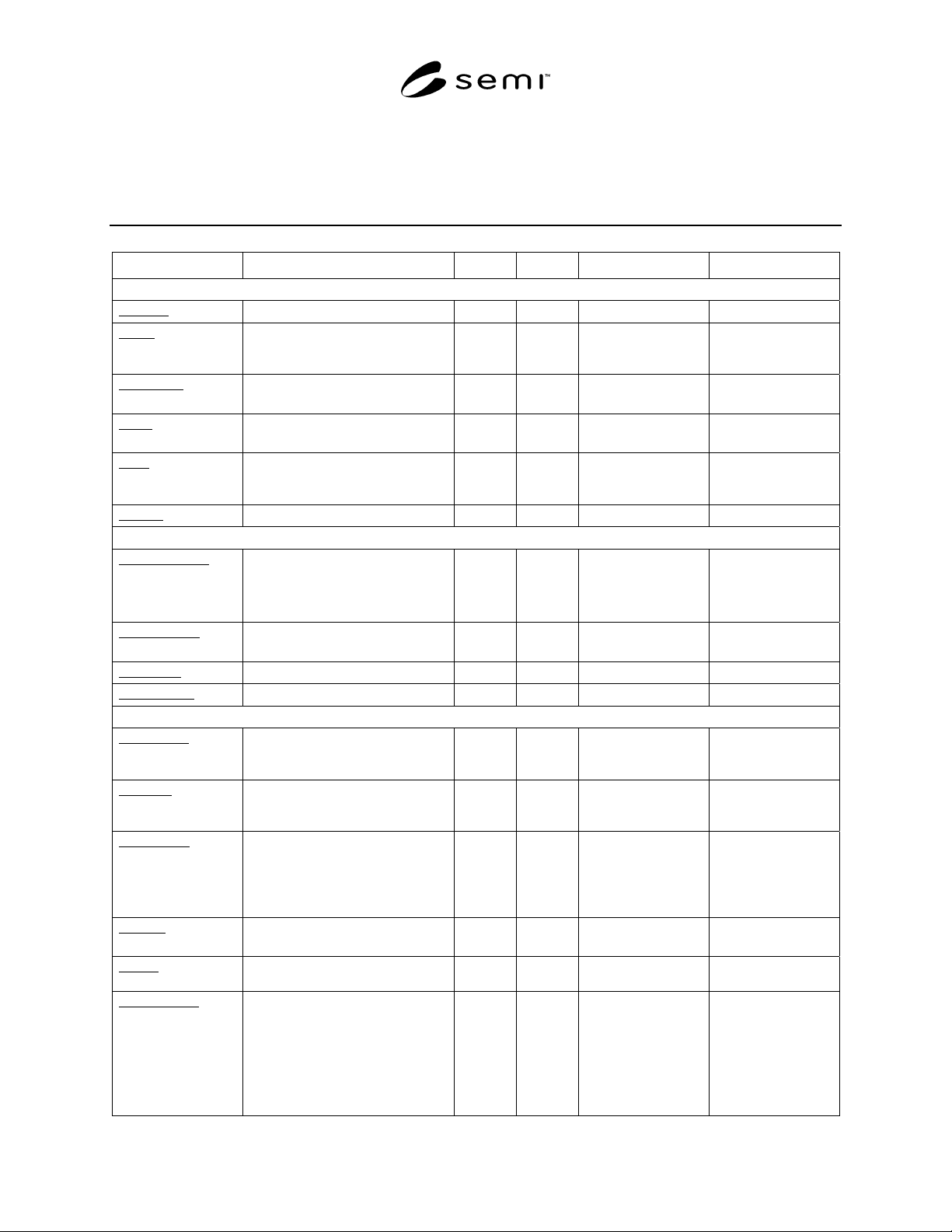
SEMI E42-0704 © SEMI 1995, 2004 43 Attribute Name Definition Access Rqmt Form Default Value ExecChgCtrl Preserved. Specifies change cont rol requirements for recipe. RO Y Binary. Bitwise (MSB=8): 1 - The recipe body may …
SEMI E42-0704 © SEMI 1995, 2004 42
• Mandatory attributes and the other required
attributes, in the order in which they are to appear
when a recipe is transferred.
• Optional attributes in alphabetical order, and
• Non-standard attributes, transferred last.
Default values for non-mandatory attributes are shown
in the last column. Null values (indicated by “NULL”)
are dependent upon the particular form (see Section
3.2.5).
Table 6.1 Execution Recipe Attribute Definition
Attribute Name Definition Access Rqmt Form Default Value
Identification Attributes
ObjType The object type. RO Y Text: “ERcp” “ERcp”
ObjID An identifier derived from
Namespace, Class, Name, and
Version
RO Y Formatted text. -
Namespace The name of the originating
namespace.
RO Y Text. NULL
Name A logical name assigned by the user
when the recipe is created.
RO Y Text. -
Class The recipe’s class
(e.g., “/PROCESS/” or
“/PROCESS/LOADER/”).
RO Y Formatted text:
“CLASS/CLASS/../
CLASS/”
-
Version The version of the recipe. RO Y Text. -
Mandatory Attributes
ExecAttrLength The length attribute for the attributes
of the execution recipe. Calculated
when the recipe is downloaded and
whenever an attribute changes.
RO Y List of formatted text. -
ExecChgTime The timestamp of a change to the
attributes of the execution recipe.
RO Y Formatted text,
timestamp format.
-
AttrLength Preserved. RO Y Unsigned integer. 0
AttrChgTime Preserved. RO Y Formatted text. NULL
Required Attributes
BodyLength Preserved unless recipe is modified.
Length of the recipe’s body, in
bytes.
RO Y Unsigned integer. -
EditTime Preserved unless recipe is modified.
Timestamp of when the body was
created or modified.
RO Y Formatted text.
Timestamp format.
-
BodyFormat Indicates the form and format of the
recipe’s body.
RO Y Enumerated unsigned
integer:
0 = source,
1 = object,
> 1 reserved.
0
Verified Indicates whether the recipe’s body
is syntactically correct.
RO Y Boolean. FALSE
Linked Indicates whether the recipe is
linked.
RO Y Boolean. FALSE
ChangedBody Set to TRUE if the recipe body has
changed without a subsequent
upload to the originating namespace.
NOTE: This attribute is never
uploaded to a namespace. Required
only if recipe can be changed or
created.
RO Y Boolean. FALSE
SEMI E42-0704 © SEMI 1995, 2004 43
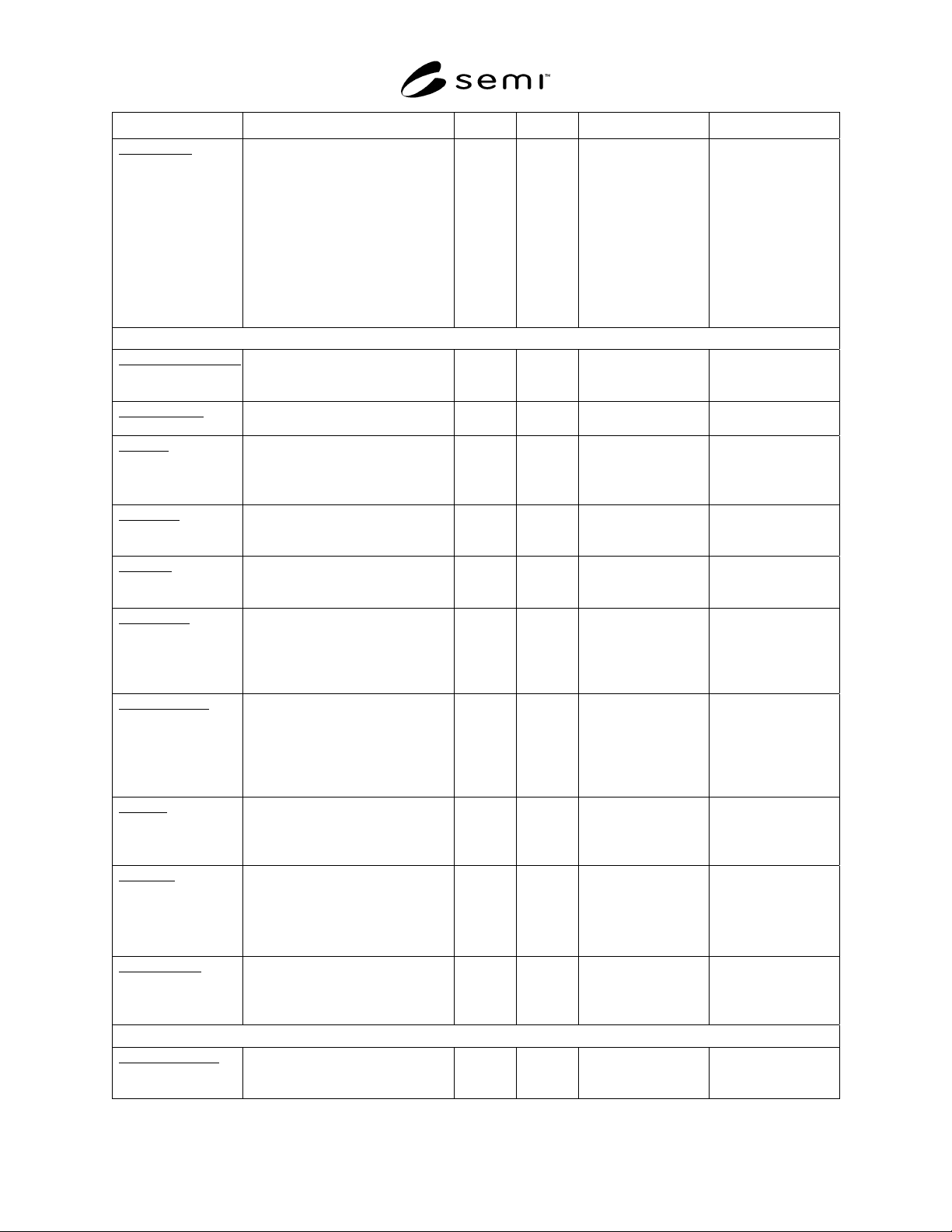
Attribute Name Definition Access Rqmt Form Default Value
ExecChgCtrl Preserved. Specifies change control
requirements for recipe.
RO Y Binary.
Bitwise (MSB=8):
1 - The recipe body
may be changed,
2 – Change
notification required,
4 - Recipe may be
selected after change,
8 - Most recent
p
arameter setting shall
be saved.
0
Optional Attributes
AgentSpecComments Copied from the original agent-
specific attribute when downloaded.
Set by the user.
RO N Text. Maximum
length is 80
characters.
-
ApprovalLevel Indicates the level of approval
assigned by an authorized user.
RW N Unsigned integer. 0
Certified Preserved from the agent-specific
attribute as downloaded. May be
used as control for production-
worthy recipes.
RO N Unsigned integer. 0
Comments User comments. Preserved from the
generic attribute as downloaded.
RO N Text. Maximum
length is 80
characters.
-
EditedBy Preserved unless recipe is modified.
The name of the person or executing
agent who last modified the recipe.
RO N Text. Maximum
length is 80
characters.
-
EstRunTime The nominal or estimated execution
(run) time of the recipe, in seconds.
Used for scheduling purposes.
Preserved from the generic attribute
as downloaded.
RO N Unsigned integer. 0
ExecLinkParam Preserved unless last value is
changed (Section 6.6.4). Contains
the list of parameter definitions,
including any agent-specific
modifications. Required for variable
parameter support.
RO N Structure composed o
f
parameter name,
initial value, and
restrictions.
NULL
LinkList Preserved. A complete list of recipe
specifiers for a linked recipe set.
Required for multipart recipe
support.
RO N List of formatted text. NULL
SrcRcpID For a derived object form recipe,
contains the recipe identifier of the
original source form recipe.
Required only for derived object
form recipes.
RO N Formatted text. NULL
VerificationID Identifier code used by the verifier
of the recipe. May be used to
determine out-of-date formats that
need to be reverified.
RO N Text. Maximum
length is 40
characters.
NULL
Non-Standard Attributes
AgentSpec- UD * Preserved from the original agent-
specific attributes as downloaded.
RO N Defined by supplier or
user. Text limited to
80 characters.
-
SEMI E42-0704 © SEMI 1995, 2004 44
Attribute Name Definition Access Rqmt Form Default Value
UD * Non-standard attribute defined by
supplier or user. Asterisk indicates
the part of the attribute name that is
provided in this definition. Shall be
preserved exactly, except by the
entity that defined it.
RO N Varies with definition.
Text form is limited to
80 characters.
-
6.4 Default Namespace — The default namespace is a dedicated centralized namespace (see Section 4.4) that is
used for all agent-specific recipes. A recipe executor that uses agent-specific recipes, such as thermocouple
calibration tables, shall be provided with a namespace for such recipes. Equipment that may be operated in a stand-
alone mode, and that requires agent-specific recipes, shall also provide a local namespace to be used for this
purpose. A single namespace shall be used to satisfy both requirements.
The recipe executor shall provide a user-settable attribute DefaultNamespace
that contains the name of the default
namespace. The default namespace shall be available on power-up for stand-alone operation. For executing agents
intended to operate only in a supervised configuration, such as cluster process modules, the default namespace may
be provided by the supervisor.
A recipe in a default namespace is referenced within a recipe body by specifying a namespace named “Default”.
This allows controlled specification by namespace role for hardware-specific recipes.
6.5 Recipe Storage — Discussion of types of storage used by the recipe executor is provided to clarify terminology.
Storage is generally assumed to consume space in some form, and the amount of space available for recipes is
assumed to be finite, so that adding recipes reduces the amount of space available and deleting recipes increases the
amount of space available. These assumptions are based on current technologies and are not requirements.
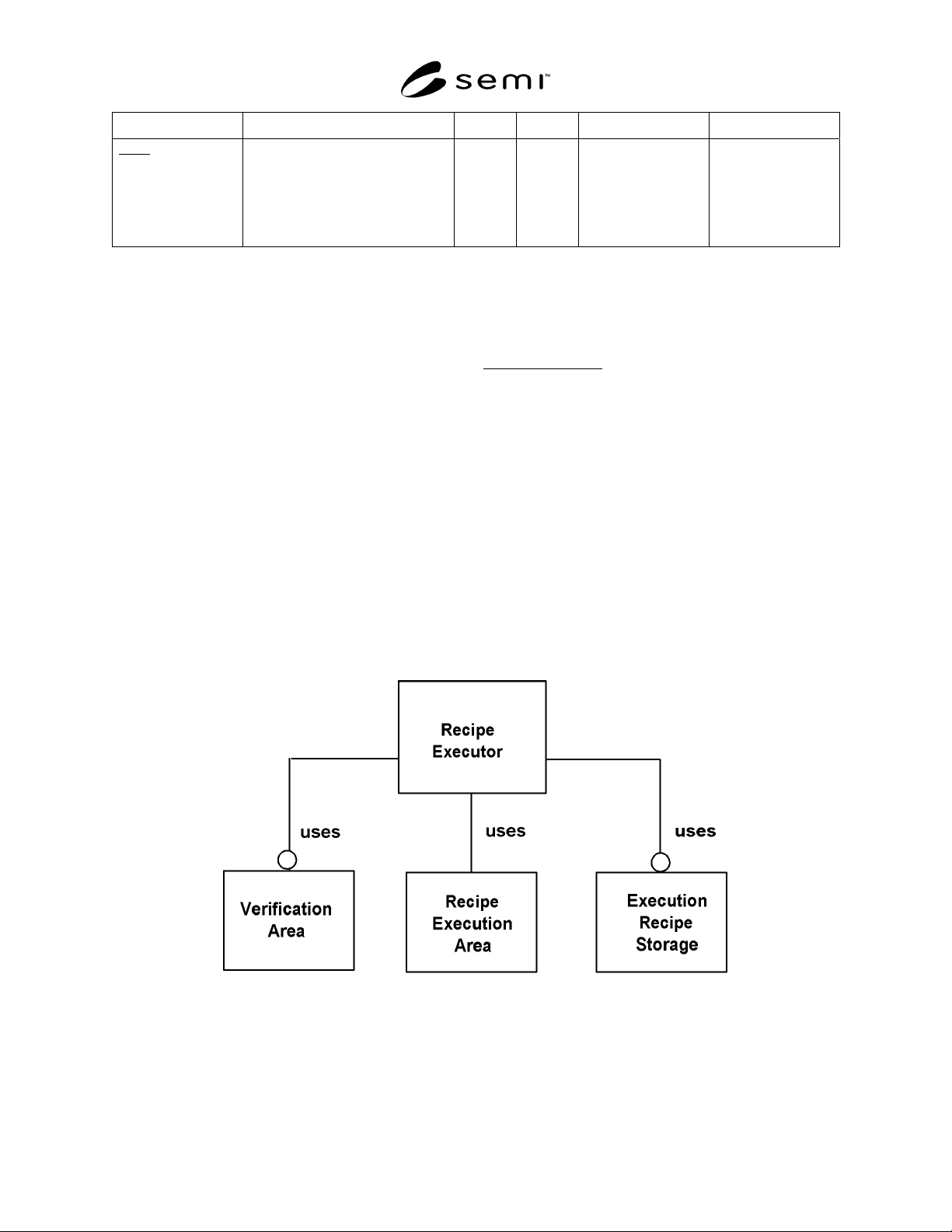
The recipe executor may have one or more types of storage area for recipes, shown in Figure 6.3. The storage area
used for the current process cycle is called the recipe execution area. This is the minimum storage capacity
required. Executable copy recipes in the recipe execution area may or may not be transformed for execution
purposes but shall retain the attributes of the execution recipe. The recipe execution area shall be protected from all
inadvertent and unintentional change, including change resulting from transferring a recipe to or from a recipe
namespace or from editing a recipe.
Figure 6.3
Object Model for Recipe Executor
Extra storage area, for additional recipes that are not
currently selected, when provided, is called the
execution recipe storage.
A separate intermediate area for temporary storage of
unverified downloaded recipes may also be provided.
This area is the verification area. The separation of
this area provides protection for the executable copy
recipes and the execution recipes. Recipes that fail