semi合集-English.pdf - 第6753页
SEMI INTERNATIONAL STANDARDS SAFETY GUIDELINES Semiconductor Equipment and Materials International
SEMI C53-0704 © SEMI 2001, 2004 DIMETHYL SULFOXIDE 2
remaining after evaporation of a sample of DMSO
followed by heating of the residue: Heat a clean 200
mL beaker at 105°C in an oven for 30 min., cool for 30
min. in a dessicator charged with calcium chloride and
weigh. Place 100 g of DMSO into the 200 mL tared
beaker. Evaporate the liquid gently, so that boiling does
not occur, in a hood protected from any possibility of
contamination. When all the sample has evaporated, dry
the residue in an oven at 105°C for 30 minutes and cool
the beaker for 30 min in a dessicator charged with
calcium chloride and reweigh.
8.5.1 Calculate the residue as parts per million (ppm).
8.6 Trace Metal Determination — The following
method has given satisfactory results in determining
trace metal impurities at the value specified for each of
the following trace metals: aluminum (Al), antimony
(Sb), arsenic (As), barium (Ba), boron (B), cadmium
(Cd), calcium (Ca), chromium (Cr), copper (Cu), iron
(Fe), lead (Pb), lithium (Li), magnesium (Mg),
manganese (Mn), nickel (Ni), potassium (K), sodium
(Na), tin (Sn), titanium (Ti), vanadium (V) and zinc
(Zn). Alternate methods may be used as long as the
method has been validated according to SEMI C1.
8.7 Special Reagents
8.7.1 Water — The water used for all the dilution,
calibration, and standards should meet suggested
guidelines for pure water for semiconductor processing.
8.7.2 Sample Preparation — In a clean environment,
dilute 25 mL of sample by adding 25 mL of water.
Prepare reagent blanks.
8.7.3 Analysis — Using the prepared sample and
reagent blanks, analyze the elements by inductively
coupled plasma (ICP). The density (see SEMI C1) of
the DMSO sample must be determined to express the
result in ppb.
8.7.4 Notes
NOTE 1: Each laboratory is responsible for verifying the
validity of the method within its own operation.
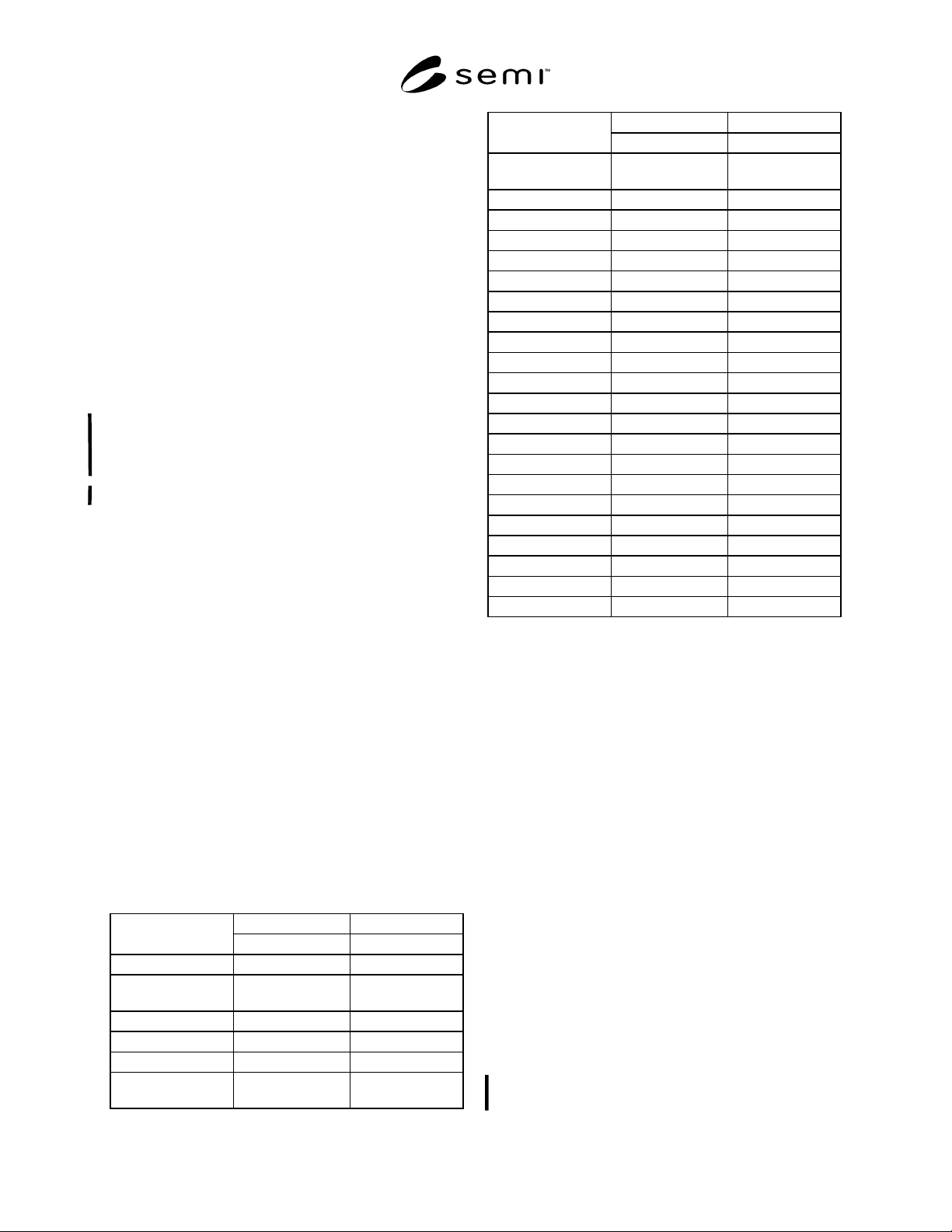
Table 1 Impurity Limit and Other Requirements for
Dimethyl Sulfoxide
Grade 1 Grade 2
(specification) (specification)
Assay (CH
3
SOCH
3
) 99.8% min. 99.8% min.
DMSO
2
(CH
3
SO
2
CH
3
)
0.05% max. 0.05% max.
DMS (CH
3
SCH
3
) 0.05% max. 0.05% max.
Color (APHA) 10 max. 10 max.
Water (H
2
O) 0.05% max. 0.05% max.
Acidity 0.0007 meq/g max. 0.0007 meq/g
max.
Grade 1 Grade 2
(specification) (specification)
Residue after
evaporation (ppm)
50 50
Aluminum (Al) 50 ppb max. 10 ppb max.
Antimony (Sb) 50 ppb max. 10 ppb max.
Arsenic (As) 50 ppb max. 10 ppb max.
Barium (Ba) 50 ppb max. 10 ppb max.
Boron (B) 50 ppb max. 10 ppb max.
Cadmium (Cd) 50 ppb max. 10 ppb max.
Calcium (Ca) 50 ppb max. 10 ppb max.
Chromium (Cr) 50 ppb max. 10 ppb max.
Copper (Cu) 50 ppb max. 10 ppb max.
Iron (Fe) 50 ppb max. 10 ppb max.
Lead (Pb) 50 ppb max. 10 ppb max.
Lithium (Li) 50 ppb max. 10 ppb max.
Magnesium (Mg) 50 ppb max. 10 ppb max.
Manganese (Mn) 50 ppb max. 10 ppb max.
Nickel (Ni) 50 ppb max. 10 ppb max.
Potassium (K) 50 ppb max. 10 ppb max.
Sodium (Na) 50 ppb max. 10 ppb max.
Tin (Sn) 50 ppb max. 10 ppb max.
Titanium (Ti) 50 ppb max. 10 ppb max.
Vanadium (V) 50 ppb max. 10 ppb max.
Zinc (Zn) 50 ppb max. 10 ppb max.
NOTICE: SEMI makes no warranties or
representations as to the suitability of the standards set
forth herein for any particular application. The
determination of the suitability of the standard is solely
the responsibility of the user. Users are cautioned to
refer to manufacturer's instructions, product labels,
product data sheets, and other relevant literature,
respecting any materials or equipment mentioned
herein. These standards are subject to change without
notice.
By publication of this standard, Semiconductor
Equipment and Materials International (SEMI) takes no
position respecting the validity of any patent rights or
copyrights asserted in connection with any items
mentioned in this standard. Users of this standard are
expressly advised that determination of any such patent
rights or copyrights, and the risk of infringement of
such rights are entirely their own responsibility.
Copyright by SEMI® (Semiconductor Equipment and Materials
International), 3081 Zanker Road, San Jose, CA 95134. Reproduction o
f
the contents in whole or in part is forbidden without express written
consent of SEMI.

SEMI INTERNATIONAL STANDARDS
SAFETY GUIDELINES
Semiconductor Equipment and Materials International

SEMI S1-0701
E
© SEMI 1986, 2001 1
SEMI S1-0701
E
SAFETY GUIDELINE FOR EQUIPMENT SAFETY LABELS
This safety guideline was technically approved by the Global Environmental Health and Safety Committee
and is the direct responsibility of the North American Environmental Health and Safety Committee. Current
edition approved by the North American Regional Standards Committee on April 30, 2001. Initially
available at www.semi.org May 2001; to be published July 2001. Originally published in 1986; previously
published in 1990.
This document replaces S1-90 in its entirety.
E
This standard was editorially modified in January 2005 to correct a spelling error. Changes were made to
Appendix 2.
1 Purpose
1.1 This guideline provides guidance for the content and format of equipment safety labels and gives examples of
symbols to use.
1.2 This guideline is intended for use by equipment manufacturers to create safety labels that alert persons to
hazards associated with the equipment.
1.3 This guideline is intended to provide a unified international semiconductor-industry-specific safety labeling
format.
2 Scope
2.1 This guideline is intended to assist in developing safety labels for manufacturing equipment used in the
semiconductor industry.
NOTE 1: This guideline may also be used for the design of safety signs for the facilities where semiconductor manufacturing
equipment is installed.
NOTE 2: The guidance provided in this document may also be adapted to help communicate safety information in installation
instructions, operation and maintenance manuals, and other similar written communication relating to a product.
NOTE 3: This guideline may also be adapted for the design of computerized user interfaces on equipment.
NOTE 4: In order to present a more consistent user interface, it is recommended that the use of the words DANGER, WARNING,
and CAUTION, in such interfaces be limited to the meanings and uses given for them in this guideline.
2.2 This document contains the following sections:
1. Purpose
2. Scope
3. Limitations
4. Referenced Standards
5. Terminology
6. General Provisions
7. Formats
8. Signal Words
9. Symbols
10. Word Messages
11. Lettering
12. Colors
13. Placement