semi合集-English.pdf - 第2003页
SEMI E54.6-0997 © SEMI 1997, 2004 9 Table 6 Device Manager Object Netwo rk Variables Name Storage Class CDM Tag Standard NV DataType Device Type const DmA1 SNVT _str_asc or SNVT_str_int Standard Rev. Level const DmA2 SNV…
SEMI E54.6-0997 © SEMI 1997, 2004 8
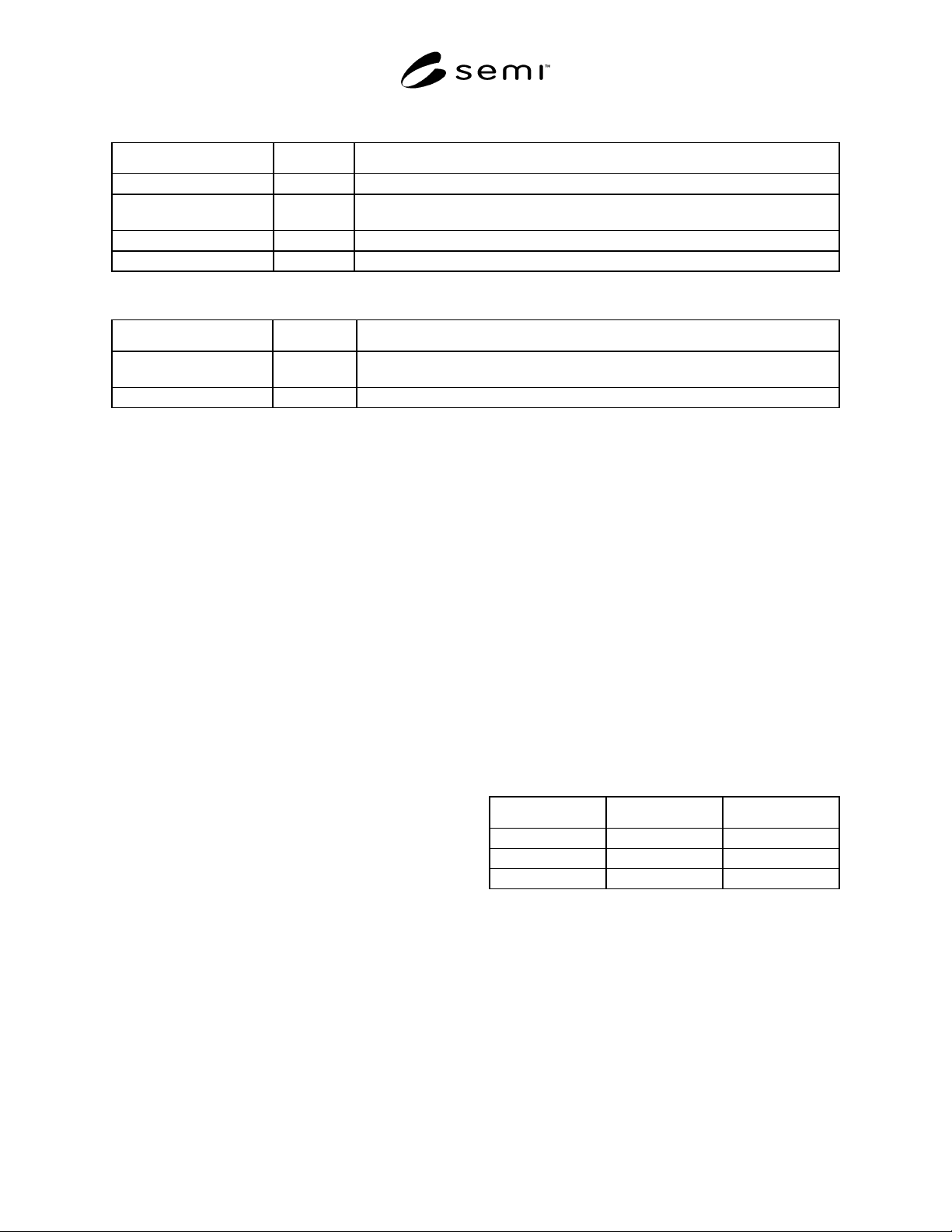
Table 3 SEMI SAN Request Message APDU Format
Field Name Size (bits) Value
Message Code 8 4D (hex). Indicates a SEMI SAN-compliant foreign frame message.
Object ID 16 Destination object’s ID number. Based on the order of the declaration of the instance
in the device’s external interface documentation string.
Service Code 8 Defines the service being requested.
Request Parameters optional Service-specific request parameters.
Table 4 SEMI SAN Response Message APDU Format
Field Name Size (bits) Value
Message Code 8 Zero indicates successful execution of the requested service. Non-zero indicates
failure. Values are request-specific.
Response Parameters optional Service-specific result parameters.
7.2 Object Attributes — The GetAttribute and
SetAttribute service requests may also be implemented
as network variable fetch, poll, and update requests
addressed to the network variable corresponding to the
specified attribute. This is appropriate when
application-layer service responses are not required. A
GetAttribute service request may be addressed directly
to any network variable as a LonTalk request message,
using the LonTalk protocol network management NV
fetch mechanism. A GetAttribute service request may
also be addressed to an output network variable as a
LonTalk NV poll message, using the NV selection
mechanism. A SetAttribute service request may be
addressed to an input network variable as a LonTalk
NV update message, using the NV selection
mechanism. The confirmation of a SetAttribute
(network variable update) is provided by the
acknowledged service of the LonTalk protocol transport
layer.
Each network variable in a LonMark object is identified
by means of a self-documentation string stored in the
device’s memory. This string contains the object id of
the object to which this variable belongs, and the
sequence number of the network variable within its
enclosing object. For the LonWorks NCS, this sequence
number is identical to the numerical sequence number
specified by the CDM tag.
Example: Suppose that the Device Manager object
instance is declared as the second object instance in the
device. It would, therefore, have object id 1. The
Device Manager attribute Standard Revision Level has
the tag DmA2. The self-documentation string for this
network variable is, therefore, specified as “@1| 2.”
The Publish notification service is implicit when an
output network variable is updated. The device
propagates the value of the output network variable
(equivalent to a read-only attribute) to any input
network variable(s) to which it may be bound.
The LonTalk protocol only supports propagation of
output network variables. In CDM terminology, this
means that only read-only attributes may be published.
If a specific device model requires publication of a
read/write attribute, an output network variable whose
value mirrors the value of the input (read/write)
network variable may be introduced to the object
definition.
7.3 Sensor/Actuator/Controller Object (*) — The
SEMI CDM SAC object coordinates the functionality
of Sensor, Actuator, and Controller objects in the
device. A new object type is defined, which forms part
of the LonMark Functional Profile for SEMI SAN-
compliant devices based on LonWorks. Table 5
summarizes the services implemented by the SAC
object.
Table 5 SAC Object Services
Service Name CDM Tag Service Code
Reset SacS1 1
Abort SacS2 2
Recover SacS3 3
7.4 Device Manager Object (*) — The SEMI CDM
Device Manager Object combines attributes of device
self-documentation with an exception reporting
mechanism. A new object type is, therefore, defined
with the following mandatory network variables and
behaviors. This object type forms part of the LonMark
Functional Profile for SEMI SAN-compliant devices
based on LonWorks. Table 6 summarizes the network
variables that implement the attributes of the Device
Manager object.
SEMI E54.6-0997 © SEMI 1997, 2004 9
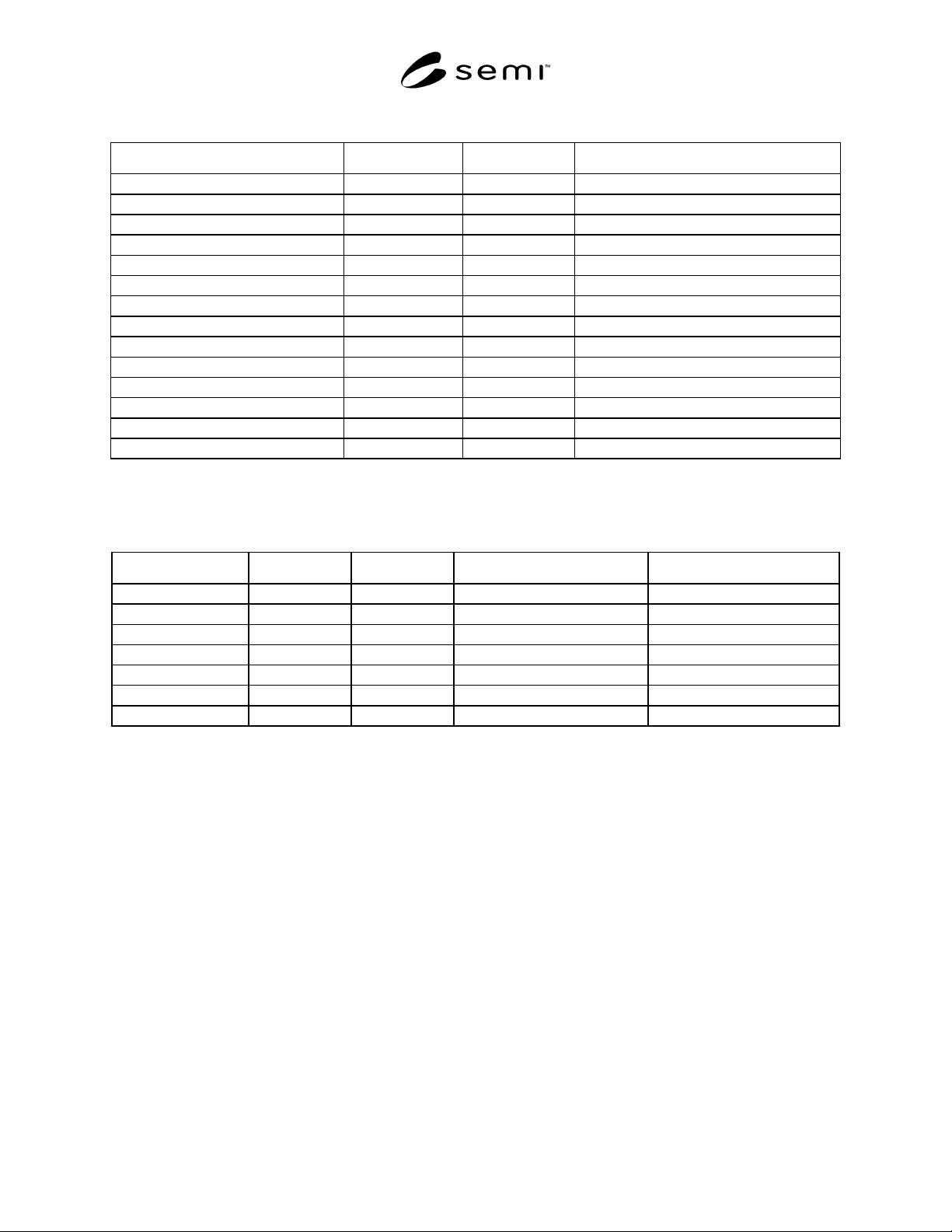
Table 6 Device Manager Object Network Variables
Name Storage Class CDM Tag Standard NV DataType
Device Type const DmA1 SNVT_str_asc or SNVT_str_int
Standard Rev. Level const DmA2 SNVT_str_asc or SNVT_str_int
Device Mfgr. Identifier const DmA3 SNVT_str_asc or SNVT_str_int
Mfr. Model Number const DmA4 SNVT_str_asc or SNVT_str_int
S/W or F/W Rev. Level const DmA5 SNVT_str_asc or SNVT_str_int
Hardware Rev. Level const DmA6 SNVT_str_asc or SNVT_str_int
Serial Number const DmA7 SNVT_str_asc or SNVT_str_int
Device Config’n const DmA8 SNVT_str_asc or SNVT_str_int
Device Status output DmA9 SNVT_dev_status
Reporting Mode config DmA10 SCPT_rept_mode
Exception Status Rept Interval config DmA11 SCPT_exc_sts_t
Exception Status output DmA12 SNVT_exc_status
Exception Detail Alarm output DmA13 SNVT_exc_detail
Exception Detail Warning output DmA14 SNVT_exc_detail
7.4.1 Device Manager Object Requests — Table 7 summarizes the services implemented by the Device Manager
object.
Table7 Device Manager Object Request Services
Service Name CDM Tag Service Code Request Parameters Result Parameters
Reset DmS1 1
Abort DmS2 2
Recover DmS3 3
GetAttribute# DmS4 4 Attribute ID## Attribute Value
SetAttribute### DmS5 5 Attribute ID##, Attribute Value
Execute DmS6 6
Perform Diagnostics DmS7 7 Test ID####
# The GetAttribute service may also be implemented as a network variable poll.
## The attribute ID is the numerical sequence number specified by the CDM tag for the attribute.
This is the same as the LonMark member ID of the network variable in its owning object.
### The SetAttribute service may also be implemented as a network variable update.
#### The Test ID parameter will be the first parameter in the Perform Diagnostics Request Parameters field.
The Publish (DmS8) notification service for the Device
Manager exception status is implemented when the
device updates the output network variable of type
SNVT_exc_status. This causes the value of this
network variable to be propagated across the network to
other network variable(s) to which it may be bound.
The implementation of the Device Manager object
updates this output network variable according to the
conditions specified by the Reporting Mode and
Exception Status Reporting Interval configuration
properties of the object.
7.4.2 Device Manager Object Constant Output
Network Variables — Table 6 lists the constant output
network variables of the Device Manager object. The
type of each of these network variables is either
SNVT_str_asc, a Standard Network Variable Type that
can represent from 0 to 30 ASCII characters, or
SNVT_str_int, a Standard Network Variable Type that
can represent from 0 to 14 international 16-bit
characters.
7.4.3 Device Manager Object Configuration Properties
— The DM object has two configuration properties to
control exception reporting as shown in Table 6. These
parameters are of Standard Configuration Parameter
Types (SCPTs).

SEMI E54.6-0997 © SEMI 1997, 2004 10
The type SCPT_rept_mode(*) contains two four-bit
fields specifying the reporting method for alarms and
warning conditions. For example, in Neuron C, the
application programming language used on the Neuron
Chip, the declaration of SCPT_rept_mode is as follows:
typedef enum {
REP_REQUEST = 0,
REP_REQ_LATCHED = 1,
REP_EVT_TRIGD_ON = 2,
REP_EVT_TRIGD_ONOFF = 3,
REP_TIME_TRIGD = 4,
REP_EVT_ON_TIME_TRIGD = 5,
REP_EVT_ONOFF_TIME_TRIGD = 6,
} rept_mode_t;
typedef struct {
rept_mode_t alarm_rept_mode :4;
rept_mode_t warn_rept_mode :4;
} SCPT_rept_mode;
The type SCPT_exc_sts_t(*) is a 16-bit value
representing times from 0.00 to 655.35 seconds, with a
resolution of 0.01 seconds. This parameter is optional.
The default reporting mode is REP_REQUEST.
7.4.4 Device Manager Object Output Network
Variables — The Device Manager object has four
output network variables as shown in Table 6. The data
type SNVT_dev_status is an enumeration,
corresponding to the device status attribute defined in
Table 6 of the CDM. The values of this type are defined
in Table 8.
Table 8 Device Status Enumeration Values
Value Enumeration Tag
0 DS_UNKNOWN
1 DS_INIT_SELFTEST
2 DS_IDLE
3 DS_SELFTEST_EXCPT
4 DS_EXECUTING
5 DS_ABORT_1
6 DS_ABORT_2
The value DS_ABORT_1 corresponds to the Abort
from Idle or Executing state, and the value
DS_ABORT_2 corresponds to the Abort from
Initialized/Self Testing or Self Test Exception state of
the DM object.
The type SNVT_exc_status(*) is a union of two
structures, depending on whether expanded or basic
exception reporting mode is used. For example, in
Neuron C, the declaration of SNVT_exc_status is as
follows:
typedef union {
struct {
int excpt_method : 1; //set to 0
int dev_spec : 7;
} basic_method;
struct {
int excpt_method : 1; //set to 1
int warn_mfr_spec : 1;
int warn_dev_spec : 1;
int warn_dev_comn : 1;
int resvd : 1;
int alrm_mfr_spec : 1;
int alrm_dev_spec : 1;
int alrm_dev_comn : 1;
} expanded_method;
} SNVT_exc_status;