semi合集-English.pdf - 第6857页
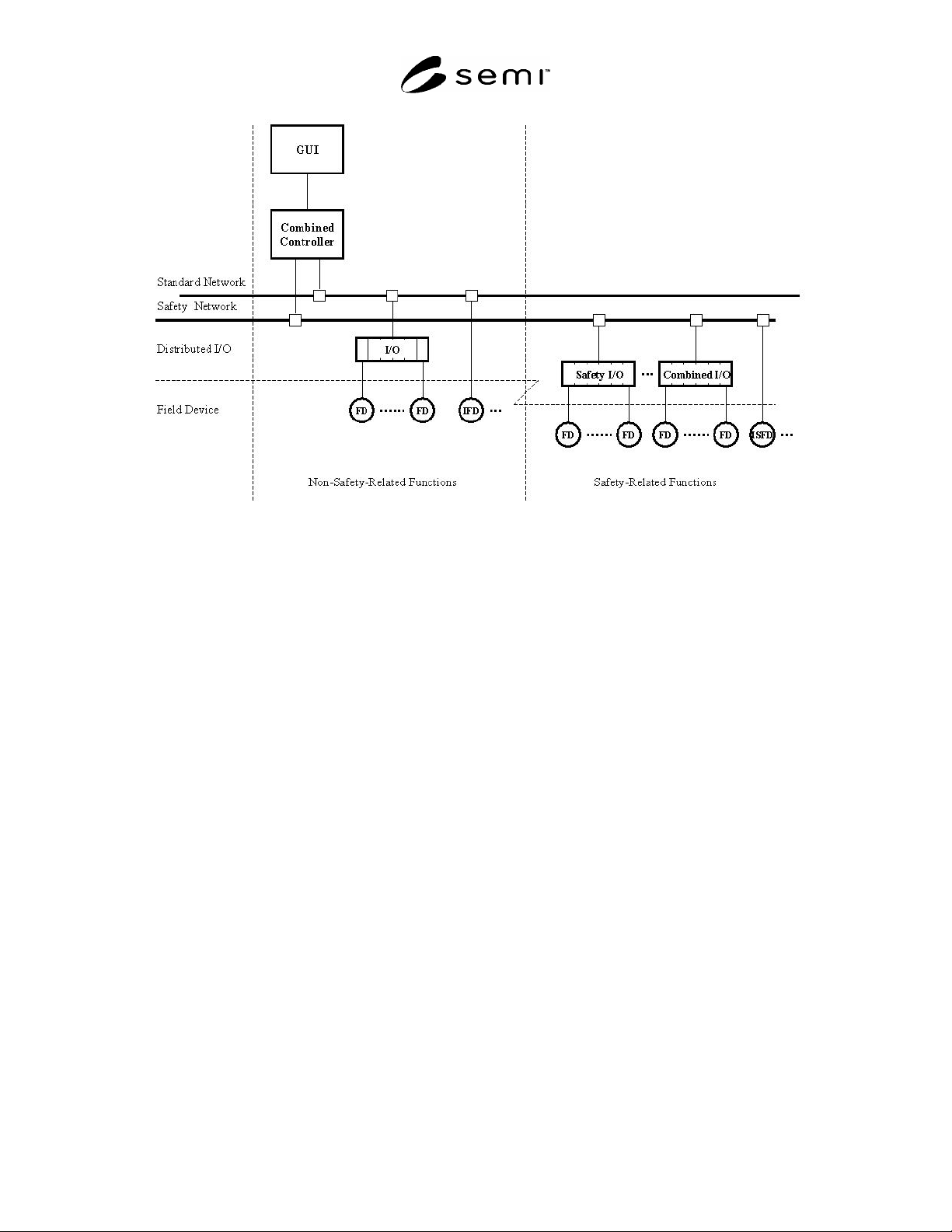
SEMI S2-0703a E © SEMI 1991, 2004 86 Figure R14-4 Fail-To-Safe Equipment Control Sys t em with Du al Network for Standa rd and Fail-To-Safe Communication and Comb ined Contro ller
SEMI S2-0703a
E
© SEMI 1991, 2004 85
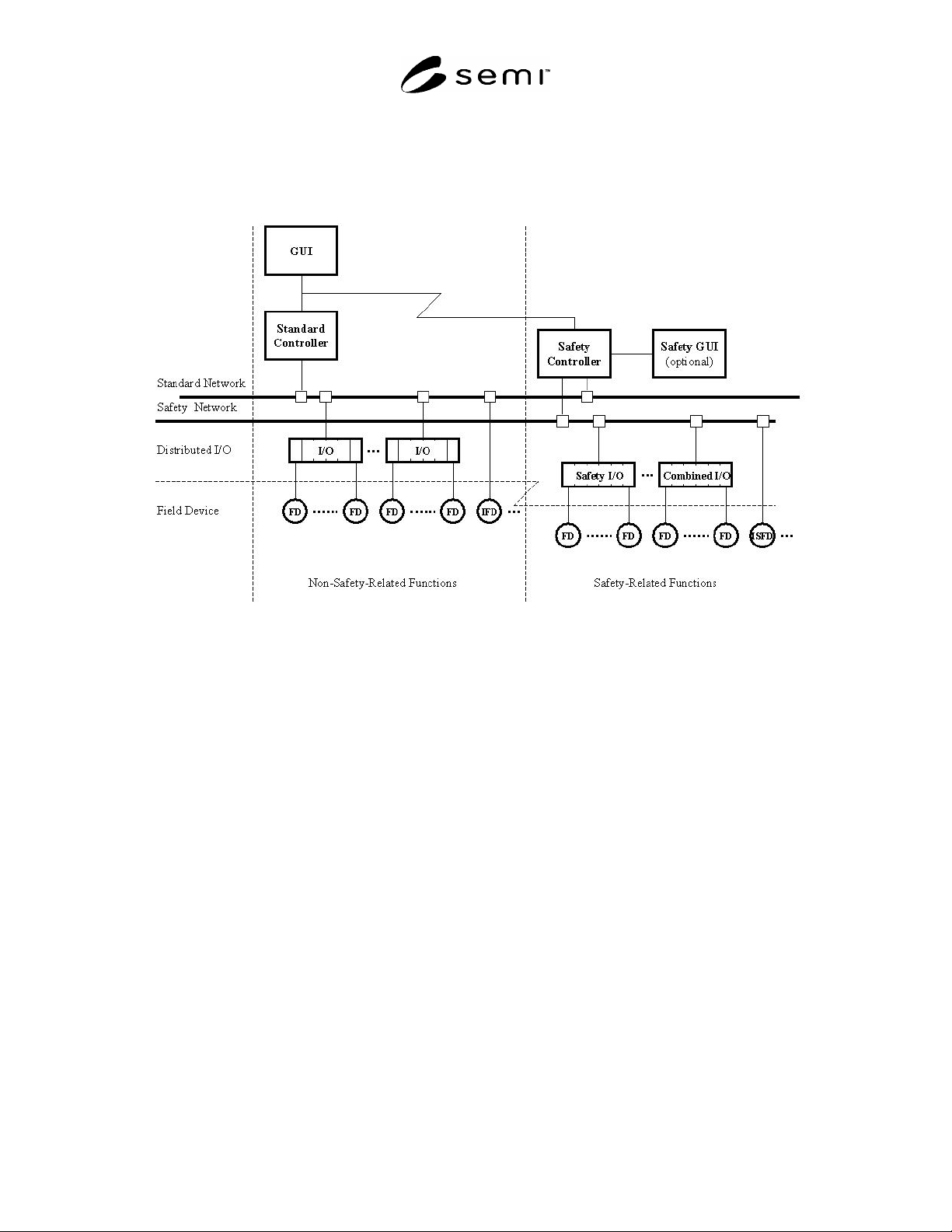
R14-8.3.1.1 Use of Fail-to-safe Equipment Control Systems with Dual Networks for Standard and Fail-to-safe
Communications and Combined Controllers — Figures R14-3 and R14-4 are dual network systems with control of
the non-safety functions remaining the same as in Fail-to-safe Equipment Control Systems with Conventional Safety
Technology. Safety functions, however, are achieved using FECS with safety-related information and control
managed over a separate dedicated safety network.
Figure R14-3
Fail-To-Safe Equipment Control System with Dual Network for Standard and Fail-To-Safe Communication
and Separated Standard and Safety Controllers
SEMI S2-0703a
E
© SEMI 1991, 2004 86
Figure R14-4
Fail-To-Safe Equipment Control System with Dual Network for Standard and Fail-To-Safe Communication
and Combined Controller
SEMI S2-0703a
E
© SEMI 1991, 2004 87
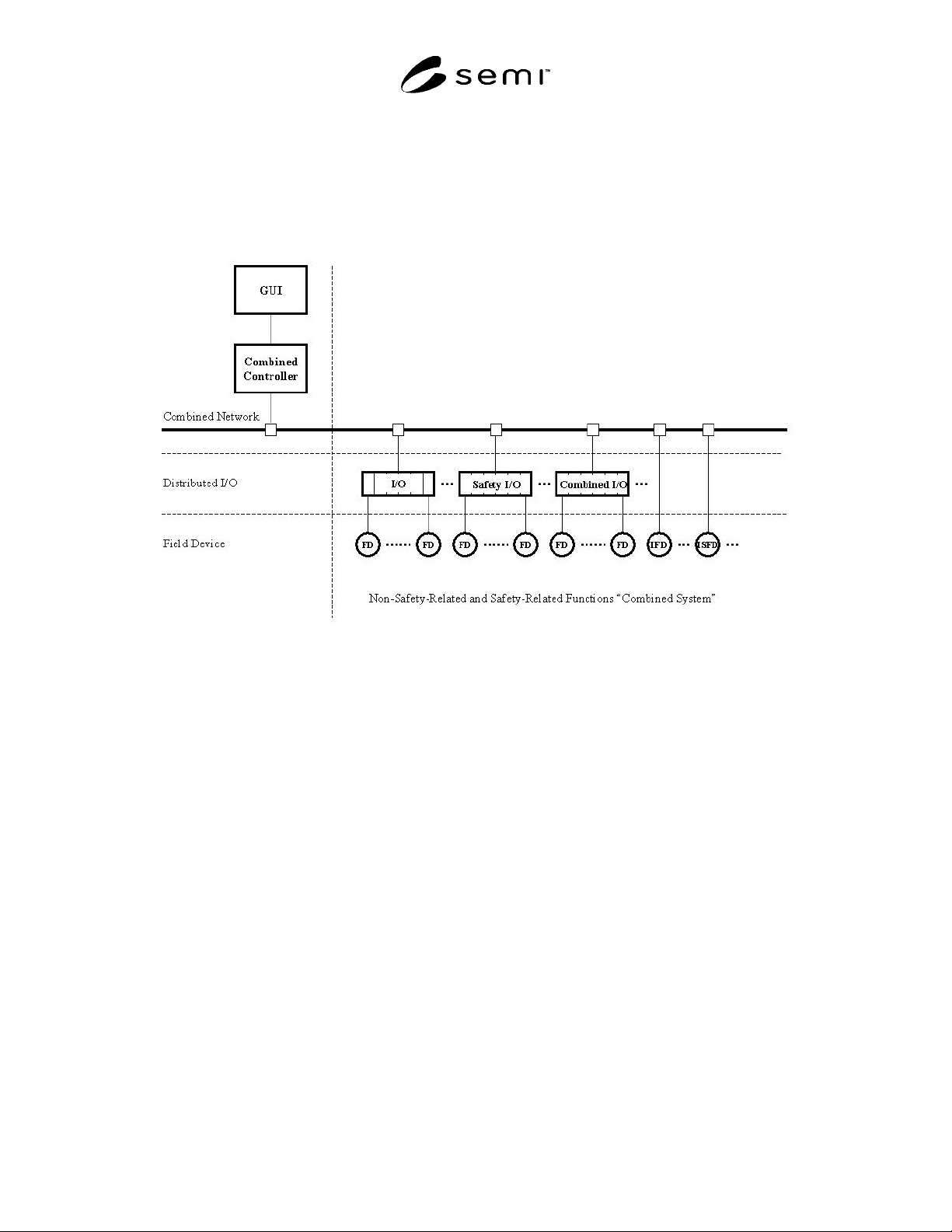
R14-8.3.2 Fail-to-safe Equipment Control System With Combined Network For Standard And Fail-to-safe
Communication — In Figures R14-5 and R14-6 the standard network and safety network have been combined into
one physical network. The standard controller and the safety controller can physically be consolidated into one
single unit. A combined network system is composed of technology that allows the non-safety-related and safety-
related communication to function on the same bus cable. Standard I/O, safety I/O and combined standard/safety
I/O can all connect to the network.
Figure R14-5
Fail-To-Safe Equipment Control System with Combined Network for Standard and Fail-To-Safe
Communication and Combined Controller