semi合集-English.pdf - 第6588页
SEMI C1-0705 © SEMI 1978, 2005 14 reagent. The efficient mass transfer associated with wide bore capillary colum n s may necessitate initial column temperatures to be more than 20°C b elow the boiling point of the reagen…
SEMI C1-0705 © SEMI 1978, 2005 13
7.2 Assay by Wide Bore Column Gas Chromatography — The theory of gas chromatography is given in many
documents, reviews, etc. The purpose here is to delineate some practical aspects for the assessment of volatile
organic reagents by gas chromatography. A complete detailed procedure for the gas chromatographic assay is not
given since available instruments vary from laboratory to laboratory. However, the use of wide bore capillary
columns is recommended to replace conventional packed columns. Capillary columns, constructed of fused silica
onto which is bonded a liquid phase, have greater resolving power and liquid chemical inertness.
7.2.1 Equipment — A gas chromatograph equipped with capillary wide bore column adaptors of isothermal and
multi-step linear and temperature-programmed operation is recommended.
7.2.2 Sample — Direct flash vaporization or on-column injection of the sample with standard gauge needles can be
used with wide bore columns. On column injection can minimize sample degradation while increasing the
reproducibility of results. On column injection is ideal to use with very volatile materials such as the reagents
assayed in this guide.
7.2.3 Columns — Many types of columns exist and can be used. Until recently, packed columns in which a liquid
phase is coated on a porous solid support were extensively used for assay of reagents. The introduction of wide bore
capillary columns having an i.d. of typically 530 micrometers and a thick film of liquid phase from 1 to 5
micrometers allows a laboratory to use a packed column instrument and conditions, while gaining the advantages of
capillary technology. Columns can be used either in the high resolution capillary mode (low carrier gas flow rates)
to achieve optimum resolution of sample components, or at higher flow rates (20–30 mL/min) where they will
perform packed column-like separations in a shorter time. Packed columns require a multitude of stationary phases
to accomplish typical separations performed in an analytical laboratory. The increased length of capillary columns
allows for better separation of components so that three columns of low (Type 1, Methyl Silicone), moderate
(Type 2, Mixed Cyano, Phenyl, Methyl Silicone), and high (Type 3, Carbowax) polarity can handle the majority of
analytical requirements. Columns, which have been found acceptable for assay of the reagents in this manual, are
listed in Table 8.
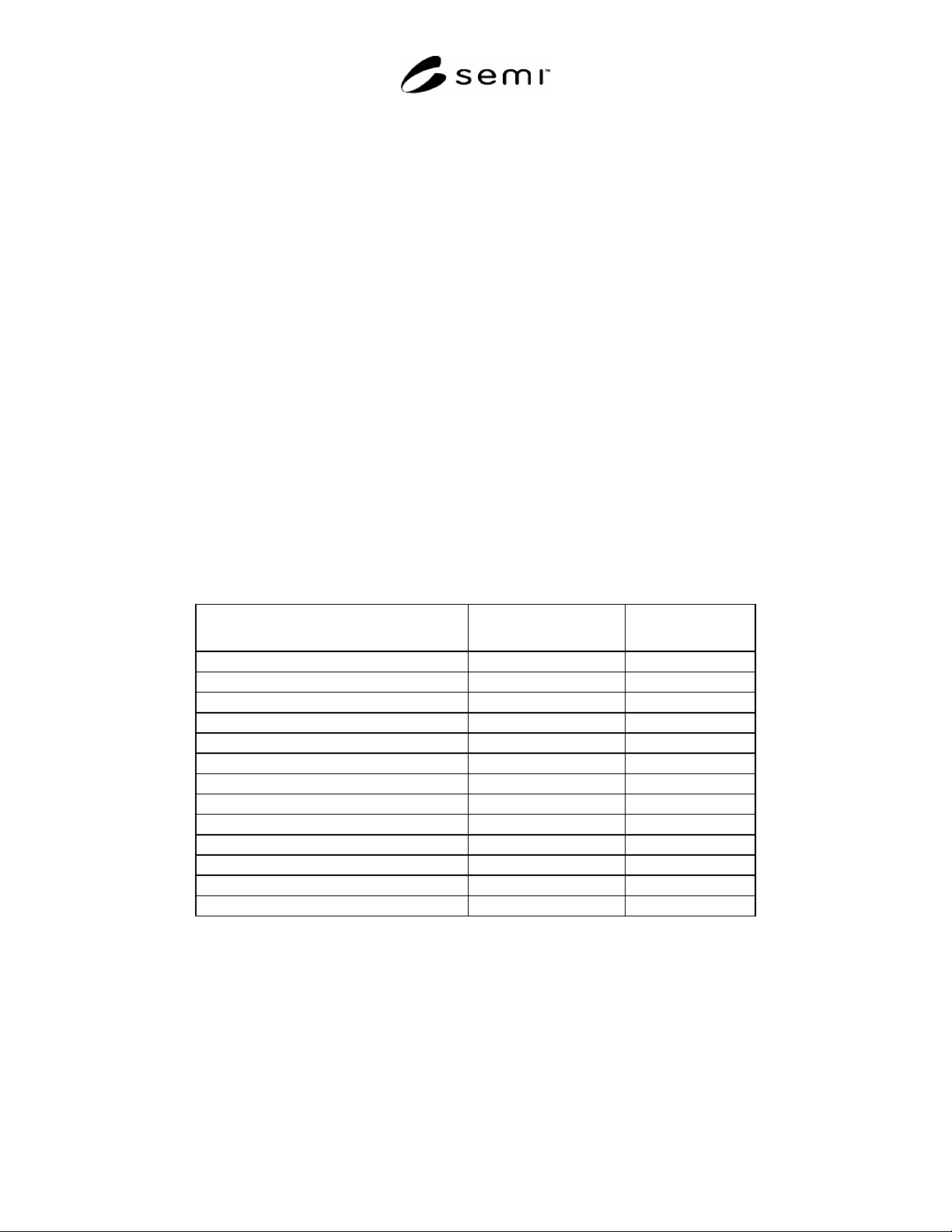
Table 8 Columns for Wide Bore Column Gas Chromatography
Reagent Recommended
#1
Column
Alternate
#2
Column
Acetone III II, I
n-Butyl Acetate I II
Dichloromethane I II
Methanol I
Methyl Ethyl Ketone I
2-Propanol I III
Tetrachloroethylene I
Toluene I III
Trichloroethylene I
Trichlorotrifluoroethane I
Hexamethyldisilizane
#3
I
1-Methyl-2-Pyrrolidone I
1,1,1 Trichloroethane I
Type I Column — Methyl Silicon Bonded Phase
Type II Column — Mixed Cyano, Phenyl, Methyl Silicon Bonded Phase
Type III Column — Carbowax Bonded Phase
#1 Satisfactory for both assay and SEMI-specified impurity determinations.
#2 Column will separate all SEMI-specified impurities from assay component. Elution order will differ from
typical given in individual reagent procedures.
#3 Presilanized column recommended.
7.2.4 Conditions — Appropriate conditions will vary from one gas chromatographic system to another. Conditions,
which have been found acceptable, are listed under each individual standard. When using packed column in the
isothermal mode, the temperature of the column is usually maintained at 10° to 20°C below the boiling point of the

SEMI C1-0705 © SEMI 1978, 2005 14
reagent. The efficient mass transfer associated with wide bore capillary columns may necessitate initial column
temperatures to be more than 20°C below the boiling point of the reagent of interest. Temperature programming
may be used to improve the shape of eluting peaks and to shorten analysis times. The remaining two heated zones
(injector and detector) should be maintained at as low a temperature as possible to lessen thermal decomposition
effects. Typically, for the injector this is 50°C above the boiling point of the material of interest; the detector is held
25°C above the highest temperature reached by the column, but never less than 100°C. The split or splitless mode
of injection can be used depending on the chromatographic equipment available. The use of a wide bore capillary
column simplifies conversion of a packed column to a capillary instrument.
7.2.5 Detector — Use of a thermal conductivity detector minimizes the need to correct for detector response to
differences in liquid chemical composition and is usually sufficient for determining reagent assay. To qualify trace
impurities, the more sensitive flame ionization detector is recommended. The detector output, after amplification, is
used to produce the chromatogram, a plot of component quantity versus elution time. Modern systems digitize the
analog output, allowing direct printout of peak areas and retention times.
7.2.6 Calculation of Results — Results from a chromatogram, used to determine the assay of a reagent, are
expressed in area percent normalized to 100%. A response factor correction for each component is required for the
most accurate results, especially when the sample components differ markedly in their detector response. An
internal standard reduces error due to variations in injection quantities, column, and detector conditions. The use of
control charts, to aid the analyst in visualizing chromatographic variability, is suggested. To verify that assay results
are valid, use of a system suitability test is recommended.
7.3 Color
7.3.1 Color (APHA) — For the rapid assessment of “colorless” liquids for contamination by colored materials,
visual comparison with platinum-cobalt solution standards is appropriate, following the methodology of the
American Public Health Association (APHA)
7
established for the evaluation of the color of water.
7.3.2 Preparation of Platinum-Cobalt Stock Solution (APHA No. 500) — Dissolve 1.246 g of reagent grade
potassium chloroplatinate, K
2
PtCl
6
, and 1.000 g of cobalt chloride hexahydrate, CoCl
2
• 6H
2
0, in water. Add 100 mL
of reagent grade hydrochloric acid (~37%) and dilute with water to exactly 1,000 mL. Store in a tightly closed
bottle.
7.3.3 General Procedure for “Color (APHA)” Test — For the working standard, dilute one or more suitable
aliquots of the Platinum-Cobalt Stock Solution (APHA No. 500) with water to 100 mL. In 100 mL Nessler tubes,
compare the working standard with an equal volume of the liquid under assessment. View each tube vertically over
a white background. The color of the liquid should not exceed the maximum APHA standard value allowed by the
specification for that liquid. On the dilution to 100 mL, aliquots of the stock standard of 1, 2, 3 . . . mL correspond
to APHA 5, 10, 15, etc.
7.4 Determination of Residue after Evaporation
7.4.1 Introduction — The residue after evaporation is defined as the relative amount of residue remaining after
evaporation of a sample of solvent followed by heating of the residue at 105°C for 30 minutes. Drying to constant
weight is not utilized since protracted heating may lead to slow volatilization of high-boiling matter.
7.4.2 For the determination of the residue after evaporation at the level of 5 parts per million (µg/g) or below,
determinate errors must be kept extremely small and random errors should be minimized. In the procedure given
below, the positive error due to exposure to airborne particulate matter is reduced by the use of the closed system
afforded by the Thiers assembly. Possible negative errors associated with losses caused by transfer of a
concentrated sample or the residue is avoided by effecting the evaporation and weighing in a single dish. The
determinate and random errors associated with the weighing operations are reduced by using an aluminum dish for
most solvents, weighing on a semi-microbalance, eliminating any static electricity, and conducting all heating and
cooling steps in a reproducible manner.
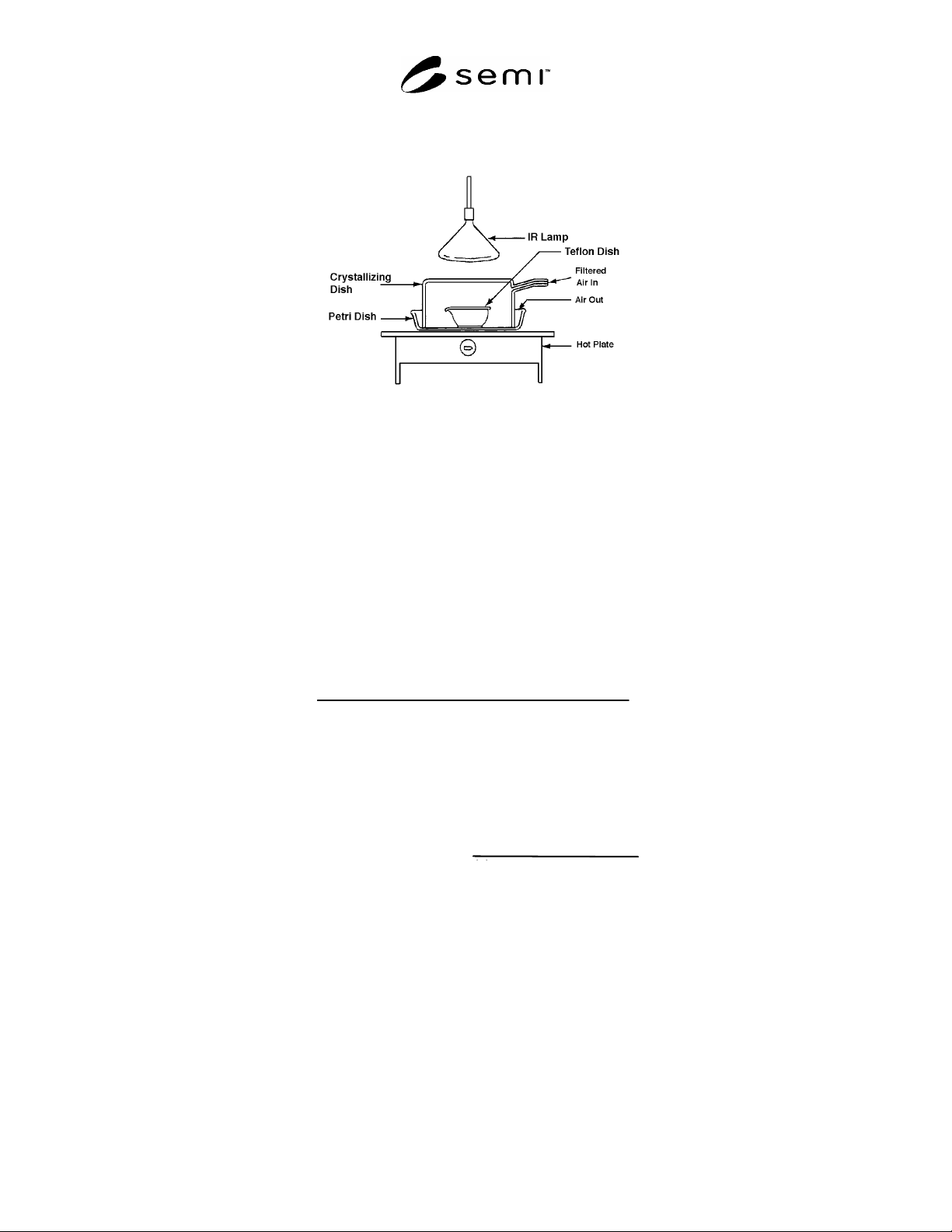
7.4.3 Equipment — The Thiers assembly is fashioned from a crystallizing dish. (See Figure 2.) The aluminum
dishes of 250 mL capacity are prepared by cutting out a 30 cm circle of aluminum foil, rinsing it with the solvent,
7 American Public Health Association, 800 I Street, NW, Washington, DC 20001, Phone: (202) 777-2742, Fax: (202) 777-2534, Website:
http://www.apha.org
SEMI C1-0705 © SEMI 1978, 2005 15
and, using gloves, pressing it around the base of an 800 mL beaker. The balance is a semi-micro type, and the static
electricity eliminator may be obtained from supply houses.
Figure 3
Thiers Assembly
7.4.4 Procedure
7.4.4.1 Rinse the 250 mL aluminum dish (or platinum dish in the case of halogenated solvents) with a portion of the
sample. Heat the dish at 105°C in an oven for 30 min and cool for 30 min (1 hr for platinum) in a desiccator
charged with calcium chloride and placed near the balance. Discharge static electricity using the eliminator and
weigh the dish on a semi-microbalance to the nearest 0.01 mg.
7.4.4.2 Start the flow of filtered nitrogen gas through the side arm of the Thiers assembly and place the dish inside.
Raise the cover briefly to add the specified amount of solvent from a clean, graduated cylinder. Adjust the nitrogen
stream so that the surface of the solvent is barely rippled. Also, adjust the heat lamp and hot plate so that the
evaporation rate does not exceed 8 mL/min and that no sample condenses on the top inner surface of the assembly.
7.4.4.3 When all of the sample has evaporated, heat the dish for 30 min in an oven at 105°C. Cool as given above,
discharge the static electricity, and reweigh. Calculate the residue as mg/mL.
[wt of dish plus residue (g)
-
wt of dish (g)]
10
6
sample wt (g)
For best results, room temperature should be kept constant to ± 5°C.
7.5 Residue after Ignition — A “residue after ignition” test serves to assess the amount of nonvolatile inorganic
matter present in a sample. Unless otherwise stated, the ignition shall be performed at 800° ± 25°C for 15 minutes.
Where the addition of sulfuric acid is specified, the result corresponds to what is often termed “sulfated ash.” The
calculation of the result, expressed in parts per million (µg/g), takes the form:
ppm Residue after Ignition
=
Net weight of residue
()
10
Weight of sample
6
7.6 Trace Arsenic (and Antimony) Determination
7.6.1 Introduction — This photometric procedure is based upon the color reaction of silver diethyldithiocarbamate
with arsine (and stibine). It provides for measurement of the absorbance of the sample and standards with
subsequent calculation of the arsenic and antimony content of the sample, expressed as arsenic. The procedure
given below differs from conventional ones by the omission of potassium iodide and stannous chloride. By this
omission, antimony is evolved as stibine and reacts with the silver diethyldithiocarbamate solution. The color
development is consequently due to both arsenic and antimony. The test sensitivity for arsenic is greater than for
antimony.