semi合集-English.pdf - 第3447页
SEMI E133-0705 © SEMI 2004, 2005 28 11.4.12 Comment — This field contain s any additional information that th e PCS analysis engine provider may wish to provide. Note that if the “Suppo rted” field is lis ted as “Conditi…
SEMI E133-0705 © SEMI 2004, 2005 27
11.3.3 Compliance verification will not address the following:
Engine response to improperly formatted inputs
Quality of Service (QoS) of data in output structures produced by engine
Quality of Performance (QoP) of engine in producing output structures (e.g., in response to receipt of input
structures)
11.4 Statement of Compliance (SoC): Functional Group Capabilities Data Sheet
11.4.1 All PCS Analysis Engines claiming compliance with this standard are required to be delivered with a
statement of compliance sheet on functional group capabilities. This sheet specifies for the user which functional
capabilities, specified as required or conditional in this standard, are available with this engine. The format of the
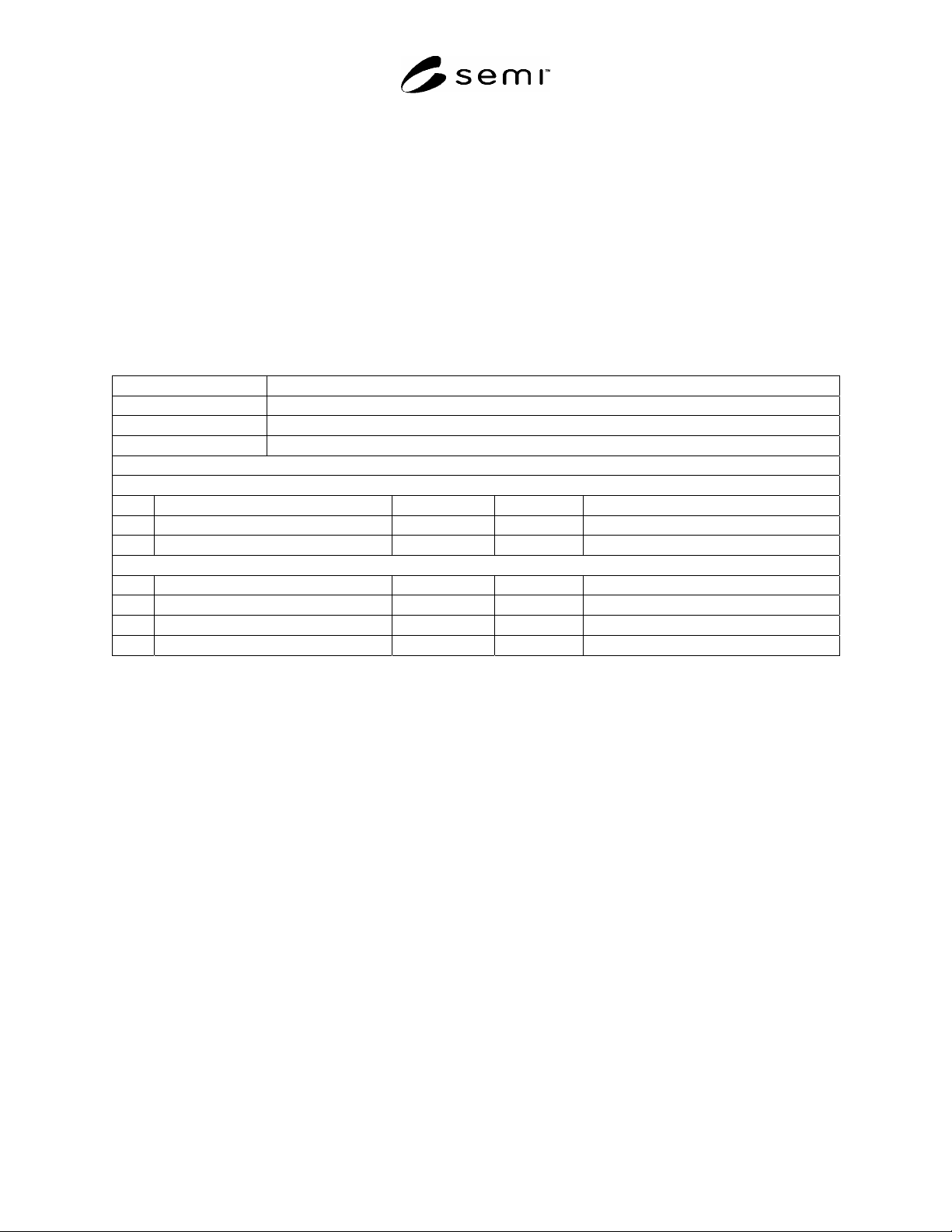
SoC sheet is given in Table 21, which includes a description of the fields of this sheet:
Table 23 PCS Analysis Engine SoC Functional Group Capabilities Data Sheet
Company
Company Name
Product
Product Name
Version
Software Revision Number, etc.
Functional Group(s)
Functional Group(s) to which Compliance is claimed
Functional Group Capabilities
- Functional Group #1
# Description Requirement Supported Comments
- Functional Group #2
# Description Requirement Supported Comments
11.4.2 Company — Name of company supplying product.
11.4.3 Product — Name of product being supplied.
11.4.4 Version — Any additional descriptors that supplier applies to product (such as software revision number)
that, along with Product Name, uniquely identifies product.
11.4.5 Functional Group(s) — The functional groups, as defined in this standard, to which compliance is being
claimed.
11.4.6 Functional Group Capabilities — The functional group capabilities as specified in this standard for the
functional group(s) to which compliance is being claimed (as indicated in the “Functional Group(s)” field). Note
that all capabilities specified in this standard for the functional groups, to which compliance is being claimed, must
be listed, and are organized by the fields below.
11.4.7 Functional Group #n — The name of the ‘n-th’ functional group to which compliance is being claimed, e.g.,
“R2R”, “FD”, “FC”, “FP”, or “SPC”.
11.4.8 # — The index number (copied from the “#” field for that capability).
11.4.9 Description — The functional group capability description copied verbatim from this standard (copied from
the “Description” field for that capability), for the PCS analysis engine functional group listed.
11.4.10 Requirement — The requirement of the capability as defined in this standard (copied from the
“Requirement” field for that capability).
11.4.11 Supported — This field contains the PCS analysis engine provider’s claim of support of this capability.
The claim could be “Yes” (“Y”), “No” (“N”), “Conditional” (“C”), or “Optional” (“O”). Note that if the capability
is listed as a requirement then it must be supported.

SEMI E133-0705 © SEMI 2004, 2005 28
11.4.12 Comment — This field contains any additional information that the PCS analysis engine provider may wish
to provide. Note that if the “Supported” field is listed as “Conditional” or “Optional”, the conditionality or
optionality conditions must be delineated in this field.
11.5 PCS Analysis Engine Compliance Verification Procedure
11.5.1 The following procedure should be applied to all PCS Analysis Engines:
11.5.2 Compliance: Functional Group Capabilities Data Sheet Verification Test:
Is a properly formatted SoC data sheet supplied with product?
Pass Criteria:
A properly formatted SoC data sheet, as specified in ¶11.3 is provided with product.
The Product + Version fields uniquely identify product.
At least one functional group is claimed, i.e., the engine declares to belong to at least one functional group as
specified in this standard.
All functional group capabilities for each functional group claimed in the “Functional Group” field are listed as
defined in §9, and the requirement field matches that provided for each capability in §9.
For each capability listed as required, it must also be supported (i.e., if Requirement == ‘Y’, then Supported
==’Y’).
For each capability listed as conditional, the conditions, defined in §9, must be met.
For each capability listed as optional (i.e., not required), a declaration of whether the requirement is supported
must be made (i.e., the “Supported” field for this requirement must be filled in).
11.6 Condition of Compliance
11.6.1 A PCS Analysis Engine can be considered to be compliant with this standard if and only if it passes all of the
compliance tests for the Analysis Engine in ¶11.5.
NOTICE: SEMI makes no warranties or representations as to the suitability of the guidelines set forth herein for
any particular application. The determination of the suitability of the standard is solely the responsibility of the user.
Users are cautioned to refer to manufacturer's instructions, product labels, product data sheets, and other relevant
literature, respecting any materials or equipment mentioned herein. These standards are subject to change without
notice.
By publication of this guideline, Semiconductor Equipment and Materials International (SEMI) takes no position
respecting the validity of any patent rights or copyrights asserted in connection with any item mentioned in this
guideline. Users of this guideline are expressly advised that determination of any such patent rights or copyrights,
and the risk of infringement of such rights are entirely their own responsibility.
Copyright by SEMI® (Semiconductor Equipment and Materials
International), 3081 Zanker Road, San Jose, CA 95134. Reproduction of
the contents in whole or in part is forbidden without express written
consent of SEMI.
SEMI E134-0305 © SEMI 2004, 2005 1
SEMI E134-0305
SPECIFICATION FOR DATA COLLECTION MANAGEMENT
This specification was technically approved by the Global Information & Control Committee and is the direct
responsibility of the North American Information & Control Committee. Current edition approved by the
North American Regional Standards Committee on July 11, 2004 and August 16, 2004. Initially available at
www.semi.org September 2004; to be published November 2004. Originally published July 2004.
E
This standard was editorially modified in November 2004 to correct editorial errors in Figures 21 and 22.
NOTICE: The designation of SEMI E134 was updated during the 0305 publishing cycle to reflect the creation of
SEMI E134.1.
1 Purpose .......................................................................................................................................................................2
2 Scope ..........................................................................................................................................................................2
2.1 In-scope ...............................................................................................................................................................2
2.2 Out-of-scope ........................................................................................................................................................2
3 Limitations..................................................................................................................................................................2
3.1 Abstract Model ....................................................................................................................................................2
4 Referenced Standards .................................................................................................................................................3
4.1 Non-SEMI Standards...........................................................................................................................................3
4.2 SEMI Standards...................................................................................................................................................3
5 Terminology ...............................................................................................................................................................3
5.1 Abbreviations and Acronyms...............................................................................................................................3
5.2 Definitions ...........................................................................................................................................................3
6 Conventions................................................................................................................................................................4
6.1 Terms...................................................................................................................................................................4
6.2 Notation ...............................................................................................................................................................4
7 Background.................................................................................................................................................................6
7.1 Equipment Data Collection .................................................................................................................................6
8 Overview ....................................................................................................................................................................8
8.1 Data Collection Concepts....................................................................................................................................8
8.2 Trace Data...........................................................................................................................................................8
8.3 Events ..................................................................................................................................................................8
8.4 Exceptions............................................................................................................................................................9
8.5 Data Collection Plans..........................................................................................................................................9
8.6 Equipment Operational Performance Monitoring...............................................................................................9
8.7 Ad-hoc Data Requests..........................................................................................................................................9
9 Data Collection Plan Management ...........................................................................................................................10
9.1 DataCollectionManager Interface.....................................................................................................................10
10 DCP Privilege Model..............................................................................................................................................27
10.1 Privileges.........................................................................................................................................................27
11 Data Collection Plan Definition..............................................................................................................................29
11.1 DataCollectionPlan .........................................................................................................................................29
12 Data Collection Plan State Models .........................................................................................................................35
12.1 DataCollectionPlan State Model.....................................................................................................................35
12.2 DataCollectionPlan-Active State Model..........................................................................................................38
12.3 Trace Request State Model ..............................................................................................................................41
13 Operational Performance Monitoring.....................................................................................................................44
13.1 Operational Performance Conditions State Model .........................................................................................44
14 Data Collection Report Formats .............................................................................................................................45
14.1 Data Collection Reports ..................................................................................................................................45
14.2 Parameter Values ............................................................................................................................................50
14.3 Primitive Parameter Values.............................................................................................................................51
14.4 Structured and Enumerated Parameter Values ...............................................................................................53
14.5 Time Format ....................................................................................................................................................55
15 DCP Consumer Interface........................................................................................................................................56