semi合集-English.pdf - 第6676页
SEMI C31-0301 © SEMI 1978, 2001 METH A N O L 4 Previ ous SEMI Reference # C1 .10-96 Grade 1 (Specificatio n) Nick el (Ni) 0.1 ppm m ax Potassium (K) 0.1 ppm m ax Sodium (Na) 0.1 ppm m ax Tin (S n) 0.1 ppm m ax Titanium (…
METHANOL SEMI C31-0301 © SEMI 1978, 20013
until approximately 1 mL of liquid remains. Take up
liquid and all visible residue (from walls of dish) with 1
mL ultra pure, 12 M hydrochloric acid and continue
heating until approximately 0.5 mL of liquid remains.
No undissolved particulate matter should be observed.
Otherwise repeat the addition of hydrochloric acid until
all particulate matter is dissolved. Transfer
quantitatively to a 50 mL volumetric flask using 2%
(v/v) hydrochloric acid and adjust liquid level to mark.
Prepare a reagent blank using the same reagents and in
the same manner as for the sample concentration.
8.12.5 Analysis
8.12.5.1 Using the prepared sample and reagent blank,
analyze group I elements potassium (K) and sodium
(Na) by atomic absorption spectroscopy and all other
elements by plasma emission spectroscopy. Apply, if
necessary, a reagent blank correction to the final
determined value of the sample.
NOTE 3: Due to the uncertainty of acid concentration in the
liquid residue the final concentration can be estimated to be
approximately 2% (v/v). Standard calibration solutions are to
use this same acid concentration.
9 Grade 2 Procedures
9.1 This section does not apply to this chemical.
10 Grade 3 Procedures
10.1 This section does not apply to this chemical.
11 Grade 4 Procedures
11.1 This section does not apply to this chemical.
12 Grade 5 Procedures
12.1 This section does not apply to this chemical.
13 VLSI Grade Procedures
13.1 This section does not apply to this chemical.
14 Tier A Procedures
14.1 This section does not apply to this chemical.
15 Tier B Procedures
15.1 This section does not apply to this chemical.
16 Tier C Procedures
16.1 This section does not apply to this chemical.
17 Tier D Procedures
17.1 This section does not apply to this chemical.
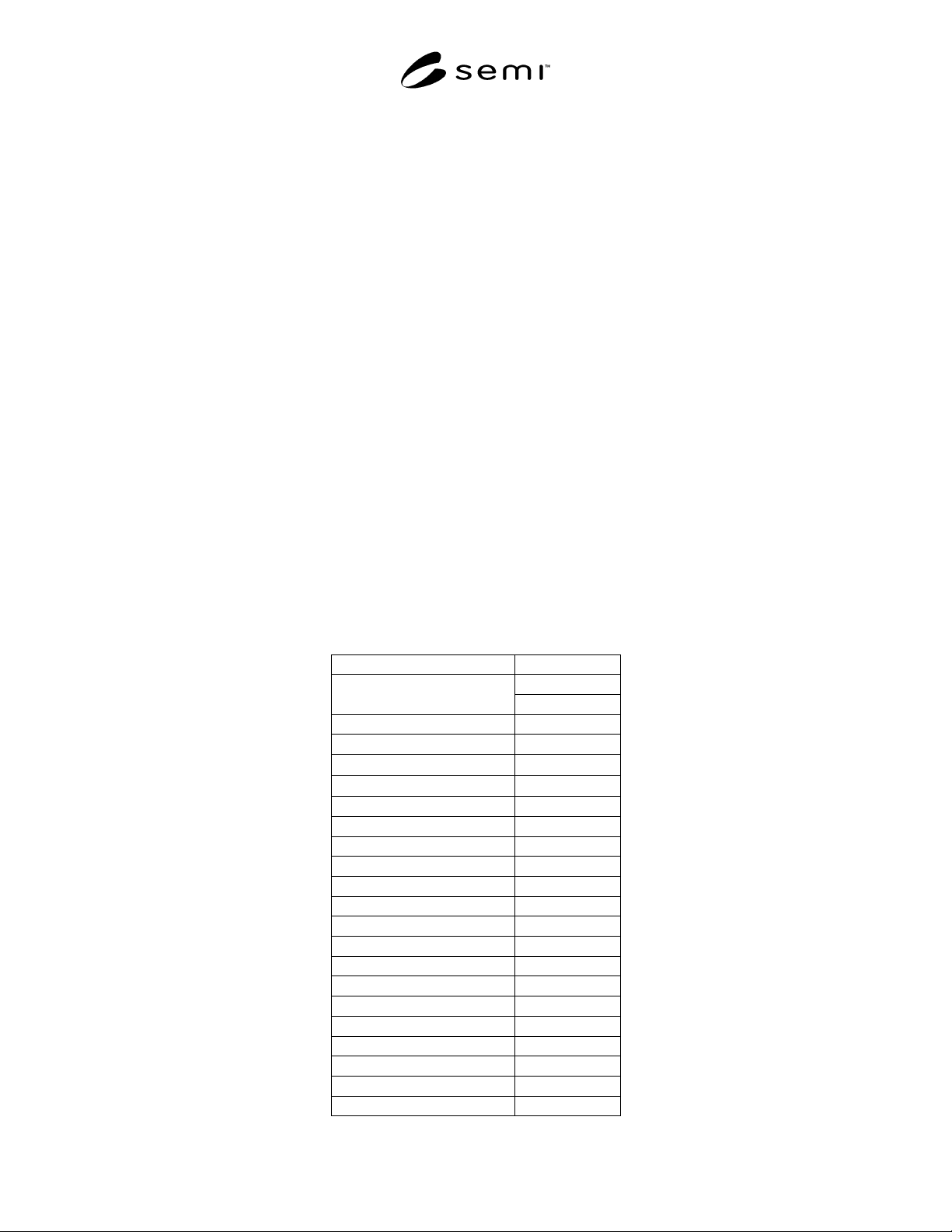
Table 1 Impurity Limits and Other Requirements for Methanol
Previous SEMI Reference # C1.10-96
Grade 1
(Specification)
Assay (CH
3
OH) 99.9% min
Color (APHA) 10 max
Acidity
0.3 µeq/g max
Alkalinity
0.1 µeq/g max
Residue after Evaporation 5 ppm max
Water (H
2
O) 0.05% max
Solubility in Water To pass test
Boron (B) 0.01 ppm max
Chloride (Cl) 0.2 ppm max
Phosphate (PO
4
) 0.5 ppm max
Aluminum (Al) 0.1 ppm max
Arsenic and Antimony (as As) 0.01 ppm max
Calcium (Ca) 0.1 ppm max
Chromium (Cr) 0.1 ppm max
Copper (Cu) 0.1 ppm max
Gold (Au) 0.1 ppm max
Iron (Fe) 0.1 ppm max
Lead (Pb) 0.1 ppm max
Magnesium (Mg) 0.1 ppm max
Manganese (Mn) 0.1 ppm max
SEMI C31-0301 © SEMI 1978, 2001 METHANOL4
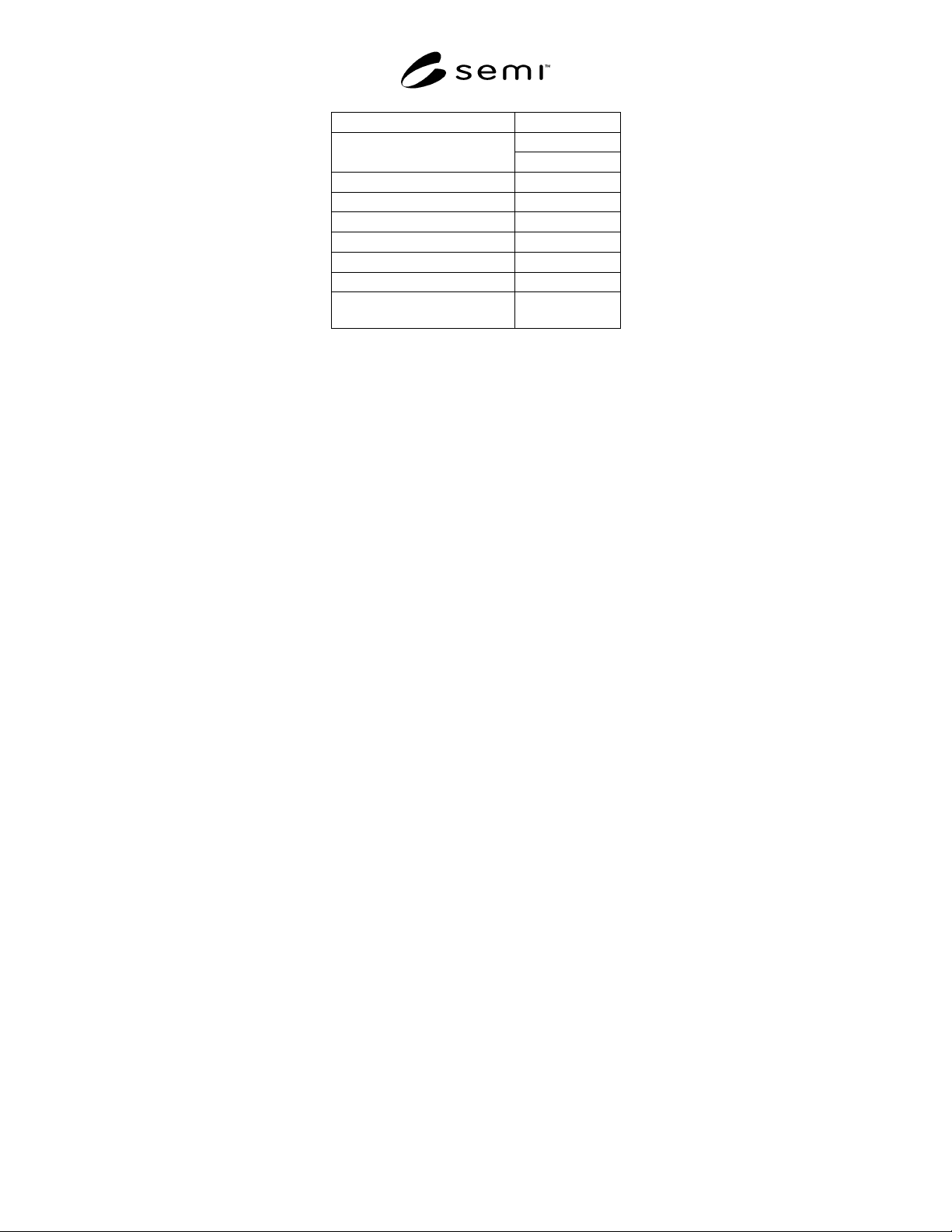
Previous SEMI Reference # C1.10-96
Grade 1
(Specification)
Nickel (Ni) 0.1 ppm max
Potassium (K) 0.1 ppm max
Sodium (Na) 0.1 ppm max
Tin (Sn) 0.1 ppm max
Titanium (Ti) 0.1 ppm max
Zinc (Zn) 0.1 ppm max
Particles in bottles:
size, #/mL
≥ 1.0 µm, 10 max
NOTICE: SEMI makes no warranties or representations as to the suitability of the standards set forth herein for any
particular application. The determination of the suitability of the standard is solely the responsibility of the user.
Users are cautioned to refer to manufacturer’s instructions, product labels, product data sheets, and other relevant
literature respecting any materials mentioned herein. These standards are subject to change without notice.
The user’s attention is called to the possibility that compliance with this standard may require use of copyrighted
material or of an invention covered by patent rights. By publication of this standard, SEMI takes no position
respecting the validity of any patent rights or copyrights asserted in connection with any item mentioned in this
standard. Users of this standard are expressly advised that determination of any such patent rights or copyrights, and
the risk of infringement of such rights, are entirely their own responsibility.
Copyright by SEMI® (Semiconductor Equipment and Materials
International), 3081 Zanker Road, San Jose, CA 95134. Reproduction o
f
the contents in whole or in part is forbidden without express written
consent of SEMI.
METHYL ETHYL KETONE SEMI C32-0699 © SEMI 1978, 19991
SEMI C32-0699
SPECIFICATION FOR METHYL ETHYL KETONE
This specification was technically approved by the Global Process Chemicals Committee and is the direct
responsibility of the North American Process Chemicals Committee. Current edition approved by the North
American Regional Standards Committee on April 23, 1999. Initially available on SEMI OnLine May 1999;
to be published June 1999. This document replaces SEMI C1.11 in its entirety. Originally published in
1978.
1 Purpose
1.1 The purpose of this document is to standardize
requirements for methyl ethyl ketone used in the
semiconductor industry and testing procedures to
support those standards. Test methods have been shown
to give statistically valid results. This document also
provides guidelines for grades of methyl ethyl ketone
for which a need has been identified. In the case of the
guidelines, the test methods may not have been
statistically validated yet.
2 Scope
2.1 The scope of this document is all grades of methyl
ethyl ketone used in the semiconductor industry.
3 Limitations
3.1 None.
4 Referenced Documents
SEMI C1 — Specifications for Reagents
5 Terminology
5.1 None.
6 Physical Property (for information only)
Density at 25°C 0.80 g/mL
Boiling Point 79.6°C
7 Requirements
7.1 The requirements for methyl ethyl ketone for
Grade 1 are listed in Table 1.
8 Grade 1 Procedures
8.1 Assay — Analyze the sample by gas
chromatography (see SEMI C1, Section 3.1, Guidelines
for Assay by Wide Bore Column Gas
Chromatography). The parameters cited have given
satisfactory results.
Column: 30 meter × 530 micron I.D. fused silica
capillary, coated with 5 micron film of DB-1 or
equivalent (100% methyl silicone which has been
surface bonded and cross linked).
Column Temperature: 40°C isothermal for 5 minutes,
then programmed to 200°C at 10°C/min.
Injector Temperature: 150°C
Detector Temperature: 250°C
Sample Size: 0.2 µL splitless
Carrier Gas: Helium at 3 mL/min
Detector:
Thermal
Conductivity
Approximate Retention Times (min):
Methyl Ethyl Ketone 9.0
2-Butanol 10.5
8.2 Color — Dilute 3.0 mL of platinum-cobalt stock
solution (APHA No. 500) to 100 mL with water.
Compare this standard (APHA No. 15) with 100 mL of
sample in Nessler tubes. View vertically over a white
background. The sample must be no darker than the
standard.
8.3 Acidity — To 25 mL of water in a glass-stoppered
flask, add 10 mL of sample and 0.1 mL of
phenolphthalein indicator solution. Add 0.10 N sodium
hydroxide until a slight, pink color persists after
shaking for one-half minute. Add 21 mL (17 g) of the
sample, mix well, and titrate with 0.01 N sodium
hydroxide until the pink color is reproduced. Not more
than 3.0 mL of the sodium hydroxide solution should be
required.
8.4 Residue After Evaporation — Evaporate 63 mL
(50 g) of sample to dryness. Dry at 105°C for 30
minutes, cool in a desiccator, and weigh (see SEMI C1,
Section 3.3, Determination of Residue After
Evaporation).
8.5 Water — Add 25 mL of pyridi ne-dichloromethane
mixture (1 + 1) to a dry titration flask and add Karl
Fischer (KF) reagent to a visually or electrometrically
determined endpoint that persists for 30 seconds. Add
25 mL (20 g) of sample, taking care to protect the
sample and contents of the flask from moisture. Stir
vigorously and titrate with Karl Fischer reagent to the
same endpoint.
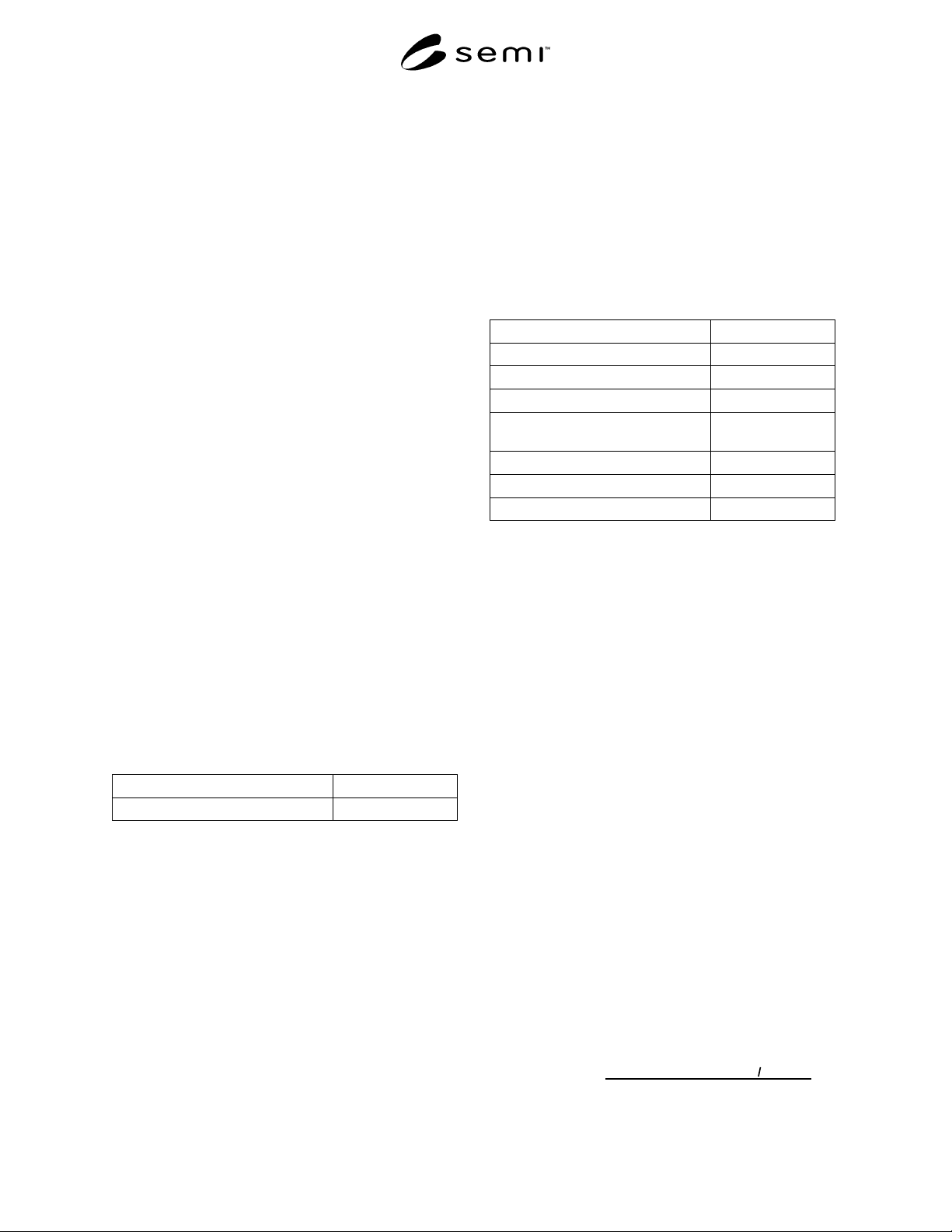
% Water H
2
O
()
=
mL KF rea
g
ent
×
KF factor
g
H
2
OmL
()
×
100
Wei
g
ht of sam
p
le
g
()