semi合集-English.pdf - 第2355页
SEMI E82-0705 © SEMI 1999, 2005 51 The following TRANSFE R c ommands are received by the TSC in top to bottom order: TRANSFER Comman d Prio rity 1 Normal 2 Normal 3 High 4 Normal 5 High 4 2 1 5 3 head tail Corresponding …
SEMI E82-0705 © SEMI 1999, 2005 50
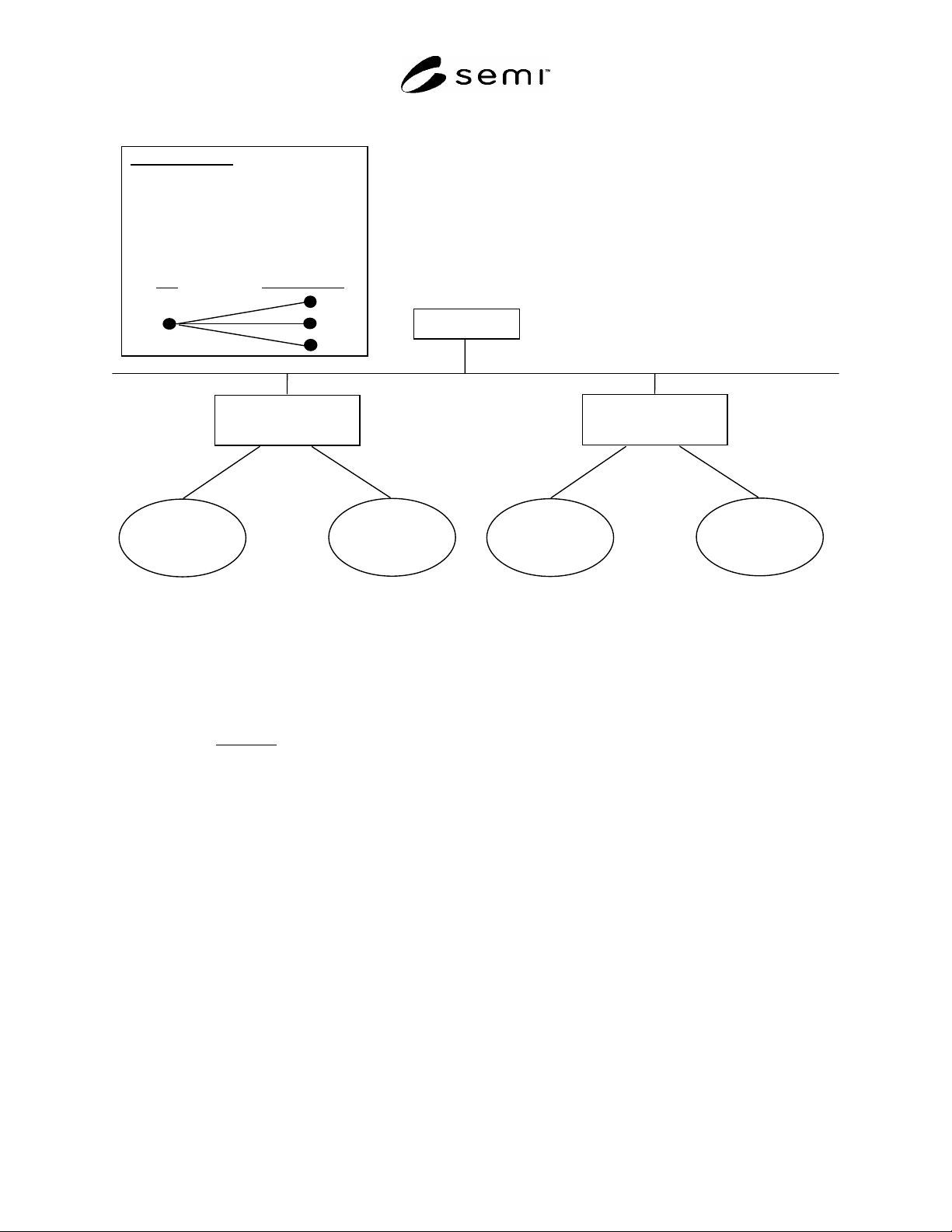
R1-3 Hardware Architecture
Factory Host
TSC
1
Transport
Unit 1
Transport
Unit M
...
TSSEM
GEM
HSMS-SS
LAN
...
TSC
N
Transport
Unit 1
Transport
Unit M
...
Key Characteristics
• TSC interfaces to an transport
units(one or more vehicles or nodes)
• One-to-many(one or more) mapping of
TSC’s to transport units
• Transport system controls decoupled from
AMHS stocker controls
TSC
Transport Units
Figure R1-3
Configurable Centralized TSC Architecture (Logical View)
R1-4 Traffic Management Characteristics
R1-4.1 At a minimum, the TSC must offer Priority-based First-In-First-Out (FIFO) queuing of TRANSFER
commands. In other words, all TRANSFER commands which have yet to be processed by the transport system
must be serviced in the order in which they are received by the TSC based on the priority given in the host
command. The minimum
priority levels required to be available on IBSEM equipment are “Normal” and “High.”
“Normal” and “High” priorities will be denoted by U2 compatible numbers as per the definition of the priority in the
Variable Data and Remote Command sections of this document. Other options may be implemented, but to be an
IBSEM equipment it must at a minimum have the ability to be configured to perform Priority-based FIFO queuing
of TRANSFER commands. Additionally, the command priorities are to be utilized during execution of the
commands to the following level: any “High” priority command will cause all other commands that are not “High”
priority to be usurped. That is to say that all other commands will modify the execution steps to allow the “High”
priority commands to be completed in the minimal elapsed time possible. Multiple “High” priority commands will
act upon each other according to the same rules as “Normal” commands act on each other.
SEMI E82-0705 © SEMI 1999, 2005 51
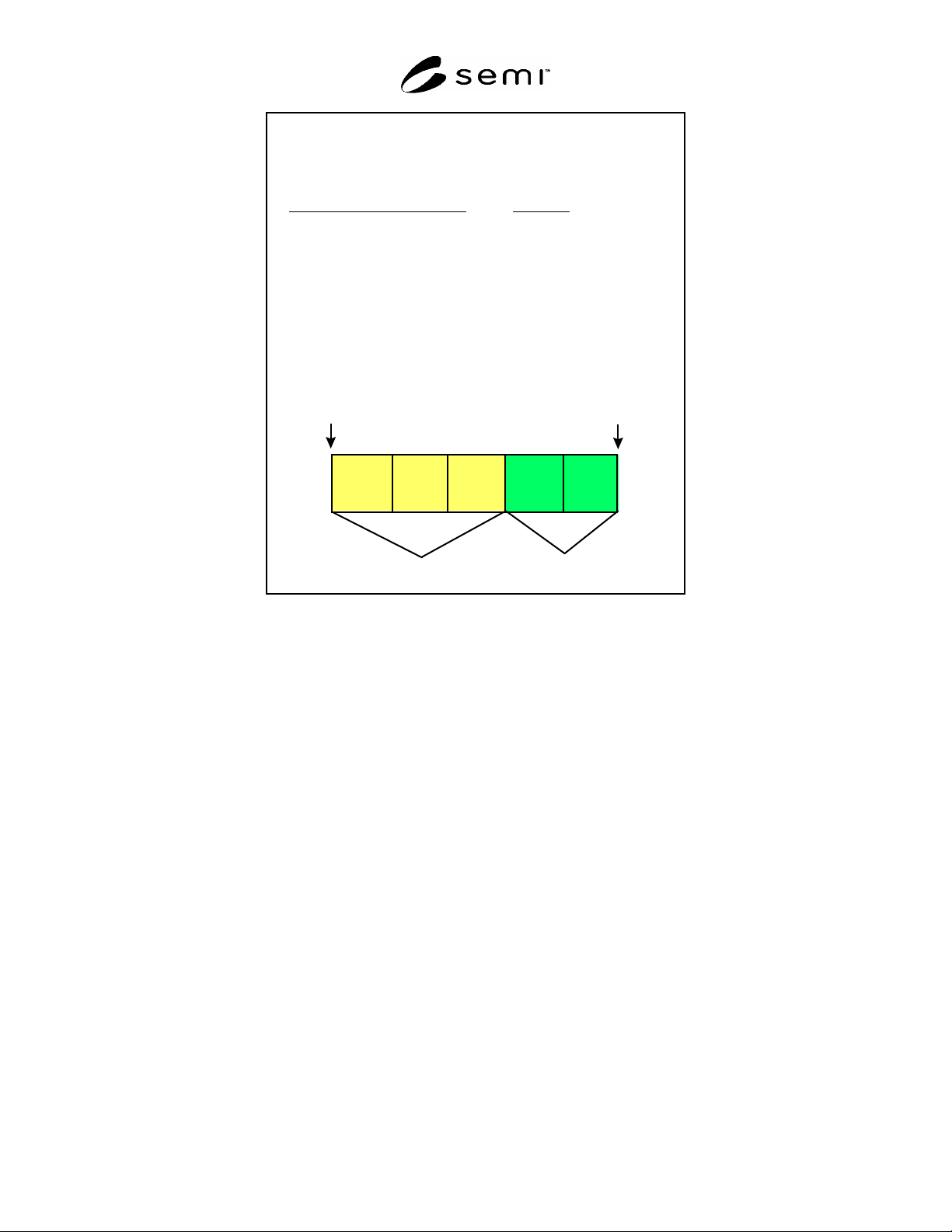
The following TRANSFER commands are
received by the TSC in top to bottom order:
TRANSFER Command
Priority
1 Normal
2 Normal
3 High
4 Normal
5 High
4 2 1 5 3
head
tail
Corresponding TSC processing queue
for outstanding TRANSFER commands :
Normal
High
Figure R1-4
TSC Priority-based FIFO TRANSFER Command Processing Example
R1-4.2 The TSC must manage the vehicles so that TRANSFER requests are queued for later service if all vehicles
are currently utilized.
R1-5 Transport System Handling and Delivery of the Transfer Unit
R1-5.1 A transfer unit must always be delivered by the same vehicle simultaneously. A transfer unit cannot be split
between multiple vehicles.
SEMI E82-0705 © SEMI 1999, 2005 52
RELATED INFORMATION 2
REQUIREMENTS FOR COMPLIANCE
NOTICE: This related information is not an official part of SEMI E82, but was approved for publication by full
letter ballot procedures.
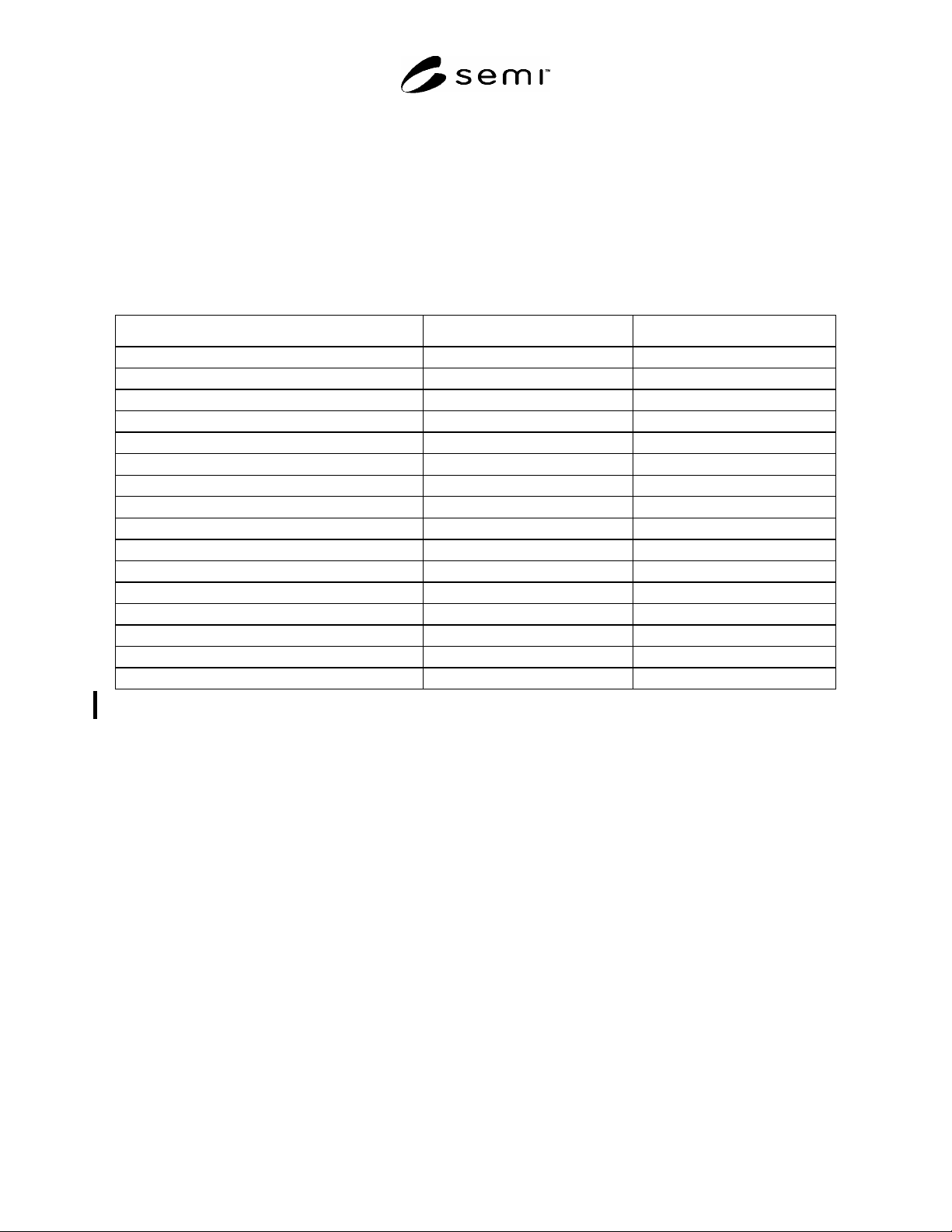
Table R2-1 provides a checklist for IBSEM compliance.
R2-1 IBSEM Compliance Statement
Table R2-1 IBSEM Compliance Statement
Fundamental IBSEM Requirements Implemented IBSEM Compliant
TSC State Model
Yes No Yes No
Transfer Command State Model
Yes No Yes No
Vehicle State Model (optional, see ¶7.4)
Yes No Yes No
Carrier State Model
Yes No Yes No
Collection Event List
Yes No Yes No
Collection Event Data Availability
Yes No Yes No
Variable Data Items
Yes No Yes No
Variable Data Availability
Yes No Yes No
Alarm List
Yes No Yes No
Remote Command List
Yes No Yes No
Remote Command Parameters
Yes No Yes No
Remote Command Mapping
Yes No Yes No
Transfer Command Format
Yes No Yes No
System Architecture
Yes No Yes No
Traffic Management Characteristics
Yes No Yes No
Delivery of the Transfer Unit
Yes No Yes No
NOTICE: SEMI makes no warranties or representations as to the suitability of the standards set forth herein for any
particular application. The determination of the suitability of the standard is solely the responsibility of the user.
Users are cautioned to refer to manufacturer's instructions, product labels, product data sheets, and other relevant
literature, respecting any materials or equipment mentioned herein. These standards are subject to change without
notice.
By publication of this standard, Semiconductor Equipment and Materials International (SEMI) takes no position
respecting the validity of any patent rights or copyrights asserted in connection with any items mentioned in this
standard. Users of this standard are expressly advised that determination of any such patent rights or copyrights, and
the risk of infringement of such rights are entirely their own responsibility.
Copyright by SEMI® (Semiconductor Equipment and Materials
International), 3081 Zanker Road, San Jose, CA 95134. Reproduction of
the contents in whole or in part is forbidden without express written
consent of SEMI.